Little Rock Look Back: Mayor Donald Mehlburger

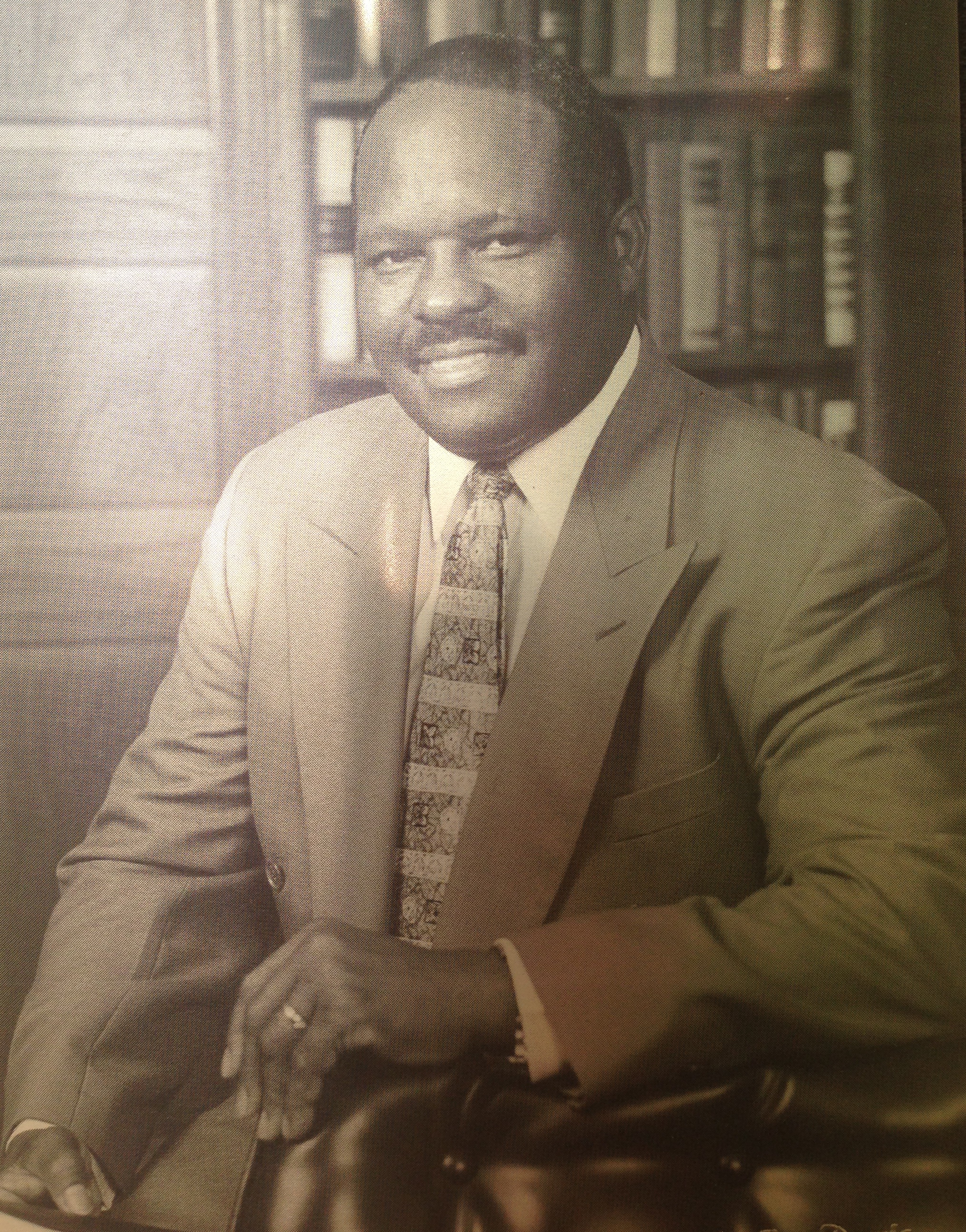
Mayor D L MehlburgerOn October 19, 1937, future Little Rock Mayor Donald Lee Mehlburger was born in Little Rock.  His parents were Max A. Mehlburger and Mary Lou Covey Mehlburger who also had another son Max C. Mehlburger.

Mehlburger’s first run for the City Board of Directors was in November 1968 when there was an open seat.  At the time he was 30, the youngest one could be and be elected to the City Board.  He lost that race, but eight years later ran again.  This time Mehlburger won the race.  At his first meeting on the City Board, Mehlburger was selected as Mayor of Little Rock by his colleagues.

Prior to running for the City Board the second time, Mehlburger had been appointed to the Planning Commission.  Planning and growth were two important emphases for Mayor Mehlburger, in addition to public safety.  He stressed the importance of quality growth in the edges of the city and a push for a revitalized downtown.  Mayor Mehlburger was also an advocate for public mass transit.

Due to business interests taking up too much of his time, he resigned from the City Board a few months before his term was up.  But he remained engaged in civic affairs.  Historic preservation was important to Mehlburger.  In addition to owning historic properties, he was a founding board member of the Historic Preservation Alliance of Arkansas.  He had graduated from the University of Arkansas and was a member of Trinity Episcopal Cathedral.  He had also been active with the Junior Chamber of Commerce (Jaycees) and Rotary Club 99.

Mehlburger died on May 25, 1992 and was buried at Mt. Holly Cemetery.  His grave marker features an engraved sextant which pays tribute to his career as an engineer.  It also notes that he was Mayor of Little Rock.  Mayor Mehlburger was survived by his wife Susan and his three children – Donald Lee Jr., Harry and Katherine.

Little Rock Look Back: Mayor Warren E. Lenon

Mayor LenonOn October 8, 1867 in Panora, Iowa, future Little Rock Mayor Warren E. Lenon was born.  He was one of eleven children of John D. and Margaret M. Long Lenon.

Lenon came to LIttle Rock in 1888 after finishing his schooling in Iowa.  He helped set up an abstract company shortly after his arrival.  In 1902 he organized the Peoples Savings Bank.  Among his other business interests were the City Realty Company, the Factory Land Company, the Mountain Park Land Company, and the Pulaski Heights Land Company.

From 1895 to 1903, he was a Little Rock alderman, and in 1903, he was elected Mayor of the city. A progressive Mayor, he championed the construction of a new City Hall which opened in 1908.  At the first meeting of the City Council in that building, Mayor Lenon tendered his resignation.  His duties in his various business interests were taking up too much of his time.

Mayor Lenon had been a champion for the establishment of a municipal auditorium. He had wanted to include one in the new City Hall complex. But a court deemed it not permissible under Arkansas finance laws at the time.  He also worked to help establish the first Carnegie Library in Little Rock which opened in 1912.

In 1889, he married Clara M. Mercer.  The couple had three children, two of whom survived him.  A son W. E. Lenon Jr., and a daughter Vivian Mercer Lenon Brewer.  She was married to Joseph Brewer, a nephew of Joseph Taylor Robinson, after whom the City’s eventual municipal auditorium would be named.

Mayor Lenon died June 25, 1946 and is buried at Roselawn Cemetery.  Lenon Drive just off University Avenue is named after Mayor Lenon.

Little Rock Look Back: Mayor Charles E. Taylor

Mayor TaylorOn September 15, 1868, future Little Rock Mayor Charles E. Taylor was born in Austin, Mississippi.  After locating to eastern Arkansas, his family moved to Little Rock around 1880.

Taylor graduated from Scott Street High School in Little Rock and proceeded to work for various hardware stores and other businesses.  In 1895 he married Belle Blackwood, with whom he would have four children.

In 1910, Taylor announced his intention to run for Mayor of Little Rock.  Though he had never held elective office, he had been involved in several civic organizations.  Taylor was the main challenger to Alderman John Tuohey.  Seen as a reformer, Taylor initially lost to Tuohey but after an investigation of voter fraud and a subsequent runoff, Taylor was elected Mayor.

Upon taking office in August 1911, Mayor Taylor focused on improving health conditions in the city, upgrading the fire department and enhancing the overall moral tone of the city.

As a progressive of the era, he fought against gambling, drinking and prostitution.  He created a Health Department and enhanced the City Hospital.  His efforts led to a decrease in the death rate in Little Rock.  As Mayor, Taylor introduced motorized vehicles to the Fire Department.  He also led the City Council to establish building and electrical codes.  Mayor Taylor also oversaw the construction of the 1913 Beaux Arts Central Fire Stations (which today serves as the City Hall West Wing).

Under his leadership, the City of Little Rock annexed Pulaski Heights. One of the selling points to Pulaski Heights residents was Mayor Taylor’s ability to provide modern services such as paved streets, water mains, fire hydrants and street lights.

Though neither his 1911 Parks Master Plan nor his dreams for a civic auditorium came to fruition, they paved the way for future successes in both of those areas.

Funding for projects continued to be a problem throughout Mayor Taylor’s four terms in office.  He believed that one obstacle to city funding was the prohibition by the state constitution against cities issuing bonds.  Though that ban has since been lifted, Taylor tried three times unsuccessfully to get it changed while he was Mayor.

In April 1919, Taylor left office after having served eight years.  He was the longest serving Mayor of Little Rock until Jim Dailey served in the 1990s and 2000s.  Following several business ventures, Taylor moved to Pine Bluff and led their chamber of commerce from 1923 through 1930.

Mayor Charles E. Taylor died in Pine Bluff in 1932. He was buried at Oakland Cemetery in Little Rock.

During his time in office, Mayor Taylor was presented with an unofficial flag of Little Rock by a group of citizens.  During Mayor Dailey’s tenure, that flag was restored by some private citizens and presented to the City.  It is framed on the 2nd Floor of Little Rock City Hall.

Little Rock Look Back: Mayor Tom Prince

Mayor PrinceFuture Little Rock Mayor Tom Prince was born on August 13, 1949.  After graduating high school in 1967 (where he was on the state championship golf team), he attended the United States Naval Academy.  He later received his law degree from the University of Arkansas at Little Rock and began practicing law in Little Rock.

In 1984 he ran for the City of Little Rock Board of Directors and was elected.  In January 1985, he was selected by his fellow City Directors to serve as Mayor of Little Rock.  He served as Mayor until January 1987.  During his term in office, Arkansas celebrated its Sesquicentennial. Mayor Prince oversaw the City’s participation in the celebratory activities.  As Mayor he was also a strong advocate for expanding the city’s involvement in quality of life issues through enhanced parks and arts while maintaining a commitment to public safety and public works issues. After the completion of his four year term on the City Board, he did not seek a second term.

City of Little Rock races are non-partisan.  After leaving office, he became involved in Democratic Party politics.  In 1992, he campaigned for Bill Clinton’s presidential bid in Iowa and other Midwest states.  When his law partner, Sheffield Nelson, ran for Governor in 1994 as a Republican, Prince resigned from his Democratic Party positions and worked on the Nelson campaign.  In 1997, he was elected chair of the Pulaski County Republican Committee.  In 1998, he ran for the United States Senate as a Republican.

In 1999, Prince experienced a family tragedy and took a sabbatical from practicing law. In 2000, he moved to St. Louis to become general counsel for a securities firm located there.  Following several years with the securities firm, he joined a St. Louis law firm in private practice.  He remained in private practice in St. Louis through 2012.

A St. Louis Business Journal profile of Prince in 2010 highlighted his interests in single action shooting and in horseback riding.

Little Rock Look Back: Willie L. Hinton

HintonOn August 2, 1947, future Little Rock Vice Mayor Willie Lee Hinton was born in Wynne and educated in Cross County.  He then attended what is now the University of Arkansas at Pine Bluff.

For twenty-eight years, Hinton was a vocational education teacher at the Arkansas School for the Deaf.  He was also very active in neighborhood activities as well as in grassroots community-building efforts.

In 1993, Hinton made his first race for the City Board of Directors.  After narrowly losing the Ward 2 race in a special election, he returned to run again the following year.  Hinton won the race in November 1994 and was re-elected in 1998 and 2002.  In 2003, he was selected to serve as Little Rock Vice Mayor for a two year term.

Long an advocate for neighborhood empowerment, Hinton had championed the transformation of the old Lee Elementary School into a resource center.  Under his leadership the building was purchased from the Little Rock School District in 1997 and opened in 2000 as the Neighborhood Resource Center.  Five years later, the Little Rock City Board of Directors voted to name it in his honor.  The building, which stands at 12th and Pine Streets, is a living testament to his vision of inclusiveness and the worth of every individual.

After battling a brain tumor for nearly two years, Hinton chose not to seek a fourth term on the Little Rock City Board.  His public service to the citizens of Little Rock ended on December 31, 2006.  On February 13, 2007, Hinton died at his home in Little Rock at the age of 59.  He was survived by his wife Blondell, two children and two grandchildren.  He is buried in the Graham Cemetery in Cross County.

Art Porter Music Education’s 2013 Jazz Week this week

artporterThe 2013 Art Porter Music Education Jazz Week runs from Monday, July 29 through Saturday August 3 at various locations in Little Rock.

The week kicks off at Little Rock City Hall on Monday.  The City of Little Rock will host the first concert as young musicians will take center stage in the City Hall Rotunda on Monday, July 29 at noon.  This is a free event.

Other events this week include

Jazz on the Plaza at the Metropolitan BankPlaza – Tuesday, July 30 at noon – FREE

Walter Beasley and Eric Struthers at Cajun’s Wharf – Wednesday, July 31 at 7:00 pm – ticketed event

Martha Burks at Club Sway – Thursday, August 1 at 7:30pm – ticketed event

Porter Players at The Afterthought – Friday, August 2 – FREE

Pieces of A Dream at the Metroplex Event Center – August 3 at 8pm – ticketed event

All proceeds benefit the Art Porter Music Education (APME) scholarship program. Ticket information is available at www.ArtPorter.org or call (501) 492-9120.

The APME was created by friends and family of Little Rock natives – Art Porter Sr and Art Porter Jr – both amazingly talented musicians. The purpose of the APME is two-fold:

  • To provide scholarships to talented Arkansas music students in need of financial assistance to pursue higher education from an accredited college or university.
  • To provide musical enhancement opportunities through workshops and seminars.

Little Rock Look Back: Mayor James A. Woodson

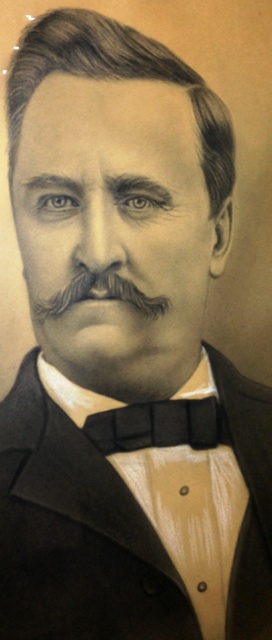
IMG_0298On July 14, 1848, future Little Rock Mayor James Alexander Woodson was born in North Carolina.  The son of two prominent eastern families, he and his parents moved to Pine Bluff in 1849.  His father died within two weeks of the families arrival in Arkansas.

With the outbreak of the Civil War, he enlisted as a drummer boy in the Ninth Arkansas infantry but was discharged because of his youth. He worked as a clerk at a general store in Pine Bluff. After the Civil War ended, he attended school in Virginia and Maryland before returning Pine Bluff. Upon his return he worked in the steamboat business and eventually started working in railroads. He was instrumental in putting together one of the forerunners of the Missouri Pacific Railroad and worked for them for 18 years.

Woodson moved to Little Rock in March 1881 and continued working for the railroad until 1891.  Working in the mercantile business allowed him more time to be engaged in civic affairs.  In 1895 he was elected mayor.   He handily defeated former mayor W. G. Whipple who was seeking to return to office.

During Mayor Woodson’s tenure, he oversaw renovations of Little Rock City Hall (which was located at the time on the north side of Markham between Main Street and Louisiana Street).  He also championed the construction of a city hospital and the first free bridge across the Arkansas River.  Mayor Woodson was reelected in April 1897 and April 1899.

In April 1890, he resigned to take over the Arkansas and Southwestern Railway.  After restoring it to sound financial footing, he later led the Arkansas Asphalt Company.  That company provided the first asphalt for paving Little Rock city streets.

Woodson served as a director of the Little Rock board of trade (forerunner to the Little Rock Regional Chamber of Commerce), director of the Mercantile Trust Company and president of the state board of trade (forerunner of the Arkansas State Chamber of Commerce).

Woodson married Virginia Lanier in 1868.  They had six children, five of whom lived to adulthood.  Mayor Woodson died on October 19, 1908 and is buried in Mt. Holly Cemetery.  His wife lived until 1937 and is buried next to him.  Also buried in Mt. Holly are their children James Alexander, Benjamin Morehead and Gertrude Woodson Hardeman; each of whom died before their mother.  Mrs. Hardeman’s husband and son are also buried in Mt. Holly.