
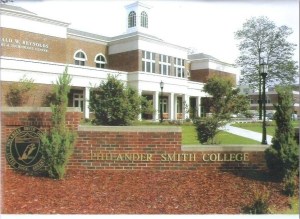
Black History Month Spotlight – Philander Smith College

reynoldslibraryphilandersmithThe new Arkansas Civil Rights History Audio Tour was launched in November 2015. Produced by the City of Little Rock and the University of Arkansas at Little Rock allows the many places and stories of the City’s Civil Rights history to come to life an interactive tour.  This month, during Black History Month, the Culture Vulture looks at some of the stops on this tour which focus on African American history.

Philander Smith College is Little Rock’s oldest historically black educational institution. It was established in 1877 as Walden Seminary, by the African Methodist Episcopal Church to educate ministers. Its name changed after an endowment in 1882 by the widow of Illinois philanthropist Philander Smith. Wesley Chapel has always been associated with the college’s activities. The enslaved William Wallace Andrews founded Wesley in 1854 on land donated by his owner, U.S. Senator Chester Ashley. In 1864, parishioners celebrated their freedom with a “Parade of Emancipation.”

Pastors at Wesley included Rev. J. C. Crenchaw, president of the Little Rock NAACP, and Rev. Negail Riley, leader of the Black United Fund. In the 1960’s, Philander Smith students participated in “sit-ins” at downtown lunch counters.

Noted alumni include Dr. Joycelyn Elders, former U.S. surgeon general; professional athletes Elijah Pitts of the Green Bay Packers; Hubert “Geese” Ausbie of the Harlem Globetrotters; and Milton Pitts Crenchaw, a Tuskeegee Airman; James Hal Cone, a pioneer of black liberation theology; Lottie Shackelford, former Mayor of Little Rock; Al Bell, founder of Stax Records and former president of Motown Records; and Stephanie Flowers, Arkansas State Senator.

The app, funded by a generous grant from the Arkansas Humanities Council, was a collaboration among UALR’s Institute on Race and Ethnicity, the City of Little Rock, the Mayor’s Tourism Commission, and KUAR, UALR’s public radio station, with assistance from the Little Rock Convention and Visitors Bureau

Vote Today FOR Little Rock’s Arts+History

Feb9electionlogoToday is Election Day for the Campaign for Arts + History.

By voting FOR on Tuesday, February 9th Little Rock residents can expand and enhance our Arkansas Arts Center, MacArthur Museum of Arkansas Military History, and MacArthur Park. Your vote FOR on February 9th will upgrade facilities and public spaces to ensure the Arkansas Arts Center keeps its accreditation by issuing a bond backed by an existing hotel tax on out of town visitors.

Polling sites are open from 7:30am to 7:30pm.

  • Your for vote will keep the Arkansas Arts Center in Little Rock accredited, with updates to aging facilities over 50 years old, bringing in more world-class exhibitions and educational opportunities.
  • Your for vote will help expand and enhance the Arkansas Arts Center and improve the MacArthur Museum of Arkansas Military History by providing much needed help to aging facilities and addressing landscaping needs in MacArthur Park.
  • Your for vote will spur community involvement by increasing educational opportunities, attracting more world class exhibits, expanding art classes and renovating the Children’s Theatre.
  • Your for vote will establish a public/private partnership between public funding and private donations that ensures our city can expand and enhance the Arkansas Arts Center, MacArthur Museum of Arkansas Military History and MacArthur Park.

In legalese: An issue of bonds of the City of Little Rock, Arkansas in one or more series in the maximum aggregate principal amount of Thirty-Seven Million, Five Hundred Thousand Dollars ($37,500,000.00) for the purpose of financing a portion of the costs of improvements to MacArthur Park, including particularly, without limitation, renovations and additions to, and furnishings and equipment for, the Arkansas Arts Center and renovations and equipment for the MacArthur Museum of Arkansas Military History, including any necessary parking, landscaping, signage, drainage, lighting, road and utility improvements in MacArthur Park. The bonds will be payable from and secured by a pledge of the collections of the taxes levied by the City at an aggregate rate of 2% upon the gross receipts or gross proceeds derived and received from the renting, leasing or otherwise furnishing of hotel, motel, bed and breakfast or short-term condominium or apartment rental accommodations for sleeping for profit in the City, pursuant to Ordinance Nos. 21,140 and 21,141 adopted December 1, 2015. The proceeds of the bonds will also be used to provide a debt service reserve and pay costs of issuing the bonds.

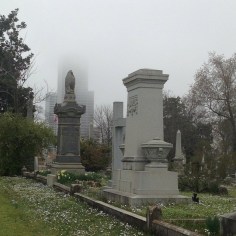
Black History Month Spotlight – Little Rock Cemeteries

Mount Holly greyThe new Arkansas Civil Rights History Audio Tour was launched in November 2015. Produced by the City of Little Rock and the University of Arkansas at Little Rock allows the many places and stories of the City’s Civil Rights history to come to life an interactive tour.  This month, during Black History Month, the Culture Vulture looks at some of the stops on this tour which focus on African American history.

Mount Holly Cemetery: Broadway at Twelfth Street, est. 1843

Oakland and Fraternal Historic Cemetery Park: 2101 S. Barber, est. 1863

Haven of Rest Cemetery: 1702 Twelfth Street, est. 1903

National African Americans and important civil rights leaders are interred in several local cemeteries.

Mount Holly Cemetery is the final resting place of enslaved people, who were buried in their owner’s family plots, and the graves of several free blacks in the mid-1800s. One notable black leader buried here is Nathan Warren, founding pastor of Bethel AME Church. A marker is dedicated to Quatie Ross, wife of Cherokee Chief John Ross, who died along the Trail of Tears in 1839.

Oakland and Fraternal Historic Cemetery Park is composed of several cemeteries serving different communities: Oakland, Confederate, National, Jewish, and Fraternal, an historically black cemetery. Civil rights advocates buried in Fraternal include Mifflin Wistar Gibbs, John E. Bush, Charlotte Andrews Stephens, Dr. John Marshall Robinson, Isaac Gillam, Sr. and Jr., Asa l. Richmond, as well as members of the influential Pankey and Ish families.

Haven of Rest Cemetery is the largest cemetery for black people in Little Rock. Among the graves here are those of Daisy Gatson Bates, civil rights activist and mentor to the Little Rock Nine; attorney Scipio Africanus Jones; and Rev. Joseph Booker, president of Arkansas Baptist College.

The app, funded by a generous grant from the Arkansas Humanities Council, was a collaboration among UALR’s Institute on Race and Ethnicity, the City of Little Rock, the Mayor’s Tourism Commission, and KUAR, UALR’s public radio station, with assistance from the Little Rock Convention and Visitors Bureau

Black History Month Spotlight – Mt Zion Baptist Church

Mount Zion Baptist Church, Little Rock, AR.JPGThe new Arkansas Civil Rights History Audio Tour was launched in November 2015. Produced by the City of Little Rock and the University of Arkansas at Little Rock allows the many places and stories of the City’s Civil Rights history to come to life an interactive tour.  This month, during Black History Month, the Culture Vulture looks at some of the stops on this tour which focus on African American history.

Mt. Zion Baptist Church was organized in 1877 and is one of the earliest black congregations in Little Rock. The church was rebuilt in its current location in 1927 under the leadership of Rev. Fred T. Guy. From the late 1800s to the present, local church leaders, their congregants, grassroots groups, civic organizations, fraternal societies, and black business owners fought for equal rights.

A warrior in the community and tireless human rights advocate, Rev. Fred T. Guy, Mr. Zion’s pastor, challenged Superintendent of Schools Virgil Blossom and the Little Rock School Board to desegregate schools in 1957. “Next to the law of God, the Constitution of the United States means the most to me. When you start to tinker with the Constitution, it becomes awfully important to us,” said Rev. Guy.

The app, funded by a generous grant from the Arkansas Humanities Council, was a collaboration among UALR’s Institute on Race and Ethnicity, the City of Little Rock, the Mayor’s Tourism Commission, and KUAR, UALR’s public radio station, with assistance from the Little Rock Convention and Visitors Bureau

Black History Month Spotlight – Lynching of John Carter

John Carter lynch victimThe new Arkansas Civil Rights History Audio Tour was launched in November 2015. Produced by the City of Little Rock and the University of Arkansas at Little Rock allows the many places and stories of the City’s Civil Rights history to come to life an interactive tour.  This month, during Black History Month, the Culture Vulture looks at some of the stops on this tour which focus on African American history.

On May 4, 1927, Little Rock witnessed its worst episode of racial violence in the twentieth century. Thirty-eight year old African American John Carter allegedly “assaulted” two white women on the outskirts of the city. A white mob hunted Carter down, hung him from a telegraph pole, and riddled his dead body with hundreds of bullets. The mob transported Carter’s body downtown and then dragged it through the streets tied to the back of an automobile.

Thousands of white onlookers gathered at West Ninth Street and Broadway, the heart of the black business district. There the mob tore pews from Bethel AME Church, one of the city’s largest and oldest black churches, and threw Carter’s body onto a makeshift funeral pyre. The mob only dispersed when Gov. John E. Martineau sent in Arkansas National Guardsmen because Mayor Charles Moyer, the Chief of Police, and Sheriff “could not be reached.” No charges were ever brought against any of the perpetrators.

During the Jim Crow era, white lynch mobs murdered at least 284 black people in Arkansas, the second highest per capita number of lynchings in any state outside of Mississippi.

The app, funded by a generous grant from the Arkansas Humanities Council, was a collaboration among UALR’s Institute on Race and Ethnicity, the City of Little Rock, the Mayor’s Tourism Commission, and KUAR, UALR’s public radio station, with assistance from the Little Rock Convention and Visitors Bureau.

Black History Month Spotlight – Taborian Hall and Dreamland Ballroom

The new Arkansas Civil Rights History Audio Tour was launched in November 2015. Produced by the City of Little Rock and the University of Arkansas at Little Rock allows the many places and stories of the City’s Civil Rights history to come to life an interactive tour.  This month, during Black History Month, the Culture Vulture looks at some of the stops on this tour which focus on African American history.

Completed in 1918, Taborian Hall stands as one of the last reminders of the once-prosperous West Ninth Street African-American business and cultural district. West Ninth Street buildings included offices for black professionals, businesses, hotels, and entertainment venues. In 1916, the Knights and Daughters of Tabor, a fraternal insurance organization, hired local black contractor Simeon Johnson to enlarge an existing building to accommodate their activities, other offices and a ballroom.

During World War I, black soldiers from Camp Pike came to the Negro Soldiers Service Center here. In World War II, Taborian Hall was home to the Ninth Street USO, catering to black soldiers from Camp Robinson. By 1936, Dreamland Ballroom hosted basketball games, boxing matches, concerts and dances.

A regular stop for popular black entertainers on the “Chitlin’ Circuit,” Dreamland hosted Cab Callaway, Count Basie, Duke Ellington, Ella Fitzgerald, Louis Armstrong, B.B. King, Earl “Fatha” Hines and Ray Charles. Arkansas’s own Louis Jordan also performed here. Between the 1960s and 1980s, West Ninth Street declined, and many buildings were demolished. In 1991, Taborian Hall was renovated to house Arkansas Flag and Banner. Once again, Dreamland Ballroom hosts concerts and social events.

The app, funded by a generous grant from the Arkansas Humanities Council, was a collaboration among UALR’s Institute on Race and Ethnicity, the City of Little Rock, the Mayor’s Tourism Commission, and KUAR, UALR’s public radio station, with assistance from the Little Rock Convention and Visitors Bureau.

Black History Month Spotlight – First Missionary Baptist Church

The new Arkansas Civil Rights History Audio Tour was launched in November 2015. Produced by the City of Little Rock and the University of Arkansas at Little Rock allows the many places and stories of the City’s Civil Rights history to come to life an interactive tour.  This month, during Black History Month, the Culture Vulture looks at some of the stops on this tour which focus on African American history.

Established in 1845, First Missionary Baptist Church is one of the oldest black congregations in Arkansas. The first church building was completed by 1847, with the current Gothic Revival building constructed in 1882.

In 1891, more than 600 blacks gathered here to protest the state’s recently enacted Separate Coach Law that required racial separation in passenger cars and separate waiting rooms in train stations. They marched from the church to the then state capitol, now the Old State House., to dispute laws that denied black people their constitutional rights. Historians cite that black boycotts in Little Rock, Pine Bluff, and Hot Springs on May 27, 1903, the first day of the streetcar law, caused a 90 percent drop in black patrons on Little Rock streetcars.

In May 1958, Dr. Martin Luther King, Jr., traveled to Little Rock here to attend the graduation ceremony of Ernest Green, the first African American to graduate from Central High School. In 1963, four months before the famous “I Have a Dream” speech, Dr. King visited Little Rock to provide the First Missionary Baptist Church’s 118th anniversary sermon.

The app, funded by a generous grant from the Arkansas Humanities Council, was a collaboration among UALR’s Institute on Race and Ethnicity, the City of Little Rock, the Mayor’s Tourism Commission, and KUAR, UALR’s public radio station, with assistance from the Little Rock Convention and Visitors Bureau.