The Economic Impact of the Clinton Center focus of noontime discussion

cfiles16593The past ten years have witnessed incredible growth in Little Rock.  This is a panel discussion to highlight the tremendous influence the Center has had on Central Arkansas.

Panelists will include Gretchen Hall, CEO of the Little Rock Convention and Visitors Bureau; Dr. Sadie Mitchell, Little Rock School District Associate Superintendent for Elementary Schools; Bruce Moore, Little Rock City Manager; Grant Tennille, Executive Director of the Arkansas Economic Development Commission; and Van Tilbury, 2015 Chairman of the Little Rock Regional Chamber of Commerce. Panelists will discuss both the economic and social impact of the Center, as well as how it continues to thrive as a vibrant educational and cultural venue for visitors of all ages. The panel will be moderated by David Goins of Fox16.

This program is free and open to the public, but registration is required. Please RSVP to LRevent@clintonfoundation.org.

It will take place at noon today at the Clinton Presidential Center.

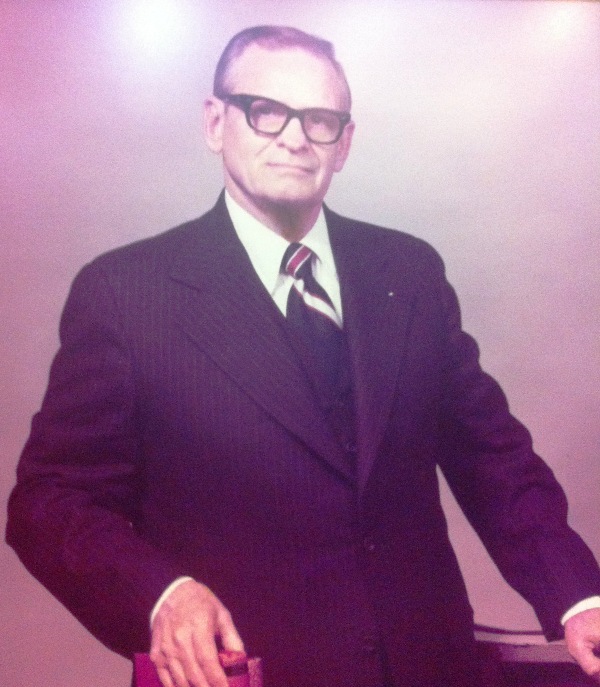
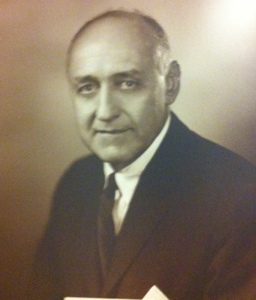
Little Rock Look Back: W. H. “Bill” Walters, LR’s 60th Mayor

Mayor Walters' official portrait

Mayor Walters’ official portrait

On November 6, 1912, future Little Rock Mayor William H. Walters was born in Clearfield, Pennsylvania.

He ran for the City Board of Directors in 1970 and was unopposed.  Walters took office on January 1, 1971 and served one term on the City Board.  He chose not to run for a second term and left office on December 31, 1974.

In January 1973, he was selected by his colleagues to serve a two year term as Mayor of the City of Little Rock.

Throughout his life, Mayor Walters enjoyed traveling and visiting over 100 countries throughout the world. Mr. Walters had a keen interest in the circus and collected circus memorabilia from many countries.

He was employed by 3M Company. He was Superintendent and Acting Plant Manager beginning January 1, 1951 and 3M Plant Manager beginning February 1, 1972. He retired in 1977.

In addition to serving on the City Board, he had been active in the Little Rock Chamber of Commerce (he served as Chamber President in 1969), Kiwanis Club, Associated Industries of Arkansas and the YMCA among other activities.

Mayor Walters died on February 14, 2005 at the age of 94.

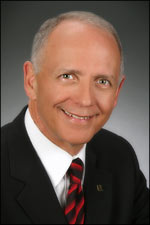
Little Rock Look Back: Jim Dailey – LR’s 71st Mayor

cityoflr_img_board_dailyOn July 31, 1942, future Little Rock Mayor Dalton James “Jim” Dailey, Jr. was born to Dalton and Ellen Dailey.  After graduating from Little Rock Catholic High School, he attended the University of Arkansas at Fayetteville.  He graduated with a Bachelor of Science degree in Business Administration. He joined his father in the family business, Dailey’s Office Furniture.

In 1974, Dailey was elected to the City of Little Rock Board of Directors.  He served one four-year term. The last two years of that term, he was the Vice Mayor of Little Rock.

Following that term, he remained engaged in civic activities including serving in leadership capacities in community campaigns.  He also served as president of the National Office Products Association – the first Arkansan to do so.  Dailey also served as the founding chair of Leadership Greater Little Rock.

In 1988, Dailey was elected to return to the City Board.  He was reelected in 1992.  Dailey served as Vice Mayor in 1991 and 1992.  In January 1993, he was chosen by his fellow City Directors to serve a two year term as Mayor.  Under his leadership, the Future-Little Rock goal-setting process took place.

Following a voter-approved change to the City structure, the position of Mayor was changed to be elected by the people while maintaining the City Manager form of government.  On January 1, 1995, Jim Dailey was sworn in as the first popularly-elected Mayor of the City of Little Rock in over 38 years.
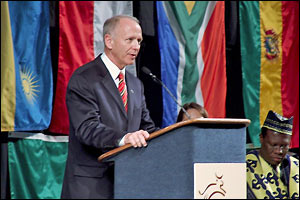
cityoflr_img_mayor_01Dailey has served on the Board of Directors for the Little Rock Regional Chamber of Commerce, Metroplan, Communities in Schools, Arkansas BioVentures and New Futures for Youth. He was appointed to the National League of Cities Board of Directors and the Municipalities in Transition on Public Finance.

As Mayor, he served as Chair of the Intergovernmental Advisory Committee of the Federal Communications Commission. He was also a member of the United States Conference of Mayor’s Communications Task Force.  He also served as president of the Arkansas Municipal League in 2002 and 2003.

While he was Mayor of Little Rock, he was a strong proponent of the development of the River Market and worked to locate the Clinton Presidential Library in Little Rock.  He also worked to increase public safety support.  He also oversaw the establishment of Central Arkansas Water, the development of downtown headquarters for Acxiom Corporation and Heifer International, and the creation of Prevention, Intervention and Treatment programs.  In addition, he was instrumental in leading the efforts for the 40th anniversary of the integration of Little Rock Central High in 1997.

Mayor Dailey was re-elected in 1998 and 2002.  His fourteen years as Mayor of Little Rock set a longevity record.  Upon his retirement the City’s fitness center was renamed the Jim Dailey Fitness and Aquatic Center.  This was in recognition of his lifelong interest in wellness activities.

Since leaving office, he has continued his civic involvement by serving as a member of the Little Rock Airport Commission which oversees the Bill and Hillary Clinton National Airport. He is also involved in commercial real estate.

Since 1965, he has been married to the former Patti Murphy.  They have four children and six grandchildren.

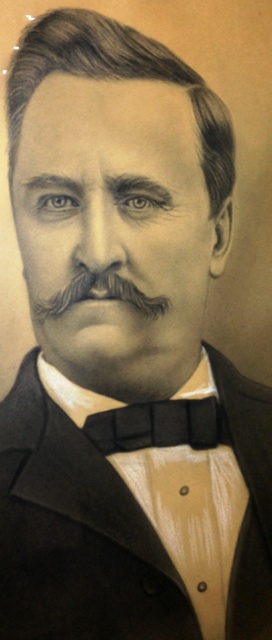
Little Rock Look Back: James A. Woodson, LR’s 37th Mayor

IMG_0298On July 14, 1848, future Little Rock Mayor James Alexander Woodson was born in North Carolina.  The son of two prominent eastern families, he and his parents moved to Pine Bluff in 1849.  His father died within two weeks of the family’s arrival in Arkansas.

With the outbreak of the Civil War, he enlisted as a drummer boy in the Ninth Arkansas infantry but was discharged because of his youth. He worked as a clerk at a general store in Pine Bluff. After the Civil War ended, he attended school in Virginia and Maryland before returning Pine Bluff. Upon his return he worked in the steamboat business and eventually started working in railroads. He was instrumental in putting together one of the forerunners of the Missouri Pacific Railroad and worked for them for 18 years.

Woodson moved to Little Rock in March 1881 and continued working for the railroad until 1891.  Working in the mercantile business allowed him more time to be engaged in civic affairs.  In 1895 he was elected mayor.   He handily defeated former mayor W. G. Whipple who was seeking to return to office.

During Mayor Woodson’s tenure, he oversaw renovations of the 1867 Little Rock City Hall (which was located at the time on the north side of Markham between Main Street and Louisiana Street).  He also championed the construction of a city hospital and the first free bridge across the Arkansas River.  Mayor Woodson was reelected in April 1897 and April 1899.

In April 1890, he resigned to take over the Arkansas and Southwestern Railway.  After restoring it to sound financial footing, he later led the Arkansas Asphalt Company.  That company provided the first asphalt for paving Little Rock city streets.

Woodson served as a director of the Little Rock board of trade (forerunner to the Little Rock Regional Chamber of Commerce), director of the Mercantile Trust Company and president of the state board of trade (forerunner of the Arkansas State Chamber of Commerce).

Woodson married Virginia Lanier in 1868.  They had six children, five of whom lived to adulthood.  Mayor Woodson died on October 19, 1908 and is buried in Mt. Holly Cemetery.  His wife lived until 1937 and is buried next to him.  Also buried in Mount Holly are their children James Alexander Woodson, Benjamin Morehead Woodson and Gertrude Woodson Hardeman; each of whom died before their mother.  Mrs. Hardeman’s husband and son are also buried in Mount Holly.

In 2013, Mayor Woodson was one of the characters portrayed at the annual Parkview High School “Tales from the Crypt” program at Mount Holly.

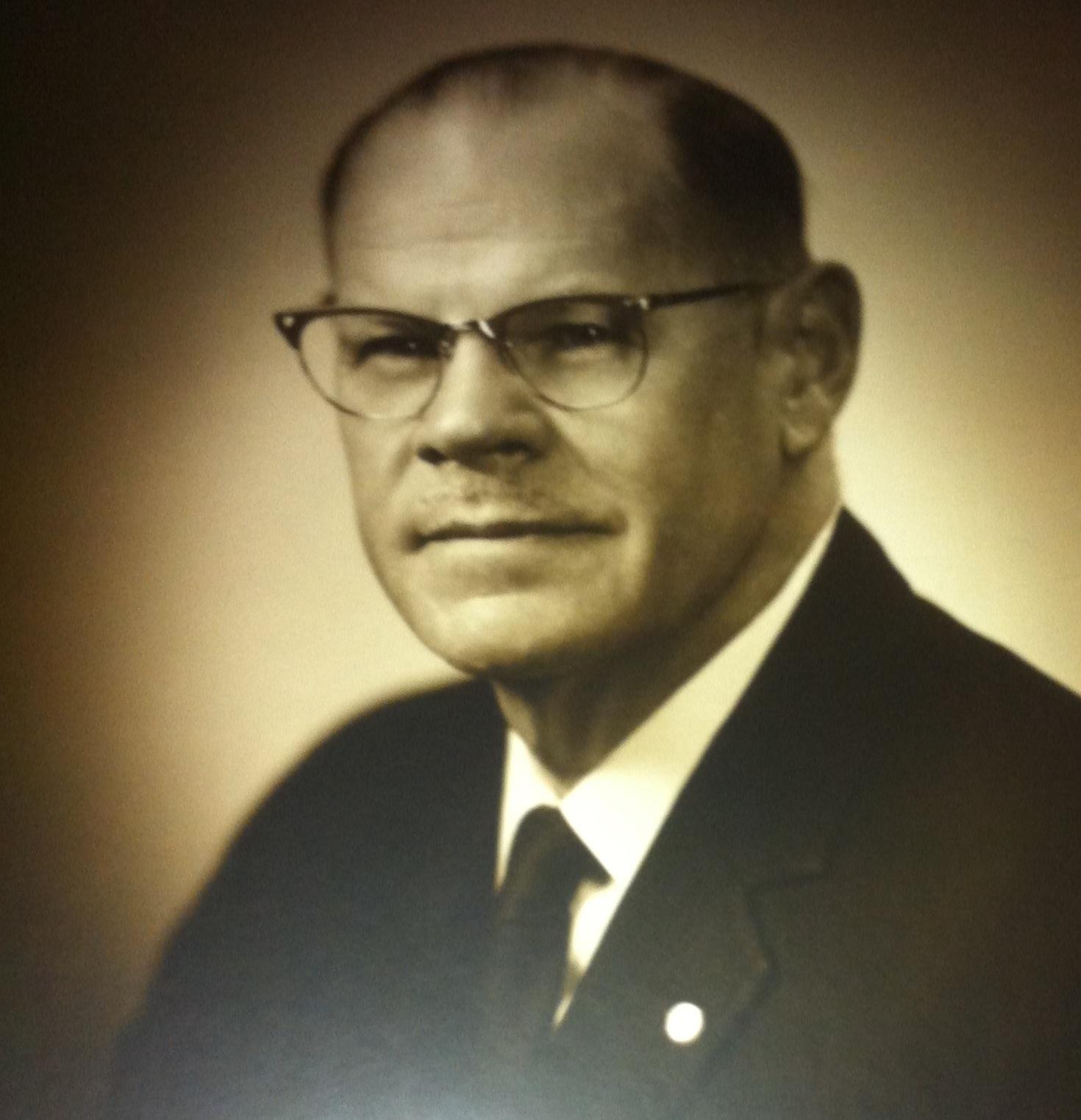
Little Rock Look Back: Werner Knoop – LR’s 54th Mayor

Mayor KnoopTo Little Rock citizens under a certain age, the name Knoop means Knoop Park — a picturesque park tucked away in a pocket of Hillcrest.  There are, however, still many who remember Werner C. Knoop as a business and political leader who helped shape Little Rock as a modern city.

Knoop was born on March 30, 1902.

In 1946, Knoop joined with Olen A. Cates and P. W. Baldwin to form Baldwin Construction Company in Little Rock.  Knoop had previously founded Capital Steel Company and established his business reputation there.  From 1945 through 1951, he served on the Little Rock School Board.

Following a series of political scandals, efforts were undertaken for Little Rock to shift from Mayor-Council to City Manager form of government.  Even before the desegregation of Little Rock Central put the city in the eyes of the world, an election for new leaders had been set for November 1957.  Knoop was on a “Good Government” slate and was one of the members elected.

At the first meeting of the new City Board, Werner C. Knoop was chosen by his fellow directors to serve as Little Rock Mayor.  Knoop served as Mayor until December 1962.  For the first several months in office, Little Rock had no City Manager so Knoop oversaw the transition of City staff as the forms of government changed.

Though City Hall generally stayed out of school district matters, that did not mean that the public viewed the two entities separately.  In September 1959, the Baldwin Construction offices were bombed as part of a series of terrorist activities protesting the desegregated reopening of all Little Rock high schools.

After two terms on the City Board, Knoop decided against seeking a third term.  He concluded his elected public service on December 31, 1962.  Following his time on the City Board, Knoop did not retire from Civic Affairs.  In 1970, he served as Chairman of the Little Rock Chamber of Commerce.   The previous year he served as President of the Arkansas Chapter of Associated General Contractors.

Mayor Knoop died in July 1983.  He is buried at Roselawn Memorial Park next to his wife Faith Yingling Knoop.

In the 1930s, Knoop moved into an Art Moderne house on Ozark Point in Hillcrest.  It was adjacent to Little Rock Waterworks property which was developed around the same time.  Eventually much of the land was deeded to the City for creation of a park.  In 1989, it was named in tribute to long-time neighbor Knoop in honor of his lifetime of service to Little Rock.

LR from Knoop Park

Downtown Little Rock as viewed from Knoop Park

Little Rock Look Back: General MacArthur Returns to Little Rock

MacArthur and Mayor Remmel

General MacArthur and Mayor Remmel

On Sunday, March 23, 1952, General Douglas MacArthur made his only post-infancy visit to Little Rock. He had previously been scheduled to visit Mississippi, and Little Rock Mayor Pratt Remmel had persuaded him to add a visit to Little Rock to the agenda. The fact that Little Rock now had a Republican mayor had apparently piqued the General’s interest.

General MacArthur, accompanied by his wife and son as well as several journalists and members of his military retinue, arrived at Little Rock Airport at 10:40 am. He was met by a delegation of civic leaders including Mayor Remmel. Alderman James Griffey made welcoming remarks on behalf of the city. Then the General and Mayor boarded an open car and led a motorcade from the airport to downtown.

The motorcade’s destination was Christ Episcopal Church at Capitol and Scott streets. It was at this church that MacArthur had been baptized as an infant. The delegation was greeted by the Episcopal Bishop R. Bland Mitchell, Rector J. Hodge Alves, and Rector Emeritus W. P. Witsell. (While he had been Rector, Dr. Witsell had garnered national attention by issuing an Easter blessing to Gen. MacArthur as he had been evacuating the Philippines at the height of World War II.) In order to gain admittance to the church that morning, church members and guests had to have tickets.

Following the worship service, the General and his party went to three events in the park named in his honor. The first was a tour of the Museum of Natural History (now the Museum of Discovery and located in the River Market; the current tenant of the building is the MacArthur Museum of Arkansas Military History), which was located in the building in which the General had been born. After the tour, he spoke at a dedication of a small rose garden adjacent to the museum. It was sponsored by the Little Rock City Beautiful Commission and the Garden Clubs of Greater Little Rock.

General MacArthur addressing several thousand in MacArthur Park.

General MacArthur addressing several thousand in MacArthur Park.

Though every stop of the General’s visit had featured crowds, the largest was at the third location in MacArthur Park. A crowd of several thousand greeted the General as he spoke from the Foster Bandshell in the park’s southwest corner. Chamber of Commerce president Richard C. Butler (brother-in-law of Mayor Remmel) was the master of ceremonies. Following an invocation by Methodist Bishop Paul Martin, the only other speaker was the General. In his remarks he spoke of his Southern heritage and of his appreciation for the support of the citizens of Little Rock over the years.

Several gifts were bestowed upon the MacArthurs at the ceremony. The City of Little Rock presented Mrs. MacArthur with an engraved silver serving tray.

Following the events in MacArthur Park, the family retired for a brief respite to the Hotel Marion. They then attended a luncheon buffet in their honor at the home of Howard and Elsie Stebbins on Edgehill Road. The General and Mrs. MacArthur circulated through the house greeting guests and then eschewed a special table in favor of balancing their plates on their laps and sitting in wingback chairs. Meanwhile Arthur MacArthur stayed upstairs and discussed stamp collecting and other hobbies with the Stebbins’ two teenage sons.

Following the luncheon, the MacArthur party went back to the airport and by 4:00pm, the plane was in the air.

Though this visit was coming at the end of a whirlwind of activities, by all accounts, the General and Mrs. MacArthur were very gracious and accommodating. The General was being mentioned as a potential GOP candidate for President, but purposefully steered clear of any political comments in his remarks. He and Mrs. MacArthur dutifully posed for photos not only for the media but also for amateur photographers. At lunch, the General even asked a Gazette photographer to take a photo of him with his Little Rock Police motorcycle escorts so that they could have a souvenir of the visit.

Little Rock Look Back: Byron Morse, LR’s 55th Mayor

20130222-185157.jpgOn February 23, 1917, future Little Rock Mayor Byron R. Morse was born. A founder of the real estate firm of Rector-Phillips- Morse, he was long active in civic affairs of Little Rock.

Mayor Morse was first elected to the City Board of Directors in November 1960. In 1963, he was chosen as Little Rock Mayor. After serving two years as Mayor, he chose to not seek re-election to the City Board. In 1980, he was appointed to the City Board to fill out an unexpired term. He was later asked to fill another unexpired term but declined.

In 1983, he was elected national president of the Society of Industrial and Office Realtors. Mayor Morse also served as president of the Little Rock Chamber of Commerce, the Little Rock United Way, the Little Rock Red Cross, and was a member of the Board of Directors of the Little Rock Boy’s Club. He was a member of the Fifty for the Future. On July 25, 2001, Mayor Morse died.