Little Rock Look Back: Mayor Frederick Kramer

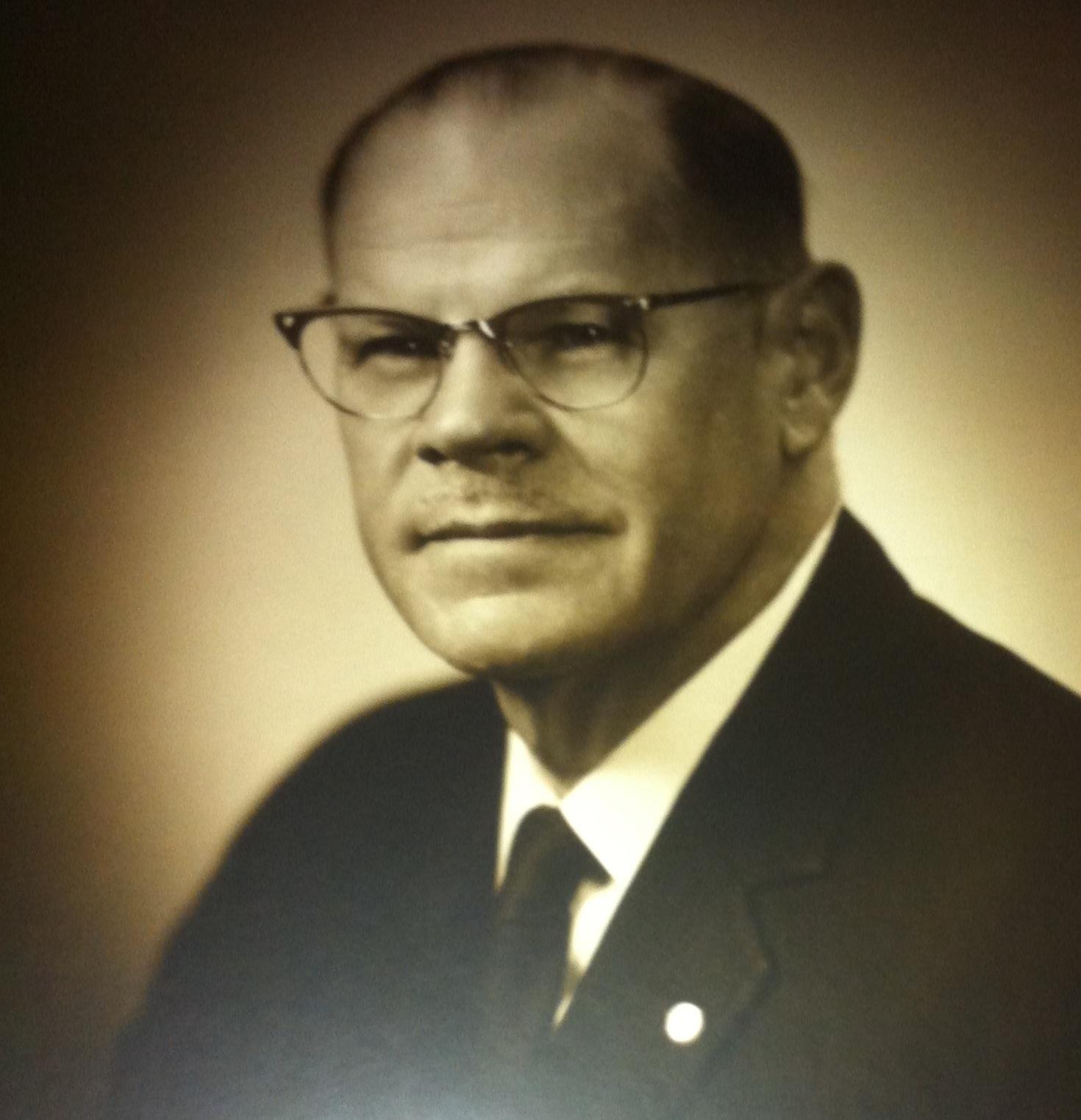
Mayor KramerOn December 29, 1829, future Little Rock Mayor Frederick G. Kramer was born in Halle, Prussia.  In 1848, he immigrated to the United States.  Kramer enlisted in the United States Army and served in the Seventh Infantry until his discharge at Fort Gibson, Indian Territory, in July 1857. After his discharge, Kramer settled in Little Rock, and became a citizen in 1859. He married Adaline Margaret Reichardt, an emigrant from Germany, in 1857. They had six children Louisa, Mattie, Emma, Charles, Fred, and Henry.

From 1869 to 1894, Kramer served on the Little Rock School Board.  He was the first School Board president.  Among his other civic activities were serving as president of the Masonic Mutual Relief Association, a founder of the Mount Holly Cemetery Commission, and a founder of Temple B’nai Israel.  In 1875 he and F. A. Sarasin opened a mercantile business. Kramer later became the president of the Bank of Commerce.

Frederick Kramer was elected Mayor of Little Rock in November 1873.  He served until April 1875, when a new Arkansas Constitution took effect.

From November 1869 through March 1875, the City Council President presided over City Council meetings and signed ordinances, performing many of the duties formerly ascribed to the Mayor.  As such, during his Mayoral tenure from 1873 to 1875, Kramer was the Chief Executive of the City but did not preside over Council Meeting.  When he had served on the City Council, however, Kramer had been elected President of the Council and had presided over Council meetings from October 1871 to May 1872

Kramer was returned to the Mayoralty in April 1881 and served three more terms leaving office in April 1887.  His tenure as an Alderman and as Mayor overlapped with his service on the school board.

A new Little Rock elementary school which opened in 1895 on Sherman Street was named the Fred Kramer Elementary School in his honor.  Though the building’s bell tower was removed in the 1950s, the structure still stands today.  It now houses loft apartments.

Frederick G. Kramer died on September 8, 1896, in Colorado Springs, Colorado.  A few months earlier, he had traveled there with his wife and daughter Emma to recuperate from an illness. He is buried in Oakland Cemetery.

Tales of the Crypt tonight at Mount Holly Cemetery

talescryptThe ghosts of Little Rock past will arise tonight at Mt. Holly Cemetery for the 21st Annual Tales of the Crypt.

Held the second Tuesday of October, Tales of the Crypt is an annual Mount Holly event.  Founded by Fred Boosey and Judy Goss, it is now under the direction of Tamara Zinck.  Drama students from Parkview Arts & Science Magnet High School are each given a person buried in the cemetery to research. They then prepare short monologues or dialogues, complete with period costumes, to be performed in front of the researched person’s grave.

Award-winning local costumer Debi Manire will once again provide the wonderful historical characters’ costumes.  Audiences are led through the cemetery from grave to grave by guides with candles. Although it takes place around the same time as the American holiday Halloween, the event is meant to be historic rather than spooky.  Many local teachers award extra credit to students who attend.

Student tour guides will escort groups of approximately 15 from grave site to grave site to learn more about those who shaped central Arkansas in to what it is today.

The Mount Holly residents will greet you are:

  • Dr. Isaac Folsom (Peyton Hooks)
  • Mrs. Sallie Folsom (Rahlea Zinck)
  • David O. Dodd (Cameron Minor)
  • Mary Dodge (Delaney Robertson)
  • Dovenia (Dovie) Kirby (Emily Gardner)
  • Samuel B. Kirby (Brock Tittle)
  • Captain Benjamin Shattuck (Micah Patterson)
  • Anne Warren (Isha Horton)
  • Quatie Ross (Michelle Mora Dominguez)
  • Katherine Eller Henderson (Mikala Hicks)
  • Juliet Neill Peay  (Emorie Mansur)
  • Mary E. Gaines Belding (Abigail Mansur)
  • Albert Stocking (Tre’Vaughn Whitley)
  • Mollie Stocking (Taylar Hasberry)
  • George Borland (Harrison Wyrick)
  • Eleanor Counts (Stephanie Schoonmaker)
  • Edward Payson Washburn (Will Frueauff)
  • Lillian Scott (Sidney Kelly)
  • James Robbins (George Patterson)
  • Maria Rebecca Craigen (Angelique Camper)

(The names of the Parkview students portraying the residents are in parentheses.)

The Twenty-first Annual “Tales of the Crypt” is sponsored by Mount Holly Cemetery Association and Parkview Arts-Science Magnet High School.

The event will be held  at Mount Holly Cemetery, 1200 South Broadway, Little Rock, from 5:30 pm until 8:30 pm.  Admission is free to the public, however donations to Mount Holly Cemetery are appreciated and aid in the maintenance of the cemetery.

First UALR Artspree of the season features Saint Louis Brass Quintet

SLBQNewSmall-825x510The University of Arkansas at Little Rock’s first Artspree event of the 2015-16 season will feature one of America’s longest standing brass quintets, Saint Louis Brass Quintet, at 7:30 p.m. Tuesday, Oct. 6, in Stella Boyle Smith Concert Hall.

Originally formed by members of the St. Louis Symphony, the Saint Louis Brass Quintet has performed more than 2,500 engagements throughout the world during its 40 years.  Current members of the Quintet are Allan Dean, trumpet; Ray Sasaki, trumpet;  Jeff Nelsen, horn; Melvyn Jernigan, trombone; and Daniel Perantoni, tuba. Jernigan is the only original member still with the group.

General admission for the concert is $15 and $10 for non-UALR students. Admission for UALR students, faculty, and staff is free. For tickets call 501.569.8993 or order online at ualr.tix.com.

Artspree is a performing arts series funded in part by the UALR Chancellor’s Circle Foundation and supported by KLRE Classical 90.5.

Artspree aims to bring unique musical and cultural performances to central Arkansas. In addition to the opening concert by the Saint Louis Brass Quintet, the series will feature an award-winning mime who has appeared on Broadway and two trios — one jazz and another that specializes in a wide array of musical periods.

Thanks to a partnership with the Little Rock School District, Artspree also is steeped in its commitment to educational outreach to young students.

For more information, contact Dr. Naoki Hakutani, Artspree director at 501.683.7230 or nxhakutani@ualr.edu.

Little Rock Look Back: JFK in the ARK

JFK LROn October 3, 1963, President John F. Kennedy delivered remarks at the Arkansas State Fairgrounds.  Only a few weeks later, he would be felled by an assassins bullet in Texas.  In the speech, the President praised Arkansas’ congressional delegation including Senators John McClellan and J. William Fulbright and Congressmen Took Gathings, Bill Trimble, Wilbur Mills and Oren Harris.  Each of these men held senior leadership positions in key committees.

The main focus of the speech was to discuss President Kennedy’s vision for a new economy in the South.  He tied that to improvements in the state’s universities and colleges as well as public works projects.

The President was actually in the state to speak at the dedication of the Greers Ferry Dam. He agreed to make that appearance as a part of a negotiation with Congressman Mills as they were deadlocked over changes to the tax code.  He had previously visited Little Rock in 1957 when he came to the state to address the Arkansas Bar Association meeting in Hot Springs.

He arrived at the Little Rock Air Force Base, then only a few years old, and proceeded to Heber Springs via helicopter. Students and civic leaders from nearby Batesville were present to help welcome the President and his entourage.  Following the ceremony at Greers Ferry, he and his party ventured to Little Rock.

It was an exceptionally hot October day (temperatures were in the lower 90s), but all else seemed perfect according to media reports.  The Little Rock School District dismissed classes on that day (which was a Thursday) so students could attend the President’s remarks at the Fairgrounds.

Little Rock Look Back: City Director Willie L. Hinton

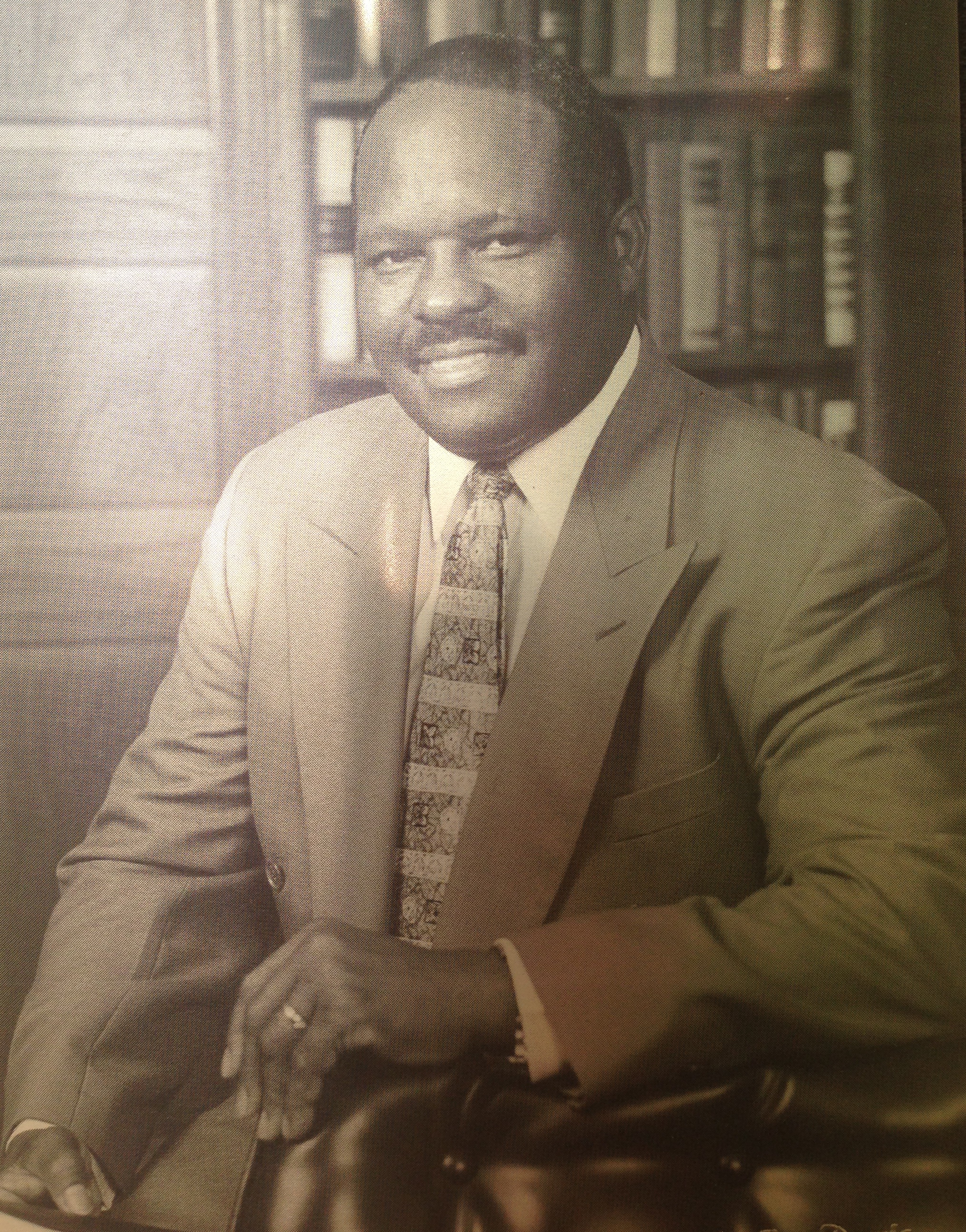
HintonOn August 2, 1947, future Little Rock Vice Mayor Willie Lee Hinton was born in Wynne and educated in Cross County.  He then attended what is now the University of Arkansas at Pine Bluff.

For twenty-eight years, Hinton was a vocational education teacher at the Arkansas School for the Deaf.  He was also very active in neighborhood activities as well as in grassroots community-building efforts.

In 1993, Hinton made his first race for the City Board of Directors.  After narrowly losing the Ward 2 race in a special election, he returned to run again the following year.  Hinton won the race in November 1994 and was re-elected in 1998 and 2002.  In 2003, he was selected to serve as Little Rock Vice Mayor for a two year term.

Long an advocate for neighborhood empowerment, Hinton had championed the transformation of the old Lee Elementary School into a resource center.  Under his leadership the building was purchased from the Little Rock School District in 1997 and opened in 2000 as the Neighborhood Resource Center.  Five years later, the Little Rock City Board of Directors voted to name it in his honor.  The building, which stands at 12th and Pine Streets, is a living testament to his vision of inclusiveness and the worth of every individual.

After battling a brain tumor for nearly two years, Hinton chose not to seek a fourth term on the Little Rock City Board.  His public service to the citizens of Little Rock ended on December 31, 2006.  On February 13, 2007, Hinton died at his home in Little Rock at the age of 59.  He was survived by his wife Blondell, two children and two grandchildren.  He is buried in the Graham Cemetery in Cross County.

Heritage Month – Paul Laurence Dunbar High School

dunbarNow known as Dunbar Middle School, this building originally house students from junior high to junior college.  For years the Paul Laurence Dunbar High School was known throughout Arkansas and the south as an outstanding school for African American students.

From 1929 until 1955, Dunbar High School provided a high-quality education for African American students, not only within Little Rock but also from far-reaching corners of the state.   Today the National Dunbar Alumni Association is a well-organized network of former students with active chapters throughout the United States. 

The school is located in a residential area south of downtown Little Rock. George H. Wittenburg and Lawson L. Delony designed the edifice, built on a southeast-northwest axis. Both architects contributed to the design of Little Rock Central High School (1927; listed on the National Register in 1977), which is nine blocks west of Dunbar.

Dunbar was designed to accommodate an academic curriculum as well as the more traditional vocational programs often considered the limit of education for blacks. In 1980, Dunbar Junior and Senior High School and Junior College was listed on the National Register.

The significance of Dunbar Junior High School derives both from the unique place it occupies in the history of education in Arkansas and from the modern architectural concepts with which it was designed. Dunbar was a center of quality education for black Arkansans in the state’s segregated public school system, functioning as a junior high school, high school, and junior college until its last high-school and junior-college classes graduated in 1955.

It had further distinction as one of only two industrial arts schools in the south to attain junior college rating, also in 1931-1932, as well as the recognition and acceptance of the Dunbar curriculum as the basis for admission to colleges and universities throughout the United States. In 1943 the school was involved in a controversy concerning equal pay for black and white teachers in the Little Rock School System, which was resolved in Morris v. Williams, 149 F. 2d 703, heard before the 8th U.S. Circuit Court of Appeals. This was a landmark case in establishing the principle of “equal pay based on professional qualifications and services rendered.”

The architects’ achievement in designing an architecturally eminent setting for this progressive passage in Arkansas history is also noteworthy. With an eye toward form following function, the plan of the building promotes maximum use of space and expedient circulation. Aesthetically, the building is decidedly modern, with decorative brick and stone work and striking towers reflecting an interest in the Art Deco style of the period.

Little Rock Look Back: LR Mayor Werner Knoop

Mayor KnoopTo Little Rock citizens under a certain age, the name Knoop means Knoop Park — a picturesque park tucked away in a pocket of Hillcrest.  There are, however, still many who remember Werner C. Knoop as a business and political leader who helped shape Little Rock as a modern city.

Knoop was born on March 30, 1902.

In 1946, Knoop joined with Olen A. Cates and P. W. Baldwin to form Baldwin Construction Company in Little Rock.  Knoop had previously founded Capital Steel Company and established his business reputation there.  From 1945 through 1951, he served on the Little Rock School Board.

Following a series of political scandals, efforts were undertaken for Little Rock to shift from Mayor-Council to City Manager form of government.  Even before the desegregation of Little Rock Central put the city in the eyes of the world, an election for new leaders had been set for November 1957.  Knoop was on a “Good Government” slate and was one of the members elected.

At the first meeting of the new City Board, Werner C. Knoop was chosen by his fellow directors to serve as Little Rock Mayor.  Knoop served as Mayor until December 1962.  For the first several months in office, Little Rock had no City Manager so Knoop oversaw the transition of City staff as the forms of government changed.

Though City Hall generally stayed out of school district matters, that did not mean that the public viewed the two entities separately.  In September 1959, the Baldwin Construction offices were bombed as part of a series of terrorist activities protesting the desegregated reopening of all Little Rock high schools.

Downtown LR as viewed from Knoop Park

Downtown LR as viewed from Knoop Park

After two terms on the City Board, Knoop decided against seeking a third term.  He concluded his elected public service on December 31, 1962.  Following his time on the City Board, Knoop did not retire from Civic Affairs.  In 1970, he served as Chairman of the Little Rock Chamber of Commerce.   The previous year he served as President of the Arkansas Chapter of Associated General Contractors.

Mayor Knoop died in July 1983.  He is buried at Roselawn Memorial Park next to his wife Faith Yingling Knoop, a renowned author.

In the 1930s, Knoop moved into an Art Moderne house on Ozark Point in Hillcrest.  It was adjacent to Little Rock Waterworks property which was developed around the same time.  Eventually much of the land was deeded to the City for creation of a park.  In 1989, it was named in tribute to long-time neighbor Knoop in honor of his lifetime of service to Little Rock.