New mural by Matt McLeod dedicated today on Main Street Creative Corridor

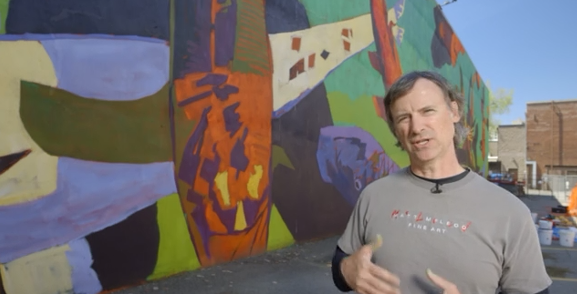
Photo taken from a Cranford Co. video shot by Chris Cranford

Photo taken from a Cranford Co. video shot by Chris Cranford

The City of Little Rock in conjunction with the Downtown Little Rock Partnership will hold a ceremony to celebrate the completion of a new piece of public art within the heart of Little Rock’s Main Street Creative Corridor. This large-scale acrylic mural, titled Beneath the Surface by Little Rock local artist Matt McLeod, is located at the corner of Sixth and Main streets.

The 30-foot-by-142-foot mural was painted along the side of the Bennett’s Military Supplies building. More than 30 students from the Urban Garden Montessori School are expected to be in attendance. The mural is located in the same block as the school.

The event will also mark the start of the Main Street Food Truck Fridays at Main Street and Capitol Avenue.

It will take place at 11:30 a.m. In case of rain, the dedication will take place at McLeod Fine Art (108 West Sixth Street).

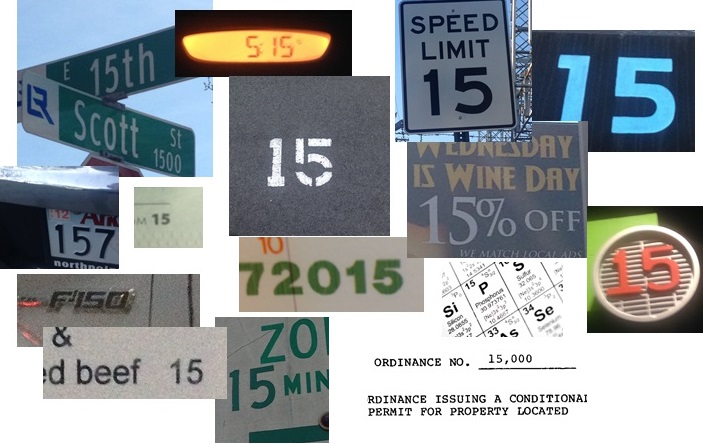
Fifteen “15”s

15 15With the start of 2015, a look at fifteen images of 15.  These are (clockwise from top left corner)

  • 15th Street sign
  • Culture Vulture car clock
  • Downtown alley speed limit sign
  • Street address on Main Street building
  • Theatre 15 at Cinemark Col. Glenn 18
  • Wine day advertisement
  • Phosphorus on the eriodic table
  • Little Rock Ordinance 15,000
  • Zip code on Little Rock map
  • Loading zone sign downtown
  • Price on Bruno’s menu
  • Pickup on LR street
  • License plate in LR parking lot
  • Page 15 from final Sync issue of 2014

Little Rock Look Back: Matthew Cunningham MD, LR’s First Mayor. And Doctor. And Husband of First Woman. And Father of First Baby. And….

M_Cunningham_fFuture Little Rock Mayor Dr. Matthew Cunningham was born on July 5, 1782 in Pennsylvania. After receiving his medical degree from the University of Pennsylvania, he ended up in New York City.

It was there he met and married a young widow, Eliza Wilson Bertrand. After a brief stint in St. Louis, Dr. Cunningham was one of the first settlers of Little Rock in February 1820. He became the first physician in Little Rock.

In September 1820, Mrs. Cunningham and her children joined him. She became the first female in the Little Rock settlement. Dr. and Mrs. Cunningham had a son, Chester, who was the first white baby born in Little Rock. (Though not supported by any public records, there is some unsubstantiated thought that one of the African American slaves they had gave birth to a child before Chester was born.) The Cunninghams had several other children.  One daughter, Matilda, would marry Little Rock businessman Peter Hangar.  (The Hangar Hill neighborhood is named after Peter Hangar.)

In 1831, Dr. Cunningham was elected the first Mayor of Little Rock. He won the race 23 to 15 over Rev. W. W. Stevenson. The first City Council meeting took place at the Cunningham house on the block which is the southwest corner of what is now 3rd and Main Streets. Records are incomplete as to where on the block the Cunningham house was located, but a plaque is on 3rd Street near Main on the side of the Fulk Building which Cranford Johnson Robinson Woods is now renovating for their future office space.

Dr. Cunningham served one year as Mayor. He lived until June 15, 1851 and is buried at Mount Holly Cemetery. His wife, son, and the Hangar family are buried next to him.  His stepson – Charles P. Bertrand – also served as Mayor of Little Rock.

ArtPlace America Awards $345,000 to Little Rock for Main Street

ArtPlace_MAP_OCD_trans-520x337ArtPlace America announced today that the City of Little Rock has been awarded a $345,000 grant to enhance its creative placemaking project on Main Street Creative Corridor – a four block area of Main Street where arts organizations are relocating.  Little Rock is one of only 55 of 1,300 communities selected to receive 2014 funding.

In Little Rock the money will be used in a four block area of the Creative Corridor to enhance streetscapes, signage, artwork and an opening celebration.

“We are delighted to share this exciting news with our community. While we know first-hand that deploying the arts can transform communities, having our work recognized by a generous grant from ArtPlace further supports and validates our efforts to use the arts to revitalize our city,”  said Mayor Mark Stodola.

“Investing in and supporting the arts have a profound impact on the social, physical, and economic futures of communities,” said ArtPlace Executive Director Jamie L. Bennett. “Projects like these demonstrate how imaginative and committed people are when it comes to enhancing their communities with creative interventions and thoughtful practices.”

About ArtPlace America

ArtPlace America (ArtPlace) advances the field of creative placemaking, in which art and culture plays an explicit and central role in shaping communities’ social, physical, and economic futures.  To date, ArtPlace has awarded $56.8 million through 189 grants to projects serving 122 communities across 42 states and the District of Columbia.

ArtPlace is a collaboration among the Barr Foundation, Bloomberg Philanthropies, The Ford Foundation, The James Irvine Foundation, The John S. and James L. Knight Foundation, The Kresge Foundation, The McKnight Foundation, The Andrew W. Mellon Foundation, The William Penn Foundation, The Rockefeller Foundation, Rasmuson Foundation, The Surdna Foundation, and two anonymous donors.

ArtPlace seeks advice and counsel from its close working relationships with the following federal agencies: the National Endowment for the Arts, the US Departments of Housing and Urban Development, Health and Human Services, Agriculture, Education, and Transportation, along with leadership from the White House Office of Management and Budget and the Domestic Policy Council.

ArtPlace has additional partnership from six major financial institutions: Bank of America, Citi, Deutsche Bank, Chase, MetLife and Morgan Stanley.

Little Rock Creative Corridor schematic designs for Main Street are on the City’s website: http://www.littlerock.org/!userfiles/editor/docs/The%20Creative%20Corridor_Final%20Report.pdf.

 

April 5 Architeaser

IMG_4706The above rounded glass blocks are from the Main Street structure now commonly called the Boyle Building.   Built in 1909 as the State National Bank Building, by 1916 it became known as the Boyle Building.  The 12-story, approximately 100,000 square foot building was designed by Little Rock architect George R. Mann.  It was the tallest building in the state from 1909 until the Donaghey building was completed in 1926.


April 4 Architeaser

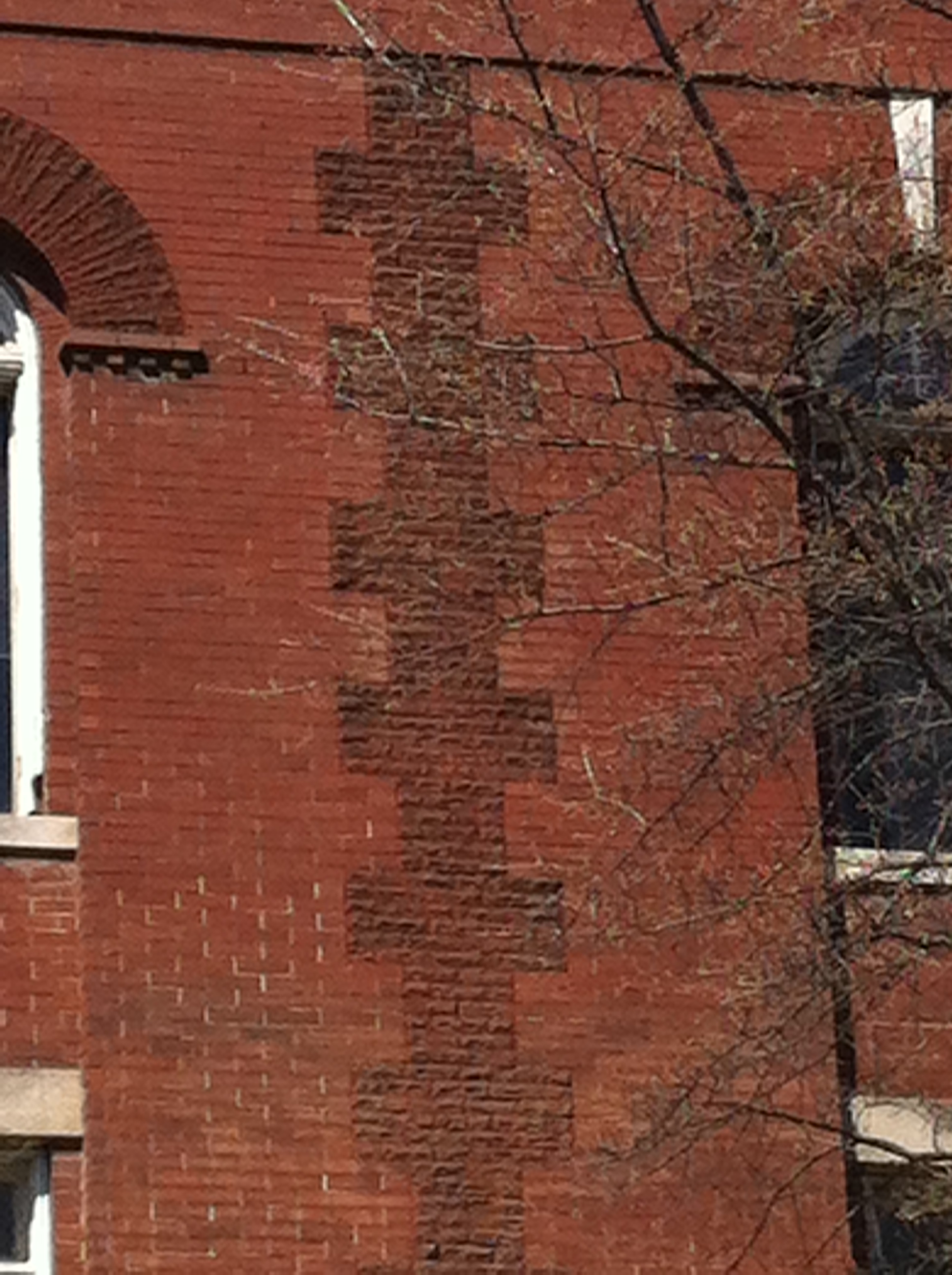
IMG_4699This two-toned and two-surfaced brick work is an early example of using different surfaces to showcase a building in a fairly simple and inexpensive manner.  This is from the Fulk building at 3rd and Main Streets. The building was built after the February 1900 fire which destroyed parts of South Main Street.

The building is on land that once belonged to Dr. Matthew Cunningham. The first Little Rock Council meeting took place at Dr. Cunningham’s house when it was on this property.

This building is one of several being envisioned for new life as part of the Creative Corridor plan along Main Street.

Architeaser: April 1

IMG_4668The Architeaser feature returns.  It starts with a recent Culture Vulture discovery along Main Street.  On the eastern side of the 500 block of Main, there is a building with six of these classical figures looking out. They are on the second floor level, partially obscured from the street level by an architectural awning.

The building was built in 1925 and sits at what was once 505 and 507 South Main.  Technically that is still the address, but in 1986 this building became part of a block long redevelopment.  The facade of this building and another from the 1920s were retained. But the interiors were gutted and combined with the new buildings which were built on the rest of the block.

Today much of the building is occupied by state offices.  The building is in the midst Mayor Mark Stodola’s Creative Corridor initiative.  Though the building itself is not in the plans, the plans for landscaping the block would enhance the building and perhaps draw more attention to these wonderful treasures.