On Memorial Day pay tribute to Veterans who paid the ultimate price at Mount Holly or other cemeteries

MountHolly Memorial DayToday is Memorial Day – a time to pay tribute to the men and women in uniform who died in service to their country.

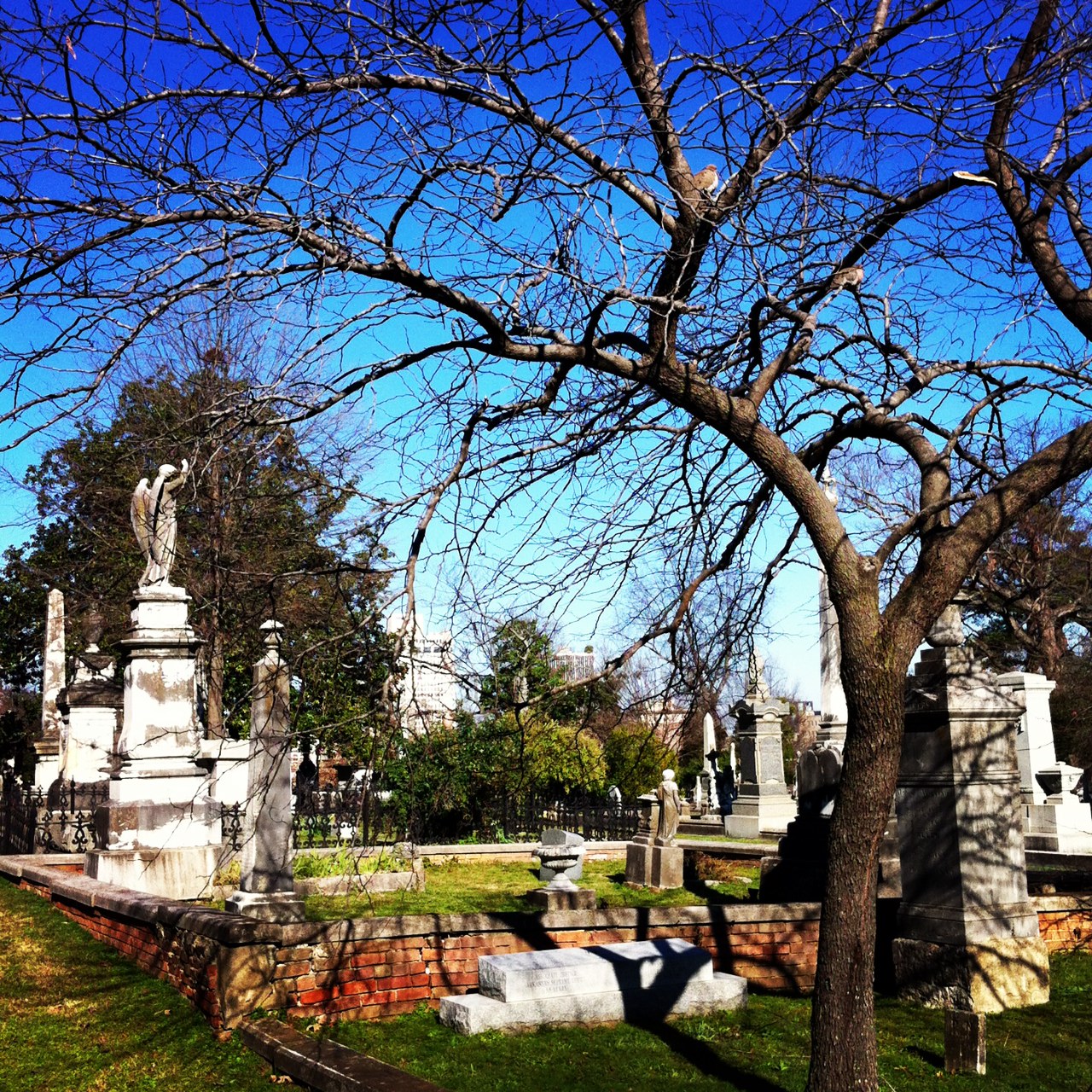
As a way to give this recognition, today would be a good day to visit a cemetery. One of Little Rock’s most storied cemeteries is Mount Holly Cemetery. There are veterans from all wars: Revolutionary, War of 1812, Mexican, Civil War, Spanish-American, World War I and II, Korean, Vietnam and Desert Storm.

Founded in 1843, Mount Holly has been called “The Westminster Abbey of Arkansas.” Thousands of visitors come each year. Those interested in history come to see the resting places of the territorial citizens of the state, including governors, senators, generals, black artisans, and even a Cherokee princess. For others the cemetery is an open air museum of artistic eras: Classical, Victorian, Art Deco, Modern––expressed in gravestone styles from simple to elaborate. Some come to read the epitaphs that range from heartbreaking to humorous to mysterious.

Though a City of Little Rock facility, the cemetery is maintained by the Mount Holly Cemetery Association, a non-profit organization with a volunteer Board of Directors. The cemetery is located at 1200 South Broadway in Little Rock. Gates are open from 8 a.m. until 5 p.m. in the summer and from 8 a.m. until 4 p.m. in the winter.

Interred within the rock walls of Mount Holly are 11 state governors, 15 state Supreme Court justices, four Confederate generals, seven United States senators and 22 Little Rock mayors, two Pulitzer Prize recipients, as well as doctors, attorneys, prominent families and military heroes.  Proving that death is the great equalizer (and the J. N. Heiskell lived a very long time) longtime Gazette owner and publisher J. N. Heiskell is buried near two different nemeses: Senator, Governor and demagogue Jeff Davis; and segregationist Congressman Dr. Dale Alford.
Little Rock Look Back: Mayor Thomas D. Merrick

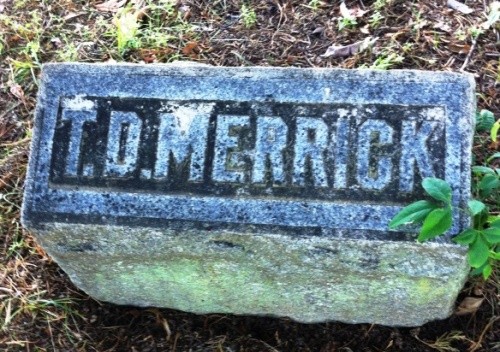
IMG_5546Thomas D. Merrick was born on 23 May, 1814, in Hampden County, Massachusetts. He later moved to Indianapolis IN and Louisville KY before ending up in Little Rock.

On January 17, 1841, he married Anna M. Adams of Kentucky at Christ Episcopal Church in Little Rock. They had seven children: George, Annie, Ellie, Mollie, Lillian, Dwight, and Thomas. Thomas died at age ten.

Merrick became a prominent member of the Little Rock business community, as a merchant and cotton broker. He was involved in Freemasonry, holding the position of Grand Secretary of the Grand Lodge of Arkansas in 1845.

In 1855 Merrick entered into a business partnership with future LR Mayor John Wassell. Merrick was also involved in city politics, serving on the city council and also as mayor from January 1854 to January 1855.

He saw active service during the Civil War. On February 6, 1861, Merrick delivered an ultimatum to Captain James Totten of the United States Arsenal at Little Rock, demanding the surrender of the federal troops.  This was more than two months before Fort Sumter was attached,.

Merrick also raised a regiment of Confederate Arkansas Militia, holding the rank of Colonel of Infantry at Camp Conway, near Springfield, Arkansas.  Following the Battle of Shiloh (April 1862), Merrick resigned his commission and returned to Little Rock.

Merrick died in his home in Little Rock on March 18, 1866.  He is buried in Mount Holly Cemetery.

Mother’s Day Little Rock Look Back: Eliza Bertrand Cunningham, Founding Mother of Little Rock

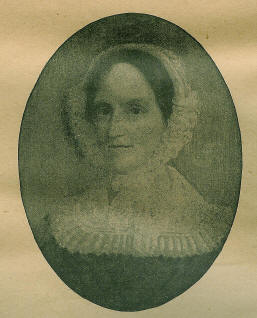
Eliza CunninghamEliza Wilson Bertrand Cunningham was the First Lady of Little Rock.  She literally was the first lady and the founding mother.

She became the first permanent female resident when she joined her husband Matthew Cunningham in Little Rock.  She gave birth to Chester Ashley Cunningham, the first baby born in Little Rock, as well as several other children with Cunningham.  When he became the first Mayor of Little Rock, she was the first First Lady of Little Rock. They hosted the first Little Rock Council meeting at their house on what is now the block downtown bounded by Third, Main, Fourth and Louisiana Streets.  Her son Charles P. Bertrand, from her first husband, later served as Mayor of Little Rock, making her the only woman to be married to a Mayor and be mother of a Mayor.

Born in Scotland in December 1788, she emigrated with her parents to the United States as a young girl.  In 1804 or 1805, she married a French businessman, Pierre Bertrand in New York City.  She lived in New York City, while he traveled to his various business ventures.  He never returned from a trip to his coffee plantation in Santo Domingo and was presumed to have died in 1808 or 1809.  She and Bertrand had three children, Charles Pierre, Arabella and Jane. (Jane may have died in childhood, because records and lore only indicated Charles and Arabella coming to Little Rock with their mother.)

Eliza married Dr. Matthew Cunningham in New York City.  He later moved to Saint Louis and settled in Little Rock in early 1820.  Eliza and her two children came to Little Rock in September 1820.  In 1822, she gave birth to Chester Ashley Cunningham, the first documented baby born in Little Rock.  (There are unsubstantiated reports that at least one slave child may have been born prior to Chester.)  She and Matthew also had Robert, Henrietta, Sarah and Matilda.  The latter married Peter Hanger, after whom the Hanger Hill neighborhood is named.

Dr. Cunningham died in June 1851.  Eliza died in September 1856. They and Chester (who died in December 1856) are buried in the Hanger family plot at Mount Holly Cemetery.

Little Rock Look Back: Major Nicholas Peay

LR sealOn April 28, 1784, in Virginia, future Little Rock Alderman (and acting Mayor) Major Nicholas Peay was born the eleventh of at least thirteen children.  (His gravestone lists a May date for his birth, but other records indicate April 28, 1784.) A veteran of the War of 1812 and the Indian Wars, he later moved to Kentucky (where he met and married his wife, Juliet Neill, in 1814) before settling in Arkansas on September 18, 1825.  At the time, they were the ninth family to set up residence in Little Rock.

After arriving in Little Rock, he bought the Little Rock Tavern. This started a fifty year tradition of his family owning taverns and hotels in Little Rock. In 1828, he was appointed Assistant Postmaster of Little Rock.  From 1825 to 1831, Little Rock residents were allowed to elect five Trustees prior to the formal incorporation. Major Peay was one of those who served on the Board of Trustees.

He later served on the Little Rock City Council, and in 1839 served for seven months as Acting Mayor due to the prolonged absence of Mayor Jesse Brown.  In 1841, his friend Gen. Zachary Taylor, paid a visit to Little Rock and stayed with him on the General’s way to Fort Smith.

Nicholas and Juliet Peay had at least eleven children, though only five appeared to have lived until adulthood. One of those, Gordon Neill Peay, served as Little Rock’s 23rd Mayor from 1859 to 1861. Other descendants of Nicholas Peay who followed him into public service include his grandson Ashley Peay, who was an Alderman in the 1920s (son of John Coleman Peay) and great-great-grandson Joseph B. Hurst (a great-grandson of Mayor Peay), who was a City Director from 1967 to 1970. In addition, Hurst’s daughter-in-law, Stacy Hurst served three terms on the City Board from 2003 to 2014; she is now Director of the Department of Arkansas Heritage.

Major Peay’s egg-nog recipe has been passed down for generations. It is the inspiration for the Historic Arkansas Museum yearly Nog-Off.  This past year, museum director Bill Worthen and his daughter were the sixth and seventh generation of the family to make Peay’s egg-nog. The Worthens are descended from Mayor Peay’s son who was also named Gordon Neill Peay.

Major Nicholas Peay is buried with his wife and many other family members in Mount Holly Cemetery.

Poetry Month: Albert Pike and “Night on the Arkansa”

PikeAlbert_fAlbert Pike was a lawyer who played a major role in the development of the early courts of Arkansas and played an active role in the state’s politics during the middle 19th Century.  He was also a soldier, a national leader of masonry, and poet & writer.

Born in Boston in December 1809, he grew up in the greater Boston area.  Pike was admitted to Harvard, but could not afford it. He began teaching school.  In 1831, he left Massachusetts for Mexico. After spending some time in Santa Fe, he headed east and ended up in Fort Smith.  Based on some political writings, he was invited to Little Rock by Charles Bertrand (a future Little Rock mayor).

In Little Rock he flourished as a writer and attorney. He also became involved in military matters first with the Mexican War and then with Confederate army during the Civil War.  He also married and fathered several children.  At the end of the Civil War, Pike moved to New York City, then for a short time to Canada. After receiving an amnesty from President Andrew Johnson on August 30, 1865, he returned for a time to Arkansas and resumed the practice of law. He then moved to Memphis and later Washington DC.

After he ceased practicing law, Pike’s real interest was the Masonic Lodge. He had become a Mason in 1850.  He held several national posts in the Mason organization.  Pike died at the Scottish Rite Temple in Washington DC on April 2, 1891. He was buried in Oak Hill Cemetery there. His Masonic brothers erected a statute to him in 1901 in Washington DC, making him the only former Confederate general to have a monument there.

The house he built in Little Rock still stands, and is known as the Pike-Fletcher-Terry House.  It was the boyhood home of Pulitzer Prize winning poet John Gould Fletcher.  Though he is buried in Washington DC, there is a memorial to him erected in Mount Holly Cemetery.  It can be seen every day, but especially today during the Mount Holly Rest in Perpetuity fundraiser picnic.

Pike began to write poetry as a young man, which he continued to do for the rest of his life.


NIGHT ON THE ARKANSA (1838)

Night comes upon the Arkansa with swift stride, —
Its dark and turbid waters roll along,
Bearing wrecked trees and drift, — deep, red, and wide.
The heavy forests sleeps on either side,
To the water’s edge low-stooping; and among
The patient stars the moon her lamps has hung,
Lit with the spirit of the buried sun.
No blue waves dance the stream’s dark bosom on,
Glittering like beauty’s sparkling starry tears;
No crest of foam, crowning the river dun,
Its misty ridge of frozen light uprears:
One sole relief in the great void appears —
A dark, blue ridge, set sharp against the sky,
Beyond the forest’s utmost boundary.


Not so wast thou, O, brave old Merrimac!
As I remember the; as thou art seen
By the Soul’s eyes, when, dreaming, I go back
To my old home, and see the small boats tack
On thy blue waters, gliding swift between
The old gray rocks that o’er them fondly lean,
Their foreheads scarred with lightning.  There, around
Grim capes the surly waterswhirl and bound;
And here and there grave patriarchal trees
Persuade the grass to clothe the reluctant ground
And frowning banks with green. Still villages
Sleep in the embraces of the cool sea-breeze: —
Ah, brave old stream! – thou seemest to infold
My heart within thy waters, as of old.


Annual Mount Holly RIP (Rest in Perpetuity) Picnic Tonight

MtHollyMount Holly Cemetery is like an aging, but gracious Southern lady. She is in need of ongoing maintenance! Funds raised at the picnic will help maintain this historic landmark. Visitors will walk in Little Rock’s historical footsteps at the 10th Annual Mount Holly Cemetery Picnic this evening from 5pm to 7pm.

The Mount Holly Cemetery Association calls this event Rest in Perpetuity. The Culture Vulture lovingly refers to it as Dining with the Dead.

Festivities will include:

  • Appetizers
  • Dinner
  • Wine
  • Turn of the century picnic “delicacies”
  • Live music
  • Silent auction of tours, elegant dinner parties and opportunities for exclusive events at Mount Holly Cemetery and many other items.

Guests will have the opportunity to join in a historic tour of the cemetery, featuring famous and infamous residents of Mount Holly Cemetery or guests can enjoy a naturalist tour!

This is the annual fundraiser to raise funds to maintain this historic landmark.
Tickets are $100 for adults, $25 for children under 12.

In case of rain, the event will be moved to Trinity Cathedral.

Dating to 1843, but with grave sites that date much earlier, Mount Holly is a “living and breathing” historical treasure in the heart of Little Rock’s Historic District. Interred within the rock walls of Mount Holly are 11 state governors, 15 state Supreme Court justices, four Confederate generals, seven United States senators and 22 Little Rock mayors, two Pulitzer Prize recipients, as well as doctors, attorneys, prominent families and military heroes. Also included are Eliza Cunningham, the first female resident of Little Rock (who later became the first First Lady of Little Rock) and her son Charles, who was the first baby born in Little Rock. There are veterans from all wars: Revolutionary, War of 1812, Mexican, Civil War, Spanish-American, World War I and II, Korean, Vietnam and Desert Storm.

On Pulitzer Day – Prizing Mount Holly

The Pulitzer Prizes are to be announced today.  Mount Holly Cemetery not only touts that it is the site of a whole host of elected officials, it is also the only place in Arkansas where two Pulitzer Prize recipients are buried. The cemetery is open every day, but a special visit to these two prize winner gravesites can be made next Sunday during the Mount Holly Cemetery Association’s annual “Rest in Perpetuity” fundraiser picnic.

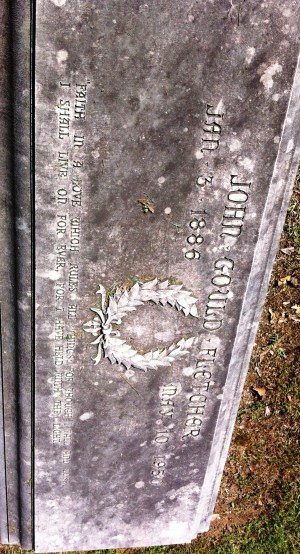
In 1939, John Gould Fletcher became the first Southern poet to win the Pulitzer Prize for Poetry.  He was born into a prominent Little Rock family in 1886.  Fletcher was awarded the prize for his collection Selected Poems which was published by Farrar in 1938.  Two years earlier, he had been commissioned by the Arkansas Gazette to compose an epic poem about the history of Arkansas in conjunction with the state’s centennial.

Fletcher is buried next to his wife, author Charlie May Simon and his parents (his father was former Little Rock Mayor John Gould Fletcher).  Other relatives are buried nearby in the cemetery.

The other Pulitzer Prize winner buried in Mount Holly is J. N. Heiskell, the longtime editor of the Arkansas Gazette.  It was Heiskell, in fact, who asked Fletcher to compose the poem about Arkansas.  Heiskell served as editor of the Gazette from 1902 through 1972.  He died at the age of 100 in 1972.

Under his leadership, the Gazette earned two Pulitzer Prizes for its coverage of the 1957 desegregation of Little Rock Central High.  One was for Harry Ashmore’s editorial writing and the other was for Public Service.

Heiskell remained in charge of the Gazette until his death in 1972.  He is buried alongside his wife with other relatives nearby.  Also not too far from Mr. Heiskell are two of his nemeses, proving that death and cemeteries can be the great equalizer. In the early days of his Gazette stewardship, he often locked horns with Senator (and former Governor) Jeff Davis. Later in Mr. Heiskell’s career, he vehemently disagreed with Dr. Dale Alford, who had been elected to Congress on a segregationist platform.