Little Rock Look Back: Senator William Marmaduke Kavanaugh

CLR KavanaughOn March 3, 1866, William Marmaduke Kavanaugh was born in Alabama. He later moved with his family to Kentucky before coming to Little Rock as a newspaper reporter.

Kavanaugh served as editor and manager of the Arkansas Gazette before entering politics.  From 1896 until 1900, he served as Pulaski County Sheriff, which at the time also included the duties of tax collector.  From 1900 until 1904, he was County Judge of Pulaski County.  In that capacity he helped wrangle several cities, railroads and trolley lines to create a compromise which lead to the completion of the Third Street Viaduct which connected Little Rock with Pulaski Heights. It is still in use today.

After leaving his post as County Judge, he had a varied career in banking and business interests.

When Senator Jeff Davis died in early January 1913, he left the last few weeks of his term incomplete as well as the new term he was set to start in March 1913.  There was much interest in who would fill the remainder of Davis’ current term, because that person might be the frontrunner to also fill out the new term.  (This was at the time that the U.S. Senators were still selected by state legislatures.) Defeated Governor George Donaghey appointed J. N. Heiskell to fill out the term. But once the Arkansas General Assembly convened in mid-January, they overrode Donaghey’s appointment and replaced Heiskell with Kavanaugh.

Kavanaugh served in the Senate from January 29, 1913 until March 3, 1913.  He was succeeded by Joseph T. Robinson who had only recently taken office as Governor.  Speculation was that Kavanaugh would not want the full six year term, so that he was acceptable choice to all of the politicians jockeying for the full appointment.  From 1912 until 1915, he was an Arkansas member of the Democratic National Committee.

Another interest of Kavanaugh’s was baseball.  He served as president of the Southern Association minor league starting in 1903.  The baseball field in Little Rock situated at West End Park was named Kavanaugh Field in his honor.  It stood until the 1930s when it was replaced by what is now known as Quigley Stadium.  (In 1927, Little Rock High School had opened on the land which had been West End Park.)

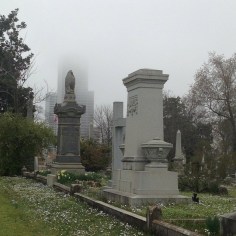
Kavanaugh died on February 2, 1915 at the age of 48.  He is buried in Oakland Cemetery.

Prospect Road was renamed Kavanaugh Boulevard in his memory.

Little Rock Look Back: Frederick G. Kramer

Mayor KramerOn December 29, 1829, future Little Rock Mayor Frederick G. Kramer was born in Halle, Prussia.  In 1848, he immigrated to the United States.  Kramer enlisted in the United States Army and served in the Seventh Infantry until his discharge at Fort Gibson, Indian Territory, in July 1857. After his discharge, Kramer settled in Little Rock, and became a citizen in 1859. He married Adaline Margaret Reichardt, an emigrant from Germany, in 1857. They had six children Louisa, Mattie, Emma, Charles, Fred, and Henry.

From 1869 to 1894, Kramer served on the Little Rock School Board.  He was the first School Board president.  Among his other civic activities were serving as president of the Masonic Mutual Relief Association, a founder of the Mount Holly Cemetery Commission, and a founder of Temple B’nai Israel.  In 1875 he and F. A. Sarasin opened a mercantile business. Kramer later became the president of the Bank of Commerce.

Frederick Kramer was elected Mayor of Little Rock in November 1873.  He served until April 1875, when a new Arkansas Constitution took effect.

From November 1869 through March 1875, the City Council President presided over City Council meetings and signed ordinances, performing many of the duties formerly ascribed to the Mayor.  As such, during his Mayoral tenure from 1873 to 1875, Kramer was the Chief Executive of the City but did not preside over Council Meeting.  When he had served on the City Council, however, Kramer had been elected President of the Council and had presided over Council meetings from October 1871 to May 1872

Kramer was returned to the Mayoralty in April 1881 and served three more terms leaving office in April 1887.  His tenure as an Alderman and as Mayor overlapped with his service on the school board.

A new Little Rock elementary school which opened in 1895 on Sherman Street was named the Fred Kramer Elementary School in his honor.  Though the building’s bell tower was removed in the 1950s, the structure still stands today.  It now houses loft apartments.

Frederick G. Kramer died on September 8, 1896, in Colorado Springs, Colorado.  A few months earlier, he had traveled there with his wife and daughter Emma to recuperate from an illness. He is buried in Oakland Cemetery.

Little Rock Look Back: William Marmaduke Kavanaugh

CLR KavanaughOn March 3, 1866, William Marmaduke Kavanaugh was born in Alabama. He later moved with his family to Kentucky before coming to Little Rock as a newspaper reporter.

Kavanaugh served as editor and manager of the Arkansas Gazette before entering politics.  From 1896 until 1900, he served as Pulaski County Sheriff, which at the time also included the duties of tax collector.  From 1900 until 1904, he was County Judge of Pulaski County.  In that capacity he helped wrangle several cities, railroads and trolley lines to create a compromise which lead to the completion of the Third Street Viaduct which connected Little Rock with Pulaski Heights. It is still in use today.

After leaving his post as County Judge, he had a varied career in banking and business interests.

When Senator Jeff Davis died in early January 1913, he left the last few weeks of his term incomplete as well as the new term he was set to start in March 1913.  There was much interest in who would fill the remainder of Davis’ current term, because that person might be the frontrunner to also fill out the new term.  (This was at the time that the U.S. Senators were still selected by state legislatures.) Defeated Governor George Donaghey appointed J. N. Heiskell to fill out the term. But once the Arkansas General Assembly convened in mid-January, they overrode Donaghey’s appointment and replaced Heiskell with Kavanaugh.

Kavanaugh served in the Senate from January 29, 1913 until March 3, 1913.  He was succeeded by Joseph T. Robinson who had only recently taken office as Governor.  Speculation was that Kavanaugh would not want the full six year term, so that he was acceptable choice to all of the politicians jockeying for the full appointment.  From 1912 until 1915, he was an Arkansas member of the Democratic National Committee.

Another interest of Kavanaugh’s was baseball.  He served as president of the Southern Association minor league starting in 1903.  The baseball field in Little Rock situated at West End Park was named Kavanaugh Field in his honor.  It stood until the 1930s when it was replaced by what is now known as Quigley Stadium.  (In 1927, Little Rock High School had opened on the land which had been West End Park.)

Kavanaugh died on February 2, 1915 at the age of 48.  He is buried in Oakland Cemetery.

Prospect Road was renamed Kavanaugh Boulevard in his memory.

Little Rock Look Back: Leap Day City Council meetings

CLR Leap Day 1932February 29 may come around only once every four years, but it is even rarer for the City of Little Rock to have City Council or City Board meetings on that date.

The most recent official meeting on a Leap Day was on February 29, 1932.  Mayor Horace A. Knowlton presided with all sixteen Aldermen present.  Among the items discussed were regulating of junk dealers, taxes on slot machines, a building condemnation, and setting a license fee for bowling alleys.

There were several issues related to cemeteries discussed throughout the evening.  One forbade any new burials in a section of Oakland Cemetery while another sought to prohibit the creation of any new cemeteries within the City limits.  The Council also passed a motion instructing the Mayor to notify the State Board of Health that the City was “seriously objecting and would strenuously oppose the establishment of a [new] Cemetery within the present boundaries of the City of Little Rock.”  The final cemetery issue was the acceptance of the annual report of the Mount Holly Cemetery Association.

That night the Council also passed a resolution to name the city government hospital as “Little Rock City Hospital.” The purpose of the name was to “clearly designate said hospital to the citizens of Little Rock as the hospital owned and operated by the City of Little Rock.”

The issue which seems to have taken up most of the time was overriding a Mayoral veto of a resolution opposing the firing of a firefighter.  The motion to sustain the veto ended in a tie. After the Mayor promised to rehire the firefighter as soon as a vacancy occurred, on alderman changed his vote and the veto was sustained.

The only other City Council meeting on a February 29 was in 1892.  Mayor H. L. Fletcher presided over the meeting.  The main focuses of that meeting were to discuss boundaries of various sewer districts, pay the monthly bills, approve the relocation of a house from 9th Street to the corner of 12th Street and Commerce Street and to bring certain City criminal penalties in line with a new state law.

Black History Month Spotlight – Little Rock Cemeteries

Mount Holly greyThe new Arkansas Civil Rights History Audio Tour was launched in November 2015. Produced by the City of Little Rock and the University of Arkansas at Little Rock allows the many places and stories of the City’s Civil Rights history to come to life an interactive tour.  This month, during Black History Month, the Culture Vulture looks at some of the stops on this tour which focus on African American history.

Mount Holly Cemetery: Broadway at Twelfth Street, est. 1843

Oakland and Fraternal Historic Cemetery Park: 2101 S. Barber, est. 1863

Haven of Rest Cemetery: 1702 Twelfth Street, est. 1903

National African Americans and important civil rights leaders are interred in several local cemeteries.

Mount Holly Cemetery is the final resting place of enslaved people, who were buried in their owner’s family plots, and the graves of several free blacks in the mid-1800s. One notable black leader buried here is Nathan Warren, founding pastor of Bethel AME Church. A marker is dedicated to Quatie Ross, wife of Cherokee Chief John Ross, who died along the Trail of Tears in 1839.

Oakland and Fraternal Historic Cemetery Park is composed of several cemeteries serving different communities: Oakland, Confederate, National, Jewish, and Fraternal, an historically black cemetery. Civil rights advocates buried in Fraternal include Mifflin Wistar Gibbs, John E. Bush, Charlotte Andrews Stephens, Dr. John Marshall Robinson, Isaac Gillam, Sr. and Jr., Asa l. Richmond, as well as members of the influential Pankey and Ish families.

Haven of Rest Cemetery is the largest cemetery for black people in Little Rock. Among the graves here are those of Daisy Gatson Bates, civil rights activist and mentor to the Little Rock Nine; attorney Scipio Africanus Jones; and Rev. Joseph Booker, president of Arkansas Baptist College.

The app, funded by a generous grant from the Arkansas Humanities Council, was a collaboration among UALR’s Institute on Race and Ethnicity, the City of Little Rock, the Mayor’s Tourism Commission, and KUAR, UALR’s public radio station, with assistance from the Little Rock Convention and Visitors Bureau

Little Rock Look Back: Mayor Frederick Kramer

Mayor KramerOn December 29, 1829, future Little Rock Mayor Frederick G. Kramer was born in Halle, Prussia.  In 1848, he immigrated to the United States.  Kramer enlisted in the United States Army and served in the Seventh Infantry until his discharge at Fort Gibson, Indian Territory, in July 1857. After his discharge, Kramer settled in Little Rock, and became a citizen in 1859. He married Adaline Margaret Reichardt, an emigrant from Germany, in 1857. They had six children Louisa, Mattie, Emma, Charles, Fred, and Henry.

From 1869 to 1894, Kramer served on the Little Rock School Board.  He was the first School Board president.  Among his other civic activities were serving as president of the Masonic Mutual Relief Association, a founder of the Mount Holly Cemetery Commission, and a founder of Temple B’nai Israel.  In 1875 he and F. A. Sarasin opened a mercantile business. Kramer later became the president of the Bank of Commerce.

Frederick Kramer was elected Mayor of Little Rock in November 1873.  He served until April 1875, when a new Arkansas Constitution took effect.

From November 1869 through March 1875, the City Council President presided over City Council meetings and signed ordinances, performing many of the duties formerly ascribed to the Mayor.  As such, during his Mayoral tenure from 1873 to 1875, Kramer was the Chief Executive of the City but did not preside over Council Meeting.  When he had served on the City Council, however, Kramer had been elected President of the Council and had presided over Council meetings from October 1871 to May 1872

Kramer was returned to the Mayoralty in April 1881 and served three more terms leaving office in April 1887.  His tenure as an Alderman and as Mayor overlapped with his service on the school board.

A new Little Rock elementary school which opened in 1895 on Sherman Street was named the Fred Kramer Elementary School in his honor.  Though the building’s bell tower was removed in the 1950s, the structure still stands today.  It now houses loft apartments.

Frederick G. Kramer died on September 8, 1896, in Colorado Springs, Colorado.  A few months earlier, he had traveled there with his wife and daughter Emma to recuperate from an illness. He is buried in Oakland Cemetery.

Little Rock Look Back: H. L. Fletcher, 35th Mayor of Little Rock

Mayor H L Fletcher

On September 15, 1833, future Little Rock Mayor Henry Lewis Fletcher was born in Saline County.  His parents were Henry Lewis and Mary Lindsey Fletcher.  One of his siblings was future Little Rock Mayor John Gould Fletcher.  The Fletcher brothers are the only set of siblings to serve as Mayors of Little Rock.

Though the life of John Gould Fletcher is fairly well documented, not much information is available on his brother Henry Lewis (and some of what is out there is incorrect).  He married Susan Bricelin August 30, 1855, in Pulaski County.  During the Civil War, he served as a sergeant in the cavalry for the Confederate Army in Captain Ed Nowland’s Company.

As a civic leader, Fletcher oversaw Arkansas’ contribution to the Philadelphia Centennial Exposition in 1876. The building received as a prize a cast-iron fountain. A replica of that stands in front of the Old State House Museum.

Fletcher served as Mayor of Little Rock from 1891 to 1893.  When Fletcher became Mayor he appointed a new Police Chief (as most Mayors did) and the entire police force was dismissed.  A new police force was hired by E. H. Sanders, who served as chief for 18 months.  Upon his resignation, Frank MacMahon (who had been dismissed from the force when Fletcher came to office), was appointed Chief by Mayor Fletcher.  He would serve from 1892 until 1905.

Mayor Fletcher died on June 30, 1896 and is buried at Oakland Cemetery next to his wife (who died in 1911).