Monday Musings: Rhea Roberts

rheaSince becoming Executive Director of the Quapaw Quarter Association, Rhea Roberts has led that organization through a planning and rebranding process, expanded programming and outreach efforts, overseen the 50th QQA Spring Tour, and launched a new historic property marker program (new signs are starting to pop up throughout Little Rock).  Tomorrow evening (Tuesday, October 27), the QQA will have its annual meeting and presentation of the Greater Little Rock Preservation Awards. For more information on the awards and other QQA programming, visit their website.

My earliest memory was (age and incident)

I have tons of early memories of playing in the woods and hide and seek at my grandparents’ 1890s farm house.  

When I was in high school and imagined my adulthood, I thought I would be…

Some kind of architect or designer 

Star Wars, Star Trek, Battle of the Network Stars, or Dancing with the Stars?

Star Wars   

 I most identify with the Winnie the Pooh character of…

Rabbit 

The performer I’d drop everything to see is…

Beyonce 

My first paying job was…

After school for the Bandera County Treasurer  

A book I think everyone should read is….

I think everyone should read as much as they can.  I’m a big fan of Letters to My Daughter by Maya Angelou 

My favorite season is…

Summer  

-We are all geeks (or experts) about something. My field is….

Historic Preservation  
Little Rock Look Back: Alderman Angelo Marre

angelomarre

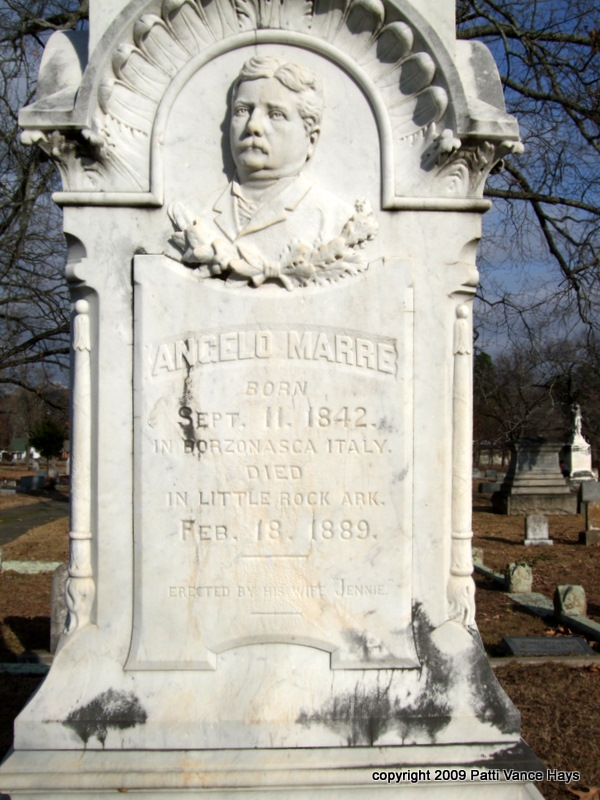
On September 11, 1842, future Little Rock Alderman Angelo Marre was born in Borzonaca, Italy.  He immigrated to Tennessee with his parents in 1854.

During the Civil War, he served in the Confederate Army. From 1865 to 1868, Angelo Marre worked for the Memphis Police Department but was forced to resign after he was accused of killing a man during an argument.  After his acquittal, he returned to the saloon business.  In 1872 Marre was convicted of stealing money and sentenced to three years in prison.

Tennessee Governor John Brown granted Marre a full pardon two years into his sentence, and he regained his citizenship in 1879.

After getting out of prison, he claimed an inheritance and joined his brothers in Little Rock.  He worked as a bartender at the Metropolitan Hotel.  He later opened a saloon and billiard parlor.

By the mid-1880s, Marre owned two saloons, a liquor import business, an office building in downtown LR, 3,000 sharesof stock in mining companies operating in Garland and Montgomery counties, and he was the first president of Edison Electric Company of LR.

In 1883, he was elected as an alderman on the Little Rock City Council.  He lost is bid for reelection in 1885. In 1888, he was an unsuccessful candidate for Pulaski County Sheriff.

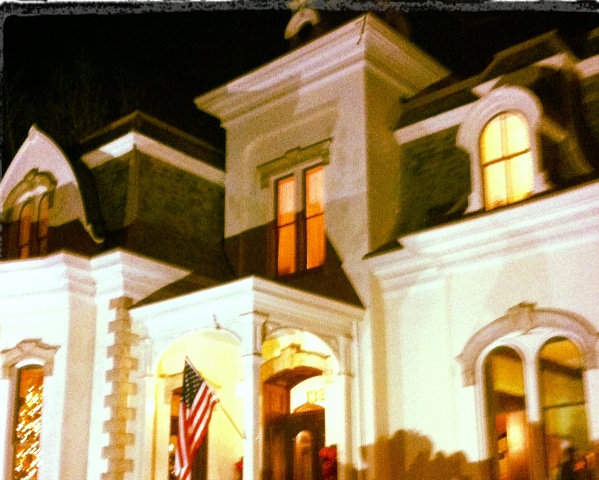
villamarreAngelo Marre died February 18, 1889, as a result of his infection.  He is buried at Calvary Cemetery in LR. His custom designed, marble monument was ordered from Florence, Italy, and cost $5,000.

Marre is probably best known today as the builder of the structure now known as the Villa Marre.  Built in 1881, it is designed in the Italianate and Second Empire styles.  It was built in 1881 and 1882 on Block 21, Lots 5 & 6 of the Original City of Little Rock.  The cost was $5,000.

It was originally a red brick structure and has been modified and expanded several times as well as painted white.  It did not bear the name Villa Marre until the 1960s when historic preservation advocate Jimmy Strawn gave it that name.

After serving as the headquarters for the Quapaw Quarter Association for several years, it was returned to a private residence.  It is now available for special events and rentals.

The Villa Marre is probably best known locally and nationally for serving as the facade for the Sugarbaker design firm on the CBS sitcom “Designing Women.”  Though the interior of the house does not match the interior on TV, the building was featured in the opening credits as well as in exterior shots each week.

Little Rock Look Back: The Quapaw Line

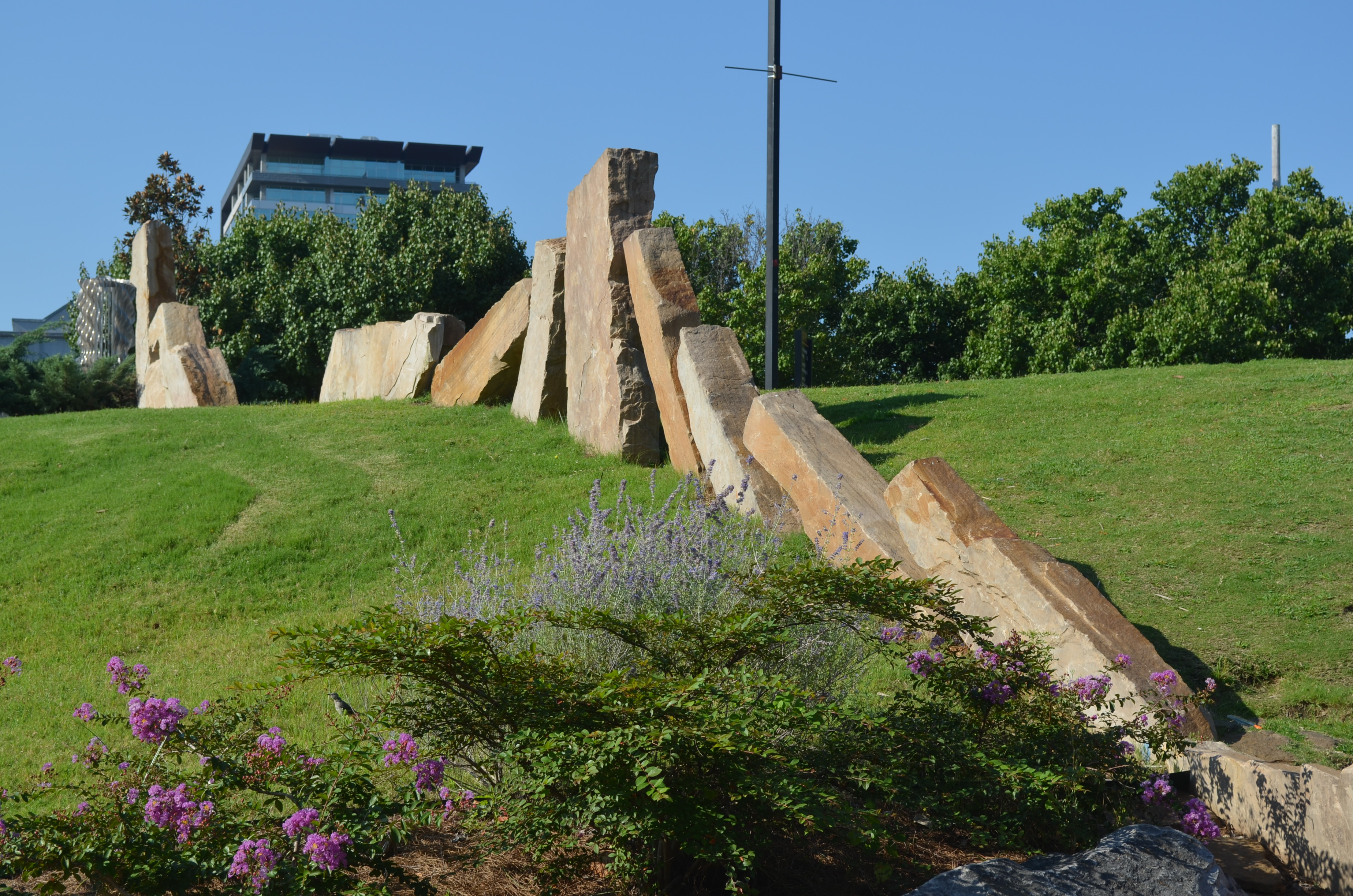
Stones placed in Riverfront Park denote where there Quapaw Line started from La Petite Roche

Stones placed in Riverfront Park denote where there Quapaw Line started from La Petite Roche

On August 24, 1818, the Quapaw Line was drawn.  Starting at La Petite Roche and heading due south, this line formed the boundary between the Quapaw tribe lands and public lands available for settlement.  Though by 1824, the Quapaw were forced to give up all of their lands, the line continued serve as an important marker.  In the ensuing six years, the first permanent settlement of Little Rock took place and streets were planned.

It is interesting to note that the 1818 treaty referred to La Petite Roche as the Little Rock.  Some have speculated that this is the first official use of “Little Rock” to designate the outcropping.  When the Post Office was established in March 1820, it was given the name Little Rock.

There is a marker commemorating the beginning of the Quapaw Line located at La Petite Roche in Riverfront Park.  The first segment of the line is also noted in the park.  There are also sunken markers place along the line at various points.  In MacArthur Park, at the corner of 9th and Commerce Streets, there is a marker noting that the line passed through at that location.

A good account of walking the Quapaw Line through downtown Little Rock can be found on this website.

Most of what is now called the Quapaw Quarter was located to the west of the Quapaw Line.  However, it did take its name from the fact that the tribe had once lived in that area and was later sequestered to lands near it.  The name for the area was chosen by a committee composed of David D. Terry, Peg Newton Smith, Mrs. Walter Riddick Sr., Dr. John L. Ferguson, and James Hatcher. They had been appointed to a Significant Structures Technical Advisory Committee to advocate for preservation of important structures as a component of the City of Little Rock’s urban renewal efforts.

Cleanup day at William E. Woodruff House announced for Saturday, Aug 8

The historic Woodruff house.

The historic Woodruff house.

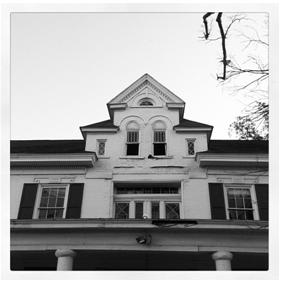
The QQA acquired the William E. Woodruff Housein December 2014 with the help of the City of Little Rock and the Arkansas Historic Preservation Program.   The QQA has donated interior and façade easements to protect the house in perpetuity, and we continue to work with the City and AHPP to stabilize the house and make repairs before selling it for development.

On Saturday, August 8 from 8am to 12 noon, join other volunteers at the Woodruff House (1017 East 8th Street) for a cleanup day.

The main task is basic landscape cleanup surrounding the house.  Before the house can be treated for termite damage and repaired, weeds and shrubs surrounding the foundation must be removed.  There is also trash on the property that needs to be picked up.

Volunteers must sign a waiver before working, they will be available on site.  Volunteers should wear old clothes, sturdy closed-toe shoes, and bring work gloves. If you would like to be involved but can’t join us on the 8th, you can help by donating cold drinks, snacks, or lunch to our volunteers. Contact the QQA office at qqa@quapaw.com or 501-371-0075 to make arrangements. If you have supplies you would be willing to let us borrow, drop them by QQA office, clearly labeled with your name and phone number, or just bring them with you when you volunteer.

If you’re interested in sponsoring this or future work days at the Woodruff House, please contact the QQA office at qqa@quapaw.com or 501-371-0075. 

The Quapaw Quarter Association’s mission is to promote the preservation of Little Rock’s architectural heritage through advocacy, marketing and education. Incorporated in 1968, the QQA grew out of an effort to identify and protect significant historic structures in Little Rock during the urban renewal projects of the early 1960s. Throughout its existence, the QQA has been a driving force behind historic preservation in Greater Little Rock.

Tonight’s QQA Preservation Conversations: Fine Art Repair and Appraisal Workshop

QQAJennifer Carman and Laura Bryan will be collaborating to discuss art repair and appraisal to coincide with the Antiques Roadshow making its way to Little Rock on July 25.
Jennifer Carman, of J. Carman, Inc., is an art appraiser and advisor and works on everything from pottery to paper. Jennifer helps with a variety of appraisal projects.
Laura Bryan, of Bryan and Devan conservation, works to conserve and rehabilitate artifacts that have seen years of wear or abuse.
Together these women will discuss conservation methodology and appraisal. The event will be hosted at historic Curran Hall. Beer and wine will be provided.
It will start at 5:30 pm.

Flag Day with QQA at Curran Hall tonight

american-flag-wavy.jpgTonight at 5pm, bring the family, meet Uncle Sam and visit Historic Curran Hall for a southern picnic to celebrate Flag Day. The Little Rock Visitor Foundation recently acquired the original 1859 square grand piano that belonged to the Woodruff family and sat in Curran Hall from the 1860s to the 1990s. Come take a look and listen to Arkansas music from the past 150 years.  

This is part of the Quapaw Quarter Association’s Summer Suppers program.

MENU: BBQ, traditional summer side dishes, beer, and ice cream

HOSTS: (Little Rock Visitor Foundation and Board of Directors): Aaron Ruby, Lauren Bridges, Joanne Hinson, Shannon Treece, Larry Carpenter, Brendan Monaghen, Jim Montgomery, Jim Rule, Barry Travis, Carolynn Coleman, Cherry Light, Jason Campbell

Heritage Month – Villa Marre

villamarreThe Villa Marre is located at 1321 Scott Street. The Second Empire-style Villa Marre was built in 1881 by Italian immigrant and Little Rock saloonkeeper Angelo Marre, who also served on the Little Rock City Council.

The distinctive home features a mansard roof covered in patterned slate, a central tower topped by wrought-iron cresting, and hood molding above the doors and windows. Marre died in 1889, and his widow, Jennie, remained in the house until about 1900. Arkansas Governor Jeff Davis rented the house for a few years, and in 1905, the home was purchased by E. B. Kinsworthy, former state senator and attorney general of Arkansas.

It is probably most famous today for being the outdoor exterior of Sugarbakers design firm in the CBS sitcom “Designing Women.”  For several years, it was the home of the Quapaw Quarter Association. It later returned to a private residence.  Currently it is a venue for weddings and other events.

It was added to the National Register of Historic Places on June 15, 1970.