Little Rock Look Back: Election Set for Auditorium Approval

muni aud elect ad editedOn November 30, 1936, Little Rock Mayor R. E. Overman asked the City Council to call a special election for January 1937 for approval of the issuance of bonds for a municipal auditorium.  Prior to asking the aldermen to call the election, the mayor had been in Washington DC to visit with Public Works Administration (PWA) officials. The mayor was assured that the auditorium project would be approved for federal funds.

While the mayor was meeting with federal officials, architects Eugene Stern, George Wittenberg and Lawson Delony were meeting with local PWA officials in Little Rock.  They were reviewing the plans for the funding request.  Though there were still a few refinements to be completed in the documents, the local officials seemed satisfied.  With these assurances in hand, Mayor Overman moved forward with putting the request before the City Council.

Though there were many things discussed at length during the November 30 City Council meeting, there was virtually no conversation regarding the structure before the 15-0 vote by the City Council to refer the auditorium bonds to the voters.  There were three different bond programs to be put before the voters in January 1937: a municipal auditorium, expansion of the public library and creation of a park for African Americans.

The bonds for the auditorium would be $468,000 in general obligation bonds which would be paid off between 1940 and 1971.  This was toward a total cost of $760,000 for the entire project.  At the time of the initial auditorium application in 1935, the mayor had noted that if the PWA failed to approve funding for the entire project, it could be submitted to the voters for the issuance of municipal bonds.  This was ultimately the course of action that would come to pass.  The PWA grant would only cover a portion of the project.  The government did agree it would purchase the financing bonds if no other entity did.

The election would be held on January 26, 1937.

Little Rock Look Back: Site selected for Robinson Auditorium

Potential rendering of new auditorium which appeared in October 30, 1937 ARKANSAS GAZETTE

Potential rendering of new auditorium which appeared in October 30, 1937 ARKANSAS GAZETTE

On October 29, 1937, the Little Rock City Council finally selected the site for the Municipal Auditorium.  It had been approved by voters in January of that year, but no site had been identified during the campaign.

During the early autumn, the City had engaged a consultant to evaluate several downtown locations as potential sites for the municipal auditorium.  One stipulation was that it had to be an entire city block.

The six sites were:

Broadway, Markham, Spring and Garland Streets; Center, Markham, Spring and Second Streets; Center, Eighth, Louisiana and Ninth Streets; Scott, Fourth, Cumberland and Capitol Streets; Scott, Tenth, Cumberland and Ninth Streets; and Third, State, Second and Gaines Streets


The top choice was the site bounded by Center, Markham, Spring and Second Streets.  It was felt that location’s proximity to public buildings made it ideal for a civic auditorium.  It was across the street from the former state capitol (then known as the Arkansas War Memorial) which was, at the time, housing state and federal offices.  The site was also adjacent to the county courthouse structures.

Half of the desired property was owned by the federal government.  Because it was being used for federal offices, it was uncertain as to the site’s availability.  Therefore a city committee recommended the site bounded by Center, Eighth, Louisiana and Ninth Streets be utilized as the auditorium location.

The City Council met on October 20 to make a decision. But were at a stalemate. They met again a few days later with still no resolution.

At an October 25 City Council meeting, Arkansas Gazette publisher (and chairman of the Planning Commission) J. N. Heiskell, advocated the site on Markham and Broadway Streets. The Council convened on October 29 to meet again.  The clock was ticking, a site had to be selected because ground had to be broken prior to January 1, 1938.


At the October 29th meeting, the discussion from previous meetings among the aldermen picked up where it had left off.  Again J. N. Heiskell spoke about the importance of employing city planning concepts in selecting the site.

“In the past, selection of a site for a public building has been merely a matter of who could sell the city some property.  I had hoped we were starting a new effort in starting selection of an auditorium site with the advice of Mr. Bartholomew.  Starting with the auditorium, we should be guided by competent advice and locate future buildings following a city plan.  Your vote today will determine the future of Little Rock so far as city building goes.”

After having engaged in discussions with various federal government agencies, Mayor Overman reported that the city could not obtain the recommended site.  It would not be possible for the federal government to relocate those agencies currently occupying half of that block within the time allowed.  The mayor also stated that he had been warned that if construction did not start by January 1, 1938, (which was just a few weeks away) then the money could be taken back and allocated to other projects.

Ultimately the City Council voted 16 to 1 with 1 absent to locate it at the corner of Markham and Broadway.  At last, Little Rock had a location for the new municipal auditorium!

Though it had not been anyone’s first choice (except Mr. Heiskell, who did not have a vote), in retrospect, the auditorium site finally chosen offered many advantages which were not identified during the marathon selection discussions.  The grade of the land sloped toward the Arkansas River from Markham Street down to Garland Street which allowed for a street level entrance to both the planned exhibition hall on a lower level and the music hall on an upper level.  Given the topography of the other sites under consideration, this was only possible at the chosen location.  By stacking the two major components the project did not take up an entire block, which had been the forecasted footprint.  Not using the entire block allowed for subsequent expansion of the complex’s footprint in the coming decades.  This would not have been possible at any of the other sites under consideration if the original structure had taken up the entire block.  In addition, both Markham and Broadway Streets are wider than normal city streets which allowed for better traffic flow and for easier access to a loading dock.

Interestingly, the Convention & Visitors Bureau, which oversees Robinson Center Music Hall, now has offices in the Cromwell Building. This building is located on the site which had been the first choice for the auditorium in 1937.

 

Little Rock Look Back: City Council approves 1935 auditorium plan

An August 25, 1935, rendering in the ARKANSAS GAZETTE of the proposed Little Rock auditorium at Capitol and Scott Streets.

An August 25, 1935, rendering in the ARKANSAS GAZETTE of the proposed Little Rock auditorium at Capitol and Scott Streets.

On August 26, 1935, the City of Little Rock took its first significant step in a decade for the creation of a City auditorium..  Under the leadership of Mayor R. E. Overman, the City Council approved authorization for the City to apply for $1,000,000 from the Federal Emergency Administration of Public Works (PWA) for the construction of an auditorium.  The PWA had issued a September 16, 1935, deadline for applications to be received as it sought to spend $4.8 billion in construction projects.

The auditorium plan was announced on Saturday, August 24, 1935.  Much preparation had already been undertaken before the project was publicly unveiled.  Private presentations hhad taken place, a team of architects had been chosen (Eugene Stern and the firm of Wittenberg & Delony), and a location had been selected.

The auditorium complex was slated for a block bounded by Capitol, Scott, Fourth and Cumberland Streets.  The Women’s City Club building on that block would remain with the new structure being built to wrap around two sides of the existing structure. The site was chosen because it was one block east of the Main Street business corridor and near existing meeting locations such as the Boys Club, Albert Pike Hotel, Albert Pike Masonic Lodge and several churches.

As planned by the architects, this structure’s front façade would have run the length of the Capitol Avenue side of the block.  The building was proposed to be constructed of concrete, stone and steel.  It would have a large hall with a proscenium stage and seating capacity of 4,000 with overflow of an additional 500.  The adjoining exhibition hall could seat 3,500 people.  The plan called for 150 cars to be parked in the building, and an additional 100 cars to be parked on a surface lot on the site.

Following an August 26 closed door meeting to discuss the project from which members of the public and press were excluded, in open session the City Council voted to pursue the funding for the million dollar auditorium.  If approved by the PWA, the funds would be provided in grants and loans, to be paid by over a 35 year period.

The auditorium proposal was filed with the PWA in Washington in September 1935.  Throughout the next several months, Mayor Overman and the city were engaged in a series of conversations and negotiations with the PWA for the expansion of both the water system and the sewer system. This diverted attention from pursuing the auditorium immediately.  This specific auditorium project stalled.  But because the plan had been filed by the September 16 deadline, it allowed the City to make use of PWA funds a few years later which would lead to the construction of Robinson Auditorium.


Little Rock Look Back: Voters Approve Municipal Auditorium

muni aud elect ad editedOn January 26, 1937, Little Rock voters went to the polls to vote on three different municipal bond issues.  One of them was the construction of a municipal auditorium (what would become Joseph Taylor Robinson Memorial Auditorium, now Robinson Center Music Hall).

The bonds for the auditorium would be $468,000 in general obligation bonds which would be paid off between 1940 and 1971. This was toward a total cost of $760,000 for the entire project.

The official campaign for the auditorium was sponsored by the Little Rock Forward Committee which was led by W. H. Williams. In campaign advertisements it showed the value of conventions in New York City which was estimated at $100 per convention attendee. Little Rock organizers were estimating a $10 a day expenditure by visitors, which the committee stressed was very conservative. The campaign committee emphasized the importance of acting at that time due to the federal government money involved.

Various committees and organizations endorsed the auditorium project including the Little Rock Chamber of Commerce, Little Rock Federation of Women’s Clubs, and the Young Business Men’s Association.

The thrust of the campaign focused on the economic benefit to Little Rock as well as the fact that the auditorium would be for all citizens. This message was picked up in editorials by both the Democrat and Gazette. In editorials on January 23 and 25, the Democrat opined that the benefits of the auditorium would be distributed among all classes of the citizenry. The next day, both papers ran editorials which touted the economic boon an auditorium would bring through conventions and meetings.

The Democrat’s approach broke down the current value of conventions to Little Rock with, what it termed, the city’s “existing inadequate” facilities. The paper emphasized a conservative estimate of what the added value to Little Rock’s economy would be with the new auditorium.

In expressing support for the auditorium the Gazette stressed the values for local, statewide and national groups. “An auditorium would provide a more convenient and better adapted community center for all kinds of local gathering,” and continued that it would make Little Rock “the logical meeting place for state conventions of every sort.” In discussing the value of state, regional and national meetings the paper stressed that the outside money spent by convention attendees has an impact beyond stores, hotels and restaurants.

Both papers also echoed the importance of the federal government financing to make this possible. The Democrat noted that the Public Works Administration grant and federal low cost loan made this an ideal time.

On January 26, 1937, Little Rock voters approved the auditorium bond by a vote of 1,518 to 519. It passed in each of the city’s 23 precincts. Little Rock Mayor R. E. Overman expressed his pleasure at the outcome of the vote and extended his thanks to the voters.

After the election, a Gazette editorial commented on the low turnout for the special election by commenting that the weather had been nice and there were no other barriers to voting. The editorial writer opined that those not voting in the election must not have been opposed to the endeavor.

Little Rock Look Back: Ground Broken for Robinson Auditorium

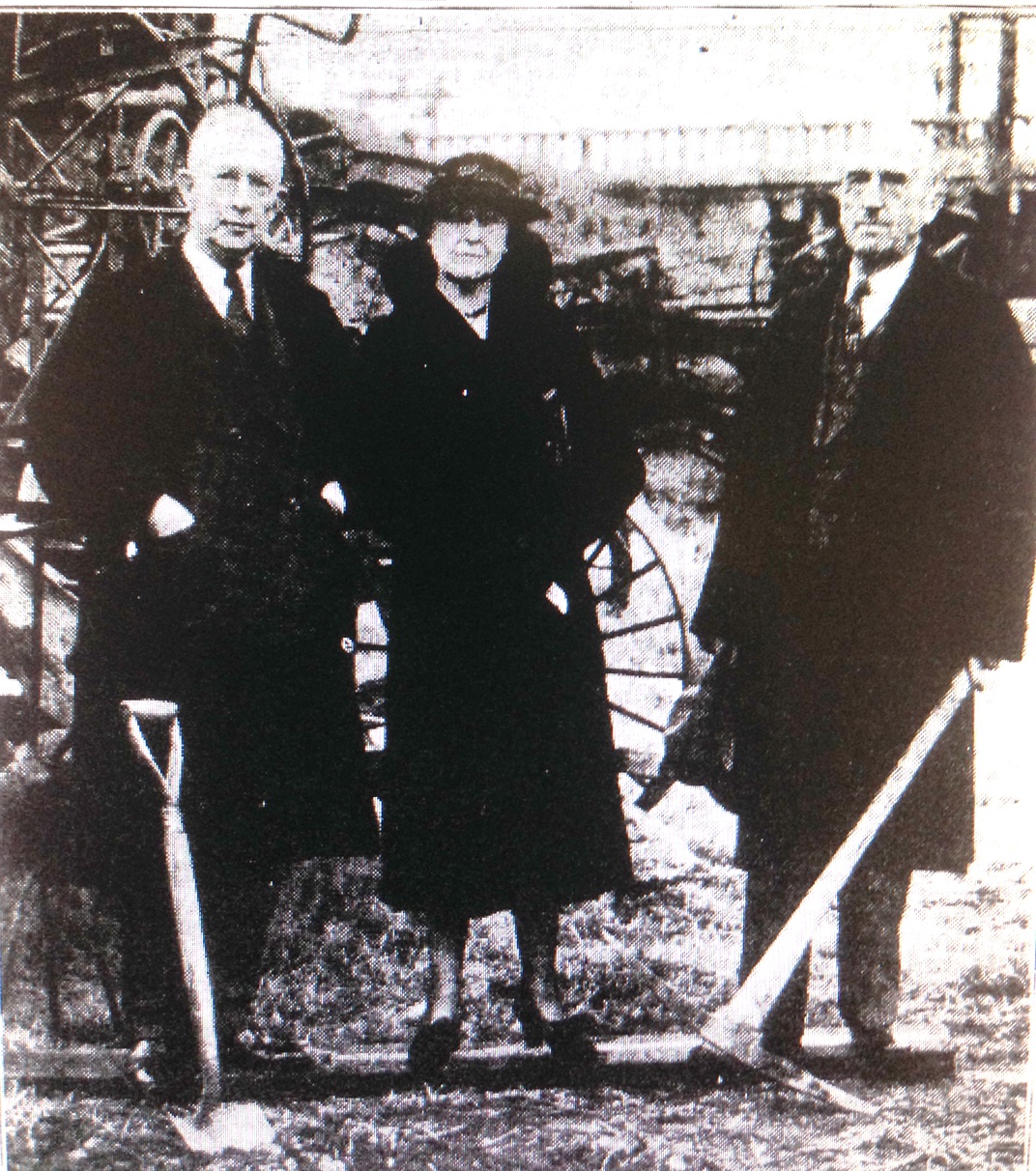
    ARKANSAS DEMOCRAT photo of Mayor Overman, Mrs. Robinson and Mr. Allaire at the groundbreaking. The Broadway Bridge balustrades are visible in the background.

ARKANSAS DEMOCRAT photo of Mayor Overman, Mrs. Robinson and Mr. Allaire at the groundbreaking. The Broadway Bridge balustrades are visible in the background.

On December 24, 1937, at 11:30 a.m., Little Rock Mayor R. E. Overman, Ewilda Gertrude Miller Robinson (the widow of Senator Joseph Taylor Robinson) and  Alexander Allaire of the PWA turned dirt to participate in the brief groundbreaking ceremony for Little Rock’s municipal auditorium.  That morning, the Arkansas Gazette ran a brief story on the upcoming groundbreaking.  The story mentioned that the building would be named in memory of the late beloved Arkansas politician.  This appears to be the first public pronouncement of the Robinson name for this civic structure.

Among others in attendance at the groundbreaking were Mrs. Charles Miller (sister-in-law of Mrs. Robinson), Mr. and Mrs. Grady Miller (brother and sister-in-law of Mrs. Robinson), the mayor’s wife, the three architects (George Wittenberg, Lawson Delony and Eugene John Stern), and D. H. Daugherty and Will Terry of the City’s Board of Public Affairs.

Construction had to start by January 1, 1938, in order to receive PWA funds.  By breaking ground on December 24, there was over a week to spare.  The site had been selected in late October 1937, and the purchase had not been finalized.  But the PWA did give permission for the City to let a contract for excavation, demolition and filling on the site.

The groundbreaking took place at the corner of Garland and Spring Streets which was on the northeast corner of the block set aside for the auditorium.  Today, Spring Street does not extend north of Markham; the street was closed to make way for the parking structure and what is now the Doubletree Hotel.  Garland Street is basically an alley that runs parallel to Markham north of City Hall, Robinson Auditorium and the Doubletree Hotel.

Approximate site of the 1937 groundbreaking. Once again it is a construction site as the Robinson renovation is underway.

Approximate site of the 1937 groundbreaking. Once again it is a construction site as the Robinson renovation is underway.

Little Rock Look Back: Ark Municipal League 1954 President H. C. “Sport” Graham

H C GrahamToday is the first full day of the 80th Arkansas Municipal League convention here in Little Rock.  It is at the Statehouse Convention Center which stands on the site of the Hotel Marion, which was the site of the first meeting.

Five Little Rock leaders have led the AML as President. On Friday, Mayor Mark Stodola will become the sixth Little Rock city official to be president of the Arkansas Municipal League.

Today’s feature spotlights Henry Clay Graham. Known officially as H. C. Graham, his nickname was “Sport.”  H. C. Graham was the first, and to date, only City Clerk to have served as AML President. He was president in 1954, serving as the 22nd President.

Graham was first appointed City Clerk in August 1934 to fill out the term of John Krumm, who had died that month. Graham ran for election in 1936 and was re-elected every two years through 1954. He was not afraid to challenge the Mayor or City Council members in meetings or in the press if he felt that rules were not being followed. He openly criticized Mayor Overman over spending habits in the late 1930s and sided with Mayor Satterfield when members of the City Council were being held in contempt of court for disobeying a judge’s order.

In October 1954, Little Rock Mayor Pratt Remmel, a Republican, was running for Governor. Graham supported Orval Faubus, who was the Democratic nominee.  On a Friday evening, he appeared on KATV promoting Faubus’ campaign.  He went home that night after the program complaining he did not feel well. On Sunday, he was having dinner at his nephew’s house in Little Rock and collapsed and died. It was a few days before the Municipal League annual meeting at which he was supposed to preside.  The decision was made to continue with the meeting as a tribute to him.

Graham’s 20 years and two months as City Clerk is the second longest in the City’s history and the longest of any elected City Clerk.

Graham’s sister, Pauline Graham Beeson, was appointed to fill out the remainder of his term. She did not seek election. In 1958, however, she was appointed the first City Clerk of Little Rock under the City Manager form of government and served in that capacity until December 1968.

Little Rock Look Back: Ark Municipal League President R. E. Overman

Overman

Mayor Overman in a photo from a campaign flyer

The Arkansas Municipal League is having the 2014 convention and celebrating its 80th anniversary this week here in Little Rock.  The first meeting took place in 1934 at the Hotel Marion.

On Friday, Mayor Mark Stodola will become the sixth Little Rock city official to be president of the Arkansas Municipal League.

Each day this week will feature a look at a previous Little Rock leader who led AML.

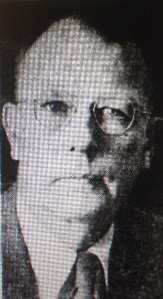
Mayor Richard “R. E.” Overman, was the third president of the Arkansas Municipal League serving in 1937.  While he was AML president, he started his second two year term as Little Rock Mayor.

First elected in April 1935, he was re-elected in April 1937.  Mayor Overman led efforts to create the first public water utility in Little Rock and to upgrade the wastewater system.  He also worked with the various New Deal programs to build up the city’s infrastructure.  In November 1936, he asked the City Council to call a special election for January 1937 to pass the bonds to allow for the construction of a new municipal auditorium. That initiative was passed by the voters.  Mayor Overman spent much of his last two years in office dealing with the water, wastewater and auditorium projects.

Mayor Overman was defeated in a bid for a third term in 1939.  He continued to live in Little Rock until his death in April 1947.