HAPPILY EVER LAUGHTER with Second City at the Arkansas Rep

SecondCityDrawing on the classics from The Second City archives as well as scenes ripped from the morning headlines, The Second City’s Happily Ever Laughter tour is your chance to see comedy stars in the making in an evening of smart, cutting edge comedy.

Many of comedy’s brightest stars have hit the road with The Second City Touring Company including Tina Fey, Stephen Colbert, Amy Poehler, Steve Carell, Bill Murray, Keegan Michael Key and most recently, current Saturday Night Live stars Cecily Strong, Tim Robinson, and Jason Sudeikis.

“From John Belushi to Tina Fey to Stephen Colbert, The Second City alumni define comedy in America,” says Bob Hupp. “You’ll want to be the first to check out the rising new stars on their all-new tour.”

The cast includes Scott Morehead, Adam Peacock, Liz Reuss, Marlena Rodriguez, Sarah Shook, and Ted Tremper.

The performance schedule is:

Thursday, May 1 | 7 p.m. | BREWHAHA sponsored by Sync
Friday, May 2 | 7 p.m. & 9:30 p.m.
Saturday, May 3| 7 p.m. & 9:30 p.m.
Sunday, May 4 | 7 p.m.

Tuesday, May 6 | 7 p.m. | Night Out with The Point sponsored by The Point 94.1
Wednesday, May 7 | 7 p.m. | Singles Mix and Mingle Night
Thursday, May 8 | 7 p.m. | Cidre Night with Stella Artois sponsored by The Arkansas Times
Friday, May 9 | 7 p.m. & 9:30 p.m.
Saturday, May 10 | 7 p.m. & 9:30 p.m.
The Second City is a $25 add-on for series subscribers; FlexPass holders may use their passes for this show.

Les Miserables Continues at Ark Rep

replesmizTwenty-seven years ago today, on March 12, 1987, Les Miserables opened on Broadway.  The production won eight Tony Awards including Best Musical. It eventually ran for 6,680 performances.  After being revived on Broadway in 2006 and spawning an Oscar winning movie in 2012, another Broadway revival is currently in New York.

Arkansas residents do not have to travel to New York (or Netflix) to see Les Miserables.  The Arkansas Repertory Theatre has brought the production back to life on its Little Rock stage.  Following an acclaimed 2008 production, Rep Producing Artistic Director Robert Hupp has again directed the show for Arkansas audiences.  It opened last Friday night and runs through April 6.

Douglas Webster and Christopher Carl return to their roles of protagonist and antagonist as Jean Valjean and Javert, respectively.  Joining them are Christopher Behmke as the romantic revolutionary Marius, Matthew Hugg as pint-sized revolutionary Gavroche, Karenssa LeGear as Valjean’s adoptive daughter Cosette, Mary Little as the waif Eponine, Caleb Reese as revolutionary leader Enjolras, Danielle Erin Rhodes as the doomed Fantine, Sydni Whitfield as Young Cosette, and Michael Sample & Terey Summers and the scheming Thenardiers. Others in the cast are Kelsie Adkisson, Alex Bush, Price Clark, Monica Clark-Robinson, Darren Drone, Hannah Eakin, Marisa Kirby, Bailey Lamb, Greg Robinson, Makayla Shope, Alyssa Sowers, Benjamin Stidam, Billy Clark Taylor and Paul Thiemann.

In addition to Hupp as director, the creative team includes choreography by Robert Kolby Harper and music direction by Mark Binns. The design team features Mike Nichols (scenery), Rafael Colon Castanera (costumes), Yael Lubetzky (lighting), Allan Branson (sound), Lynda J. Kwallek (props) and Rob Pickens (wigs).

Performances are Wednesday and Thursday evenings at 7pm, Friday and Saturday at 8pm, Sundays at 2pm and 7pm.  During the run, there are Tuesday performances at 7pm on March 18 and April 1.

LES MIZ at Ark Rep is focus of Clinton School program at noon today

replesmizThe Arkansas Repertory Theatre works in partnership with the Clinton School of Public Service to participate in the UACS’s Distinguished Speaker Series, hosting educational panel discussions on various Rep productions. The latest in these takes place today, Thursday, March 6 at 12 noon at Sturgis Hall in Clinton Presidential Park.

Arkansas Repertory Theatre producing artistic director, Bob Hupp, will host a panel discussion on the upcoming production of the Tony Award winning musical Les Miserables, which returns to the Rep’s stage.

Les Miserables, one of the most popular shows in The Rep’s history, is a musical by Alain Boublil and Claude-Michel Schönberg, and returns to the Rep from March 5 through April 6, 2014 under the direction of Robert Hupp. Les Miserables is based on the novel by Victor Hugo and tells the story of Jean Valjean as he evades police after breaking his parole, while protecting a young orphan named Cosette. Panelists will include members of The Rep’s creative team in a conversation about how film productions and stage productions differ while attempting to tell the same story.

Les Miserable opens tomorrow night (with previews last night and tonight). It runs through Sunday, April 6. Wednesday, Thursday and Sunday evening performances are at 7 p.m., Friday, Saturday evening performances are at 8 p.m. Sunday Matinees performances are at 2 p.m.

Thrills and Chills, Fun and Dysfunction all part of Arkansas Rep 2014-2015 season

ark rep

A large and dysfunctional family, a flying nanny, a tall elf, a menacing thief, a post-Civil War trio and a Rock & Roll pioneer await audiences at the Arkansas Repertory Theatre’s 39th season in 2014-2015.

“The stories we’ll tell speak to the power of live theatre,” says Robert Hupp, Producing Artistic Director at Arkansas Repertory Theatre. “It’s a season of entertainment, for sure, but it’s also a season of firsts for The Rep and our audience: The new season features engaging plays and musicals, many brought to life for the very first time in our state, all created in our intimate home on Main Street. Three popular and crowd pleasing, over the top musicals complement three amazing plays that embody the best our art form.”

The season kicks off with a regional theatre premiere of a Tony winning Best Musical. Memphis will run from September 5-28. It features a Tony-winning tuneful score by David Bryan which melds rock, blues, gospel and soul. The Tony-winning book is by Joe DiPietro.

“When I first saw Memphis on Broadway, I couldn’t wait for the day we could tell this story on our stage,” says Hupp. “Imagine how pleased I was when the producers contacted us about creating one of the first regional theatre productions of Memphis in the country. It’s a story we all know; it’s the telling of it that will get you on your feet: brash and exciting with music and dancing that will reach and grab you from start to finish.”

Next up, is Frederick Knott’s classic thriller Wait until Dark from October 24 through November 9. Though perhaps best known for the film version starring Audrey Hepburn, it first starred Lee Remick on Broadway (earning her a Tony nomination).

A sinister con man and two ex-convicts are about to meet their match. They have traced the location of a mysterious doll to the Greenwich Village apartment of Sam Hendrix and his wife, Susy. With murder afoot, a deadly game of cat and mouse ensues, as Susy discovers the only way to play fair is to play by her rules.

“It’s been years since we’ve had a thriller in our line-up,” says Hupp. “This retro suspense classic still packs a punch, still brings a gasp, still gets you clutching the arm of the person sitting beside you. Wait Until Dark is scary fun.”

A recent addition to the canon of holiday classic films has been turned into a musical. At the holiday season, Elf will be on stage from December 5 through the 28th. With a book by Tony winners Thomas Meehan (Annie, The Producers) and Bob Martin (The Driwsy Chaperone) and a score by Tony®-nominated songwriting team of Matthew Sklar and Chad Beguelin (The Wedding Singer), Elf turns one of Hollywood’s most beloved holiday hits into a hilarious and heartwarming musical that towers above the rest.

“Funny and touching, Elf is a musical with a big heart that is just perfect for families this holiday season,” says Hupp.

The year 2015 marks the sesquicentennial of the end of the Civil War. The Rep kicks off 2015 with Matthew Lopez’s award winning play The Whipping Man from January 23 through February 8.

An extraordinary tale of loyalty, deceit and deliverance, The Whipping Man opened off-Broadway in 2011 to critical acclaim, winning the 2011 John Gassner New Play Award from the NY Outer Critics Circle and becoming one of the most produced plays in the country.

On Passover, 1865, the Civil War has just ended and the annual celebration of freedom from bondage is being observed in Jewish homes across the country. A Jewish confederate officer returns from the war, badly wounded, to find his family missing and only two former slaves remaining. As the three wait for the family’s return, they wrestle with their shared past as master and slave, digging up long-buried family secrets as well as new ones.

“Make The Whipping Man a new discovery. It will challenge your assumptions about our history, and the plot twists and turns will keep you on the edge of your seat,” says Hupp. “You’ll want to see why The Whipping Man has established itself as one of the most produced plays in the country.”

Everyone’s favorite British nanny will arrive at the Rep as Mary Poppins takes the stage from March 6 through April 5. With songs by the Academy Award-winning Sherman Brothers (Chitty Chitty Bang Bang, The Jungle Book) and additional music and lyrics by George Stiles and Anthony Drewe it has a book by Oscar winner Julian Fellowes (Downton Abbey, Gosford Park). Disney’s stage musical Mary Poppins is based on the similarly titled series of children’s books by P. L. Travers and the 1964 Disney film.

The Broadway production opened in November 2006 and received nominations for seven Tony Awards, including Best Musical. It won a Tony Award, a Theatre World Award and two Drama Desk Awards. The Broadway production ran formover 2600 performances.

“Bringing Mary Poppins to the stage for the first time for Central Arkansas audiences is a special thrill,” says Hupp. “Like most of us, Mary Poppins has been a part of my life since I was a kid; we all remember the first time we met her and, even today, how many times do we wish someone would drift in from the sky to set everything right? Mary Poppins will be one of the biggest musicals we’ve ever undertaken, and will be a special treat in our intimate theatre.”

The dysfunctional family to end all dysfunctional families will conclude the Rep’s season when the Pulitzer and Tony winning August: Osage County runs from June 5 through 21, 2015.

One of the most bracing and critically acclaimed plays in recent Broadway history, August: Osage County is a darkly comedic portrait of an extended family coming apart and trying to hold itself together. Written by Tracy Letts, August: Osage County was the recipient of the 2008 Pulitzer Prize for Drama. It won five 2008 Tony Awards, including Best Play, three 2008 Drama Desk Awards including Outstanding Play, the 2008 New York Drama Critics’ Circle Award for Best Play, the 2008 Drama League Award for Distinguished Production of a Play and the 2008 Outer Critics Circle Award for Outstanding Broadway Play.

“In my opinion, August: Osage County is the best play written in the last ten years,” says Hupp. “We’ve had the rights for a few years but feel we’re now ready to bring this dynamic, funny and powerful new play to life for our audience. Maybe you saw the movie, but you need to meet this family at The Rep.”

In between Mary Poppins and August: Osage County, the stage at the Rep will feature both performances by Ballet Arkansas as well as the Rep’s educational program’s Project Élan.

CLYBOURNE PARK at Ark Rep closing this weekend

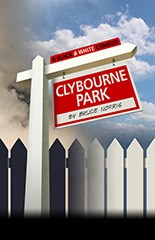
ClybourneIn real estate, “closing” is a good thing. In theatre, “closing” means a production is ending. Bruce Norris’ Pulitzer and Tony winning Clybourne Park closes its run this Sunday.

A few seasons ago, the Arkansas Rep produced Lorraine Hansberry’s seminal work A Raisin in the Sun. Clybourne Park explores events which happened before and after Hansberry’s play.

Clybourne Park is a bitingly funny and fiercely provocative play about the volatile combination of race and real estate. Written by Bruce Norris and directed by Rep founder Cliff Baker, its searing wit, intriguing plot twists and hard hitting social commentary make Clybourne Park a theatrical tour de force not to be missed.

In 1959, a white couple sells their home to a black family (the fictional Younger family from A Raisin in the Sun), causing an uproar in their middle-class neighborhood. Fifty years later in 2009, the same house is changing hands again, but the stakes have changed.

As neighbors wage a hilarious and pitched battle over territory and legacy, Clybourne Park reveals just how far our ideas about race and identity have evolved.

The cast includes Shaleah Adkisson, Ryan Barry, Katie Cunningham, Lawrence Evans, LeeAnne Hutchison, Robert Ierardi, Jason O’Connell, and David Tennal.

The creative team includes scenic designer Mike Nichols, costume designer Yslan Hicks, lighting designer Yael Lubetzky, sound designer Allan Branson and properties designer Lynda J. Kwallek.

The play was first performed in 2010 at Playwright’s Horizons. Following that production Norris received the 2011 Pulitzer Prize for Drama. A subsequent production was mounted on Broadway in 2012. The Broadway production was nominated for four Tony Awards and won the Tony for Best Play.

Clybourne Park is made possible in part by a grant from the Arkansas Black Hall of Fame Foundation, a component fund of the Arkansas Community Foundation.

For a review of Clybourne Park, read this.

Sold on CLYBOURNE PARK – expanded

ClybourneClybourne Park, Bruce Norris’ Pulitzer and Tony winning play, is about race and place. But it is not a pedantic treatise meant to induce guilt. Through its humor and honesty it examines prejudice, property value, and protection of principles. The prejudice on display is not just racial, but also extends to gender, class, disability and sexual identity. The characters are alternately clinging to a past as well as trying to bury it. If this sounds like heavy stuff, it is. But it is presented in such a way, that it does not seem weighty or oppressive.

The action of Clybourne Park takes place in the unseen house that was the crux of Lorraine Hansberry’s A Raisin in the Sun. The conceit of Norris’ play is that fifty years separate the first act from the second one. Though played by the same actors, the characters are different in the two acts. Neither the playwright nor Cliff Fannin Baker, the director, hit the audience over the head with the connections the second act characters have to the first act or to the Hansberry play. They let things emerge organically. The people in this play are rarely who they seem to be. Allegiances shift throughout each act as layers are peeled back on the characters and their motivations.

It is cliché to say, but this play is truly an ensemble piece. As such, Norris (an erstwhile actor himself who once was directed by Baker) has provided each actor with moments to shine in both acts. When given these moments, the actors seized them. In quieter moments, the members of the ensemble exhibited wonderful performances as well without stealing focus from their fellow actors.

Shaleah Adkisson is marvelous both as a long-suffering maid and wife in the first act and a neighborhood activist in the second act. Her voice can drip honey and cut like a knife at the same time. Katie Cunningham plays an expectant mother in both acts. In the first act her character is deaf, while in the second act her character can hear perfectly (but may wish there things she didn’t hear). Shifting from prim to relaxed in the two acts, Cunningham creates two distinct characterizations on stage.

LeeAnne Hutchison’s first act housewife is appropriately daffy and warm. In the second act, she transforms herself into a self-absorbed, calculating professional by use of a different voice, demeanor and posture. As Hutchinson’s husband in the first act Robert Ierardi portrays a man wrestling with emotions and changing times while trying his best to continue to provide for and protect his wife. His interaction with Hutchison during the opening of the first act captured the dichotomy of comfort and confrontation found in long-married couples.

Ryan Barry’s harried priest in the first act is doing his best to be helpful and remain calm in the midst of a sea of turmoil. In the second act he is a bemused, detached attorney trying to facilitate conversation between opposing parties. Though the reactions are different, in both acts his character is pushed to a brink long after other characters have been. In many ways, he is a barometer for the audience. Lawrence Evans has little stage time in the first act but creates a memorable character as a husband just trying to be helpful. In the second act Evans has more opportunity to shine as a neighborhood resident working to preserve his community, and perhaps understand his wife as much as he is trying to understand some strangers.

In the first act, Jason O’Connell plays Karl, a character who appeared in A Raisin in the Sun. While not trying to justify his racist actions, this play fleshes out Karl. O’Connell’s characterization is not a broad villain, but it does not try to make excuses for his beliefs. He also handles some physical comedy in a manner that is both humorous but also completely in character. In the second act, O’Connell’s character is more naïve on some levels as he is confronting aspects of himself and his wife (played by Cunningham) that had never been considered.

Rounding out the cast is David Tennal, an alum of the Rep’s Summer Musical Theatre Intensive, in a small but pivotal role at the end of the play. It is always nice to see students who came up through the Rep’s SMTI program hold their own on mainstage productions. It was nice to see Rep veterans Adkisson (Avenue Q), Evans (Fences) and O’Connell (All My Sons, Sherlock Holmes, Frost/Nixon) return and create memorable characters. Based on their performances in this play, hopefully Cunningham, Ierardi, Hutchison and Barry will be back in the future.

The seamless direction provided by Baker well-serves the actors and Norris’ masterful script. It is obvious that in rehearsal Baker created an atmosphere of trust and collaboration among the acting company. Together he and the actors have mined the play for its much needed humor. But they did not settle for cheap laughs. The play uses laughter to relieve tension. But it does not shy away from making the audience or the characters onstage uncomfortable. Baker and his cast know when to let the feelings of unease simmer. In Baker’s hands, the play never seems pious but it does show the challenges of building and maintaining a community when often well-meaning people have competing perspectives.

While the acting ensemble could have undoubtedly sold the play performing in street clothes in a bare stage, luckily they did not have to. The physical design supported the play. Mike Nichols’ set is in many ways another character in the play. He has created a pre-war two story house. While the play is set in a fictional Chicago neighborhood, the actions in the play could easily take place in any mid- to large-sized American city over the past half century. In the first act, Nichols’ house is the epitome of the emerging middle class. The second act shows the same house after years of neglect. With only a few physical changes, the difference is stark.

Yslan Hicks’ costumes ably showcase not only the different time periods but also the different stations in life of the characters. Through exacting details, her costumes enable the characters to look like they have stepped out of magazine photos from the two eras. Yael Lubetzky’s subtle lighting adds atmosphere to the play. The early morning shadows cast in the final moments of the play were particularly memorable. As sound designer, Allan Branson not only set the mood with music but had the unenviable task of ensuring that numerous actors talking over each other throughout the play could still be heard. Lynda J. Kwallek has a knack for finding props which tell the audience about the characters and their stations in life more than spoken words can do.

Whether we know it or not (or are willing to admit it) Clybourne Park is all our story. There are times we each feel like an outsider, a protector, a denier, a fighter, a detached observer, a victim or a peacemaker. The play offers no easy answers or pat conclusions. In fact it’s one message seems to be that unless we continue to have these messy conversations we will never move forward.

We must respect each other and see value in each other. But we must not be afraid to engage each other in meaningful and often complicated dialogue. If that doesn’t happen, sectors of the community will continue to move back and forth sliding past each other like some sort of societal amoebas without respecting differences.

A final note, some of the language in Clybourne Park is harsh. There are words said on the stage that could definitely offend theatregoers. But the use is not gratuitous. It is to highlight how words do matter, but also ideas. Audience members should not let their distaste for those words detract from their play-going experience. Kudos to Rep Producing Artistic Director Bob Hupp for choosing this play for Little Rock audiences.

Little Rock audiences need to pay a visit to Clybourne Park. It runs only through February 9. For those who want to laugh and think, this is one property not to be missed.

Due to a cut and paste error, an earlier version of this review inadvertently omitted a section on Robert Ierardi’s performance. This review has also been edited because the author of it is constantly tweaking his writing.

Ark Rep production of prize winning CLYBOURNE PARK focus at Clinton School today

ClybourneThe Arkansas Repertory Theatre works in partnership with the Clinton School of Public Service to participate in the UACS’s Distinguished Speaker Series, hosting educational panel discussions on various Rep productions. The latest in these takes place today, Thursday, January 23 at 12 noon at Sturgis Hall in Clinton Presidential Park.

Arkansas Repertory Theatre producing artistic director, Bob Hupp, will host a panel discussion on the upcoming production of Bruce Norris’ Clybourne Park, winner of the 2011 Pulitzer Prize and 2012 Tony Award for Best Play.

Clybourne Park is a bitingly funny and fiercely provocative new play about the volatile combination of race and real estate. In 1959, a white couple sells their home to a black family, causing uproar in their middle-class neighborhood. Fifty years later in 2009, the same house is changing hands again and neighbors wage battle over territory and legacy revealing how far our ideas about race and gentrification have evolved.

Panelists director Cliff Fannin Baker, Jess Porter and John Kirk from the UALR History Department, along with Bob Hupp, will discuss how Clybourne Park relates to issues of race, real estate, history, and legacy in our own community.

Clybourne Park opens tomorrow night (with previews last night and tonight). It runs through Sunday, February 9. Wednesday, Thursday and Sunday evening performances are at 7 p.m., Friday, Saturday evening performances are at 8 p.m. Sunday Matinees performances are at 2 p.m.

clinton-school-logo