Explore Little Rock’s civil rights history with new app

Little Rock-area residents and visitors have a new way to explore the city’s rich civil rights history.

The University of Arkansas at Little Rock Institute on Race and Ethnicity and Little Rock city officials  have unveiled the Arkansas Civil Rights History Tour app.

The free Apple and Android app guides users on an excursion through some of the city’s most influential historical sites, going back to the 1840s. Each of the 35 stops on the GPS-guided tour includes compelling narratives, historic photos, audio, and links to related content.

Tour stops range from the L.C. and Daisy Bates House to the Trail of Tears. The tour includes a total of three National Historic Landmarks, three National Register Historic Districts, and numerous buildings on the National Register of Historic Places.

Narrated in both English and Spanish, the app also offers information about Jewish history in Little Rock, Hispanic migrations to Arkansas, and Native American tribes.

Organizers recommend app users begin their route at Broadway and West Ninth Street in downtown Little Rock, but the app can help people customize their own path.

A collaboration of the Institute on Race and Ethnicity, the City of Little Rock, the Mayor’s Tourism Commission, and KUAR, UALR’s public radio station, led to the creation of the Arkansas Humanities Council-funded app.

“The institute’s mission is to remember and understand the past, to inform and engage the present, and to shape and define the future in the area of race and ethnicity,” said Dr. John Kirk, director of the Institute on Race and Ethnicity.

“The tour app helps us to do all those things: It powerfully sheds light on the past, it allows people to engage with the past in the present moment, and it helps us to consider how those legacies and lessons can shape and define the future of the city and state.”

The app can be found in the Apple App Store and on Google Play by searching for “Arkansas history.”

Sanderia Faye reading from MOURNER’S BENCH tonight

The UALR Institute on Race and Ethnicity and UALR Public Radio tonight are sponsoring a reading by Arkansas native Sanderia Faye  at 7:00 p.m. at the UALR Ottenheimer Library.

Originally from Gould, Faye will read from her debut novel, Mourner’s Bench, and take questions from the audience. A book signing will follow and copies of Mourner’s Bench will be available for purchase at the event.

Parking is available in Lot 4, just north of the Ottenheimer Library, or in the lot to the east of the parking deck on the east side of the UALR campus on 32nd street.

Related Event:

Mourner’s Bench is also the book we are discussing during KUAR’s Readers Review on October 7.

In partnership with the Central Arkansas Library System, KUAR introduces community conversations for book lovers, called KUAR’s Readers Review.

Arts & culture advocate, Dr. Joel Anderson to retire as UALR Chancellor

jeasmile-444x668University of Arkansas at Little Rock Chancellor Joel E. Anderson announced today that he will retire following a 13-year tenure as chancellor and a 45-year career at the university. His retirement will be effective June 30, 2016.

Anderson became UALR chancellor in 2003, bringing with him more than 30 years of university and community service. He had previously served UALR as provost and vice chancellor for Academic Affairs and as founding dean of the Graduate School.

Chancellor Anderson’s announcement comes on the heels of a 1.2 percent increase in enrollment at UALR, including a 19 percent increase in first-time college students and a 7.1 percent increase in first-time transfer students.

“It has been a tremendous pleasure to see UALR grow and mature into the excellent, comprehensive university that it has become,” said Chancellor Anderson. “The faculty and staff of UALR deserve more credit than they will ever receive for their tireless efforts to help students achieve the dream of a college education that will enable students to adjust to a changing future and support themselves and their families.”

University of Arkansas System President, Donald R. Bobbitt will form a search committee in the coming weeks with the goal to complete the search by July 1, 2016.

One of the achievements he was most passionate about was the founding in 2011 of the Institute on Race and Ethnicity, a center designed to move Arkansas forward on the broad front of racial and ethnic justice through education, research, dialogue, community events, and reconciliation initiatives.

As professor, dean, provost, and chancellor, Anderson always related success of the university to success of the students UALR served. As chancellor, he launched numerous initiatives to recruit and retain more students and to reach out to underserved student populations. His signature is on more than 26,836 diplomas and the university’s fall-to-fall retention rate is the highest it has ever been.

“Joel is a true gentleman who cares about the university more than himself”, said Dr. Dean Kumpuris, chair of the UALR Board Visitors.  “He has no ego and has sought our advice and support more than he probably had to,” “His primary goal has been to shepherd the university to a better place, which he has done. We are lucky to have had him as a leader for so many years.”

Anderson, who grew up on a farm east of Swifton in northeast Arkansas, received a BA degree in political science from Harding University, an MA degree in international relations from American University, and a Ph.D. in political science from the University of Michigan. He also completed the Institute for Educational Management at Harvard University.

“The university has good momentum. I need time to catch up on a backlog of books and also to see my grandchildren more often,” Anderson said.  “All the while I will watch with pride as UALR grows and changes.”

Highlights of his service as chancellor include:

  • The Windgate Charitable Foundation awarded UALR a grant of $20.3 million for a new Visual Arts and Applied Design center.
  • Since 2003, UALR has purchased the University Plaza shopping center which is now home of KUAR-KLRE Public Radio as well as the current home of the applied design center.

  • As part of the Coleman Creek Greenway project, the Trail of Tears Park was completed in 2011 to recognize the historical significance of the location on the south end of campus where the Choctaw and Chickasaw tribes stopped for water along Coleman Creek.

  • Establishment of a Dance major, the only one in the state, within the Department of Theatre Arts and Dance.
  • Much of the campus’s infrastructure has undergone substantial renovations including the Stella Boyle Smith Concert Hall. Likewise, there has been an added emphasis on the promotion and maintenance of public art on campus.

  • Chancellor Anderson served as a “Scholar in Residence” in 2010 at the Center on Community Philanthropy at the Clinton School for his work on issues of race and ethnicity.

  • Dr. Anderson launched the Institute on Race and Ethnicity in 2011 to move Arkansas forward on the broad front of racial and ethnic justice through education, research, dialogue, community events, and reconciliation initiatives.  One of their projects has been the annual Civil Rights Heritage Trail installation.

  • In 2015, as part of its 40th anniversary celebration, the Winthrop Rockefeller Foundation honored Chancellor Anderson as one of 40 Community Leaders in the categories of community, education, nonprofits, and prosperity.

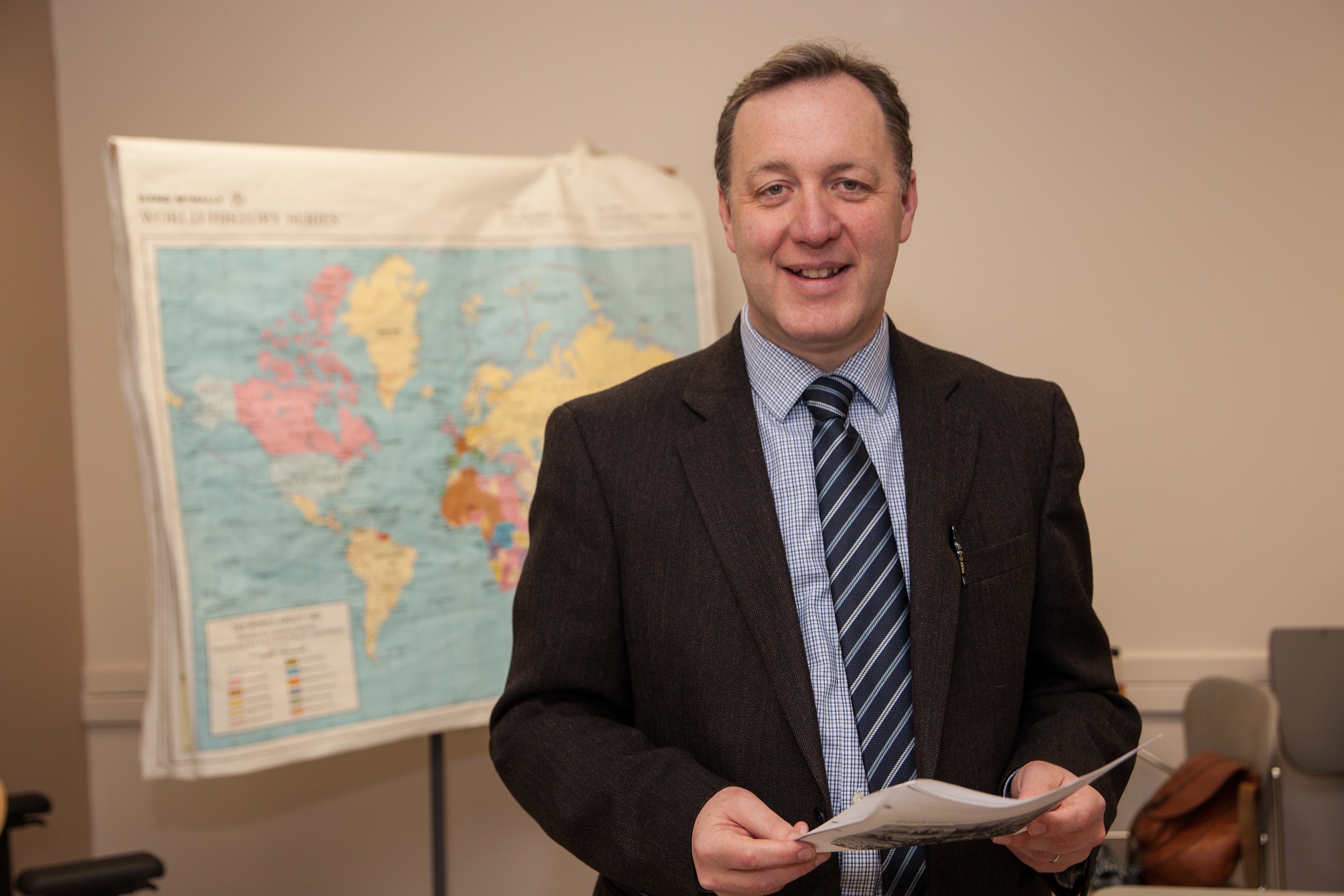
Historian Dr. John Kirk is new director of UALR Institute on Race and Ethnicity

JohnKirk_history1aDr. John A. Kirk has been named the new director of the University of Arkansas at Little Rock’s Institute on Race and Ethnicity.  A native of Great Britain, he has garnered international acclaim for his research and writings on race and the civil rights movement — with a particular focus on Little Rock.

Kirk has been a member of the Chancellor’s Committee on Race and Ethnicity since he arrived at the university more than five years ago and has been involved with the institute since its inception about four years ago.

“I have a deep personal and professional commitment to the pursuit of racial and ethnic justice, and I think that should be the primary reason anyone takes on the job of director of UALR’s Institute on Race and Ethnicity — it is at the very heart of what the institute does,” Kirk said.

Kirk plans to connect with and engage as many students, faculty, and community members as possible in achieving the goals of the institute, which include:

  • Raising awareness of race and ethnicity issues
  • Providing research-based information and policy recommendations
  • Building bridges and seeking reconciliation through interracial and interethnic dialogue
  • Engaging students
  • Serving as a clearinghouse for on- and off-campus initiatives related to race and ethnicity
  • Holding UALR accountable for becoming a more diverse and multi-ethnic community.

For the past 25 years, Kirk has researched and written about issues of race and ethnicity in the United States, especially in Little Rock and Arkansas. He’s the author of numerous books, including “Race and Ethnicity in Arkansas: New Perspectives,” “Martin Luther King, Jr. and the Civil Rights Movement,” and “Beyond Little Rock: The Origins and Legacies of the Central High Crisis.” He also recently partnered with the BBC on its Martin Luther King Jr. web display that serves as an information resource for an international audience.

In announcing Kirk’s appointment, UALR Chancellor Joel E. Anderson noted the professor’s knowledge and passion for civil rights-related topics were ideal fits for the institute’s leadership role.

“It is a rare opportunity to work with someone who grew up in Great Britain but whose knowledge of Arkansas civil rights history is probably greater than anyone else’s in Arkansas or the United States,” Anderson said.  “Dr. John Kirk is a well-known resource in our community for his expertise on the many ways race has shaped our city and state. I am confident that under his leadership the UALR Institute on Race and Ethnicity will continue to grow in influence and will help shape a better future for the people of Arkansas.”

Kirk replaces Dr. Michael R. Twyman, who resigned in July to take a position at the Indiana Black Expo organization.

With Kirk’s new director responsibilities, he will remain the Donaghey Distinguished Professor of History  but no longer will serve as the UALR History Department chair.

“I am excited by the challenges and opportunities that the director’s job brings with it,” Kirk said. “I particularly look forward to getting to know more about and working with students, faculty, and community members who are learning, teaching, researching and serving on issues of race and ethnicity.”

Healthcare Pioneers focus of this year’s Civil Rights Heritage Trail

crht-banner-2014-thru-banner32Drs. Thomas A. Bruce, M. Joycelyn Elders, Henry Foster Jr., Edith Irby Jones, and Billy Ray Thomas, and five posthumous honorees will be recognized for their efforts to provide quality healthcare to all citizens at 2 p.m. Friday, Oct. 24, in the Little Rock River Market District at the entrance of the St. Vincent Medical Mile.

Posthumous honors will be bestowed upon Drs. Cleon A. Flowers Sr., Samuel Lee Kountz, and John Marshall Robinson; registered nurse Lena Lowe Jordan; and scientist and educator Phillip Leon Rayford, Ph.D., during the fourth annual Arkansas Civil Rights Heritage Trail Commemoration.

Commemorative markers will be added to the Heritage Trail in honor of pioneers in health care, individuals who were either first of their race to graduate from medical school, or who have shared their professional talents generously in ways that have championed racial equity in Arkansas.

“This year, the Institute turned to healthcare because even though it is a profession by which African Americans in particular have been grossly underrepresented and underserved, Arkansas has a rich tradition of producing some of the nation’s best and brightest medical professionals,” said Dr. Michael R. Twyman, director of the UALR Institute on Race and Ethnicity.

The Institute is partnering with the University of Arkansas for Medical Sciences Center for Diversity Affairs to honor these healthcare professionals. The center specializes in encouraging young persons of color to seek careers in health and STEM professions.

“I am honored to be recognized with such accomplished people,” said Thomas, vice chancellor for diversity affairs at the University of Arkansas for Medical Sciences. “It is also a very humbling experience because many of the other honorees are also my mentors.”

Like Thomas, the other nine honorees have made significant contributions toward social and racial equity in Arkansas – most of whom received their professional education and training during the the Civil Rights Movement era, during a time of deep civil unrest in the country and state.

“It is not lost on us that this year marks the 60th anniversary of the Brown vs. Board of Education court decision that prohibited public institutions from discriminating on the basis of race,” said Twyman.

“Access to quality education and healthcare have become the predominant civil rights issues of our time,” he added.

Learn more about each honoree at  arkansascivilrightsheritage.org supported in part by a grant from the Arkansas Humanities Council and the National Endowment for the Humanities.

In addition to the Center for Diversity Affairs at UAMS, the Central Arkansas Planning and Development District; East Harding Inc.; Arkansas Medical, Dental, and Pharmaceutical Association; Just Communities of Arkansas; the Little Rock Alumnae Chapter of Delta Sigma Theta Sorority, Inc.; and the Little Rock Alumni Chapter of Kappa Alpha Psi Fraternity, Inc. are sponsors for the event.


About the Civil Rights Heritage Trail

The Arkansas Civil Rights Heritage Trail was created in 2011 to acknowledge the sacrifices and achievements made by those who have fought for racial justice in the state. The Heritage Trail begins at the Old State House and currently stretches to the front of the Little Rock Regional Chamber of Commerce. As commemorative bronze markers are added each year, it will continue toward the William J. Clinton Presidential Center and beyond.     


About the UALR Institute on Race and Ethnicity

The UALR Institute on Race and Ethnicity was founded in July 2011. With a vision to make Arkansas the best state in the country for promoting and celebrating racial and ethnic diversity, the Institute conducts research, promotes scholarship and provides programs that address racial inequities. It does so by facilitating open and honest dialogue aimed at empowering communities and informing public policy to achieve more equitable outcomes.

Six educators, activists honored tonight as part of 2014 Reel Civil Rights Film Festival

lrff_film-projects_civil-rightsLittle Rock Central High School National Historic Site commemorates the 57th anniversary of the desegregation crisis in September with the Reel Civil Rights Film Festival featuring special guests, panel discussions, and a special commemoration to honor local educators and civil rights activists. All events at local venues are FREE and open to the public.

Honoring Liberators of a Collective Conscious Community

Tonight at the Mosaic Templars Cultural Center (501 West 9th Street), Little Rock Central High School National Historic Site will honor local educators and social activists including: Dr. Dexter Booth, Dr. Beverly Divers-White, Othello Faison, Ed Hawkins (in memoriam), Nancy Rousseau, and Sammie Nell Irving Tollette.

The keynote will be delivered by Dr. Terrence Roberts, member of the Little Rock Nine; the ceremony will be moderated by Dr. Michael Twyman, director of the UALR Institute on Race and Ethnicity.

Presenting Sponsor –Little Rock Film Festival

Premier Sponsor –Little Rock Central High School National Historic Site

Supporting Sponsors: arfilm|Arkansas Production Alliance, Central High Museum Inc., City of Little Rock, Conyers Institute of Public Policy, Jefferson National Parks Association, Little Rock Central High School, Little Rock Convention and Visitors Bureau, Little Rock School District, Marriott Little Rock, Mosaic Templars Cultural Center, Moses Tucker Real Estate, Riverdale 10 Movies, National Park Service, Sue Smith Vacations/Vacation Valet, North Point Toyota, University of Arkansas Clinton School of Public Service, Philander Smith College, Whole Hog Cafe –North Little Rock, Arkansas Education Television Network, and Arkansas Motion Picture Institute

Commemorate the 50th Anniversary of the 1964 Civil Rights Act tonight from 6pm to 8pm at the Mosaic Templars Cultural Center

To commemorate the 50th Anniversary of the 1964 Civil Rights Act, the Arkansas Psychological Association and Mosaic Templars Cultural Center will hold an event to discuss the importance of psychologically healthy workplaces and honor two local civil rights advocates, political and social justice activist Mary Brown “Brownie” Williams Ledbetter, and psychologist and member of the Little Rock Nine, Dr. Terrence Roberts, from 6 to 8 p.m. Wednesday, July 2, at Mosaic Templars.

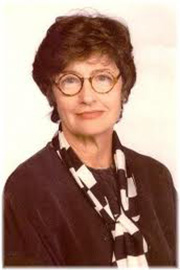
BrownieLedbetterThe free and public event is designed to raise the awareness of the effect of discrimination in the workplace on the groups named in the 1964 Civil Rights Act which was signed into law by President Lyndon B. Johnson on July 2, 1964. A reception will follow.

Ledbetter is being honored posthumously for her work through the Arkansas Public Policy Panel. She served as volunteer executive director until her retirement in 1999.

Terrence RobertsRoberts is best known as being one of the nine students to desegregate Little Rock’s Central High School, but as an adult, he became a psychologist and through his private practice he has counseled organizations on equitable practices in both industry and business including serving as a desegregation consultant to the Little Rock School District.

The UALR Institute on Race and Ethnicity, Office of Governor Mike Beebe, City of Little Rock, Central High School National Historic Site, and Social Justice Initiative at Philander Smith College are all sponsors of the event.For more information, contact Dr. Patricia L. Griffen, president of the ArPA at 501.223.8883.