 Forte, the season ender for Ballet Arkansas in many ways encapsulates the work of the company over its first 40 years. The combination of classical and modern styles of dance performed with both live and pre-recorded accompaniment played to the company’s strengths.
(A frustration I have with ballet is that different dancers alternate roles at different performances – I want to see all of them, but I cannot attend all performances. So my comments are based solely on the performers I saw.)
The first half was “Act II” from Swan Lake. As the central couple Odette and Siegfried, Lauren Bodenheimer Hill and Zeek Wright were well-matched. During their pas de deux, they were graceful as the executed their movements. Because it was not the full ballet, one did not get the chance to fully explore the chemistry between the couple.
The swans were beautifully attired in the classic white, feathered tutus one would expect from Swan Lake (kudos to designer/creator Callie Rew). And the ladies dancing as the birds had movements that both honored the choreography and the birds they were evoking.
The highlight was (as it usually is when considering Act II), the Danse des petits cygnes. And it did not disappoint. Meredith Short Loy, Amanda Sewell, Hannah Bradshaw and Isabelle Urben danced as one unit. But though the movements were in sync, one was aware that it was four individual dancers and not four automatons. The audience was so appreciative of their talent that it broke out into spontaneous applause at least twice during the section.
An added bonus to the Swan Lake performance was the presence of Dr. Drew Mays, the Van Cliburn winning pianist, providing live accompaniment. Having the live music provided an additional layer of richness ot the piece.
After intermission, Tchaikovsky returned, this time by way of George Balanchine. The “Tchaikovsky Pas De Deux” featured Paul Tillman and Meredith Short Loy. The couple exhibited true partnering. Whereas in more classical ballet, often the male dancer may be there to merely support the ballerina, in the Balanchine piece, it is a symbiotic partnership with definite interplay. The piece allowed Tillman to showcase his graceful athleticism, while Loy displayed her elegant footwork, especially during some delicate and fast moments. Artistic Director Michael Fothergill wisely put this moment to open the act as a transition from the pure classical piece to the works yet to come.
Fothergill’s “Forma” was next up. It was a very kinetic dance with Toby Lewellen and Amanda Sewell at the center of it. Together with Deanna Stanton, Deanna Gerde, and Isabelle Urben, the dancers employed a variety of movements often so interconnected they resembled cogs in a machine. But even with the mechanical nature of the movements, Lewellen and Sewell displayed an emotional connectivity. These were not just dancers going through the paces of executing modern movements.
The performance concluded with Ma Cong’s “Calling.” Set to music inspired by a variety of Mediterranean and lower European cultures, it put its six dancers through their paces. As the styles of music changed, the dancers changed from more brisk movements to more fluid motions. The work allowed the dancers to showcase a variety of styles of dance without seeming like it was saying “look what else we can do.”
While the partnering of the three male dancers with their ballerina partners was nice throughout the work, what was most striking was the opening moments when it was just Zeek Wright, Paul Tillman, and Matthew Larson on stage. These three are different heights and different builds. To see them move in sync with these varied physiques was a lesson in movement. No one was overshadowing the others, but one was much more aware that these were three distinct dancers working together. Likewise when they were partnering with Lauren Bodenheimer Hill, Megan Hustel, and Lynsie Jo Ogden (respectively), the juxtaposition highlighted each dancer’s abilities.
As the latest in the long line of Ballet Arkansas leaders, Artistic Director Fothergill and Associate Artistic Director Catherine Garratt Fothergill have both honored the legacy of the past while putting their own stamp on the company.
Throughout the 2000s the company wandered through the wilderness of a revolving door of plans that, more often than not, failed to materialize. At a time it had no staff, it was held together largely due to the grit and determination of Jana Beard, her daughter Allison Stodola Wilson, a few supporters, and an annual presentation of The Nutcracker. Emerging from that cocoon, the company now has a presence on Main Street. It is pleasing to see the Fothergills build on the work of Beard and recent artistic director Michael Bearden to launch Ballet Arkansas into a new level.
(Ballet Arkansas’ emergence as a full-fledged professional dance company is complemented by the burgeoning dance program at UA Little Rock. It is kismet that these two tracks are happening parallel considering that both programs were coincidentally at their nadirs in the early 2000s.)
Completing their second season of leadership, the Fothergills have expanded Ballet Arkansas’ number of performances, number of dancers, and community outreach. In so doing, they have forged new partnerships and unsurprisingly attracted new patrons. But they have not let the quest for “the new” move them away from the core mission. After forty years, Ballet Arkansas is focused now, more than ever, on providing quality ballet performances and experiences to audiences throughout Arkansas.

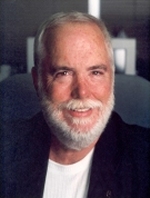 On this date in 1947, future Little Rock Mayor Floyd G. “Buddy” Villines was born. A 1969 graduate of Hendrix College, he served in Vietnam in 1970 and 1971. He later graduated from the University of Arkansas at Little Rock Law School.
 Today (6/11) at noon, the Central Arkansas Library System presents the annual Rabbi Ira E. Sanders Lecture. It featured Richard T. Hughes, “Understanding White Supremacy: Why We Must Hear Black Voices.”


 Little Rock Culture Vulture