LR Women’s History Month – Adolphine Krause Fletcher

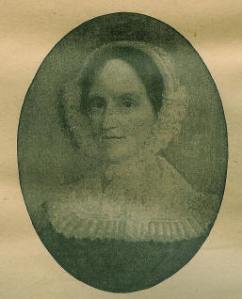
CLR Adolphine Krause FletcherIn 1878, Adolphine Krause Fletcher became First Lady of Little Rock when she married John Gould Fletcher, who was then serving as mayor.  Though records are incomplete, this may well be the first and only time that a sitting mayor has been married while in office.

She was born September 3, 1854, the daughter of John and Fredericka Krause.  Her father had immigrated from Denmark and her mother had come from what is now Germany.  Adolphine had at least two older sisters – Clara and Johanna.  When the girls were small children, their father died.  While all three girls reached adulthood, Clara died in 1866.  By the time Adolphine married Mayor Fletcher, her mother had died.  It is expected that Adolphine was introduced to her future husband by her sister Johanna. She was married to Peter Hotze, who was a business partner of Mayor Fletcher’s.

Adolphine and John Gould Fletcher had five children, three of whom survived to adulthood – Adolphine, Mary and John Gould.  (The Fletcher family often used the same names in subsequent generations and never distinguished among different people with the uses of Senior, Junior, Third, etc.)

In 1889, the Fletcher family moved in to what is now known as the Pike-Fletcher-Terry House. It stayed in the family until the 1970s, when Adolphine’s two daugthers deeded it to the City of Little Rock for use by the Arkansas Arts Center.

Mrs. Fletcher saw to it that each of her children were well-educated, even if she restricted them to spending most of their time at the family manse. The three were surrounded with literature and books on topics of the day.  She brought in tutors to teach them German and Latin.  At a time when few females were educated, the Fletcher girls were sent to college.

Though her children and husband traveled, Mrs. Fletcher never ventured from Arkansas. She was, however, enthralled by images of the upper classes from the North, about which she read in magazines. She dressed her children inappropriately for the warmer Arkansas climate but in clothing inspired by etchings from New York, Philadelphia, Boston, and other northern cities.  She also apparently did not care for many of her husband’s more rural relatives. As soon as Adolphine was old enough to act as hostess, Mrs. Fletcher would stay in her room and send her daughter downstairs to receive guests.

Her two passions were gardening and music.  She had the glass conservatory installed on the southeast corner and spent countless hours there cultivating plants which were not native to Arkansas.  She also spent many hours playing piano and singing — everything from popular music to classical songs. She regaled her children with stories about a tutor who had encouraged her to become an opera singer.  She tried to teach her son how to play the violin, but his father would not allow it.

It appears that most her her life was spent focused on her gardening, music and children.  In May 1910, Adolphine Krause Fletcher died and was buried at Mount Holly Cemetery alongside her husband.  Her parents and sisters are also buried in that cemetery.


LR Women’s History Month – Adolphine Fletcher Terry

adolphine

Photos from the collection of the Butler Center for Arkansas Studies

Adolphine Fletcher Terry was born on November 3, 1882 to former Little Rock Mayor John Gould Fletcher and his wife Adolphine Krause Fletcher.

Raised in Little Rock, in 1889 she moved into the Albert Pike House on East 7th Street, when her aunt transferred the title to her father. That house would be her primary residence the rest of her life.  Her sister Mary Fletcher Drennan never lived in Arkansas as an adult after marriage. Her brother John Gould Fletcher spent much of his adulthood in Europe before returning to Little Rock and establishing his own house, Johnswood.

At age 15, Adolphine attended Vassar. She later credited that experience as broadening her views on many issues.  After graduating at age 19, she returned to Little Rock.  Her parents both died prior to her 1910 wedding to David D. Terry, which took place at what was then known as the Pike-Fletcher House (and today is known as the Pike-Fletcher-Terry House).

She is perhaps best known today for establishing the Women’s Emergency Committee in 1958 and for her subsequent deeding of the family house to the City for use by the Arkansas Arts Center.  But her entire life was based on civic engagement.

She was instrumental in establishing the first juvenile court system in Arkansas and helped form the first school improvement association in the state. She was long an advocate for libraries, serving 40 years on the Little Rock public library board.  Through her leadership, the library opened its doors to African Americans in the early 1950s. Today a branch of the Central Arkansas Library System (the successor the Little Rock public library) is named after her.  Another branch is named after her Pulitzer Prize winning brother.

Adolphine formed the Little Rock chapter of the American Association of University Women, the Pulaski County tuberculosis association and the Community Chest.

In 1958, when the Little Rock public high schools were closed instead of allowing them to be desegregated again, she called Harry Ashmore the editor of the Gazette and exclaimed, “the men have failed us…it’s time to call out the women.”  With this, she formed the Women’s Emergency Committee to Open Our Schools. This group played a major role in getting the four high schools open the following year.

From 1933 to 1942, David Terry served in the U.S. Congress. During that time, Adolphine alternated her time between Washington DC and Little Rock. But she spent much time in Little Rock raising her five children.

After her husband’s death in 1963, she continued to remain active in civic affairs. In the 1960’s, she and her sister deeded the Pike-Fletcher-Terry House to the City of Little Rock for use by the Arkansas Arts Center upon both their deaths.  Following Adolphine Fletcher Terry’s death in 1976, Mary turned over the title to the City.

Adolphine Fletcher Terry is buried in Mount Holly Cemetery alongside her husband. Three of her children are also buried in that plot.  Her parents and brother are buried in a nearby plot.

Her son William Terry and his wife Betty continue to be active in Little Rock. Their daughters and their families also carry on Adolphine Fletcher Terry’s commitment to making Little Rock better.

LR Women’s History Month: Eliza Cunningham

Eliza CunninghamEliza Wilson Bertrand Cunningham was the First Lady of Little Rock.  She literally was the first lady and the founding mother.

She became the first permanent female resident when she joined her husband Matthew Cunningham in Little Rock.  She gave birth to Chester Ashley Cunningham, the first baby born in Little Rock, as well as several other children with Cunningham.  When he became the first Mayor of Little Rock, she was the first First Lady of Little Rock. They hosted the first Little Rock Council meeting at their house on what is now the block downtown bounded by Third, Main, Fourth and Louisiana Streets.  Her son Charles P. Bertrand, from her first husband, later served as Mayor of Little Rock, making her the only woman to be married to a Mayor and be mother of a Mayor.

Born in Scotland in December 1788, she emigrated with her parents to the United States as a young girl.  In 1804 or 1805, she married a French businessman, Pierre Bertrand in New York City.  She lived in New York City, while he traveled to his various business ventures.  He never returned from a trip to his coffee plantation in Santo Domingo and was presumed to have died in 1808 or 1809.  She and Bertrand had three children, Charles Pierre, Arabella and Jane. (Jane may have died in childhood, because records and lore only indicated Charles and Arabella coming to Little Rock with their mother.)

Eliza married Dr. Matthew Cunningham in New York City.  He later moved to Saint Louis and settled in Little Rock in early 1820.  Eliza and her two children came to Little Rock in September 1820.  In 1822, she gave birth to Chester Ashley Cunningham, the first documented baby born in Little Rock.  (There are unsubstantiated reports that at least one slave child may have been born prior to Chester.)  She and Matthew also had Robert, Henrietta, Sarah and Matilda.  The latter married Peter Hanger, after whom the Hanger Hill neighborhood is named.

Dr. Cunningham died in June 1851.  Eliza died in September 1856. They and Chester (who died in December 1856) are buried in the Hanger family plot at Mount Holly Cemetery.

Women Entrepreneurs celebrated at Mosaic Templars today

Women Phenomenal: A Celebration of Women Entrepreneurs – Join Mosaic Templars Cultural Center in celebration of some of central Arkansas’s phenomenal women in honor of National Women’s History Month. The program runs from 11:30am until 1:00pm. 

Enjoy lunch and a candid conversation with a group of business savvy leaders and entrepreneurs who will share their stories of success and struggles as they found their path in the business world. 

Special guests include: Leanna Godley, founder and president of Goddess Products, Inc.; Yolanda Hughes, owner, RSVP Catering; Ashley Jones, owner, Ashley Ann’s Event Planning Service and Patricia Nunn Brown, director, Arkansas Economic Development Commission’s Small and Minority Business Division. 

The event will be moderated by MTCC Executive Director and Editor-in-Chief of “PowerPlay” magazine, Sericia Cole.

Lunch is free and open to the public, but reservations are required. Contact Tameka Lee at 501.683.3620 or tameka@arkansasheritage.org to reserve your seat.

MacArthur Museum hosts Cissy Rucker, Veterans Affairs Director

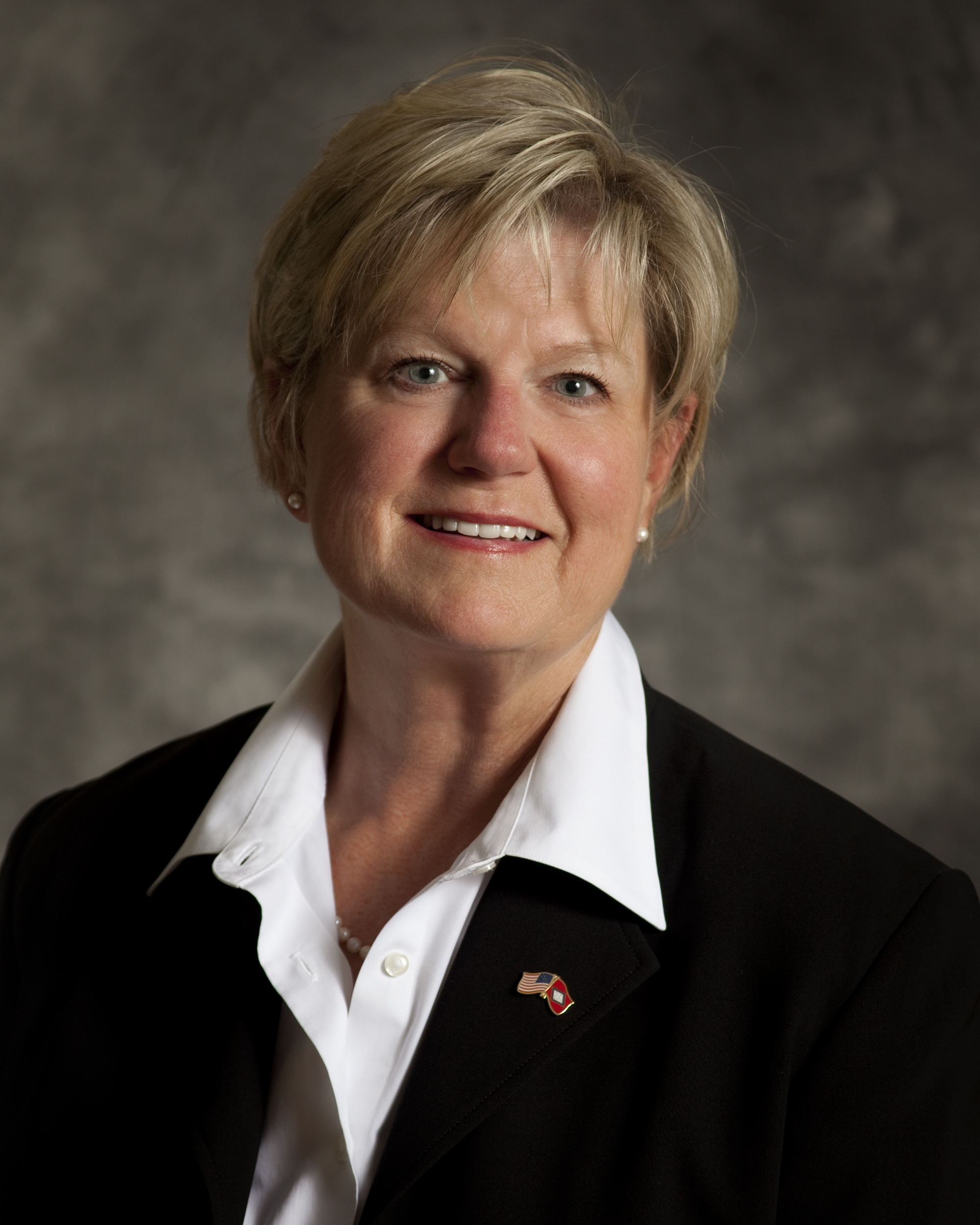
macmusAlicia (Cissy) RuckerAlicia “Cissy” Rucker, the director of the Arkansas Department of Veterans Affairs, will speak Saturday, March 23, at 1pm about the current state of women in the United States military.  Rucker spent thirty-three years in the Arkansas National Guard, retiring with the rank of colonel. Her assigned duties included Airfield Commander, Surface Maintenance Manager, Maintenance Manager and State Public Affairs Officer.

Rucker is a member of the Employer Support of the Guard and Reserve Committee, as well the Women’s International Helicopter Pilots Association.   Prior to her appointment to Arkansas Department of Veterans Affairs, Rucker served as the administrator of the Arkansas Career Training Institute.

The program will commemorate “National Women’s History Month,” celebrated each March in the United States.  The 2013 theme,Women Inspiring Innovation through Imagination, honors generations of women who throughout American history have used their intelligence, imagination, sense of wonder, and tenacity to make extraordinary contributions.

Only a few weeks ago, the Pentagon officially lifted the ban on women in combat, but women have served this country in combat roles for years.  During the American Revolution, Mary Corbin worked a cannon in combat and was awarded a soldiers pension by the Continental Congress for her service – although she only received half pension because of her gender.  In every war this country has fought, women have been exposed to the same hardships and risk for personal injury or death as male soldiers, but it is only now that women can officially serve in combat.

Colonel Rucker will speak about her experiences as a female soldier, and on her current duties as the Director for the Arkansas Department of Veterans Affairs.  Last year, Rucker became the first woman inducted into the Arkansas Military Academy Hall of Fame.  The event begins at 1:00 p.m. and is free to the public.


The MacArthur Museum of Arkansas Military History relates the military heritage of Arkansas and its citizens to a diverse and widespread audience. Located in the historic Arsenal Building in MacArthur Park–one of Central Arkansas’s oldest surviving structures and the birthplace of one of this country’s foremost military heroes–the museum collects, preserves, and interprets our state’s rich military past from its territorial period to the present.