Boston Brass in concert tonight

Boston BrassFor 27 years, Boston Brass has set out to establish a one-of-a-kind musical experience. From exciting classical arrangements, to burning jazz standards, and the best of the original brass quintet repertoire, Boston Brass treats audiences to a unique brand of entertainment, which captivates all ages.

Their 2014-15 program “And the Nominees are…” will poll the audience at intermission to determine the music selection on the second half of the program. The first half of the concert will be comprised of Boston Brass’s favorite repertoire, and the second half will be structured in categories by genre-Best Movie Soundtrack, Best Broadway Musical, Best Jazz Selection, etc.

Boston Brass is performing tonight at Christ Church in downtown Little Rock. It is a part of the ongoing Arts @ Christ Church series.  The concert starts at 7:30 pm.

Tickets are $20, $10 for students.

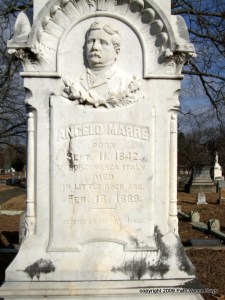
Little Rock Look Back: City Councilman Angelo Marre

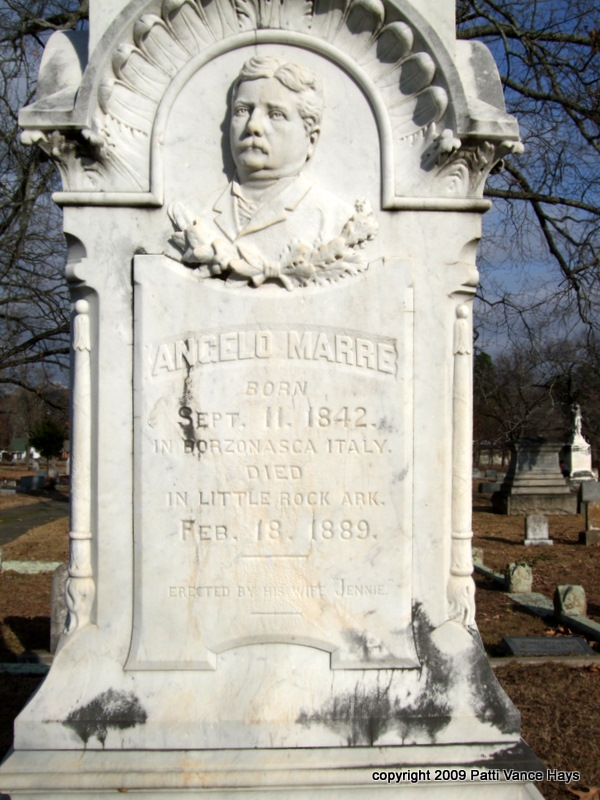
angelomarreOn September 11, 1842, future Little Rock Alderman Angelo Marre was born in Borzonaca, Italy.  He immigrated to Tennessee with his parents in 1854.

During the Civil War, he served in the Confederate Army. From 1865 to 1868, Angelo Marre worked for the Memphis Police Department but was forced to resign after he was accused of killing a man during an argument.  After his acquittal, he returned to the saloon business.  In 1872 Marre was convicted of stealing money and sentenced to three years in prison.

Tennessee Governor John Brown granted Marre a full pardon two years into his sentence, and he regained his citizenship in 1879.

After getting out of prison, he claimed an inheritance and joined his brothers in Little Rock.  He worked as a bartender at the Metropolitan Hotel.  He later opened a saloon and billiard parlor.

By the mid-1880s, Marre owned two saloons, a liquor import business, an office building in downtown LR, 3,000 sharesof stock in mining companies operating in Garland and Montgomery counties, and he was the first president of Edison Electric Company of LR.

In 1883, he was elected as an alderman on the Little Rock City Council.  He lost is bid for reelection in 1885. In 1888, he was an unsuccessful candidate for Pulaski County Sheriff.

villamarreAngelo Marre died February 18, 1889, as a result of his infection.  He is buried at Calvary Cemetery in LR. His custom designed, marble monument was ordered from Florence, Italy, and cost $5,000.

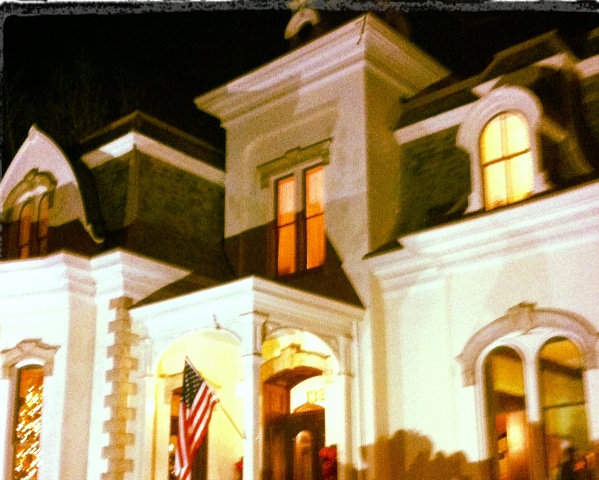
Marre is probably best known today as the builder of the structure now known as the Villa Marre.  Built in 1881, it is designed in the Italianate and Second Empire styles.  It was built in 1881 and 1882 on Block 21, Lots 5 & 6 of the Original City of Little Rock.  The cost was $5,000.

It was originally a red brick structure and has been modified and expanded several times as well as painted white.  It did not bear the name Villa Marre until the 1960s when historic preservation advocate Jimmy Strawn gave it that name.

After serving as the headquarters for the Quapaw Quarter Association for several years, it was returned to a private residence.  It is now available for special events and rentals.

The Villa Marre is probably best known locally and nationally for serving as the facade for the Sugarbaker design firm on the CBS sitcom “Designing Women.”  Though the interior of the house does not match the interior on TV, the building was featured in the opening credits as well as in exterior shots each week.

Jazz in the Park tonight – Julia Buckingham Group

jazzinparkJazz in the Park is back in Little Rock for the second half of the second season! Jazz in the Park is a free, family-friendly event featuring jazz in downtown Little Rock.

Things continue tonight from 6pm to 8pm with the Julia Buckingham Group.

The event is completely free, but no coolers are allowed. Beer, wine, soft drinks and water will be available for sale, with a portion of the proceeds going to benefit Sculpture at the River Market. Lawn chairs and blankets are welcome, and there is some seating in the natural stone amphitheater at the History Pavilion.

This event is sponsored by Little Rock Convention and Visitors Bureau and the River Market, with special thanks to Arkansas Sounds Music Festival and the Central Arkansas Library System.

Jazz in the Park takes place Wednesday nights in September from 6pm to 8pm. They will take place in the History Pavilion near the Junction Bridge and the River Market.

Little Rock Look Back: Plans for new City Hall finally proceed

City Hall circa 1908

City Hall circa 1908

After a judge ruled in August 1906 that the City of Little Rock could not build a new City Hall and Auditorium complex, it looked like Little Rock would be stuck with its existing inadequate building.

However on September 10 it became obvious that much work had been taking place behind the scenes after that ruling.  On that day, the Board of Public Affairs (a City body charged with overseeing municipal government construction projects and comprised of the mayor and two citizens approved by the City Council) voted to ask the aldermen to cancel plans and rescind legislation for the city hall, jail and auditorium complex.  The Board of Public Affairs then offered up a new plan for a city hall and jail building.  Because no auditorium was involved, these plans would not be in violation of the Chancery Court.

That same evening the City Council followed suit and revoked the plans for the original project.  The aldermen then voted to proceed with building a new city hall and jail without the auditorium.  There was only one dissenting vote; Alderman Jonathan Tuohey voted no.  He explained his negative vote was not a lack of support for the project, but he was not comfortable with the way it was rushed through.

Mayor Warren E. Lenon told the Gazette, “The Chancery Court has enjoined us from erecting an auditorium and the Board of Public Affairs has consequently rescinded all resolutions and orders pertaining to that structure.” He noted that there would “be no appeal from the injunction granted by Chancellor Hart, because there is nothing to appeal.”

The coverage of the actions of the City Council that night was in keeping with the manner in which the two daily newspapers had covered the lawsuit and the trial.  The Gazette headline cried “City Hall Ordinance Railroaded Through” while the staid Democrat merely stated “New $175,000 City Hall Provided by City Council.”  The tone of the Gazette’s article matched the headline while the Democrat’s story was more straightforward.

Architect Charles Thompson adjusted his plan for the new City Hall by removing the auditorium wing.  With the revised Th0mpson plan and the approval of the City Council, Little Rock was at last on its way to a new City Hall.  This was over two years after Mayor Lenon had first broached the subject.

Originally slated to open in 1907, the building officially opened in April 1908.

Little Rock Look Back: Battle of Little Rock

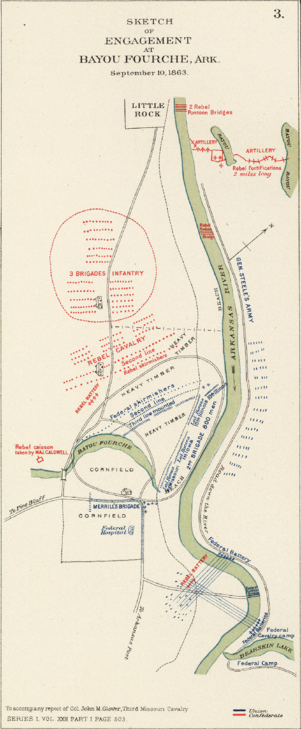
301px-Battle_of_Bayou_Forche_mapOn September 10, 1863, Confederate forces under General Sterling Price evacuated Little Rock in advance of Federal forces, thus ending the Little Rock Campaign. By 5:00pm, his forces had left the city and at 7:00pm, civil authorities formally surrendered. Little Rock became the fourth Southern capital to come under Federal control.

The battle was the culmination of a campaign launched by Maj. Gen. Fred Steele, on August 1, 1863 to capture Little Rock. The campaign includes engagements at Westport, on 14 August, Harrison’s Landing, on 16 August, Brownsville on 25 August, the Reed’s Bridge, on 27 August, and Ashley’s Mills on 7 September 1863. After the Union army affected a river crossing east of Little Rock, effectively flanking the Confederate defenses north of the river, the Confederates staged a brief delaying action at Bayou Fourche to allow for evacuation of Little Rock.

The Battle of Little Rock is also known as the Battle of Bayou Fourche.

56th annual Delta Exhibition at Arkansas Arts Center wraps up later this month

Mark Lewis, Peoria Avenue #7, 2011, graphite and paper collage, 2013 Grand Award

“As one of the most anticipated Arkansas Arts Center events of the year, the 56th Annual Delta Exhibition offers a unique snapshot of the Delta region,” said Arkansas Arts Center executive director Todd Herman. “The widely held exhibition sanctions local artists to lead and inspire their respective communities through art, education and cultural excellence.”

The Delta Exhibition runs through Sunday, September 28.

The Delta Exhibition of Painting and Sculpture was founded in 1956 to feature contemporary work by artists from Arkansas and the bordering states. Today, the 56th Annual Delta Exhibition has grown to encompass works in all media and is a showcase for the dynamic vision of the artists of the Mississippi Delta region. The diversity of their art reflects the region’s strong traditions of craftsmanship and observation, combined with an innovative use of materials and an experimental approach to subject matter.

The competition is open to all artists who live in or were born in one of the following states: Arkansas, Louisiana, Mississippi, Missouri, Oklahoma, Tennessee and Texas. All work must be completed during the last two years and must not have been exhibited previously at the Arkansas Arts Center. This year’s exhibition will be on view June 27 – September 28 in the Townsend Wolfe Gallery.

Guest juror Brian Rutenberg of New York selected works for the exhibition in addition to a Grand Award, with a cash prize of $2,500, and two Delta Awards, with cash prizes of $750 each, for the top works in the show. Juror Rutenberg earned his Master of Arts degree from New York’s acclaimed School of Visual Arts and went on to become a Forum Gallery artist in 2001. He has since had three successful solo exhibitions and actively exhibits throughout the United States and Canada.

For more information, visit arkansasartscenter.org/delta or call(501) 372-4000.

Creative Corridor work to close a block of Main Street for a few weeks

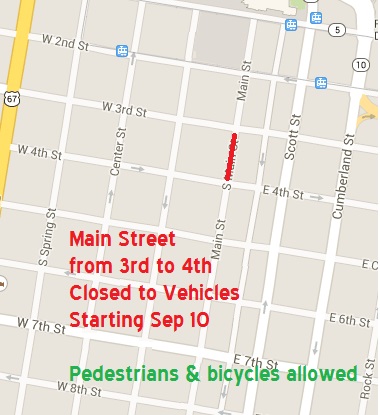
Main Street closureBeginning Wednesday, Sept. 10 at 7 a.m., Main Street between Third and Fourth streets will be closed to thru vehicle traffic.

The closure is expected to last three to four weeks.  During this time period, pedestrian and bicycle traffic to businesses, residences and job sites will be allowed at all times.

The closure is needed to continue progress on the Main Street Creative Corridor project. The lack of vehicular traffic will maintain a safe working environment for construction crews and the general public.

The 300 block of Main Street will be one of the gateways to the Creative Corridor, featuring a plaza with rain and light gardens.