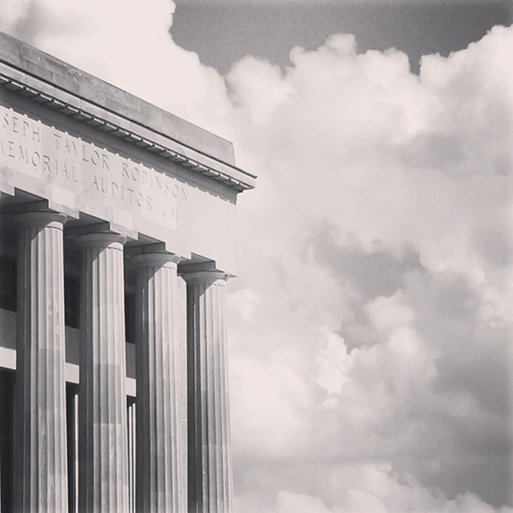
Little Rock Look Back: Voters Approve Municipal Auditorium

muni aud elect ad editedOn January 26, 1937, Little Rock voters went to the polls to vote on three different municipal bond issues.  One of them was the construction of a municipal auditorium (what would become Joseph Taylor Robinson Memorial Auditorium, now Robinson Center Music Hall).

The bonds for the auditorium would be $468,000 in general obligation bonds which would be paid off between 1940 and 1971. This was toward a total cost of $760,000 for the entire project.

The official campaign for the auditorium was sponsored by the Little Rock Forward Committee which was led by W. H. Williams. In campaign advertisements it showed the value of conventions in New York City which was estimated at $100 per convention attendee. Little Rock organizers were estimating a $10 a day expenditure by visitors, which the committee stressed was very conservative. The campaign committee emphasized the importance of acting at that time due to the federal government money involved.

Various committees and organizations endorsed the auditorium project including the Little Rock Chamber of Commerce, Little Rock Federation of Women’s Clubs, and the Young Business Men’s Association.

The thrust of the campaign focused on the economic benefit to Little Rock as well as the fact that the auditorium would be for all citizens. This message was picked up in editorials by both the Democrat and Gazette. In editorials on January 23 and 25, the Democrat opined that the benefits of the auditorium would be distributed among all classes of the citizenry. The next day, both papers ran editorials which touted the economic boon an auditorium would bring through conventions and meetings.

The Democrat’s approach broke down the current value of conventions to Little Rock with, what it termed, the city’s “existing inadequate” facilities. The paper emphasized a conservative estimate of what the added value to Little Rock’s economy would be with the new auditorium.

In expressing support for the auditorium the Gazette stressed the values for local, statewide and national groups. “An auditorium would provide a more convenient and better adapted community center for all kinds of local gathering,” and continued that it would make Little Rock “the logical meeting place for state conventions of every sort.” In discussing the value of state, regional and national meetings the paper stressed that the outside money spent by convention attendees has an impact beyond stores, hotels and restaurants.

Both papers also echoed the importance of the federal government financing to make this possible. The Democrat noted that the Public Works Administration grant and federal low cost loan made this an ideal time.

On January 26, 1937, Little Rock voters approved the auditorium bond by a vote of 1,518 to 519. It passed in each of the city’s 23 precincts. Little Rock Mayor R. E. Overman expressed his pleasure at the outcome of the vote and extended his thanks to the voters.

After the election, a Gazette editorial commented on the low turnout for the special election by commenting that the weather had been nice and there were no other barriers to voting. The editorial writer opined that those not voting in the election must not have been opposed to the endeavor.
Little Rock Look Back: General Douglas MacArthur

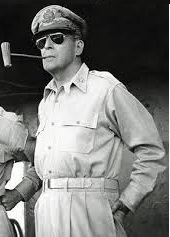
MacArthurOn January 26, 1880, Douglas MacArthur was born in the Arsenal Building while his father was stationed at the Little Rock Barracks.  Though he left Arkansas a few weeks later when his father was transferred, he returned to his birthplace on March 23, 1952. On that day he was greeted by crowds welcoming one of the USA’s most famous military figures.

Though Gen. MacArthur spent only a few weeks in Little Rock, he was baptized at Christ Episcopal Church.  The location of the baptism remains a mystery today because the church was meeting in temporary locations due to the first structure having been lost to a fire.

When the General returned to Little Rock in 1952, he did pay a brief visit to Christ Church.  He also spoke at the Foster Bandshell in the park which bore his name.  He was one of three presidential candidates to speak at the Foster Bandshell in 1952, the others were the eventual Democratic and Republican nominees Adlai Stevenson and Dwight Eisenhower.

When General MacArthur died, he was granted a state funeral.  He was one of the few non-Presidents to have been given this honor.

Today, the MacArthur Museum of Arkansas Military History is located in the Arsenal building.  It was created to interpret our state’s military heritage from its territorial period to the present.  Located in the historic Tower Building of the Little Rock Arsenal–the birthplace of General Douglas MacArthur–the museum preserves the contributions of Arkansas men and women who served in the armed forces.  Exhibits feature artifacts, photographs, weapons, documents, uniforms and other military items that vividly portray Arkansas’s military history at home and abroad.

Movie Lineup at CALS Ron Robinson Theatre announced

cals ronrob intMovie lovers of all ages can plan their entertainment schedule with the Central Arkansas Library Systems (CALS)Ron Robinson Theaters winter/spring line up. Three series have been designed for adults, young adults, and children, and the films will be screened at the theater, 100 River Market Avenue, through May. Tickets are $5 each, concessions are available, and access is near the Main Librarys parking lot.

Combined these films have won 6 Oscars and been nominated for 31.

            From the 1950s, 1960s and 1970s, “The Classics”series includes

The Godfather (R)

Thursday, February 12

7 p.m.

Breakfast at Tiffanys (NR)

Friday, April 10

7 p.m.

Some Like It Hot (NR)

Friday, May 1

7 p.m.


            Highlighting some of the best from the 1980s and 1990s is “The Rewind” series includes

Pretty Woman (R)

Friday, February 6

7 p.m.

Annie (1982 PG)

Thursday, March 12

7 p.m.

Fight Club (R)

Thursday, April 9

7 p.m.

Ferris Buellers Day Off (R)

Thursday, May 28

7 p.m.

            For families, the “Kid Flix” series includes

Anastasia (G)

Saturday, January 24

2 p.m.

James and the Giant Peach (PG)

Saturday, February 28

2 p.m.

Fantastic Mr. Fox (PG)

Saturday, March 28

2 p.m.

The Sandlot (PG)

Saturday, April 11

2 p.m.

            The 315 seat single-screen theater combines the best of the golden age of cinema and todays industry standard in state-of-the-art projection, lighting, and surround sound equipment. We are proud to offer Central Arkansas residents an exceptional cinema experience.

            For tickets or more information contact the Ron Robinson Theater Box Office at 320-5715 or visit the website at www.ronrobinsontheater.com.

Little Rock Look Back: City Takes Possession of Robinson Auditorium

10.+citylittlerock-2On January 25, 1940, the City of Little Rock officially took complete possession of the Joseph Taylor Robinson Memorial Auditorium. By assuming custody of the structure from the contractor and the PWA, the City accepted responsibility for any of the remaining work to be completed.  This event happened one day shy of the third anniversary of the election which approved plans to issue bonds for an auditorium.

E. E. Beaumont, the Auditorium Commission chairman, stated that an opening date could not be set until more work was completed. A major unfinished task was the laying of the front sidewalk which had been delayed due to cold weather.

The night before Little Rock took possession, Robinson Auditorium had been a topic of discussion at the Little Rock Chamber of Commerce annual meeting. The new Chamber president Reeves E. Ritchie (who as an Arkansas Power & Light executive had been engaged in the lengthy discussions about the installation of the steam line and transformers of the building) pledged that the Chamber would work to bring more and larger conventions to Little Rock at the Joseph Taylor Robinson Memorial Auditorium.

Today, the building is once again a construction site as it is being renovated and repurposed to become a performing arts and event space for the 21st Century.

Straw Gets Spun into Gold as RUMPELSTILTSKIN takes stage at Arts Center Children’s Theatre

AACCTrumpThe Arkansas Arts Center Children’s Theatre presents Rumpelstiltskin through February 8, 2015.

“The magical tale of Rumpelstiltskin takes the audience on an action-packed journey that is familiar to so many generations,” said Todd Herman, executive director of the Arkansas Arts Center. “We invite the community to experience the enchantment of this wonderful play.”

Once upon a time, there was a dwarf who tried to take things that just weren’t his. Now, this dwarf lived in a land that was ruled by a king whose greed was as grand as his kingdom. And in that kingdom, there lived a miller whose bragging mouth was nearly as grand as the king’s greed. And it so happened that this miller had a lovely daughter who was kind and good, but one day she did a very bad thing –  she made a promise she could not keep. Now, the king is angry, the miller is frightened, and the dwarf is simply out of control.

Wheels spin and straw flies as the miller’s daughter works madly to make things right again, but the only way she can is by discovering the mean old dwarf’s secret true name. In searching for that, she discovers the only power in the world that will help her. The most magical power of all: love.

This production is adapted for the stage by Keith Smith from the Brothers Grimm.

The cast for Rumpelstiltskin includes:

  • Nate Plummer as Rumpelstiltskin
  • Lauren Linton as The Miller’s Daughter
  • Mark Hansen as The King
  • John Isner as The Miller

Bradley Anderson is the artistic director and Keith Smith is the playwright and set designer for the production. Costumes are designed by Erin Larkin; technical direction by Drew Posey; lighting design by Penelope Poppers; properties design by Miranda Young and Sarah Gasser is the stage manager.

BUILD IT LAB today and next 4 Saturdays at Museum of Discovery

NewMOD 021Starting today and continuing on Saturdays through February 21, the sound of hammering and sawing will fill the galleries of the Museum of Discovery during its latest project, “Build It Lab,” a hands-on exploration into the world of construction.  In partnership with AGC Arkansas, the state’s largest association of commercial contractors; University of Arkansas at Little Rock; and Home Depot, “Build It Lab” will be held from 10 a.m. to 3 p.m. on five consecutive Saturdays, January 24 through February 21, and promises to offer visitors an interactive view into the many phases of construction ranging from framing to wiring to painting.

Museum visitors each Saturday will engage in five hands-on activities related to framing, waterproofing, plumbing, wiring, roofing, soundproofing and painting.  Some of these activities include an introduction to hammering and sawing, circuit blocks, marble runs and painting with the aid of stencils.  The activities will be facilitated by area construction professionals, Home Depot employees and museum staff.

In addition to the hands-on projects, students from the University of Arkansas at Little Rock’s Construction Management program will build a playhouse, focusing on a different construction phase each Saturday.  Once the house is complete, the Museum of Discovery will donate the building to a school for their playground.

“The mission of the Museum of Discovery is to ignite a passion for science, technology and math in a dynamic, interactive environment,” said Kelley Bass, museum CEO, “and Build It Lab is going to give our visitors the chance to do just that as they engage in hands-on construction activities while also observing UALR students building the playhouse that later will be awarded to an Arkansas school.”

“Workforce development continues to be a topic at the forefront of the minds of many Arkansans,” said Richard Hedgecock of AGC Arkansas, “We are proud to partner with these great community leaders to open the eyes of young people, and their parents, about the possibilities offered to them through construction careers.”

“Build It Lab” participation is included in regular museum admission.  For more information, visit www.museumofdiscovery.org or contact 501-396-7050.

Riveting WHIPPING MAN at Arkansas Rep

THEREP_THE WHIPPINGMAN (no credits)-page-001The Arkansas Repertory Theatre production of Matthew Lopez’s The Whipping Man is a riveting production which features three men grappling with issues of faith, family, and fidelity over three days at the close of the Civil War.  Set in the remains of a once-grand townhouse in Richmond (masterfully designed by Mike Nichols), it tells the story of Caleb, the scion of the edifice’s owner, and two of the now-former house slaves, Simon and John.

As Simon, the moral compass of the trio, Michael A. Sheppherd portrays a complex man wrestling with the changing times while holding on to a vision of a bright future. His approach to the role is to emphasize Simon’s pragmatism. He can easily shift from stern (when making hard decisions) to tender (when discussing his wife and daughter). Sheppherd projects an inner strength which never allows the character to slip into the “noble, long-suffering slave” stereotype.  As do the other two actors, he finds the quiet, honest humor in the script while not disrupting the story.

Damian Thompson likewise avoids having John wear the “shiftless, devious” label. He joyfully struts like a peacock in his increasingly finer clothing (a deft creation of costume designer Yslan Hicks) and brags of his latest acquisitions (which progressively litter the stage courtesy of props designer Lynda J. Kwallek). But like the other two characters, he is seeking to better himself in these uncertain times. Thompson’s eyes and smile flash the brilliance of the character, who obviously has intelligence since he taught himself to read.

Ryan Barry’s Caleb spends much of the time onstage sitting in one place due to an injury. Through his sometimes pained voice, shifts in posture and gestures, he never seems static. His descriptions of the horrors of war are gripping. When paired with his soft tone of voice and romantic longing for the girl he left behind at home, he serves as a reminder that not all went into war with gusto.

Throughout the play, it becomes apparent that all is not what it seems with any of the three. What the secrets are, and who knows what about whom, is just part of the evening.  While the mysteries are plot points, they are not the whole point of the story.  The faith and shared experiences bind these three together far more than they would care to admit.  Sheppherd, Thompson and Barry share a great chemistry which serves the production well.

Director Gilbert McCauley obviously trusts his actors and the script.  He lets the action unfold at a languid, but not sluggish pace.  In his hands, the silences and stillness of the actors can sometimes be more powerful than words and movement.  There are moments in the script which could easily shift into melodrama, but McCauley does not allow that.

This same approach is shared with the strong and subtle lighting design of Dan Kimble. He achieves a rare balance of having the stage dim and well-lit at the same time. The mood of the play is also ably served by Allan Branson’s sound design.

The Whipping Man offers no easy answers or pat endings. While none of the characters are without flaws (who is?), they each have redeeming qualities.  At the end of the play, one is left wondering what will happen to them.  Realizing that the Reconstruction era in the South was hardly pleasant for anyone regardless of race, the audience knows that the future will probably not be too satisfying for any of the three.

Toward the end of the play, the trio share a Seder. In addition to the obvious connections (Abraham Lincoln and Abraham from the Bible, the end of slavery in both eras), it is also about sharing faith and sharing experiences.  It is, for a brief respite, a moment of pure peace.

The Arkansas Rep production of Lopez’s play serves as a helpful reminder that in the midst of chaos, harmony can be achieved, if only for a moment.