Final ASO River Rhapsodies concert tonight. Mendelssohn, Mozart & Brahms on the program

ASO_revThe Arkansas Symphony Orchestra, Philip Mann, Music Director and Conductor, presents the final concert of the 2014-2015 Landers FIAT River Rhapsodies Chamber Music Series: Mendelssohn, Mozart, & Brahms. The ASO’s Quapaw and Rockefeller String Quartets and other ASO musicians perform chamber music from Mendelssohn, Mozart, and Brahms on April 21, 2015 at 7:00 PM in the beautiful Great Hall of the Clinton Presidential Center, 1200 President Clinton Ave., Little Rock, AR.

A cash bar is open at 6 PM and at intermission, and patrons are invited to carry drinks into the hall. Media sponsor for the Landers FIAT River Rhapsodies Chamber Music Series is KUAR/KLRE.

Tickets are $23; active duty military and student tickets are $10 are can be purchased online at www.ArkansasSymphony.org; at the Clinton Presidential Center box office beginning 60 minutes prior to a concert; or by phone at 501-666-1761, ext. 100.

ARTISTS:
Quapaw Quartet: Eric Hayward, Meredith Maddox Hicks, Katrina Weeks, David Gerstein
Rockefeller Quartet: Katherine Williamson, Trisha McGovern, Katherine Reynolds, Daniel Cline
Andrew Irvin, violin
Ryan Mooney, viola
Rafael Leon, cello
Leanna Booze, oboe

PROGRAM
MENDELSSOHN: String Quartet in F minor, Op. 80
MOZART: Oboe Quartet in F Major, K. 370
BRAHMS: Strings Quintet in G, Op. 111

ABOUT THE ARKANSAS SYMPHONY ORCHESTRA
The Arkansas Symphony Orchestra celebrates its 49th season in 2014-2015, under the leadership of Music Director Philip Mann. ASO is the resident orchestra of Robinson Center Music Hall, and performs more than sixty concerts each year for more than 165,000 people through its Stella Boyle Smith Masterworks Series, ACXIOM Pops LIVE! Series, Landers FIAT River Rhapsodies Chamber Music Series, and numerous concerts performed around the state of Arkansas, in addition to serving central Arkansas through numerous community outreach programs and bringing live symphonic music education to over 26,000 school children and over 200 schools.

New Quapaw Quarter Historic Building Marker Program focus of program tonight at Butler Center

qqa markerLearn about the Quapaw Quarter Association’s Historic Building Marker Program and How to Participate

Historic homes are cherished parts of the community, and building markers help tell their stories. The Butler Center for Arkansas Studies will host an informational session about the Quapaw Quarter Association’s (QQA) building marker program on Tuesday, April 21, at 5:30 p.m. in room 204 of the Arkansas Studies Institute building, 401 President Clinton Ave.

Attendees will learn how to research historic properties to determine National Register eligibility and how to apply for a building marker. The session will focus specifically on how to use the QQA’s records and other resources available at the research room of the Arkansas Studies Institute building. More information on the QQA’s building marker program is available at http://quapaw.presencehost.net/what_we_do/qqa-historic-building-marker-program/. To attend the session, property owners may RSVP toqqa@quapaw.com with a property address.

The Quapaw Quarter Association began the new Historic Building Marker Program earlier this year.  This program replaces the discontinued Quapaw Quarter Historic Structure Plaque and the QQA Historic House Marker Programs.   The markers will be aluminum and approximately 14 inches wide by 12 inches high.  They will display the building name and date of construction.  They may be pole-mounted, or attached directly to the building.

The goals of this program are to recognize historically and architecturally significant buildings located anywhere in the City of Little Rock that have been well-maintained or have undergone exemplary rehabilitation; to bring to the attention of the general public buildings that are unique assets to the City of Little Rock; and to promote the Quapaw Quarter Association as Little Rock’s leading historic preservation organization.

The Butler Center for Arkansas Studies is a department of the Central Arkansas Library System (CALS) promoting the study and appreciation of Arkansas history and culture. For more information, visit www.butlercenter.org or call 501-918-3033.

THE BAREFOOT LAWYER tonight at the Clinton School

uacs barefootThe son of a poor farmer in rural China and blinded by illness when he was an infant, Chen Guangcheng became a self-taught lawyer and a political activist. Repeatedly harassed, beaten, and imprisoned by Chinese authorities, Chen was ultimately placed under house arrest. Despite his disability, he was determined to escape to freedom and fight for the rights of his country’s poor. After two years, one morning he climbed over the wall of his heavily guarded home and escaped. Days later, he turned up at the American embassy in Beijing, and after high-level negotiations, was able to leave China and begin a new life in the United States. Both a riveting memoir and a revealing portrait of modern China, “The Barefoot Lawyer” tells the story of a man who has never accepted limits and always believed in the power of the human spirit to overcome any obstacle.

He will speak tonight at the Clinton School at 6pm.

Little Rock Look Back: SOUTH PACIFIC wins Pulitzer Prize for Drama

SoPa Pul GazThe Pulitzer Prizes will be announced today.  In 1950, one of the recipients in the “Letters, Drama and Music” categories featured a character from Little Rock.

The 1950 Pulitzer for Drama went to a musical, for only the second time in the history of the awards.  The recipient was South Pacific by Richard Rodgers, Oscar Hammerstein II and Joshua Logan.  The character was the leading lady of Nellie Forbush. She was an Navy ensign and a nurse stationed on an exotic island during World War II.  The musical was based on a Pulitzer Prize winning novel, James Michener’s Tales of the South Pacific.

In the Michener novel, Miss Forbush is not from Little Rock.  She is actually from a small town in Alabama.  The part was written for Mary Martin from Weatherford, Texas.  Rodgers, Hammerstein & Logan did not discuss why they relocated Nellie’s birthplace.

In the musical, Nellie struggles with her own prejudices. This issue of prejudice became an instance of fact meeting fiction. In 1957, a few weeks after Eisenhower sent troops into Little Rock to ensure that Central High would be desegregated, a production of South Pacific on Long Island was temporarily halted when the audience booed and yelled after Nellie mentioned she was from Little Rock.


On Pulitzer Day – Prizing Mount Holly

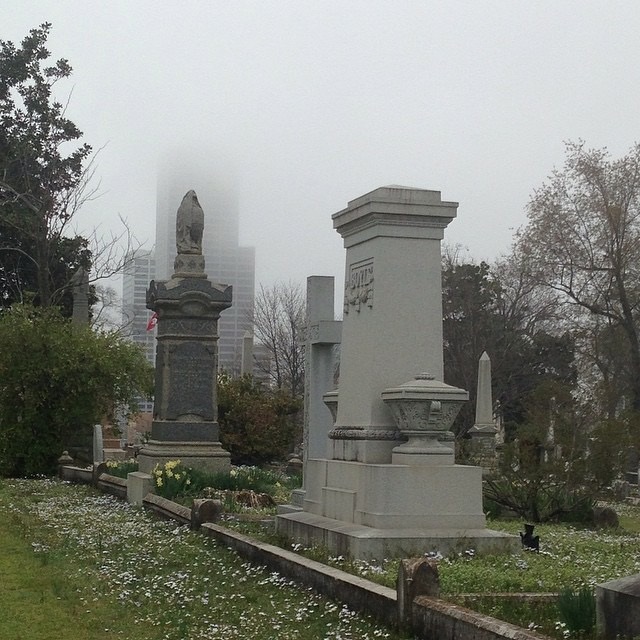
The Pulitzer Prizes are to be announced today.  Mount Holly Cemetery not only touts that it is the site of a whole host of elected officials, it is also the only place in Arkansas where two Pulitzer Prize recipients are buried. The cemetery is open every day, but a special visit to these two prize winner gravesites can be made next Sunday during the Mount Holly Cemetery Association’s annual “Rest in Perpetuity” fundraiser picnic.

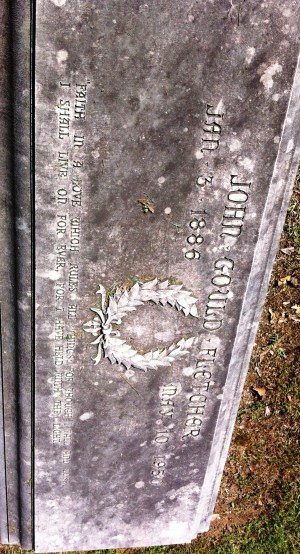
In 1939, John Gould Fletcher became the first Southern poet to win the Pulitzer Prize for Poetry.  He was born into a prominent Little Rock family in 1886.  Fletcher was awarded the prize for his collection Selected Poems which was published by Farrar in 1938.  Two years earlier, he had been commissioned by the Arkansas Gazette to compose an epic poem about the history of Arkansas in conjunction with the state’s centennial.

Fletcher is buried next to his wife, author Charlie May Simon and his parents (his father was former Little Rock Mayor John Gould Fletcher).  Other relatives are buried nearby in the cemetery.

The other Pulitzer Prize winner buried in Mount Holly is J. N. Heiskell, the longtime editor of the Arkansas Gazette.  It was Heiskell, in fact, who asked Fletcher to compose the poem about Arkansas.  Heiskell served as editor of the Gazette from 1902 through 1972.  He died at the age of 100 in 1972.

Under his leadership, the Gazette earned two Pulitzer Prizes for its coverage of the 1957 desegregation of Little Rock Central High.  One was for Harry Ashmore’s editorial writing and the other was for Public Service.

Heiskell remained in charge of the Gazette until his death in 1972.  He is buried alongside his wife with other relatives nearby.  Also not too far from Mr. Heiskell are two of his nemeses, proving that death and cemeteries can be the great equalizer. In the early days of his Gazette stewardship, he often locked horns with Senator (and former Governor) Jeff Davis. Later in Mr. Heiskell’s career, he vehemently disagreed with Dr. Dale Alford, who had been elected to Congress on a segregationist platform.

Old, New, Borrowed, Blue (Jeans) in 2015-16 Arkansas Symphony Masterworks Series

Under the baton of Maestro Philip Mann, the 2015-2016 Arkansas Symphony Orchestra Stella Boyle Smith Masterworks series features a lineup with something old, something new, something borrowed and jeans that are blue.

The borrowed is the location. For the second of two seasons, the Maumelle Performing Arts Center will be the Masterworks home.

The new includes a World Premiere of D.J. Sparr’s Concerto for Jazz Guitar, which will feature Ted Ludwig.  Another new selection is Scott McAllister’s Black Dog which is based in hard rock.

Among the old friends returning are pieces by Grieg, Dvorák, Haydn, Mendelssohn, Borodin, Beethoven, Tchaikovsky, Rossini, Stravinsky, Brahms, Shostakovich and Bernstein.

The season kicks off with Grieg’s Piano Concerto on September 26 & 27. The guest artist that weekend is pianist Jon Kimura Parker.  The concert will include Mendelssohn’s The Hebrides, Op. 26 “Fingal’s Cave,” Grieg’s Piano Concerto in A minor, Op. 16 and Borodin’s Symphony No. 2 in B minor.

Next is Dvorák’s Symphony No. 8 on October 17 & 18. Imre Palló will be the guest conductor, and Cicely Parnas, cello will be the featured artist. The program will include Kodály’s Dances of Galanta; Haydn’s Concerto for Cello in C Major; and Dvorák’s Symphony No. 8 in G Major, Op. 88.

The annual Beethoven and Blue Jeans concert will be November 7 & 8 featuring guest artist Kelly Johnson, clarinet.  The lineup will feature Beethoven’s Symphony No. 8 in F Major, Op. 93; McAllister’s Black Dog; and Tchaikovsky’s Swan Lake Suite, Op. 20a.

2016 will start with Firebird Suite and featured soloist Kiril Laskarov. On January 30 & 31 the program will include Rossini’s La gazza ladra: Overture; Mendelssohn’s Concerto for Violin, Visconti’s Black Bend and Stravinsky’s The Firebird Suite (1919).

February 27 & 28 the program is Bernstein and Brahams.  The concert will have Bernstein’s Chicester Psalms and the Brahms Ein deutsches Requiem. 

The 2015-2016 season will wrap up on April 9 & 10 with Shostakovich’s Symphony No. 5. The concerts will include Bernstein’s Candide Overture; Sparr’s Concerto for Jazz Guitar and Shostakovich’s Symphony No. 5 in D minor, Op. 47. 

Poetry Month: John Gould Fletcher & “In Mount Holly”

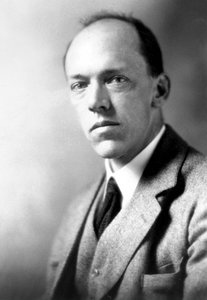
John_Gould_Fletcher poetThe Pulitzer Prizes will be announced tomorrow.  Arkansas poet John Gould Fletcher became the first Arkansan to win a Pulitzer and the first Southern poet to win the Pulitzer for Poetry.

The scion of a leading family of Little Rock, Fletcher was most known for his association with the Imagism movement in poetry.

Below is his 1929 poem “In Mount Holly.”  This cemetery is the final resting place of many members of his family. Fletcher and his wife Charlie May Simon (an award winning children’s author) are buried next to his parents in Mount Holly.

Supporters of Mount Holly will gather next Sunday (April 26) for the Rest in Perpetuity picnic in the cemetery.  It is a fundraiser sponsored by the Mount Holly Cemetery Association.


Mount Holly grey“In Mount Holly”

Here beyond hope is all that death shall hold of me,
This brown Arkansas hillside, dreaming through depth of mid-winter, alone in the southland;
Under the dove-grey low-swung cloud come up from the Gulf to scatter
Its benediction of deep rain, endlessly flashing and pouring;
Here, in the drift of the years,
From the seas I have crossed, and the lands I have known, and the struggles
I have faced with the steady river of time marching on through my vitals,
I have come back to this point of repose, to these stones side by side in the grass,
Turning as the earth turns against far Orion’s fierce whirlwind of stars.

They greet me unseeing, these graves,
Mute symbols of life accomplished, made noiselessly perfect,
Quieted by the cold hands of death that suddenly seize on the body
In an hour unexpected, as a thief in the night, running free with the tale of man’s days;
Yet not to be loosed from the soil till the sphere splits its core and is shattered
Like a ripe seed pod crammed full with thick seed of expectancies, memories, and failures;
Their dumb thought trails on in the soil while I in the high world above them
Lift up thin eager hands to the sky and cry to the sun’s dying splendor.

Here beyond hope is all that death shall take of me,
The blood that is mine, and yet theirs, the tower, the base and the framework;
The building not reared by man’s hands, but shaped in the night and the silence,
The framework of the body fashioned as theirs, for the blood through the generations
Repeats the same tale of Eden lost and Paradise darkly forgotten:
When the stars hang low in the sky and two souls become as one body
Straining past hope and despair to a timeless consummation,
Which is as the wedding-song of God mating the stars without number.
Here does the last life wait,
Crouched in its stronghold of bone behind the slow-vanishing sinew,
A spark without issue, a last ache of lust, a slow tide merging and dying
Into the running of quick hidden sap and the thin dumb flame of the grass.

Out of what chasms of fire,
Out of what lavalike torrents life sprung at the outset neither I nor these graves can remember;
They have become turf-covered dumb mouths opening below to the waters under the earth,
Which burst forth but once in the flood, and since then have ever been silent.
Into what dark seas we flow
I know not at all—I remember
Only the sunlight that lays a soft pencil of shadow to sleep on the grass;
The tramp of the black-clad pallbearers, the words spoken or sung, the lowering of the coffin to earth.

Here beyond hope, beyond dreams,
Under this soft and lazy sky dreaming in depth of midwinter,
Where the sweetgum casts to the earth its brown prickly balls, where the holly
Flashes its scarlet clusters, where the feathery pine sways its thin needles,
Where the red haw blazes with berries threaded bright on long outspraying stems,
Where the conelike fount of the magnolia spreads downwards a billion of star-rayed leaves,
Where the acorn lies split on the stone, its yellow sustenance wasted:
Here was I fashioned and made
By those who now sleep in the earth at my feet, as they by others forgotten.
Their speech was my speech, their dream was my dream, it was given
Beyond the cloud’s arbitrament of rain to create, or the slow earth’s power to destroy.
And I pause ere I go,
And stretch out my hands to these worn stones, smoothing them over and over,
Repeating their names which no one but I now remembers,
Praying that they may somehow bless me;
These who have given me life and so many dreams
On this brown Arkansas hillside, quiet in depth of midwinter:
Out of this army of graves facing eastward I single out but these two stones,
I wailingly beseech them
With the tears of the spirit torn against life and its days,
In this place where so many tears have been shed and mortal lives brought to the awe
Of the open portals of death, beyond hope, beyond dreams;
I kneel and weep as a man weeps,
I cry out loud as a man cries,
Let that which is mine and yet yours, this memory transient, this passion,
Marked by the cross of Christ on those stones, marked in my heart by time’s ebbing,
Be with me now forever wherever I go.