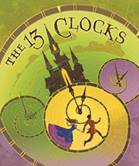
13 CLOCKS next at Arkansas Arts Center Children’s Theatre

AAC CT ClocksThe Arkansas Arts Center Children’s Theatre invites you to join the brave Prince Zorn on a whimsically impossible fantasy quest from the ever-surprising, always entertaining imagination of James Thurber. The 13 Clocks will run January 29 – February 14.

In The 13 Clocks, Thurber tells the story of Princess Saralinda and her evil uncle, the Duke, who holds her prisoner in a tower, refusing to let her marry. That is until Prince Zorn arrives to rescue her. But first, he must complete an impossible task: deliver 1,000 jewels to the Duke just as the 13 castle clocks strike five o’clock.

The cast is led by Samantha Harrington and Geoffrey Eggleston.  Adapted for the stage by Keith Smith from the story by James Thurber, it is directed by Bradley D. Anderson, AACCT artistic director. Costumes are designed by Nikki Webster, technical direction and set design by Drew Posey, lighting design by Mike Stacks, properties design by Miranda Young and Sarah Gasser is the stage manager.

Performances are Fridays at 7 p.m., Saturdays and Sundays at 2 p.m.

 $12.50 General admission, $10 for Arkansas Arts Center members


Little Rock Look Back: LR Mayor W.W. Stevenson

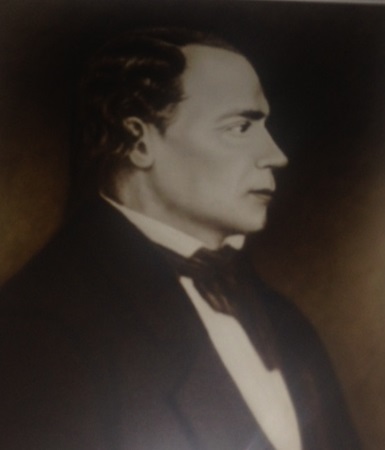
Mayor StevensonOn January 29, 1797, future Little Rock Mayor William Wilson “W. W.” Stevenson was born in South Carolina.

In 1811, he came to Arkansas when his family settled in Batesville.  An ordained Presbyterian minister, he married Ruana Trimble in 1821 and had two children. After she died, he married Maria Tongray Watkins in 1831 and had two more children.

In 1831, he ran for Little Rock Mayor in the first election for the office but was defeated by Dr. Matthew Cunningham.  The next year he ran to succeed Cunningham and was elected.  After leaving the Mayor’s office on December 31, 1833, he continued public service.  He was asked to run for Mayor later in the 1830s, but declined.  He did serve as State Commissioner for Public Buildings in 1839.

In 1849, he delivered the funeral oration at the ceremony for Hon. Ambrose H. Sevier.  Later that year, he was hired as a geologist for the Little Rock and California Association which was created to take advantage of the gold rush.  He and his two oldest sons moved to California and never returned to Arkansas. He died in 1888.

Pianist Michelle Cann tonight at Mosaic Templars, sponsored by Chamber Music Society of Little Rock

This evening at the Mosaic Templars Cultural Center, the Chamber Music Society of Little Rock presents Michelle Cann, pianist.  The recital will begin at 7:30 pm.  Tickets are $30, free for students.

Concert pianist Michelle Cann is a young artist with a deep musical commitment to performing a wide range of repertoire throughout the US and to bringing the arts to local communities. Michelle made her orchestral debut at age 14 and has since performed with various orchestras including the Florida Orchestra, the New Jersey Symphony Orchestra and the Cleveland Institute of Music Symphony Orchestra. She regularly appears in recital and as a chamber musician throughout the US, China and South Korea at premiere concert halls including the National Center for the Performing Arts in Beijing and the Kennedy Center for the Performing Arts.

Michelle received her Bachelor and Master degrees in piano performance from the Cleveland Institute of Music studying with Paul Schenly and Daniel Shapiro and received an Artist Diploma from the Curtis Institute of Music in Philadelphia, where she currently resides, studying with Robert McDonald.

Michelle is a young leader in creating opportunities for music education in her community. During her time in Philadelphia, she has served as the choir director of two thirty-member children choruses in the El-Sistema inspired program, “Play On Philly”, and is the founder of a new program, “Keys to Connect”, which strives to strengthen the bond between parent and child through the shared study of piano.


Star Wars Science tonight at Museum of Discovery, or “Light Sabres and Beer, What Could Possibly Go Wrong?”

MOD Dark Star WarsEach month the Museum of Discovery hosts “Science after Dark” for adults aged 21 and up.  This month’s theme is “Star Wars Science.”

Here are some of the things you can expect:
-Making finger light sabres

-Fusing plastic to make Darth Vader capes

-Geeking out with Star Wars science facts, fun, and..well, it’s Star Wars!!!!!!

Don’t forget to bring cash for refreshments from Stone’s Throw Brewing and Damgoode Pies.

The program runs from 6pm to 9pm. Cost is $5, FREE for museum members. (Go ahead and get a membership, it will more than pay for itself within a year!)

Art+History Throwback Thursday: City Park in 1907

On February 9, Little Rock voters will have the chance to say Yes to improving the MacArthur Museum of Arkansas Military History, Arkansas Arts Center, and MacArthur Park.

Leading up to that election is a good time to look back at the development of MacArthur Park.

The land now known as MacArthur Park had originally served as a horse racetrack in the early days of Little Rock.  By 1836, the federal government purchased the land for construction of a military arsenal.  The flagship building, the Arsenal Tower building, is the only remaining structure from that time period.  

The land served as a military outpost until 1892.  On April 23, 1892, a land swap took place where in the City of Little Rock was given the property with the stipulation that it would be “forever exclusively devoted to the uses and purposes of a public park.” (Never mind that the federal government took part of the land back for the construction of the Wilbur Mills Freeway.)  

In return for giving the City this land, the federal government took possession of land on the north side of the Arkansas River (then part of Little Rock) – that 1,000 acres became Fort Logan H. Roots. The park opened on July 4, 1893, with the name Arsenal Park. Since it was the City’s first and only park at the time, residents started referring to it as City Park. In time, the designation Arsenal Park fell from use.  In fact, it is referred to as City Park exclusively and officially in City documents throughout the first 42 years of the 20th Century. 

On March 9, 1942, Little Rock’s first public park was renamed by the Little Rock City Council.  By a vote of fourteen ayes, zero nays and four absent, the alderman approved Ordinance 6,388 which renamed the park in honor of General Douglas MacArthur. 

The text of the ordinance says that “it is fitting and proper that the bravery and glorious deeds of General Douglas MacArthur, a native son of Little Rock, should be commemorated.”  This was passed a few months after the United States’ entry into World War II.   Though he was already a well-established military figure, most of the MacArthur legend during the war would take place after this naming. 

In 1952, General MacArthur (contemplating a run for the GOP nomination for President) visited Little Rock in March.  Later that year, the eventual GOP nominee (and 34th US President) General Dwight Eisenhower visited the park.  The 1952 Democratic nominee Adlai Stevenson also visited MacArthur Park in 1952.

Today, MacArthur Park is the anchor of the burgeoning MacPark district as well as the MacArthur Park Historic Distric.

 

Award winning composer Dan Visconti at the Clinton School today

Today the Clinton School, in partnership with the Arkansas Symphony Orchestra, welcomes composer Dan Visconti. His remarks will start at 12 noon.

Dan Visconti is an American composer whose compositions often explore the rough timbres, propulsive rhythms, and improvisational energy characteristic of jazz, bluegrass, and rock. His work has been performed by some of the top interpreters of contemporary music in some of the best venues around the world, including Carnegie Hall, the Sydney Opera House, and the Kennedy Center for the Performing Arts, and has received numerous awards.

For his ongoing initiatives innovating concert experiences that address social issues through music, Visconti was awarded a 2014 TED Fellowship and delivered a TED talk at the 30th Anniversary TED Conference in Vancouver. Visconti serves as composer and Director of Artistic Programming at Chicago’s Fifth House Ensemble, a nonprofit organization that reaches new audiences with an emphasis on civic outreach, educational programming, and collaborative projects with other artists. He is also composer-in-residence at the Fresh Inc Festival, where he works with young entrepreneurs in building musical careers in line with their own unique vision and values.

Next week’s Iowa Caucus focus of Clinton School program today

Today (January 27) at noon, Steffen Schmidt will discuss Historical Significance and Current Trends in the Iowa Caucus today at the Clinton School.

Steffen Schmidt is a University Professor of Political Science at Iowa State University and an internationally recognized expert on American elections.

He’s the author of 70 articles in scholarly journals and 11 books, including the best-selling college textbook “American Government and Politics Today (19th edition),” which has been read by over 3 million college students, and the recipient of numerous prestigious teaching prizes, including the Amoco Award for Lifetime Career Achievement in Teaching and Teacher of the Year award.

Known as “Dr. Politics,” Schmidt has been analyzing the Iowa caucuses and US national politics since 1972 and is currently teaching a free, short online course on the caucuses.