Little Rock Look Back: LR Voters Approve Municipal Auditorium

muni aud elect ad editedOn January 26, 1937, Little Rock voters went to the polls to vote on three different municipal bond issues.  One of them was the construction of a municipal auditorium (what would become Joseph Taylor Robinson Memorial Auditorium, now Robinson Center Music Hall).

The bonds for the auditorium would be $468,000 in general obligation bonds which would be paid off between 1940 and 1971. This was toward a total cost of $760,000 for the entire project.

The official campaign for the auditorium was sponsored by the Little Rock Forward Committee which was led by W. H. Williams. In campaign advertisements it showed the value of conventions in New York City which was estimated at $100 per convention attendee. Little Rock organizers were estimating a $10 a day expenditure by visitors, which the committee stressed was very conservative. The campaign committee emphasized the importance of acting at that time due to the federal government money involved.

Various committees and organizations endorsed the auditorium project including the Little Rock Chamber of Commerce, Little Rock Federation of Women’s Clubs, and the Young Business Men’s Association.

The thrust of the campaign focused on the economic benefit to Little Rock as well as the fact that the auditorium would be for all citizens. This message was picked up in editorials by both the Democrat and Gazette. In editorials on January 23 and 25, the Democrat opined that the benefits of the auditorium would be distributed among all classes of the citizenry. The next day, both papers ran editorials which touted the economic boon an auditorium would bring through conventions and meetings.

The Democrat’s approach broke down the current value of conventions to Little Rock with, what it termed, the city’s “existing inadequate” facilities. The paper emphasized a conservative estimate of what the added value to Little Rock’s economy would be with the new auditorium.

In expressing support for the auditorium the Gazette stressed the values for local, statewide and national groups. “An auditorium would provide a more convenient and better adapted community center for all kinds of local gathering,” and continued that it would make Little Rock “the logical meeting place for state conventions of every sort.” In discussing the value of state, regional and national meetings the paper stressed that the outside money spent by convention attendees has an impact beyond stores, hotels and restaurants.

Both papers also echoed the importance of the federal government financing to make this possible. TheDemocrat noted that the Public Works Administration grant and federal low cost loan made this an ideal time.

On January 26, 1937, Little Rock voters approved the auditorium bond by a vote of 1,518 to 519. It passed in each of the city’s 23 precincts. Little Rock Mayor R. E. Overman expressed his pleasure at the outcome of the vote and extended his thanks to the voters.

After the election, a Gazette editorial commented on the low turnout for the special election by commenting that the weather had been nice and there were no other barriers to voting. The editorial writer opined that those not voting in the election must not have been opposed to the endeavor.
Little Rock Look Back: Gen. Douglas MacArthur

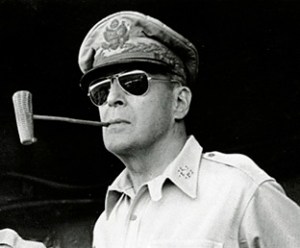
GOn January 26, 1880, Douglas MacArthur was born in the Arsenal Building while his father was stationed at the Little Rock Barracks.  Though he left Arkansas a few weeks later when his father was transferred, he returned to his birthplace on March 23, 1952. On that day he was greeted by crowds welcoming one of the USA’s most famous military figures.

Though Gen. MacArthur spent only a few weeks in Little Rock, he was baptized at Christ Episcopal Church.  The location of the baptism remains a mystery today because the church was meeting in temporary locations due to the first structure having been lost to a fire.

When the General returned to Little Rock in 1952, he did pay a brief visit to Christ Church.  He also spoke at the Foster Bandshell in the park which bore his name.  He was one of three presidential candidates to speak at the Foster Bandshell in 1952, the others were the eventual Democratic and Republican nominees Adlai Stevenson and Dwight Eisenhower.

When General MacArthur died, he was granted a state funeral.  He was one of the few non-Presidents to have been given this honor.

Today, the MacArthur Museum of Arkansas Military History is located in the Arsenal building.  It was created to interpret our state’s military heritage from its territorial period to the present.  Located in the historic Tower Building of the Little Rock Arsenal–the birthplace of General Douglas MacArthur–the museum preserves the contributions of Arkansas men and women who served in the armed forces.  Exhibits feature artifacts, photographs, weapons, documents, uniforms and other military items that vividly portray Arkansas’s military history at home and abroad.

That museum will be one of the main beneficiaries of the successful approval of the tax election set for February 9.

Little Rock Look Back: City Takes Possession of Joseph T. Robinson Auditorium

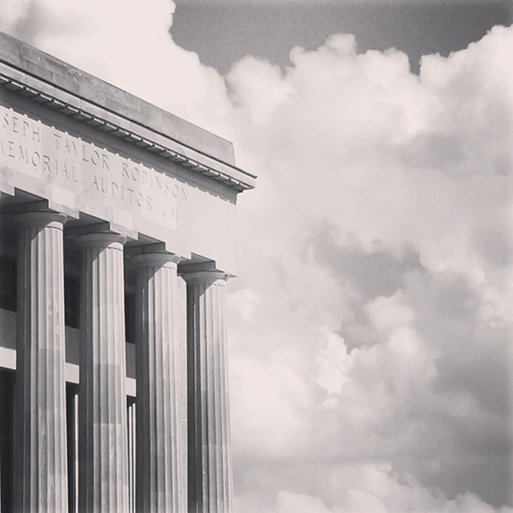
10.+citylittlerock-2On January 25, 1940, the City of Little Rock officially took complete possession of the Joseph Taylor Robinson Memorial Auditorium. By assuming custody of the structure from the contractor and the PWA, the City accepted responsibility for any of the remaining work to be completed.  This event happened one day shy of the third anniversary of the election which approved plans to issue bonds for an auditorium.

E. E. Beaumont, the Auditorium Commission chairman, stated that an opening date could not be set until more work was completed. A major unfinished task was the laying of the front sidewalk which had been delayed due to cold weather.

The night before Little Rock took possession, Robinson Auditorium had been a topic of discussion at the Little Rock Chamber of Commerce annual meeting. The new Chamber president Reeves E. Ritchie (who as an Arkansas Power & Light executive had been engaged in the lengthy discussions about the installation of the steam line and transformers of the building) pledged that the Chamber would work to bring more and larger conventions to Little Rock at the Joseph Taylor Robinson Memorial Auditorium.

Today, the building is once again a construction site as it is being renovated and repurposed to become a performing arts and event space for the 21st Century.

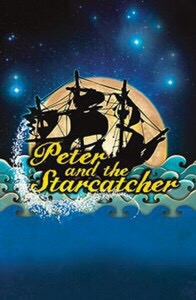
The show will go on! Ark Rep production of PETER AND THE STARCATCHER opens tonight

 Despite the snow which caused many cancellations this morning, the Arkansas Repertory Theatre production of PETER AND THE STARCATCHER opens tonight.  Think you know all there is to know about Peter Pan? Think again.

This Tony winning play by Rick Elice is based on the novel by Dave Barry and Ridley Pearson.  In this swashbuckling prelude to J. M. Barrie’s fantasy classic, the secret history of the Boy Who Would Never Grow Up is revealed with theatrical panache.

Based on the popular Dave Barry books, and mixing British pantomime with playful elements of childhood make-believe, this raucous adventure journeys into the forgotten realms of the imagination filled with mermaids, fierce natives, pirates and magic. 

Embark upon a treacherous ocean voyage as Molly, a young Starcatcher aboard the good ship Neverland, races to escape the comical clutches of the dread pirate Black Stache. Accompanied by a trio of Lost Boys from a British orphanage, she is soon marooned on a not-so-deserted island filled with otherworldly enchantments and exhilarating danger around every turn. Each breathtaking adventure leads them closer to the mysterious origins of the Peter Pan you know and love.

Peter and the Starcatcher will be presented as a co-production with TheatreSquared in Fayetteville, Ark. The Rep presents the regional premiere of this award-winning play as a perfect outing for young and old alike. It opens tonight and runs through Februry 14. 

The cast includes Seth Andrew Bridges, Marc Carver, Patrick Halley, Carey Hite, Garrett T. Houston, Bryce Kemph, Hugh Kennedy, Steve Pacek, Faith Sandberg, Jason M. Shipman, Nathaniel Stahlke and Bruce Warren.  Moriah Patterson and Garrett L. Whitehead are understudies. 

The production is directed by Mark Shanahan.  Other members of the creative team are Music Director: Mark Binns; Fight Director: D.C. Wright; Set Designer: James J. Fenton; Properties Designer: Brodie Jasch; Lighting Designer: Martin E. Vreeland; Costume Designer: Trish Clark; and Sound Engineer: Allan Branson.

Arkansas Sounds and Arkansas Times present premiere of URANIA DESCENDING film tonight

urania_descendingThe U.S. premiere of a film by Arkansas’s Tav Falco, a musician, artist, author, and filmmaker, who will hold an audience discussion after the screening. The film’s length is 1 hour, 8 minutes. This event is presented by Arkansas Sounds in partnership with the Arkansas Times.

The screening is free and open to the public.  It begins at 7pm in the CALS Ron Robinson Theater.

Urania Descending is described as “a black and white film poem infused with metaphor and mood, where the past overtakes the present…the story of an American girl on a one-way ticket to merry/sinister old Vienna who becomes embroiled in an intrigue to uncover buried Nazi plunder.”

Tav Falco has created films for over fifteen years, working with performers, artists, and directors such as Winona Ryder, Bruce MacDonald, Jean Michel Basquiat, and Iggy Pop.

Something New at tonight’s Arkansas Symphony Intimate Neighborhood Concert

Stained GlassThe Arkansas Symphony Orchestra, Philip Mann, Music Director and Conductor, presents”Something New” tonight (January 21) as the 2015-2016 Intimate Neighborhood Concerts series continues.
The concert begins at 7PM at St. James United Methodist Church.

PROGRAM:
FINE – Suite for Strings
RILEY – In C
MENDELSSOHN – Symphony No, 1

Grammy winner Michael Fine’s chamber version of “Suite for Strings” will receive its premiere performance at this concert.

Tickets are $25 and can be purchased online at www.ArkansasSymphony.org or by phone at 501-666-1761, ext. 100.

ASO, I.N.C.: Intimate Neighborhood Concerts presents gorgeous and acoustically unique venues and music selected specifically to explore the spaces of the concerts. Patrons can get up-close and personal with musicians in chamber orchestra ensembles performing pieces in the settings intended by the composers.

Arts+History Throwback Thursday: Arsenal Building in 1942

Associated Press photo

Associated Press photo

On February 9, Little Rock voters will have the chance to say Yes to improving the MacArthur Museum of Arkansas Military History, Arkansas Arts Center, and MacArthur Park.

Leading up to that election is a good time to look back at the development of these two MacArthur Park sited museums.

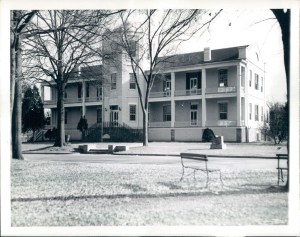
This is a 1942 Associated Press photo of the Arsenal Building.  Completed in 1840, it was decommissioned in 1890 after fifty years as a military arsenal and later officer barracks.  In 1893, the land on which it sits was transferred from the Federal Government to the City of Little Rock. The land became Little Rock’s first public park.  Briefly known as Arsenal Park, it was known as City Park until 1942, when it was renamed MacArthur Park after the five star general who was born there in 1880.

From 1942 until 1996, it was home to the Museum of Science and History (under several different names). The building was restored in preparation for the museum moving in.  After the building was vacated again in 1997 (when the museum moved to the River Market to become the Museum of Discovery), it stood vacant in preparation for a proposed military history museum. In 1999, the building was hit by a tornado which severely damaged part of the roof and caused some interior flooding.  The building was repaired and restored while plans for the new museum were underway.  In May 2001, the MacArthur Museum of Arkansas Military History opened.