Little Rock Look Back: Senator William Marmaduke Kavanaugh

CLR KavanaughOn March 3, 1866, William Marmaduke Kavanaugh was born in Alabama. He later moved with his family to Kentucky before coming to Little Rock as a newspaper reporter.

Kavanaugh served as editor and manager of the Arkansas Gazette before entering politics.  From 1896 until 1900, he served as Pulaski County Sheriff, which at the time also included the duties of tax collector.  From 1900 until 1904, he was County Judge of Pulaski County.  In that capacity he helped wrangle several cities, railroads and trolley lines to create a compromise which lead to the completion of the Third Street Viaduct which connected Little Rock with Pulaski Heights. It is still in use today.

After leaving his post as County Judge, he had a varied career in banking and business interests.

When Senator Jeff Davis died in early January 1913, he left the last few weeks of his term incomplete as well as the new term he was set to start in March 1913.  There was much interest in who would fill the remainder of Davis’ current term, because that person might be the frontrunner to also fill out the new term.  (This was at the time that the U.S. Senators were still selected by state legislatures.) Defeated Governor George Donaghey appointed J. N. Heiskell to fill out the term. But once the Arkansas General Assembly convened in mid-January, they overrode Donaghey’s appointment and replaced Heiskell with Kavanaugh.

Kavanaugh served in the Senate from January 29, 1913 until March 3, 1913.  He was succeeded by Joseph T. Robinson who had only recently taken office as Governor.  Speculation was that Kavanaugh would not want the full six year term, so that he was acceptable choice to all of the politicians jockeying for the full appointment.  From 1912 until 1915, he was an Arkansas member of the Democratic National Committee.

Another interest of Kavanaugh’s was baseball.  He served as president of the Southern Association minor league starting in 1903.  The baseball field in Little Rock situated at West End Park was named Kavanaugh Field in his honor.  It stood until the 1930s when it was replaced by what is now known as Quigley Stadium.  (In 1927, Little Rock High School had opened on the land which had been West End Park.)

Kavanaugh died on February 2, 1915 at the age of 48.  He is buried in Oakland Cemetery.

Prospect Road was renamed Kavanaugh Boulevard in his memory.

Women’s History Month – Carolyn Conner, first woman on LR City Council

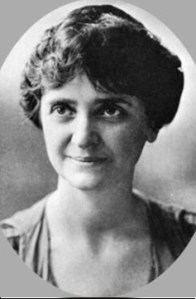
glass-connerCarolyn Conner was elected to the Little Rock City Council in April 1931. She was initially elected to fill out the remaining year of her husband’s term on the Little Rock City Council. She received 551 votes, or 61.6% besting two male candidates.

She was not the first woman to run for City Council.  In 1924, Mrs. George M. Waller challenged Charles M. Connor (no relation to Carolyn Conner).

In 1932, Carolyn Conner was reelected and would continue to serve on the council until April 1942, winning a total of six elections.  Mrs. Conner was the first woman to be elected to any City of Little Rock office.  She was also the first to chair a council committee, leading the Civic Affairs Committee from 1933 to 1935. On October 16, 1933, she was chosen as Acting Mayor becoming the first woman to lead the City of Little Rock and preside at a council meeting.

In December 1939, she also became the first female alderman to be arrested for contempt of court along with eleven of her male colleagues.  The judge did not send her to jail, though he did the male aldermen.  At the end of the day their sentences were suspended.

In April 1941, Mildred Craig joined Mrs. Conner on the Council after being elected to finish out her husband’s term.  Their service marked the first time there were two women on the City Council.

Four other musicals join THE LION KING in 2017-2018 Celebrity Attractions lineup

lion-king-ca-logoIn 2016, it was announced that Celebrity Attractions would bring The Lion King to Little Rock’s Robinson Center Performance Hall during the 2017-2018 season.

Now the dates for that show have been announced, as have the names and dates for four other musicals.

The Lion King, winner of the 1998 Tony Award for Best Musical, will play in Little Rock from April 18 through May 6, 2018.

The season will kick off with Kinky Boots, which won the 2013 Tony Award for Best Musical (playing October 13-15, 2017).  The 1987 Tony winning Best Musical Les Miserables returns to Little Rock from November 29 through December 3, 2017.

The stage version of Dirty Dancing will not be put in a corner, but it will be put on Robinson’s stage from March 16 to 18, 2018.  The season will conclude with Tony winning Beautiful: The Carole King Musical.  It will play from May 29 through June 3, 2018.

The remaining shows of the 2016-2017 are The Phantom of the OperaRiverdance, and Motown-The Musical.  Phantom, the 1988 Tony winner for Best Musical, plays March 8 through 19.  Riverdance‘s 20th anniversary tour plays in Little Rock from April 14 through 16.  Motown will rock Little Rock from June 21 through 25.

Women’s History Month – Lillian Dees McDermott

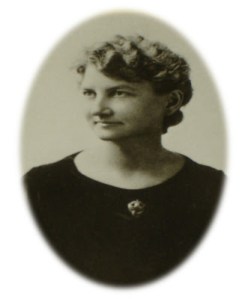
glass-mcdermottLillian Dees McDermott served on the Little Rock School Board from 1922 to 1946.

Not only was she the first woman to be elected to the School Board, she was also one of the longest-serving members of the board.  She was elected several times to serve as President of the School Board, becoming the first woman to have that title.  During one of her terms, plans to construct Little Rock High School (now Central) and Dunbar High School (now Dunbar Middle School) were finalized.

In her capacity as President, she had to sign contracts. She became the first woman in the country to sign a multi-million dollar contract for a public building project.  McDermott Elementary is named in her memory.

Little Rock Look Back: Creation of the Arkansas Territory

Arkansas TerritoryOn March 2, 1819, the Arkansas Territory was authorized by an act of Congress, to take effect  on July 4, 1819.

The Arkansas Territory was created from the portion of the Missouri Territory. It originally encompassed all of what is now Arkansas and much of what is now Oklahoma. The westernmost portion of the territory was removed on November 15, 1824, a second westernmost portion was removed on May 6, 1828, reducing the territory to the extent of the present state of Arkansas.

The Territorial capital was Arkansas Post from July 1819 until June 1821. At that point in time it was moved to Little Rock. In 1819, there was no permanent settlement in Little Rock. It would my be until early 1820 that a permanent settlement would be established.  On 1818, the Quapaw Treaty had anticipated a future settlement in Little Rock.

Women’s History Month – Erle Chambers, first woman sworn-in to Arkansas House of Representatives

rep-erle-chambersFirst woman sworn in as a member of the Arkansas General Assembly: Erle Chambers

Miss Chambers of Little Rock was elected in 1922 at the same time as Frances Hunt of Pine Bluff. But because members were sworn in based on their last names, she was actually sworn in first.

She had trained as an attorney at both the University of Arkansas and the University of Chicago, but never practiced law.  She served as Pulaski County probation officer from 1913 until 1917. At that time, she went to work for the Tuberculosis Association, where she would work until her death in 1941.

Miss Chambers served in the Arkansas General Assembly from 1923 until 1926.