Women’s History Month – Adolphine Fletcher Terry

Photos from the collection of the Butler Center

Adolphine Fletcher Terry did not rely on her pedigree for her identity.  She made her own impact on Little Rock, on Arkansas, and on the US.  For over 40 years, she served on the Little Rock Public Library Board.  Not only is she the longest serving female on Library Board history, she is likely the longest serving female on any City of Little Rock board or commission.

The daughter of a Little Rock Mayor, daughter-in-law of a congressman, wife of a congressman, she was raised in Little Rock and spent most of her life here.

She is perhaps best known today for establishing the Women’s Emergency Committee in 1958 and for her subsequent deeding of the family house to the City for use by the Arkansas Arts Center.  But her entire life was based on civic engagement.  She was instrumental in establishing the first juvenile court system in Arkansas and helped form the first school improvement association in the state. She was long an advocate for libraries, serving 40 years on the Little Rock public library board.  Through her leadership, the library opened its doors to African Americans in the early 1950s. Today a branch of the Central Arkansas Library System (the successor the Little Rock public library) is named after her.  Another branch is named after her Pulitzer Prize winning brother.

After her husband’s death in 1963, she continued to remain active in civic affairs. In the 1960’s, she and her sister deeded the Pike-Fletcher-Terry House to the City of Little Rock for use by the Arkansas Arts Center upon both their deaths.  Following Adolphine Fletcher Terry’s death in 1976, Mary turned over the title to the City.
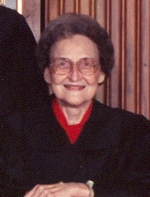
Women’s History Month – Judge Elsijane Trimble Roy, first woman on Arkansas Supreme Court

judge-trimbleElsijane Trimble Roy was born the daughter of a judge. At an early age, she knew she wanted to be an attorney.  She would eventually become not only the third female to graduate from the University of Arkansas Law School, but the first female circuit court judge in Arkansas, the first female on the Arkansas Supreme Court, and the first female Federal judge from Arkansas.

She was also the first woman in the United States to follow her father as federal judge.  She presided in the same courtroom where her father had served for 20 years. She retired in 1999 after 21 years on the federal bench.

Judge Roy has received many awards and honors including being selected Woman of the Year by the Business and Professional Woman’s Club in 1969, Arkansas Democrat Woman of the Year in 1976, an honor that her mother also received, and Outstanding Appellate Judge of 1976-1977 by the Arkansas Trial Lawyers Association.

While she was on the Arkansas Supreme Court (to which she had been appointed by Governor David Pryor), she administered the oath of office to Anne Bartley to lead the Department of Arkansas Natural and Cultural Heritage.  Ms. Bartley became the first woman in an Arkansas Governor’s cabinet.  In 1977, President Jimmy Carter appointed her to the federal bench to succeed Judge Oren Harris.

Women’s History Month – Anne Bartley, first woman to serve in Arkansas Governor’s cabinet

bartley_255x320px_0In 1976, Anne Bartley was sworn in as the first director of what was then known as the Department of Arkansas Natural and Cultural Heritage.  In that capacity, she was the first woman to serve in an Arkansas Governor’s cabinet.  She had encouraged Governor David Pryor to propose establishing the department and then had lobbied the Arkansas General Assembly to create it.  (Her oath of office was administered by the first woman on the Arkansas Supreme Court, Justice Elsijane Trimble Roy.)

Since 1968, Bartley had been involved in historic preservation, promotion of the arts, and civic engagement.   In 1979, Bartley was asked to establish a Washington Office for the state of Arkanas.  She later was involved in founding the Threshold Foundation (1981), the Funders’ Committee for Citizen Participation (1983), the Forum Institute for Voter Participation (1986), the Faith and Politics Institute (1991), Vote Now ’92 and ’94, America Coming Together (2004), Democracy Alliance (2004), America Votes (2005), and, currently, the Committee on States.

Some of the boards she has served on have been the New World Foundation, the Winthrop Rockefeller Foundation, and the Rockefeller Family Fund. She is currently on the boards of the Bauman Family Foundation, Rockefeller Philanthropy Advisors, America Votes, and on the Advisory Councils for Project New West and TAI SOPHIA.

Women’s History Month – Louise Loughborough, first female Little Rock Planning Commissioner

louise_loughborough_fLouise Loughborough was the first woman to serve on the Little Rock Planning Commission.  Not only was the she first woman to serve on this body, she was the first to serve on any City commission other than the Board of Censors or Library Board.  Born Louisa Watkins Wright in Little Rock 1881, her ancestors included many early Arkansas leaders including Little Rock Mayor David Fulton.

In 1935, Loughborough was appointed to the Little Rock Planning Commission, and it was in this role that she first heard about the plan to condemn the half-block of houses that she had grown up admiring on Cumberland and East Third streets. Although the neighborhood had fallen on hard times, becoming a red-light district and slum, Loughborough feared the loss of several historic structures, including the Hinderliter House, the oldest building in Little Rock and thought to be Arkansas’s last territorial capitol. She mobilized a group of civic leaders to save these buildings. She enlisted the aid of prominent architect Max Mayer and coined the term “town of three capitols” to try to capture the imagination of potential supporters, grouping the “Territorial Capitol” with the Old State House and the State Capitol.

The Arkansas Territorial Restoration opened on July 19, 1941. The project was the first Arkansas agency committed to both the restoration of structures and the interpretation of their history, and it served as a model and inspiration for historic preservation in the state. Around the same time, she was a moving force behind the creation of a museum at the Old State House as well.  Today both Historic Arkansas Museum (as the Territorial Restoration is now known) and the Old State House Museum are agencies of the Department of Arkansas Heritage.

As founding Chairman of the Arkansas Territorial Restoration Commission, Louise Loughborough provided daily direction for the museum house complex through the first twenty years of its existence. She died in Little Rock on December 10, 1962 and was buried at Mount Holly Cemetery.

Women’s History Month – Joan Adcock, longest serving Little Rock city director

joan-adcockLongest serving Little Rock City Director: Joan Adcock

In November 2016, Director Adcock was elected to her seventh term on the Little Rock City Board of Directors.  She is the longest-serving City Director of either gender in that form of government in Little Rock history.  (Only two aldermen have served longer on a City of Little Rock legislative body.)

She was first elected to the City Board in 1992.  She has subsequently been elected in 1996, 2000, 2004, 2008 and 2012.  From January 1995 until December 1996, she served as Vice Mayor of Little Rock.

Director Adcock has been active in establishing neighborhood associations throughout the City. She is also active in Neighborhoods USA (NUSA) and has worked for Little Rock to host the national conference twice.  She has worked to establish the Landbank Authority and to create the Little Rock Animal Village.  Her latest creation is Working Together in the Community, which is focused on helping integrate the Hispanic population into Little Rock.

Little Rock Look Back: Little Rock becomes a City of the First Class

On March 9, 1875, the City of Little Rock became a City of the First Class in Arkansas. It was the first city in the state to receive this designation.
This was in conjunction with the adoption of the Arkansas Constitution of 1874 which created this status.  The Constitution defines them as: “All cities, which at the last federal census had, or now have, a population exceeding two thousand five hundred (2,500) inhabitants shall be deemed cities of the first class.”

March 9 is just one of several dates Little Rock could celebrate as a birthday.

  • January 6, 1866 – Little Rock government resumes operations following the Civil War
  • November 2, 1835 – Little Rock is incorporated as a City
  • November 7, 1831 – Little Rock is incorporated as a Town
  • October 27, 1825 – Little Rock given the right to elect a governing board of trustees
  • April 9, 1722 – Jean Batiste Benard de La Harpe sees Le Petite Roche

There could also be the dates in 1812 when William Lewis built the first home in Little Rock (a shack) or in 1820 when the first permanent settlement was established.  But neither of those have exact dates that are remembered.

The birthday that is used is the November 7, 1831.

Little Rock Look Back: Suit filed to integrate Little Rock facilities

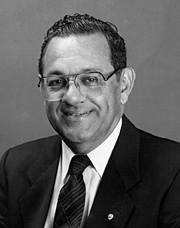
Attorney Wiley Branton, who filed the law suit.

On March 8, 1962, 22 members of the Council on Community Affairs filed a lawsuit in U.S. District Court against the city Board of Directors for the desegregation of “public parks, recreational facilities, Joseph T. Robinson Auditorium and all other public facilities.”  The members included journalists, dentists, attorneys, school teachers and other members of Little Rock’s African American professional class.  Attorney Wiley Branton, Sr., filed the suit.

Though the City’s Auditorium Commission was mentioned in the suit, they were not served with papers. So when media contacted them, they made no comment.

Historian John A. Kirk has written, “Members of the City Board were willing to admit that the desegregation of public facilities was ‘a foregone conclusion’ if the case went to court, but they remained committed to fighting the lawsuit if only to buy time to devise other methods to avoid desegregation.”

The decision was rendered in February 1963 that the City must integrate its public facilities.

In 1951, the City’s library facilities had been integrated followed by the bus system in 1956. Both of these had been accomplished without incident.  Of course the same was not said for the integration of the public schools in 1957.

In 1961, there had been attempts to have Robinson Auditorium integrated after Duke Ellington threatened to cancel a concert rather than play to a segregated crowd.  The Auditorium Commission refused to change its policy, and Ellington did not play the concert.

Based on efforts of the Council of Community Affairs working with white business leaders, downtown lunch counters and businesses were integrated starting in January 1963.  The efforts of the Council of Community Affairs and the white business leaders are commemorated in the Arkansas Civil Rights Heritage Trail with medallions in front of the Little Rock Regional Chamber building.