
 On July 4, 1893, Arsenal Park opened in Little Rock. This was the City’s first municipal public park. Though it predated the establishment of a formal Parks and Recreation Department by several decades, it is the oldest part of that department.
The land now known as MacArthur Park had originally served as a horse racetrack in the early days of Little Rock. By 1836, the federal government purchased the land for construction of a military arsenal. The flagship building, the Arsenal Tower building, is the only remaining structure from that time period.
The land served as a military outpost until 1892. On April 23, 1892, a land swap took place where in the City of Little Rock was given the property with the stipulation that it would be “forever exclusively devoted to the uses and purposes of a public park.” (Never mind that the federal government took part of the land back for the construction of the Wilbur Mills Freeway.) Congressman William L. Terry was active in negotiating the land swap.
In return for giving the City this land, the federal government took possession of land on the north side of the Arkansas River (then part of Little Rock) – that 1,000 acres became Fort Logan H. Roots.
The park officially opened on July 4, 1893, with the name Arsenal Park. Since it was the City’s first and only park at the time, residents started referring to it as City Park. In time, the designation Arsenal Park fell from use. In fact, it is referred to as City Park exclusively and officially in City documents throughout the first 42 years of the 20th Century.
On March 9, 1942, Little Rock’s first public park was renamed by the Little Rock City Council. By a vote of fourteen ayes, zero nays and four absent, the alderman approved Ordinance 6,388 which renamed the park in honor of General Douglas MacArthur.
In 1952, General MacArthur (contemplating a run for the GOP nomination for President) visited Little Rock in March. Later that year, the eventual GOP nominee (and 34th US President) General Dwight Eisenhower visited the park.
Today, MacArthur Park is the anchor of the burgeoning MacPark district as well as the MacArthur Park Historic Distric.
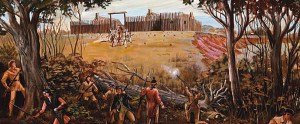 Because Arkansas was part of the Louisiana Territory, and under the Spanish flag, one does not think about there being any Revolutionary War battles being fought on Arkansas soil.


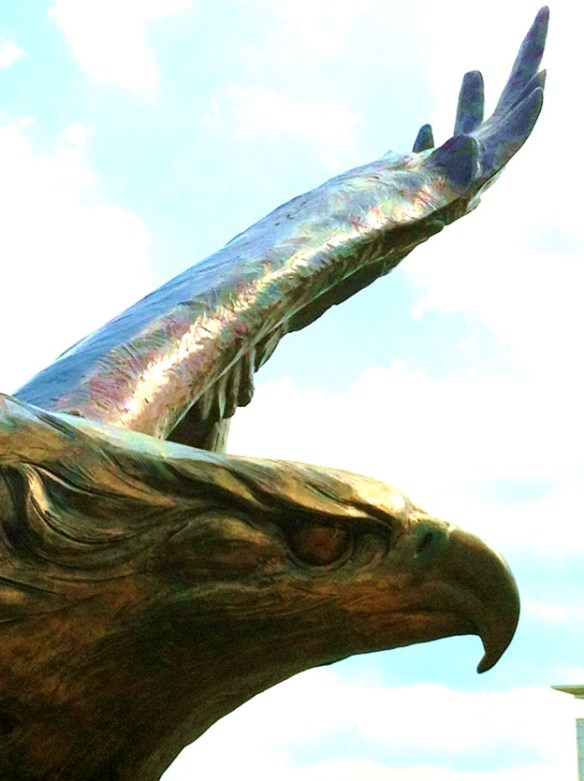 With today being Independence Day, it seems appropriate to feature Eagle of the Rock in the Sculpture Vulture.
 This was one of the original six sculptures placed in the River Market, back in November 2004. Sculpted by Sandy Scott, it depicts an eagle taking flight from atop a craggy rock. The eagle and rock are cast in bronze which is then set upon a limestone base. It is situated on President Clinton Avenue to the west of the entrance to Clinton Presidential Park.


 July 1 marks the start of a new fiscal year for many (if not most) cultural organizations in Little Rock. The previous year has ended, hopefully in the black.
 Little Rock Culture Vulture