
Will Trice named next leader of Arkansas Rep

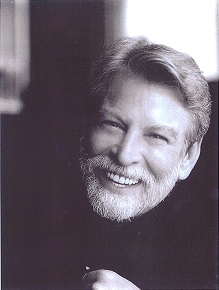
Arkansas Repertory Theatre announced that William Trice has been named the theatre’s new executive artistic director. Trice, a Little Rock native, has served as Broadway producer in New York since 2010, producing work that has earned him three Tony Awards and five nominations.

“After the year we’ve been through with suspending productions and re-evaluating our entire operations, we’re thrilled to have Will join our team,” said Ruth Shepherd, The Rep’s board chair. “He is uniquely positioned with his vast experience and ties to central Arkansas to lead at this specific point in The Rep’s history.”

As executive artistic director, a newly-created position, Trice will be responsible for management and budgeting in addition to providing the artistic vision. He assumes his new role officially in August but has been serving as a consultant since December.

“I couldn’t be more excited to join The Rep’s staff, board, supporters, and audiences, as we continue its rich tradition of entertaining and inspiring theatre in Arkansas,” Trice said. “The way this organization has rallied over the past year shows how much The Rep is cherished, and it’s an honor to have a role in mapping its future.”

Trice has served as a producer for nearly 30 productions on Broadway, the West End, and National Tours. He is a three-time Tony Award Winner forAll The Way, staring Bryan Cranston; the Steppenwolf Theatre Company’s Who’s Afraid of Virginia Woolf; and Porgy and Bess, starring Audra McDonald. He was also nominated for five Tony awards for his work on Fiddler on the Roof; The Royal Shakespeare Company’s Wolf Hall, You Can’t Take It With You starring James Earl Jones and Rose Byrne, The Glass Menagerie starring Cherry Jones and Zachary Quinto; and Gore Vidal’s The Best Man starring John Larroquette and Candice Bergen.

Prior to his career in producing, Trice served as a business analyst with management consulting firm McKinsey & Company, an artistic administration associate with The Metropolitan Opera, and a strategic growth associate with alternative asset managers D.E. Shaw & Company. He holds degrees from Southern Methodist and Northwestern Universities.

Trice, a 1997 graduate of Central High School, began his theatre career on stages in central Arkansas. In fact, he appeared on The Rep stage in 1994 as a young actor in the production of Neil Simon’s Lost in Yonkers.

“The Rep taught me what it means to be a professional theatre-maker,” Trice said. “I was lucky enough to grow up in a community that values the arts and supports institutions presenting music, dance, opera, visual arts, and theatre – all with superb quality. I can’t wait to come back home and help create The Rep’s next edition of a great night out.”

18 Cultural Events from 2018 – 60th Anniversary of Women’s Emergency Committee

Image result for the giants wore white glovesOn Sunday, September 16, 2018, the Clinton School of Public Service in conjunction with the CALS Butler Center for Arkansas Studies screened the documentary “The Giants Wore White Gloves” at the Ron Robinson Theater.
The film tells the story of the Women’s Emergency Committee. It was shown on the 60th anniversary of the first meeting of that group.

“The Giants Wore White Gloves” tells the story of the women of Little Rock and their accomplishments during the Little Rock Desegregation Crisis.

The 1958 school year began with a vote to close four high schools in the city of Little Rock and once again avoid integration. A group of middle-class white women, faced with the prospect of no schools as well as the further loss of their city’s good name, turned militant. They quickly put together the Women’s Emergency Committee to Open Our Schools (WEC). Largely inexperienced in politics, these women became articulate, confident promoters of public schools and helped others understand that those schools must remain open.

Years later, these women are honored for their work in changing the course of civil rights history. With integrity, they withstood the challenges of the battle, and accomplished their goal of reopening the city high schools.

A few WEC members were in the audience for the film screening. Many children and grandchildren of WEC members were also in attendance as was filmmaker Sandy Hubbard.

Earlier in the day, a full-page ad ran in the Arkansas Democrat-Gazette listing the membership of the WEC.  In 1998, the paper carried the first public listing of the names of WEC members. It was, in fact, the first time all the names had been compiled in one place.

18 Cultural Events from 2018 – Death of Cliff Fannin Baker

On September 6, 2018, Arkansas Rep founder Cliff Fannin Baker died after suffering a brain aneurism a week earlier in New York.

Patrons and actors from the Rep’s earliest days up to the current effort to reopen the Rep were in shock by the news. From the time the news about his hospitalization was announced on September 2, friends and fans alike came together to share their thoughts, love, prayers, bright lights, etc. in a wish for his recovery.

A memorial service was held in October at the Rep. It featured remarks from longtime colleagues as well as music by Vivian Morrison (accompanied by composer Michael Rice) in a song from PAGEANT and members of the cast of SISTER ACT, the last show Cliff directed at Arkansas Rep.

Cliff founded the Rep in 1976 and led it until 1999. He oversaw it as it went from a small group of actors in an abandoned church into a professional theatre. After retiring from the Rep, he would come back every season or so to direct a production.

Below are excerpts from what I wrote about Cliff upon the news of his death.

Cliff Baker willed Arkansas Rep into existence.  He had a merry band of players to join him.  But in the end, it was his vision, his determination, his blood, his sweat, and his tears that made the dream a reality.

[In 1976], the Arkansas Rep was born in an abandoned church space adjacent to MacArthur Park.  Operating for the first few years as a true repertory company, the same core cadre acted, sold tickets, built sets, and cleaned the building. What Cliff was creating in Little Rock was rare at the time.  Professional theatre did not exist in cities of its size.

He had the ability to make people feel connected, to make you feel you were the most important person in the room.  It was that gift that made him a good director, actor, producer, and fundraiser.

….Alas, just as the Rep is on the cusp of a new phase, Cliff won’t be there to direct.  But Cliff WILL be there.  He will always be a part of the Rep. It is more than him, but it is very much him…  Cliff Fannin Baker was a Pied Piper, and we were all glad to follow along.

18 Cultural Events from 2018 – Dedication of Elizabeth Eckford Bench

Sixty-one years after Elizabeth Eckford took the long walk down Park Street as she was trying to enter Little Rock Central High for her first day of classes there, she again went down the street. But on September 4, 2018, her journey was to celebrate the dedication of a new bench.

Met by a mob and kept out of the school by the soldiers she thought were there to protect her, Eckford finally made her way to a bus bench at Sixteenth and Park Streets.  This year, a replica of that bench is being dedicated at that location.

Little Rock Central High School National Historic Site collaborated with the Central High Memory Project students and additional partners for the ceremony.

September 4, 1957, was supposed to be the first day of school for the African American students who were selected to integrate Little Rock Central High School.  Due to the mobs gathered outside of the school and interference from Governor Orval Faubus, the students would not get in the school that day.

The most famous images from that day are the photos of Elizabeth Eckford walking in front of the school, only to be rebuffed by soldiers and tormented by the crowds. Elizabeth’s decision to walk through the mob of protesting segregationists to enter school, only to be turned away became world news. The story of the desegregation of Central High School was thrust into a defining role within the Civil Rights Movement. Elizabeth’s efforts to overcome the fear and uncertainty that she faced that morning resulted in her seeking refuge at a lonely bus stop bench.

In order to highlight this aspect of the story and create more personal connections with this turning point in history for students and visitors, the National Park Service and the Central High Memory Project Student Team will work with community partners in a new public history project.  The Bench Project includes building a replica of the bus stop bench, creating a mobile app for the students’ audio walking tour of eyewitness accounts of that first day of desegregation, and developing a storycorps recording booth for interviews and student podcasts.

The partnership includes: Bullock Temple C.M.E., Central High School and their EAST LAB, the Little Rock School District, the City of Little Rock, the Clinton School of Public Service, Central Arkansas Library System’s Butler Center for Arkansas Studies, Good Earth Garden Center, Friends of Central High Museum Inc., Home Depot, Little Rock Club 99 and other Rotary International Clubs,  Unity in the Community, and others.

18 Cultural Events from 2018 – Todd Herman departs Arkansas Arts Center

On Wednesday, July 11, 2018, Dr. Todd Herman, announced to Arkansas Arts Center staff that he would be leaving to take a position in North Carolina.  His last day at Little Rock’s art museum was August 10.
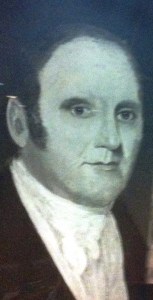
Herman, who joined the AAC in 2011, succeeded Nan Plummer as director, who served from 2002 to 2010. She was preceded by longtime director Townsend Wolfe, who led the AAC from 1968 to 2002. Between 1961 and 1968, the Arts Center had a revolving door of directors and acting directors including Muriel Christison (1961), Alan Symonds (1962-1964), William H. Turner (1964-1965), and Louis Ismay (1966-1968).  William Steadman (1958) and George Ware (1959-1960) lead the museum as it transitioned from the Museum of Fine Arts to the Arkansas Arts Center.  Nettie L. Robinson was the director of the original Museum of Fine Arts from its opening in 1937 until her retirement in 1957.

T. Laine Harber, the Arts Center’s Chief Operations Officer/Chief Financial Officer will be Interim Director while a search is conducted for Herman’s replacement.

Work continues on the planning for the expansion and enhancement of the Arts Center which is currently slated to be completed in 2022.

Little Rock Look Back: David Fulton, LR’s 4th Mayor

On January 2, 1771 in Ireland, future Little Rock Mayor David Fulton was born.

He served as the fourth and final mayor of the Town of Little Rock in 1835. His term was cut short by the transition of Little Rock from town to city status. Once that happened in November 1835, a new election had to be held.

Mayor Fulton was also proprieter of the Tan Yard, a tanning operation in Little Rock.   He later served as a judge and was appointed as  Surveyor General of Public Lands in Arkansas by President Martin Van Buren in 1838.

Mayor Fulton married Elizabeth Savin in June 1795 in Maryland.  She died in November 1829, while they resided in Alabama.  One of their children was William Savin Fulton who served as Territorial Governor of Arkansas in 1835 and 1836 and was one of Arkansas’ first US Senators upon statehood in 1836.  Mayor Fulton was serving as Mayor at the same time his son was Governor.

Mayor Fulton came to Little Rock in 1833.  His daughter Jane Juliet Shall and her four children came to Little Rock as well.  The family made the move to be nearer to the future governor.  The Fultons and Shalls rented the Hinderliter House (now part of Historic Arkansas Museum) in 1834.  One of his descendants, Louise Loughborough was the person who saved the Hinderliter House from destruction and was founder of what is now Historic Arkansas Museum.

In addition to serving as Mayor, he was president of the Anti-Gambling Society and a Pulaski County Justice of the Peace.  From 1836 until 1838, he was County Judge of Pulaski County.

Mayor Fulton died on August 7, 1843 and is buried at Mount Holly Cemetery as are several other members of his family.

18 Cultural Events from 2018 – TROUBLED ISLAND produced by Opera in the Rock

Little Rock native William Grant Still was the leading African American composer of classical music throughout most of the 20th century.  In 1949, his composition, Troubled Island became the first grand opera written by an African American to be produced by a major company.  It premiered with the New York City Opera in 1949.

On May 4 and 6 Opera in the Rock presented a rare fully-staged production of Troubled Island.  It was at the UA Pulaski Tech’s Center for Humanities and Arts.  The work is being performed by a cast of local and regional operatic talent.

The libretto for the opera was written by Langston Hughes and Verna Arvey.  The story is set in Haiti in 1791.  Jean Jacques Dessalines declares himself emperor of an independent Haiti. Corruption, revolution and assassination ensue.

Ronald Jensen-McDaniel sang the role of Dessalines.  Others in the cast included Jordan Murdock, Jannette Robinson, Charles Moore, Nisheedah Golden, Anthony K. Valley,  and Chris Straw.