
Civic Hope is focus of Clinton School program today at noon

“Civic Hope: How Ordinary Americans Keep Democracy Alive” is the topic of Roderick P. Hart’s discussion today (February 14) at noon at the Clinton School.

Civic Hope is a history of what everyday Americans say – in their own words – about the government overseeing their lives. Based on a highly original analysis of 10,000 letters to the editor from 1948 to the present published in twelve U.S. cities, the book overcomes the limitations of survey data by revealing the reasons for people’s attitudes.

While Hart identifies worrisome trends – including a decline in writers’ abilities to explain what their opponents believe and their attachment to national touchstones – he also shows why the nation still thrives. Civic Hope makes a powerful case that the vitality of a democracy lies not in its strengths but in its weaknesses and in the willingness of its people to address those weaknesses without surcease. The key, Hart argues, is to sustain a culture of argument at the grassroots level.

Roderick Hart is one of the most successful deans in the history of the Moody College at the University of Texas at Austin and is among its most renowned scholars and teachers. An expert of politics and the mass media, he has taught in the Communication Studies Department since 1979 and is the author of 12 books. He has taught courses on political communication, rhetoric, and government and is a member of UT’s Academy of Distinguished Teachers. He founded the Annette Strauss Institute for Civic Life, a research and outreach center committed to reversing civic and political apathy. From 2004 to 2015, he served as dean of the Moody College of Communication.

All Clinton School Speaker Series events are free and open to the public. Reserve your seats by emailing publicprograms@clintonschool.uasys.edu or by calling (501) 683-5239.

2019 Grants announced by National Endowment for the Arts

Three Little Rock organizations were announced today as recipients of grants from the National Endowment for the Arts.  They are: Arkansas Symphony Orchestra, Chamber Music Society of Little Rock, and the Oxford American magazine.
Each year, more than 4,500 communities large and small throughout the United States benefit from National Endowment for the Arts (NEA) grants to nonprofits. For the NEA’s first of two major grant announcements of fiscal year 2019, more than $25 million in grants across all artistic disciplines will be awarded to nonprofit organizations in all 50 states, the District of Columbia, and Puerto Rico. These grants are for specific projects and range from performances and exhibitions, to healing arts and arts education programs, to festivals and artist residencies.

Arkansas Symphony Orchestra Society, Inc.
$10,000
Challenge America
To support concert performances and related outreach activities.

Chamber Music Society of Little Rock
$10,000
Challenge America
To support a series of chamber music performances and related educational programming.

Oxford American Literary Project
$20,000
Art Works — Literature
To support payments to writers for The Oxford American magazine.

In addition, three other Arkansas organizations and one Arkansas artist received funds. TheatreSquared of Fayetteville, received $30,000 for the Arkansas New Play Festival, the King Biscuit Blues Festival of Helena received $25,000, the Ozark Foothills Film Fest received $10,000, and Geffrey Davis of Fayetteville received $25,000 for a Creative Writing fellowship.

Little Rock Look Back: First TABRIZ Gala in 1971

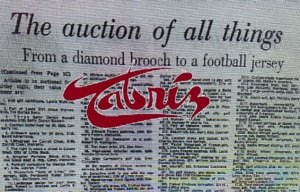
After a casual evening on Friday, February 12, 1971, the next night, several hundred people donned their tuxedos and maxi-length formal wear to attend the first Tabriz Gala.

After eating a gourmet dinner, guests were treated to a live auction with over 90 items.  The auctioneers were Edwin C. Jenkins of Los Angeles and Little Rock’s Dalton Dailey.

Among the items in the live auction (which raised $30,000)  were usage of a billboard for a month, a five day cruise in the Bahamas and the opportunity to help create a sculpture.  One of the more unique items was a lot in Pleasant Valley, which went for $11,500 (the equivalent of $72,000 in 2019).  The final item in the live auction was lunch with Martha Mitchell. The Pine Bluff native was married to US Attorney General John Mitchell. Little did anyone know at the time that President Nixon would one day blame Watergate on Martha Mitchell making life difficult for John Mitchell.

The Fine Arts Club had desired that Tabriz would be a unique event in Little Rock’s social calendar.  It appeared they succeeded.  The Arkansas Gazette noted that the crowd was livelier than normally happened at black tie events in Little Rock.

Due to the success of Tabriz, the Arts Center more than had the money it needed for the National Endowment for the Arts challenge match program.

Rock the Oscars 2019: A SOLDIER’S STORY

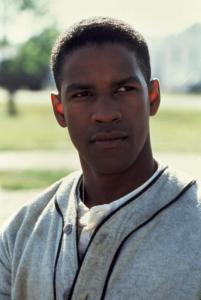
A SOLDIER’S STORY, Denzel Washington, 1984

A SOLDIER’S STORY, Denzel Washington, 1984

In September and October of 1983, Norman Jewison and the cast of A Soldier’s Story filmed the movie at various locations in Arkansas.  Little Rock’s Lamar Porter Field was the site for the baseball scenes.

Adolph Caesar would receive an Oscar nomination for his performance in this movie.  Howard Rollins had recently been an Oscar nominee for his performance in Ragtime.  Future Oscar winner Denzel Washington was also featured in the cast.

Based on Charles Fuller’s Pulitzer Prize winning A Soldier’s Play, the movie was directed by Jewison from a script adapted by Fuller.  The film was nominated for three Oscars: Best Picture, Caesar in the Best Supporting Actor category and Fuller in the Best Adapted Screenplay category.

While the movie was filming in Arkansas, Governor Bill Clinton visited the set.  He had also been instrumental in making the Arkansas National Guard and some of the military facilities in the state available.  In addition to filming at Lamar Porter, scenes were shot in Fort Smith and at Fort Chaffee.

Art of Positive Communication is topic at UA Little Rock Downtown tonight

Image result for julien mirivelThe UA Little Rock Downtown Campus continues its Wednesday evening lectures tonight. This evening’s topic is “The Art of Positive Communication: How Small Behaviors Create Your Best Moments”

This talk is given by Julien Mirivel, dean of the College of Social Sciences and Communication. It is an introduction to the art of positive communication. It is built on the premise that “the spoken word, spoken honorably and well, can make a difference that no other form of communication can equal.”

In the talk, he shares a simple model to inspire the audience to communicate more positively. With personal examples and stories, the talk will invite everyone to practice concrete behaviors that will have a positive effect at work, at home, and in the community. By the end of the talk, every person in the audience will be able to create their best moments and to connect with others more deeply.

The program will begin at 6pm at the UA Little Rock Downtown Campus.

Tonight at 6:30, CALS presents Sounds in the Stacks with the ASO Quapaw Quartet at the CALS Williams Library Branch

Sounds in the Stacks: Quapaw QuartetExperience the beauty of string music of the highest caliber with the Quapaw String Quartet of the Arkansas Symphony Orchestra!
This free concert at the CALS Williams Library will be a lovely way to take a break from the work week or introduce kids to the magic of violin, viola, and cello.

Arkansas Symphony Orchestra’s Quapaw Quartet includes Meredith Maddox Hicks, violin; Charlotte Crosmer, violin; Ryan Mooney, viola; and David Gerstein, cello.

It is today (February 12) from 6:30pm to 7:30pm at the CALS Sue Cowan Williams Library, which is located at 1800 South Chester Street.

Rock the Oscars 2019: James Earl Jones

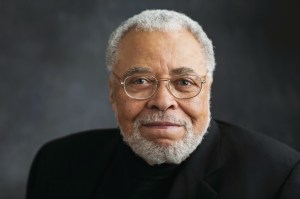
Actor James Earl Jones has made several appearances in Central Arkansas over the years.  He has appeared at Robinson Center with the Arkansas Symphony Orchestra.  On February 12, 1999, he narrated Aaron Copland’s “Lincoln Portrait” and Alexander Miller’s “Let Freedom Ring” with the Symphony in a concert at Robinson Center.  (It was the 190th birthday for Lincoln.)

Born in Mississippi, he spent most of his childhood in Michigan.  After service in the Army during the Korean War, he moved to New York to study theatre.  In the late 1950s he started alternating between Broadway (where he often played a servant) and Off Broadway (where he played leading roles).  His first film appearance was in Dr. Strangelove….  From the 1960s onward he has alternated between stage, film and TV.  In the 1980s, he added voice work to his repertoire.

In 1969 and in 1987, he won Tony Awards for Actor in a Play (The Great White Hope and Fences, respectively).  His other Tony nominations have been for revivals of On Golden Pond and The Best Man.  He was nominated for an Oscar in 1970 for reprising The Great White Hope on film.  He received two Emmy Awards in 1991 – the only actor to ever win two in the same year.

In 2008, he won the Screen Actors Guild Lifetime Achievement Award, and in 2011 he was given an Honorary Oscar.  In 2002, he was a Kennedy Center Honors recipient.

He is probably best loved for his work as the voice of Darth Vader in many of the Star Wars films as well as his voicework in The Lion King.