Unknown's avatar

About Scott

A cultural thinker with a life long interest in the arts and humanities: theatre, music, architecture, photography, history, urban planning, etc.

Women’s History Month Throwback Thursday: The Little Rock Musical Coterie


In 1893 Mrs. Elizabeth Pierce Lyman (pictured at left), Mrs. Susie Pierce Stephens, and Mrs. Effie Miller Williams were invited to the home of Mrs. Cora Cross Marshall for tea and the express purpose of forming a music club. From this grew the organization now known as the Little Rock Musical Coterie.

Meetings of the Little Rock Musical Coterie were first held in members’ homes, and by January 1904, the organization had become well enough established to be featured in Arkansas Life magazine in an article marking its first decade as `a notable institution for the promotion of musical talent and higher culture * * * the leading organization of its kind in the Southeast.’

Meetings, with concerts, were held monthly from September through May, and from members’ homes moved to various city locations, including the Masonic Temple, the Christian Temple at Tenth and Louisiana, the Hotel Marion, Robinson Auditorium, and the Arkansas Arts Center.

From its modest beginnings, the coterie was more than just an opportunity for like-minded individuals to get together to make music. Perhaps because the membership has always included a good percentage of music teachers, the main interest and concern has been to foster musical talent in the young and provide financial support wherever possible.

In 1898 similar music clubs around the Nation formed the National Federation of Music Clubs [NFMC], which Arkansas joined in 1915, becoming one of the first States to affiliate with the national organization.

In 1904 the coterie voted to send $25 to the NFMC convention toward prize money for an American composition contest, the first such contribution recorded in the history of American music clubs.

In 1973 the coterie was incorporated as a nonprofit corporation and received tax-exempt status. Over the years, the Little Rock Musical Coterie has been in the forefront of movements that later resulted in the formation of the Arkansas Symphony Orchestra, the Arkansas Choral Society, the Arkansas Opera Theatre, and the Community Concerts organization.

Annually, the coterie sponsors or promotes competitions and awards designed to encourage young musicians. The Hildegard Smith Award, in the amount of $1,000, is given each year to a university student. The Crusade for Strings competition, part of a national program of the same name, is open to elementary and secondary school students, winners receiving cash prizes and an opportunity to perform on a coterie program.

Programs for young musicians are organized and promoted through 11 junior music clubs and junior festivals are held in February.

The coterie contributes to the Butterfield Endowment Fund, which provides scholarships to the opera workshop and festival at Inspiration Point in Eureka Springs, presents the Stillman-Kelly Scholarship quadrennially, and the Wendell Irish Viola Award.

In the of cutbacks and budget constraints, organizations like the Little Rock Musical Coterie fill the void in school music curricula, as well as touch many other areas of the community through its actions in the cause of music.

On the occasion of the 100th anniversary, Senator Dale Bumpers delivered an address on the floor of the Senate extolling the virtues of the LR Musical Coterie. 

Josh Ruxin discusses how creating a restaurant revitalized a community 

Today at noon at the Clinton School, Josh Ruxin will discuss his book A Thousand Hills to Heaven: Love, Hope and a Restaurant in Rwanda.

In the book, Ruxin recounts the trials of rebuilding a village from the ashes, then constructing a restaurant from scratch.  He makes the case that entrepreneurship and the private sector are the keys to long-term sustainability in Rwanda. 

Ruxin is assistant clinical professor of Public Health at Columbia University’s Mailman School of Public Health and the founder of Health Builders, which improves management systems in 86 health centers across Rwanda and has constructed 5 health facilities serving 150,000 people. 

He is director of the Access Project, Rwanda Works, and the Millennium Villages Project in Rwanda. Dr. Ruxin has extensive experience operating at the intersection of public health, business, and international development. He has led projects in several developing countries and was an advisor to government and private sector leaders on business strategy and economic development. 

Dr. Ruxin was a Truman Scholar at Yale University, where he received his undergraduate degree, and a Marshall Scholar at the University of London. He is currently based in Kigali, Rwanda.

Little Rock Look Back: The Eagle Returns to Little Rock

eagleOn March 16, 1822, Captain Morris piloted the steamboat The Eagle to Little Rock, seventeen days after departing New Orleans.  This became the first steamboat to reach Little Rock.  The boat reached Little Rock at an early hour in the morning and Captain Morris, in order to arouse the town, fired a salute of several guns.

It did not stay in Little Rock, but headed upriver toward the community of Dwight Mission, founded by Presbyterians in what is now Pope County at the mouth of the Illinois Creek.  Due to low waters, it was unable to make it to Dwight Mission.  On March 19, 1822, it returned to Little Rock.  It then headed back to New Orleans.

Though it would be the McClellan-Kerr navigation project before the Arkansas River would become a permanent home to commercial river traffic, boats up and down the Arkansas River helped establish Little Rock as an important trading post.

Dirty Dozen Brass Band jazzes up South on Main tonight

The sounds of New Orleans come to South Main tonight at 8pm as the Oxford American magazine presents the legendary ensemble Dirty Dozen Brass Band at South on Main’


In 1977, The Dirty Dozen Social and Pleasure Club in New Orleans began showcasing a traditional Crescent City brass band. It was a joining of two proud, but antiquated, traditions at the time: Social and pleasure clubs dated back over a century to a time when black southerners could rarely afford life insurance, and the clubs would provide proper funeral arrangements.


Brass bands—the earliest predecessors of jazz as we know it—would often follow the funeral procession playing somber dirges and then, once the family of the deceased was out of earshot, burst into jubilant dance tunes as casual onlookers danced in the streets.


By the late ’70s, few of either existed. The Dirty Dozen Social and Pleasure Club decided to assemble this group as a house band and, over the course of these early gigs, the seven-member ensemble adopted the venue’s name: the Dirty Dozen Brass Band.


Thirty-five years later, Dirty Dozen Brass Band is a world-famous music machine, whose name is synonymous with genre-bending romps and high-octane performances. They have revitalized the brass band not only in New Orleans, but around the world, progressing from local parties, clubs, baseball games, and festivals in their early years to touring nearly constantly in the U.S. and in over thirty other countries on five continents.


The Dirty Dozen have been featured guests on albums by popular artists including David Bowie, Elvis Costello, Dr. John, Widespread Panic, Modest Mouse, Dave Matthews Band, and The Black Crowes.


Tickets to Dirty Dozen are at http://www.metrotix.com, or by calling (800) 293-5949. All patrons require a ticket for entry. Tickets are general admission and are $25 each. Seating at tables is limited and available on a first-come, first-seated basis when the doors open at 6:00 PM.


No reservations are being taken ahead of time. To ensure the best possible seat, plan to arrive when the doors open. The concert starts at 8:00 PM, with food and drinks available for purchase at that time.

Little Rock Look Back: Grover Cleveland


Stephen Grover Cleveland, the 22nd and 24th President of the U.S. was born on March 18, 1837. He won the popular vote in 1884, 1888 and 1892, but lost the Electoral College vote in 1888.

Though he never visited Little Rock, Cleveland Street is named in his honor. Cleveland County in southeast Arkansas is also named for him. It originally was Dorsey County, named after a GOP Senator from Arkansas. It was renamed for Cleveland in hopes to curry favor for the state from the new Democratic president.  Cleveland’s Attorney General was Augustus Garland from Arkansas. Garland Street in Little Rock and Garland County are both named for him. 

Cleveland was the leader of the pro-business Bourbon Democrats who opposed high tariffs, Free Silver, inflation, imperialism, and subsidies to business, farmers, or veterans. His crusade for political reform and fiscal conservatism made him an icon for American conservatives of the era.

John Bush Group headlines Local Live tonight at South on Main

Tonight at 7:30pm, join the Oxford American magazine for this week’s Local Live concert at South on Main, starring the John Bush Group! As always, Local Live is free and open to the public.
To guarantee a table/seat for this popular series, call ahead at (501) 244-9660. Local Live is made possible by the generous sponsorship of Cosmic Cowboy Music.Cosmic Cowboy Music logo

John Bush’s musical upbringing occurred here in Little Rock in the late 1950s and early 1960s, along with other lovers and students of the genre at that time, including John Stubblefield, James Leary, and Claudine Meyers. While Bush’s contemporaries committed themselves to and pursued professional careers playing jazz music, he took another direction in that he came back to music later in life. His aspiration is to uphold the original edict that drove all of the players he grew up with, as well as recognize the same Arkansas jazz traditions and honor the paths taken by musicians like The Original Yellow Jackets, Louis Jordan, Al Hibbler, and Pharaoh Sanders. Bush is dedicated to playing in the same true spirit of those who helped lay the foundations for this rich and beloved genre.

Joining Bush for this show is an exceptionally talented ensemble of players, including vocalist Kelley Hurt, Bill Huntington (bass), Chris Parker (keys), and Brian Withers (drum).

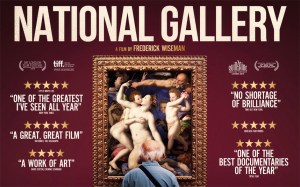
NATIONAL GALLERY film shown tonight through Clinton School/LR Film Festival partnership

Frederick Wiseman’s “National Gallery” takes the audience behind the scenes of a London institution, on a journey to the heart of a museum inhabited by masterpieces of Western art from the Middle Ages to the 19th Century. 

The documentary is the portrait of a place, its way of working and relations with the world, its staff and public, and its paintings. In a perpetual and dizzying game of mirrors, film watches painting watches film. 

Fred Wiseman is one of today’s greatest living documentary filmmakers. For close to thirty years, he has created an exceptional body of work consisting of thirty full-length films devoted primarily to exploring American institutions.

The film will be shown tonight at the Ron Robinson Theater at 6pm. It is sponsored by the Clinton School for Public Service and the Little Rock Film Festival.