Unknown's avatar

About Scott

A cultural thinker with a life long interest in the arts and humanities: theatre, music, architecture, photography, history, urban planning, etc.

Black History Month Spotlight: Gertrude Hadley Jeannette

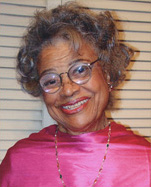
bhm gertrudePlaywright, producer, director, and actress of the stage and screen, Gertrude Hadley Jeannette, was born in Urbana, on November 28, 1914, to Willis Lawrence Hadley and Salley Gertrude Crawford Hadley. She attended Dunbar High School in Little Rock. Just before her high school graduation, Jeannette decided that she wanted to get married instead of attending Fisk University, as she had previously planned.  She and Joe Jeannette II, a prizefighter and the president of the Harlem Dusters, a motorcycle club, eloped to New York City in 1934.

In New York City, Jeannette learned to drive; in 1935 she became the first woman to get a license to drive a motorcycle. In 1942, because of the shortage of male taxicab drivers caused by the war, Jeannette became the first woman to drive a cab in New York City. During this time, Jeannette decided to further her education; she took bookkeeping classes in the basement of Abyssinian Baptist Church, and speech classes at the American Negro Theatre in order to remedy her speech impediments.

In 1950, she appeared on television in James Weldon Johnson’s Gods Trombone on CBS’s General Electric Hour; she had replaced Pearl Bailey, who was originally cast in that role. As a result, Jeannette continued to work both in the theatre and in film and television. Some of Jeannette’s film credits included Shaft, Black Girl, and Cotton Comes To Harlem.  Her Broadway credits include Lost in the Stars, The Long Dream, Nobody Loves an Albatross, The Amen Corner, Vieux Carre and a revival of The Skin of Our Teeth.  Off Broadway she starred in To Be Young, Gifted and Black.

In 1979, Jeannette founded the H.A.D.L.E.Y. Players (Harlem Artists Development League Especially for You) in the Harlem neighborhood of New York City. The mission of the H.A.D.L.E.Y. Players was to give artists a chance to develop their talents and skills in the theatre, and to enrich the cultural life in Harlem. Jeannette went on to direct, produce, and write her own plays, as well as the works of other playwrights.

Jeannette was presented with several awards for her work and accomplishments. In 1991, Jeannette was honored as a living legend at the National Black Theatre Festival in Winston-Salem, North Carolina, and in 1998, she was honored with the Lionel Hampton Legacy Award. Jeannette was inducted into the Arkansas Black Hall of Fame in 1999, and in 2002, she received the prestigious Paul Robeson Award from the Actor’s Equity Association. Jeanette, though retired, remained active and celebrated member of the New York theater scene well into her nineties.

For more on Gertrude Hadley Jeannette and other inductees into the Arkansas Black Hall of Fame, visit the permanent exhibit at the Mosaic Templars Cultural Center. That museum is an agency of the Department of Arkansas Heritage.

Little Rock Look Back: President William Henry Harrison

A campaign ribbon from an 1840 Harrison and Tyler rally in Little Rock.

A campaign ribbon from an 1840 Harrison and Tyler rally in Little Rock.

On February 9, 1773, future US President William Henry Harrison was born in Virginia. Though he would later be viewed as a frontiersman (which he was), his early years were spent on a family estate as part of one of the FFV’s (First Families of Virginia).

At the age of 18, he was commissioned in the US Army and began an illustrious military career which spanned the Northwest Indian War and the War of 1812. This career took him into the wilderness areas of the US, which at the time were Indiana and Ohio.

Harrison launched his political career in 1798 when he was appointed treasurer of the Northwest Territory. The next year, he was elected to represent the territory in Congress. In 1801, he was named Governor of the Indiana Territory.  In 1811, while still Governor of Indiana, he led troops to defend against a Shawnee attack in the Battle of Tippecanoe.  The following year, with the outbreak of the War of 1812, he continued to command armies in the northwest areas of the US.  In 1813, he scored a major victory at the Battle of the Thames in Canada.  This solidified him as a war hero with the public.

In 1814, he was appointed by President Monroe to oversee negotiations with Indians. In 1816, he was elected to Congress from Ohio and served until 1819. In 1824, he was elected as a US Senator from Ohio and served until 1828. He was sent as minister to Columbia in 1828 and served until the Presidency of Andrew Jackson in 1829.

220px-William_Henry_Harrison_daguerreotype_editReturning to private life, he ran for President as a Whig in 1836. At the time, the Whigs ran several candidates hoping to split the vote and send the election to Congress. Harrison narrowly lost Pennsylvania and its 30 electoral votes. (Though since the Democrats retained Congress in the election, it was expected that Van Buren still would have won.)  Four years later the Whigs coalesced behind Harrison.

Though his opponents tried to paint him as old, out of touch, and backwoods, he and running mate John Tyler (also a landed gentry from Virginia) embraced the depiction. They felt it helped them relate to the average voters and, in turn, painted Van Buren as out of touch and elitist.  Though Arkansas’ electoral votes went to Van Buren, Harrison ran fairly strong in the state. He narrowly captured Pulaski County and ran strong in the southeast portion of the state.

Harrison served in office only one month.  While at the time it was believed to be related to the weather at his inaugural (and his record-long inaugural address), subsequent analysis has shown it to be due to entric fever, the result of a bacterial infection.

Harrison Street in Little Rock is named for him. His grandson, Benjamin, the only grandson of a President to serve also serve as President, is skipped in the row of Presidential streets.

Author John Pollack tonight at the Clinton School

JDPollack_smallTonight at 6pm at the Clinton School, author John Pollack will discuss “Shortcut: How Analogies Reveal Connections, Spark Innovation and Sell Our Greatest Ideas.”

The 1995 World Pun Champion and a former speechwriter for President Bill Clinton, John Pollack has spent more than a decade as a consultant for Fortune 500 companies, nonprofits, and public sector leaders. Throughout his career, he has pursued insight and understanding by venturing off the beaten path, intellectually and otherwise. In this spirit, his worldview has been informed by living and working in Africa and Europe, installing seismometers in Antarctica, hitchhiking across Australia, exploring the Caucasus and skippering a boat he built of 165,321 corks down Portugal’s Douro River.

In “Shortcut,” Pollack reveals just how pervasive analogies really are — and how powerful. He also explains how to evaluate the “truth” of any analogy, and how people can hone their ability with analogies to become more creative, perceptive, and persuasive.

A graduate of Stanford University, John began his journalism career as a newspaper reporter for the Hartford Courant, covering a local sewer commission. Later, he worked in Spain as a foreign correspondent, covering everything from terrorism to business to bullfights for media that included the Associated Press, Los Angeles Times, USA Today and Advertising Age. His first book, The World On a String: How to Become a Freelance Foreign Correspondent, grew out of that experience. He speaks fluent Spanish, and has traveled extensively on seven continents.

In addition to Shortcut and The World on a String, John is the author of two other books. Cork Boat tells the story of John’s 30-year quest to build a Viking ship made almost entirely of wine corks, and its 2002 voyage down Portugal’s Douro River. In 2011, Gotham Books published The Pun Also Rises: How the Humble Pun Revolutionized Language, Changed History, and Made Wordplay More Than Some Antics, which explores the surprising role of puns in the rise of modern civilization.

Arkansas at the Grammys – A Little Rock, a little country, a little soul, etc.

One of Johnny Cash's Grammy Awards

One of Johnny Cash’s Grammy Awards

The 57th annual Grammy Awards are tonight.  There are several nominees with Arkansas connections.

The documentary Glen Campbell, I’ll Be Me spawned nominations in three different categories.  The Band Perry is nominated for Best Country Duo/Group Performance for their take on Campbell’s hit “Gentle on My Mind” from the film’s soundtrack.  Campbell himself is nominated for co-writing the song “I’m Not Gonna Miss You” in the Best Country Song category.  The song is also nominated in the Best Song Written for Visual Media category.

Former Arkansan Smokie Norful is nominated for two Grammy Awards tonight.  For his song “No Greater Love” he is nominated for Best Gospel Performance/Song. His album Forever Yours is nominated for Best Gospel Album.

John Waters, who will be headlining at the 2015 Arkansas Literary Festival, is nominated for Best Spoken Word Album for Carsick: John Waters Hitchhikes Across America.

Though not an Arkansan, Roseanne Cash comes from Arkansas stock and has been an active supporter of efforts to establish a museum in Dyess, Arkansas. She is nominated for three Grammy Awards: Best American Roots Performance (“A Feather’s Not a Bird”), Best American Roots Song (“A Feather’s Not a Bird”), and Best Americana Album (The River & The Thread).

The Grammy Hall of Fame contains several recordings with Arkansas connections.  The 1969 album The Band by The Band, which featured Levon Helm, was inducted in 1999.  Louis Jordan has several singles inducted: 1946’s “Ain’t Nobody Here but Us Chickens,” 1945’s “Caldonia Boogie,” 1946’s “Choo Choo Ch’Boogie,” and 1946’s “Let the Good Times Roll,” Charlie Rich’s 1973 single “Behind Closed Doors” was inducted as was Conway Twitty’s 1970 hit “Hello Darlin’.” Patsy Montana is included for her 1935 song “I Want to Be a Cowboy’s Sweetheart.”  Al Green is included for 1971’s “Let’s Stay Together” and 1974’s “Take Me to the River.”

Glen Campbell and his family at the 2012 Grammy Awards

Glen Campbell and his family at the 2012 Grammy Awards

Glen Campbell has three recordings in the Grammy Hall of Fame: 1967’s “By the Time I Get to Phoenix,” 1967’s “Gentle on My Mind,” and 1968’s “Wichita Lineman.”  Johnny Cash has four entries: the singles “Folsom Prison Blues” from 1956, “I Walk the Line” from 1956, and “Ring of Fire” from 1963. In addition his album “Johnny Cash at San Quentin” from 1969 was inducted.

The 1949 musical cast album from South Pacific featuring a heroine from Little Rock was inducted. Another Broadway-themed inductee is “Lullaby of Broadway” featuring former Little Rock resident Dick Powell from 1935.

Here are some past Grammy winners from Arkansas:

  • Bill Clinton, 2004 Best Spoken Word Album – My Life
  • Bill Clinton and others, 2003 Best Spoken Word Album for Children – Peter and the Wolf
  • Hillary Clinton, 1996 Best Spoken Word Album – It Takes a Village
  • Evanescence, 2003 Best New Artist, Best Hard Rock Performance (“Bring Me to Life”)
  • Al Green has 11 Grammy Awards spanning from 1981 to 2008. In 2002 he was given a Grammy Lifetime Achievement Award.
  • Johnny Cash won 13 Grammy Awards spanning from 1967 to 2007. In 1999 he was given a Grammy Lifetime Achievement Award.
  • Glen Campbell received 5 Grammy Awards in 1967 and 1968. In 2012, he was presented a Lifetime Achievement Award. That moment is captured in the documentary Glen Campbell, I’ll Be Me.
  • As part of The Band, Levon Helm received a 2008 Lifetime Achievement Award. As an individual artist he received Grammy Awards in 2007, 2009 and 2011.
  • Conway Twitty received a 1971 Grammy for Country Duo or Group for “After The Fire Is Gone” duet with Loretta Lynn.
  • Charlie Rich won the 1973 Grammy for Male Country Vocal Performance for “Behind Closed Doors.”
  • Smokie Norful won the 2004 Grammy for Contemporary Soul Gospel Album for Nothing Without You.
  • Maya Angelou won Grammy Awards in the Spoken Word Album for 1993’s On the Pulse of Morning, 1995’s Phenomenal Woman and 2002’s A Song Flung Up to Heaven.

Black History Month Spotlight – Louis Jordan

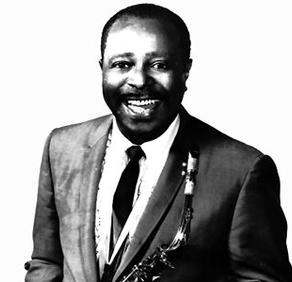
bhm louis-jordanSince tonight is the 57th Grammy Awards presentation, today’s spotlight looks at a musician who has several entries in the Grammy Hall of Fame – Louis Jordan.

Louis Thomas Jordan was born on July 8, 1908 in Brinkley. The son of a musician, he learned to play the saxophone as a youth and majored in music later at Arkansas Baptist College and performed with Jimmy Pryor’s Imperial Serenaders in Little Rock. He also toured with the famed Rabbit Foot Minstrels, who were the backing musicians for a number of blues legends. In the mid-Thirties, Jordan, now an accomplished jazz saxophonist, moved to New York, working with such jazz greats as Louis Armstrong. He joined drummer Chick Webb’s swing band in 1936.

After honing up his singing skills, he left the band in 1938 to start up his own band. Called the Elks Rendez-Vous Band, after the name of the club where they were playing a long-term engagement, Jordan signed with the Decca label. The band’s name was changed to the Tympany Five in 1939 and between 1941 and 1949; they had a series of hit records that were distinct of the “jump style” rhythm and blues style of music. These included “Choo Choo Cha Boogie,” “Saturday Night Fish Fry,”  and “Let The Good Times Roll.”

Jordan’s hits continued into the early 1950s, by which time his popularity on the R&B scene was enormous. His musical influence was far more reaching, with future rock ‘n’ roll stars like Bill Haley and Chuck Berry, fashioning their sound after Jordan’s style, particularly his vocal approach, song structures and lyrics and treatment of the guitars and horns. When Jordan left Decca in 1954, his popularity began to diminish quickly.

He continued to record and tour throughout the 1950s and 1960s, but rock ‘n’ roll, the music he helped foster, was a major contributing factor in his downfall. Louis Jordan died from heart failure in Los Angeles on February 4, 1975. In the early 1990’s, a revue called Five Guys Named Moe, based on Jordan’s music, was performed on London’s West End and New York’s Broadway.

Louis Jordan was inducted into the Rock ‘n’ Roll Hall of Fame in 1987.  He was posthumously inducted into the Arkansas Entertainers Hall of Fame in 1998 and the Arkansas Black Hall of Fame in 2005. In 2008, the centennial year of his birth, he was featured on a postage stamp.

For more on Louis Jordan and other inductees into the Arkansas Black Hall of Fame, visit the permanent exhibit at the Mosaic Templars Cultural Center. That museum is an agency of the Department of Arkansas Heritage.

A Mary Birthday

MarySteenburgenDec09It is Oscar month, so it is fitting to highlight at Arkansas’ own Academy Award winning actress, Mary Steenburgen on her birthday.  She was born on February 8, 1953 in Newport, Arkansas.  After moving to North Little Rock as a schoolgirl, she had her first starring role as Emily in the 1971 Northeast High School production of Our Town, which was the new school’s first play.

After moving the start of a successful film career, she started returning to the stage in a London production of Holiday in 1987.  In 1993, she made her Broadway debut in the Roundabout Theatre Company’s production of Candida (during Roundabout’s initial season with a Broadway house).  Her costars included Robert Foxworth and Robert Sean Leonard.

The next year, she starred in Marvin’s Room in Los Angeles.  She returned to the New York City stage with 2000′s The Beginning of August at the Atlantic Theater Company.  Steenburgen has remained an active supporter and is now a member of Atlantic.  In 2007, she and husband Ted Danson were honored by the Atlantic Theater Company.

Throughout her career, Mary Steenburgen has been a champion of the arts in Central Arkansas.  She has long been a supporter of the Arkansas Repertory Theatre, where she and Danson served as honorary chairs of the Rep’s recent successful capital campaign.  In addition, she has been very involved in two other Central Arkansas arts endeavors.  Steenburgen has spoken at acting workshops and lent her support in many other ways for The THEA Foundation (which encourages arts education in Arkansas).

Steenburgen has also been an active supporter of the Oxford American magazine as well as South on Main restaurant and performance venue.

Side by Side tonight as Ark Symphony and Ark Symphony Youth play together

sbs_orch_1You can watch the Grammys tonight on TV or you can experience the thrill of live music.  The annual ASO/ASYO Side by Side concert is a showcase of the Arkansas Symphony Youth Ensembles program. The winners of the 2014 Stella Boyle Smith Concerto Competition will be featured with the ASO, then the ASYO will join the ASO on stage to play Side by Side.

Following a brief intermission the Preparatory, Prelude, and Academy Orchestras will present programs.

ASO
WEBER Concertino for Clarinet in E-flat Major, J. 109, Op. 26
Mason Sangster, clarinet

WEBER Concerto No. 2 for Clarinet in E-flat Major, J. 118, Op. 74
Rachel Lewis, clarinet

Side By Side
TCHAIKOVSKY Marche slavbe, Op. 31, TH 45
BORODIN Polovetsian Dances from Prince Igor

The evening will take place at 7pm tonight at the Maumelle Performing Arts Center.