Unknown's avatar

About Scott

A cultural thinker with a life long interest in the arts and humanities: theatre, music, architecture, photography, history, urban planning, etc.

WINN DIXIE extended at Ark Rep through January 5 — Good seats still available

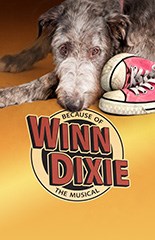
Due to overwhelming demand for tickets, the Arkansas Rep has extended Because of Winn Dixie another week.  This last week has good seats available, so don’t delay.  From the lyricist of Legally Blonde and the composer of Spring Awakening comes a new musical based on the award-winning novel by Kate DiCamillo.

A World Premiere musical brings a Tony Award-winning creative team to Little Rock this holiday season. Because of Winn Dixie is a new musical based on the heartwarming and award-winning novel by Kate DiCamillo about a young girl and a dog she finds at a Winn Dixie supermarket.

This unique production will include music by Duncan Sheik (Tony and Grammy Award Winner for Spring Awakening), lyrics and book by Nell Benjamin (Tony Nominee for Legally Blonde), direction by John Tartaglia (Tony nominee for Avenue Q) and animal direction by Bill Berloni (a 2011 Tony Honor recipient).

This original production will also be the first pre-Broadway musical starring a live dog in a leading role. Taran (and understudy Cally), both Irish Wolfhounds, have been cast in the title role of “Winn-Dixie,” trained by Broadway’s foremost animal trainer, Bill Berloni.

“It has always amazed me the reaction animals have on an audience,” says Berloni, “When a dog or cat comes onstage, our collective reality is ‘Wait a minute, you can’t get an animal to act, what is it going to do?’ And it brings the audience closer into the piece.”

“This story will melt your heart,” says Bob Hupp. “We are honored that the creative team of Winn Dixie approached us for this world premiere, and I think this project has tremendous potential to introduce a significant new work into the American musical theatre canon, and it all begins right here on our stage, for Arkansas audiences.”

The cast is led by Jonathan Rayson, Julia Nightingale Landfair, Gabe Bowling, Riley Costello, Aisha de Haas, Imari Hardon, Crystal Kellogg, Tari Kelly, Shannon Lamb, Nic Rowe, Douglas Storm and Sydni Whitfield.  Others in the cast include Danny Phillips, Cayla Christina Christian, Reagan Hodson, Dalton Johnson, Molly Russ, and Sam Shaughnessy.

The music director is Jason Hart. Duncan Sheik is the orchestrator and vocal arranger.  The creative team included Mike Nichols (scenery), Marianne Custer (costumes), Michael J. Eddy (lighting), Allan Branson (sound), and Lynda J. Kwallek (props).

FREE Admission to ROTHKO exhibit at Ark Arts Center through Dec 31

No. 8, 1949
Oil and mixed media on canvas
90 x 66 in.
The National Gallery of Art, Washington
Gift of The Mark Rothko Foundation, Inc., 1986.43.147
©1998 Kate Rothko Prizel & Christopher Rothko /Artists Rights Society (ARS), New York Image courtesy of the National Gallery of Art, Washington

In the spirit of giving, the Arkansas Arts Center is offering FREE admission to Mark Rothko in the 1940s: The Decisive Decade through Tuesday, December 31.

Mark Rothko in the 1940s: The Decisive Decade is the first exhibition and catalogue to reevaluate Rothko’s work in the context of his thoughts about art from the period. The exhibition brings to light many works not seen before by scholars or the public and highlights a period of his career that is often overlooked.

The 1940s was a decade of tremendous change for the world, for Western art, for New York City’s place in the art world and for Mark Rothko (1903-1970). The most important result was the formation of what became known as The New York School, a collection of artists working in a nexus of artistic approaches, the best known of which were Gesturalism, or Abstract Expressionism and Color Field. What most members of this group shared was a faith in the power of art effectively to address the pressing historical problems of their era writ large in the movies, news reports, and photographs of the war and its uncertain aftermath.

One of the major members of the New York School was Mark Rothko, the most important of the School’s Color Field wing. For Rothko, like many of his colleagues, the 1940s was the critical decade for his development. Mark Rothko in the 1940s is an examination into the artistic maturation—a decade of searching and rapid evolution– of one of the most influential artists of the twentieth century that deserves not only closer attention but also a re-evaluation.

Mark Rothko in the 1940s will be the first exhibition and catalogue to reevaluate this work in the context of Rothko’s thoughts about art from the period. Mark Rothko in the 1940s will bring to light many works not seen before by scholars or the public and highlight a period of his career that is often overlooked.

Mark Rothko in the 1940s: The Decisive Decade is organized by the Arkansas Arts Center, the Columbia Museum of art, the Columbus Museum of Art and the Denver Art Museum, in conjunction with the National Gallery of Art, Washington. The exhibition is funded in part by the Dedalus Foundation and is supported by an indemnity from the Federal Council on the Arts and the Humanities. It is sponsored locally by Harriet and Warren Stephens; Chucki and Curt Bradbury; The Brown Foundation, Inc. of Houston; Mary Ellen and Jason Vangilder and the Capital Hotel.

Hayes Carll at the Rev Room Tonight – with Bonnie Montgomery opening

181891_C18_044_004Hendrix College alum Hayes Carll returns to Little Rock for a concert tonight at the Rev Room.  Doors open at 7pm and the concert starts at 9pm.   Bonnie Montgomery, a renowned singer-songwriter in her own right, will open for him.

“Another Like You,” Carll’s stereotype’s attract duet of polar opposites, was American Songwriter’s #1 Song of 2011 – and KMAG YOYO was the Americana Music Association’s #1 Album, as well as making Best of Lists for Rolling Stone, SPIN and a New York Times Critics Choice.

Playing rock clubs and honkytonks, Bonnaroo, Stones Fest, SXSW and NXNE, he and his band the Gulf Coast Orchestra merge a truculent singer/songwriter take that combines Ray Wylie Hubband’s lean freewheeling squalor with Todd Snider’s brazen Gen Y reality and a healthy dose of love amongst unhealthy people.

Born in Houston, he went to college at Hendrix College in Conway – getting a degree in History, then heading back to Crystal Beach to play for a wild assortment of people either hiding out, hanging on or getting lost in the bars along Texas’ Gulf coast.

After releasing Flowers & Liquor in 2002, Carll was voted the Best New Artist of 2002 by The Houston Post. He would go on to release Little Rock, on his own Highway 87 label, which became the first self-owned project to the top the Americana charts.  His third album was 2008’s Trouble in Mind.

For those who live in and/or love Little Rock, Carll’s paean to the Capital City of Arkansas contains probably one of the best descriptions ever:  “A piece of this Earth for my peace of mind.”

Merry Christmas

The internationally recognized Capital Hotel tree. Decorations by Tipton Hurst.

The internationally recognized Capital Hotel tree. Decorations by Tipton Hurst.

Little Rock Look Back: Groundbreaking for Robinson Auditorium

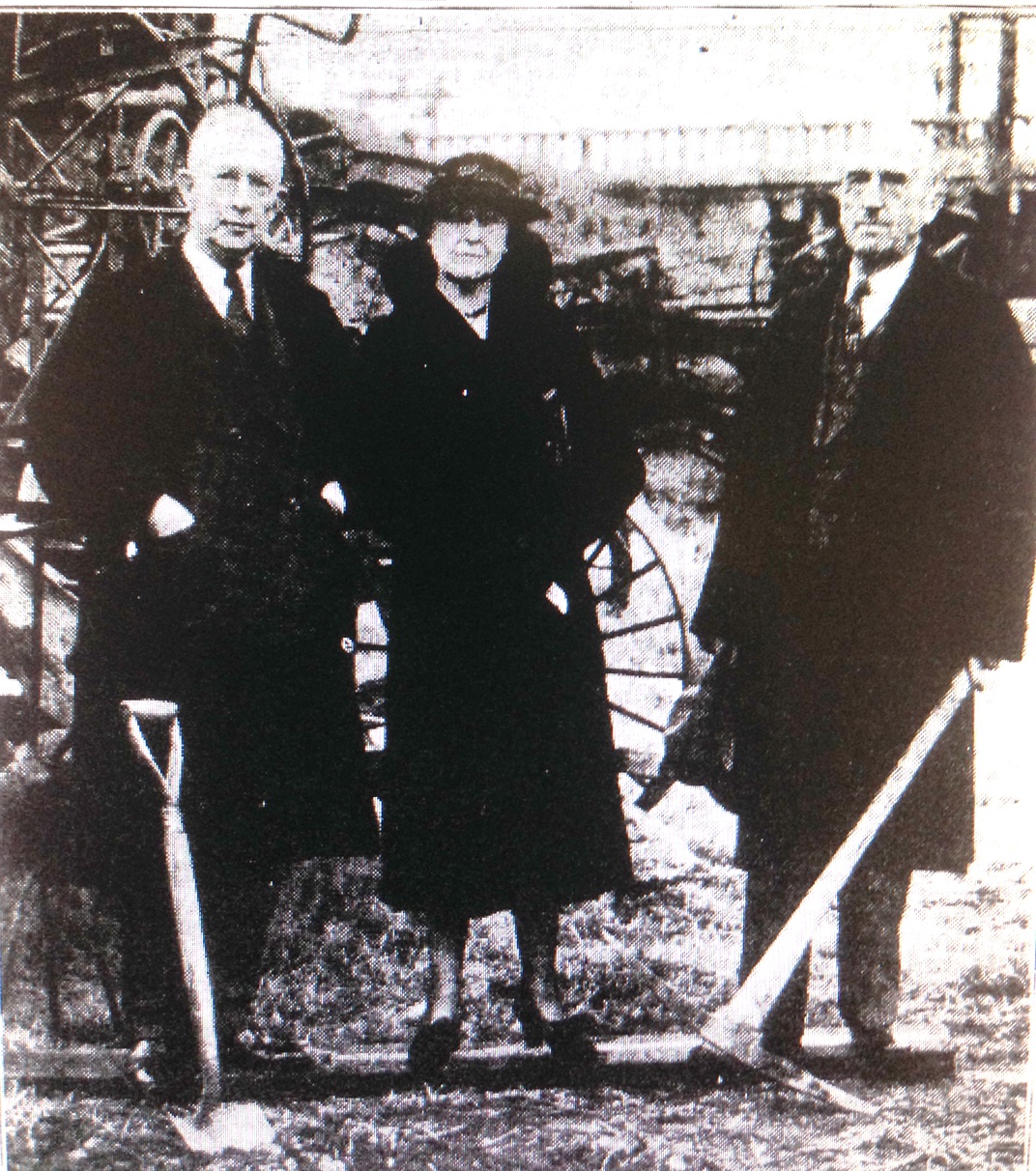
    ARKANSAS DEMOCRAT photo of Mayor Overman, Mrs. Robinson and Mr. Allaire at the groundbreaking. The Broadway Bridge balustrades are visible in the background.

ARKANSAS DEMOCRAT photo of Mayor Overman, Mrs. Robinson and Mr. Allaire at the groundbreaking. The Broadway Bridge balustrades are visible in the background.

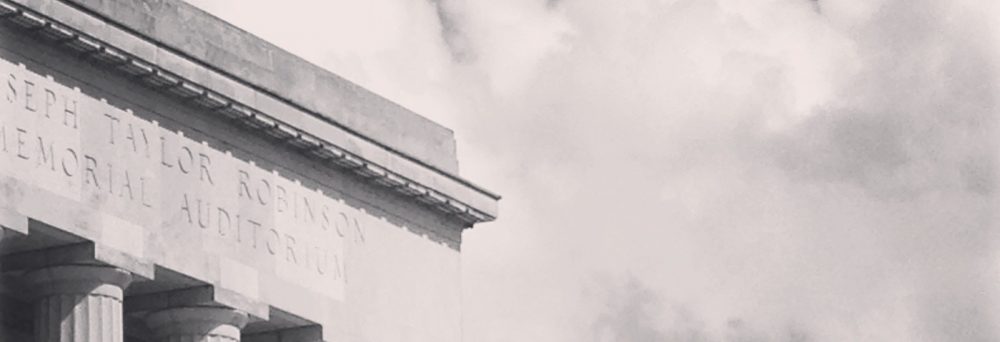
On December 24, 1937, at 11:30 a.m., Little Rock Mayor R. E. Overman, Ewilda Gertrude Miller Robinson (the widow of Senator Joseph Taylor Robinson) and  Alexander Allaire of the PWA turned dirt to participate in the brief groundbreaking ceremony for Little Rock’s municipal auditorium.  That morning, the Arkansas Gazette ran a brief story on the upcoming groundbreaking.  The story mentioned that the building would be named in memory of the late beloved Arkansas politician.  This appears to be the first public pronouncement of the Robinson name for this civic structure.

Among others in attendance at the groundbreaking were Mrs. Charles Miller (sister-in-law of Mrs. Robinson), Mr. and Mrs. Grady Miller (brother and sister-in-law of Mrs. Robinson), the mayor’s wife, the three architects (George Wittenberg, Lawson Delony and Eugene John Stern), and D. H. Daugherty and Will Terry of the City’s Board of Public Affairs. 

Construction had to start by January 1, 1938, in order to receive PWA funds.  By breaking ground on December 24, there was over a week to spare.  The site had been selected in late October 1937, and the purchase had not been finalized.  But the PWA did give permission for the City to let a contract for excavation, demolition and filling on the site.

The groundbreaking took place at the corner of Garland and Spring Streets which was on the northeast corner of the block set aside for the auditorium.  Today, Spring Street does not extend north of Markham; the street was closed to make way for the parking structure and what is now the Doubletree Hotel.  Garland Street is basically an alley that runs parallel to Markham north of City Hall, Robinson Auditorium and the Doubletree Hotel.

Approximation of site of Robinson Auditorium groundbreaking

Approximation of site of Robinson Auditorium groundbreaking

Capital Hotel has Stories with Santa Tonight

In addition to having a internationally renowned decorated Christmas Tree, the Capital Hotel has a series of holiday events.
Tonight, the hotel is playing host to a special “Stories with Santa” on Monday, Dec 23rd at 5pm.

Santa will read a few holiday favorites, including “Twas the Night Before Christmas” in the Capital lobby.

Keeping the event casual and cozy, children are asked to wear their pajamas.  The hotel staff will provide Capital robes for them to snuggle in, and pillows to relax on.

The hotel will serve cookies and hot chocolate to the kiddos, as well.

The Cabot Brass Quintet will play holiday music directly following storytime.

Little Rock Look Back: Roswell Beebe

Mayor BeebeOn December 22, 1795, future Little Rock Mayor Roswell Beebe was born in Hinsdale, New York.  His family were wealthy English immigrants.  At seventeen, Beebe went to New Orleans and fought with Andrew Jackson in the 1815 Battle of New Orleans.  He stayed in the Crescent City for the next two decades building successful lumber and brick businesses.

Due to health concerns, he moved north to a drier climate in 1834.  After first stopping in Fulton, Arkansas, he settled in Little Rock in 1835 at the age of forty.  He stayed at the home of Chester Ashley and married Ashley’s sister-in-law, Clarissa Elliott.  He and Clarissa had two children, Roswell and Cora.

For nearly 30 years, Little Rock had a complicated history of deeds, titles and land ownership.  In 1839, Beebe went to Washington DC and received the original patent from President Martin Van Buren.  He then set about clearing up the land and title issues, as well as drawing up a plan for the city and laying off blocks and streets.  Beebe deeded the streets and alleys to the City for a dollar.  He also donated the land on Markham Street for a new State Capitol building (now home of the Old State House Museum).  Along with his brother-in-law Chester Ashley, he donated the land for the establishment of Mount Holly Cemetery.

In 1848, Beebe was elected to the Little Rock City Council.  The following year, he was elected Mayor.  He served as Mayor of Little Rock from April 1849 to February 1850.

While his primary business focus in the 1840s had been real estate, in the 1850s he focused on railroads.  Beebe was named president of the Cairo and Fulton Railroad Company in 1853.

While on a visit to New York, Beebe died on September 27, 1856.  His body was returned to Little Rock, and Roswell Beebe was buried at Mount Holly Cemetery.  The town of Beebe, Arkansas, is named in his honor.