Skip to primary content
Skip to secondary content

Little Rock Culture Vulture

Cultural events, places and people in the Little Rock area

Little Rock Culture Vulture

Main menu

  • Home
  • About the Little Rock Culture Vulture
  • Little Rock Cultural Institutions and Organizations (alphabetical)
  • LR Cultural Sites by Discipline
  • Pulitzer Prize
  • Shows Seen
  • Theatre Reviews
    • Lucky 13
    • NPHS Fall of the House of Usher, ushers in fall
    • PIPPIN’s Magic Just for You
    • The Lullaby of a Golden Tent Season
    • Thoroughly Enjoyable Millie(s)
  • Tony Awards
    • 2014 Tony Award Predictions
    • 2015 Tony Awards
      • 2015 Tony Award Nomination Predictions
      • Tony Award Nomination Analysis
    • 2016 Tony Awards
      • 2016 Tony nomination predictions

Category Archives: Civic Engagement

Post navigation

← Older posts
Newer posts →

May 31, 1968 – a day of transition for the Arkansas Arts Center

Posted on May 31, 2019 by Scott

AAC Logo in 1963

As the Arkansas Arts Center prepares to transition out of its physical space in MacArthur Park this summer, it is a time to look back to another transition the AAC experienced 51 years ago. That one was not quite so exciting.

In January 1968, the Arkansas Arts Center made the decision to cease operating a degree-granting education program effective May 31 of that year.  Sixteen faculty members lost their jobs, though a couple were retained for other positions within the organization.

After opening in May 1963 and beginning the degree-granting program in September 1964, the Arkansas Arts Center found itself operating at a deficit each year.  While Jeannette and Winthrop Rockefeller made up the deficits, it was not a sustainable model.  (Mrs. Rockefeller had been the president of the AAC board for several years after she and her husband played leadership roles in the statewide fundraising efforts to establish the AAC.)

Though the degree-granting programs were bringing national recognition to the AAC, they had essentially taken over the entire facility.  The theatre was rarely available for children’s programming or community groups. The galleries were given over largely to the displaying the works of the students and faculty.  What had been envisioned as a facility melding world-class arts with community arts, was not functioning that way.

As such, the statewide membership program was suffering. Without the creation of programming in Little Rock, it was difficult to take any substantial arts offerings out to the membership clusters throughout the state. This resulted in the decline of memberships being purchased.

Following the announcement of the cessation of the degree-granting program, the AAC Board sought ways to more fully engage the public.  Part of this was due to the fact that the Arts Center had a deficit of $295,216 (the equivalent of $2.15 million today).  The only profitable part of the AAC operation was the gift shop.  With that level of deficit, the permanent closure of the AAC was certainly a possibility on people’s minds.

A committee studying the future of the AAC decided to focus on five (5) areas.  (And of course, AAC founding mother Jeane Hamilton was part of this effort.)  The areas were Education (community classes for children and adults), Exhibits (a return to a mix of permanent and traveling exhibitions), Theatre (partnerships with Community Theatre of Little Rock and the creation of children and teen theatre productions), State Services (refocusing the Artmobile to include educational instruction), and Membership. This would result in a net budget of $260,000.

In April 1968, a fund drive was announced led by former Little Rock Mayor Byron Morse.  The goal was $130,000, to be matched dollar-for-dollar by the Rockefellers.  As of May of that year, it had raised $108,731.

Share this:

  • Share on Facebook (Opens in new window) Facebook
  • Email a link to a friend (Opens in new window) Email
  • Share on X (Opens in new window) X
  • Share on LinkedIn (Opens in new window) LinkedIn
  • Share on Tumblr (Opens in new window) Tumblr
  • More
  • Share on Reddit (Opens in new window) Reddit
Like Loading...
Posted in Civic Engagement, Government, LR Look Back, Museum, Visual Art | Tagged Arkansas Arts Center, Byron Morse, Community Theatre of Little Rock, Jeane Hamilton, Jeannette Edris Rockefeller, William Rector, Windgate Foundation, Winthrop Rockefeller

The US Supreme Court hands down Brown v. Board II decision on May 31, 1955

Posted on May 31, 2019 by Scott

On May 31, 1955, the U.S. Supreme Court issued its ruling in Brown vs. Board of Education of Topeka II.  

One year after the landmark Brown v. Board decision which declared state laws establishing separate public schools for black and white students to be unconstitutional, the Supreme Court took up the case again.  This time the focus was on the implementation of desegregation

The original Brown v. Board grew out of a class action suit filed in Topeka, Kansas, by thirteen African American parents on behalf of their children.  The District Court had ruled in favor of the Board of Education, citing Plessy v. Ferguson.  When it was appealed to the Supreme Court, Brown v. Board was combined with four other cases from other jurisdictions.

After handing down the 1954 decision, the Supreme Court planned to hear arguments during the following court session regarding the implementation.  Because the Brown v. Board case was actually a compilation of several cases from different parts of the US, the Supreme Court was faced with crafting a ruling which would apply to a variety of situations.

In the arguments before the court in April 1955, the NAACP argued for immediate desegregation while the states argued for delays.

The unanimous decision, authored by Chief Justice Earl Warren, employed the now-famous (or infamous?) phrase that the states should desegregate “with all deliberate speed.”

In making the ruling, the US Supreme Court shifted the decision-making to local school districts and lower-level federal courts. The rationale was that those entities closest to the unique situation of each locality would be best equipped to handle the distinct needs of those schools and communities.

The Supreme Court did make it clear that all school systems must immediately starting moving toward racial desegregation.   But again failed to provide any guideposts as to what that meant.

In anticipation of the Supreme Court’s Brown II ruling, earlier in May the Little Rock School Board had adopted a draft of what became known as the “Blossom Plan” (named for the superintendent, Virgil Blossom).  The thought process seems to have been that if the LRSD had a plan in place prior to a Supreme Court decision, it might buy it more time had the court ruled that things had to happen immediately.

The Blossom Plan called for phased integration to start at the senior high level.  It anticipated the new Hall High School as having an attendance zone in addition to zones for Central and Mann high schools. But the way the zones were created, the only school which would be integrated at first would be Central High.  The junior highs and elementary schools would be integrated later.

With no immediate remedy from the US Supreme Court, the NAACP – both nationally and locally – had little recourse other than expressing their unhappiness continuing to verbally protest the lack of immediate desegregation. (This is an oversimplification of the NAACP efforts, but points out that their options were very limited.)

Share this:

  • Share on Facebook (Opens in new window) Facebook
  • Email a link to a friend (Opens in new window) Email
  • Share on X (Opens in new window) X
  • Share on LinkedIn (Opens in new window) LinkedIn
  • Share on Tumblr (Opens in new window) Tumblr
  • More
  • Share on Reddit (Opens in new window) Reddit
Like Loading...
Posted in Civic Engagement, Government, History, LR Look Back | Tagged Brown v. Board II, Brown v. Board of Education of Topeka, Earl Warren, Horace Mann Middle School, Little Rock Central High School, Little Rock Hall High, Little Rock School Board, Little Rock School District, NAACP, Supreme Court, Virgil Blossom

Issues that Matter looks at the Environment tonight at the Central Arkansas Library System

Posted on May 30, 2019 by Scott

Image may contain: text

Tonight (May 30) at 6pm, there will be a program at the CALS Ron Robinson Theater looking at the future of the environment in Arkansas.

This moderated panel discussion will examine environmental issues and include questions from the audience.

Panelists will include State Senator Will Bond, Arkansas Sierra Club Director Glen Hooks, and Executive Director of the Regional Recycling & Waste Reduction District Craig Douglass.

The program, part of the ongoing “Issues that Matter” series, is sponsored by CALS, KUAR and the League of Women Voters.

Share this:

  • Share on Facebook (Opens in new window) Facebook
  • Email a link to a friend (Opens in new window) Email
  • Share on X (Opens in new window) X
  • Share on LinkedIn (Opens in new window) LinkedIn
  • Share on Tumblr (Opens in new window) Tumblr
  • More
  • Share on Reddit (Opens in new window) Reddit
Like Loading...
Posted in Civic Engagement, Lecture | Tagged CALS, Central Arkansas Library System, KUAR, League of Women Voters, Ron Robinson Theater, Will Bond

JFK at CII

Posted on May 29, 2019 by Scott

102 years ago today (May 29, 1917), John Fitzgerald Kennedy was born to Joe and Rose Kennedy, the second of nine children. Groomed for leadership by his parents, he was thrust even more into the path of political greatness following the World War II death of his elder brother Joe Jr.

A war hero himself, following his leadership after the attack of PT-109, he was first elected to Congress from Massachusetts in 1946. He would be re-elected in 1948 and 1950.  In 1952, he challenged incumbent Senator Henry Cabot Lodge and beat him.  He was re-elected to the Senate in 1958.

Kennedy had been seen as a strong potential Vice Presidential candidate for the Democrats in 1956. But his father discouraged this fearing that a loss to Eisenhower/Nixon would set him back in the future.  In 1960, the young, dashing Senator from the Bay State sought the Democratic nomination.  After a contentious primary season where he often ran against senate colleagues, Kennedy headed into the Democratic convention with the most delegates.  He added his chief rival, Texas Senator Lyndon Baines Johnson as his running mate.

After a close election, the Kennedy-Johnson ticket bested Vice President Richard Nixon and his running mate Henry Cabot Lodge (the selfsame former Senator who had been defeated by Kennedy 8 years earlier).

Following the oldest President (at the time), the young Kennedy administration seemed to captivate the country.  During his 1,000 days in office, Kennedy faced many challenges both foreign (Bay of Pigs, Cuba missile crisis, start of Vietnam) and domestic (civil rights, organized crime). His ambitious “New Frontier” focused on education, additional services to rural areas and medical care for the elderly.  He also focused on getting the US to the moon.

Together with Franklin Roosevelt and Ronald Reagan, JFK embodied not only his generation but the mood of the country.  And his quotes resonate today including:

My fellow Americans, ask not what your country can do for you, ask what you can do for your country.

Let every nation know, whether it wishes us well or ill, that we shall pay any price, bear any burden, meet any hardship, support any friend, oppose any foe to assure the survival and the success of liberty.

Ich bin ein Berliner

On October 3, 1963, President Kennedy delivered remarks at the Arkansas State Fairgrounds.  Only a few weeks later, he would be felled by an assassins bullet in Texas.  In the speech, the President praised Arkansas’ congressional delegation including Senators John McClellan and J. William Fulbright and Congressmen Took Gathings, Bill Trimble, Wilbur Mills and Oren Harris.  Each of these men held senior leadership positions in key committees.  The main focus of the speech was to discuss President Kennedy’s vision for a new economy in the South.

The President was actually in the state to speak at the dedication of the Greers Ferry Dam. He agreed to make that appearance as a part of a negotiation with Congressman Mills as they were deadlocked over changes to the tax code.  He had previously visited Little Rock in 1957 when he came to the state to address the Arkansas Bar Association meeting in Hot Springs.

Share this:

  • Share on Facebook (Opens in new window) Facebook
  • Email a link to a friend (Opens in new window) Email
  • Share on X (Opens in new window) X
  • Share on LinkedIn (Opens in new window) LinkedIn
  • Share on Tumblr (Opens in new window) Tumblr
  • More
  • Share on Reddit (Opens in new window) Reddit
Like Loading...
Posted in Civic Engagement, Government, History, LR Look Back | Tagged Bill Trimble, Henry Cabot Lodge, J. William Fulbright, Jacqueline Bouvier Kennedy, John F. Kennedy, John L. McClellan, Joseph Kennedy Jr., Joseph Kennedy Sr., Lyndon Baines Johnson, Oren Harris, Richard M. Nixon, Rose Kennedy, Took Gathings, Wilbur Mills

Little Rock Violin Shop plays role in International Diplomacy

Posted on May 27, 2019 by Scott

On his Facebook page, Joe Joyner, a violist with the Arkansas Symphony Orchestra and owner of the The Little Rock Violin Shop relayed the following story.

On April 30th I heard a news story that Japan’s Emperor Akihito was stepping down and that his son, Naruhito, would be taking his place. 24 hours later I received a call from the U.S. State Department seeking an American made viola to give as a diplomatic gift. Shortly after this call, I began seeing news stories about Japan’s new Emperor Naruhito being a violist.


Nearly a month later, I can now say that last week I sold the Emperor’s new viola, an instrument made in 1938 by Ivan W. Allison of Charleston, West Virginia. The instrument was presented to Emperor Naruhito by President Donald Trump today.


God I love my job.

https://www.bostonglobe.com/…/rdshGaDP8xDBljdBTG…/story.html

The Little Rock Violin Shop is a treasure in Little Rock. Not only do they make stringed instruments and bows, but they also repair them. They are an important example of the role the arts play in the economy and in enhancing Little Rock’s quality of life.

Thank you to Joe Joyner for having the vision to create the Little Rock Violin Shop!

Share this:

  • Share on Facebook (Opens in new window) Facebook
  • Email a link to a friend (Opens in new window) Email
  • Share on X (Opens in new window) X
  • Share on LinkedIn (Opens in new window) LinkedIn
  • Share on Tumblr (Opens in new window) Tumblr
  • More
  • Share on Reddit (Opens in new window) Reddit
Like Loading...
Posted in Civic Engagement, Government, Music | Tagged Arkansas Symphony Orchestra, Joe Joyner, Little Rock Violin Shop

May 27, 1958 – Ernest Green graduates from LR Central High

Posted on May 27, 2019 by Scott

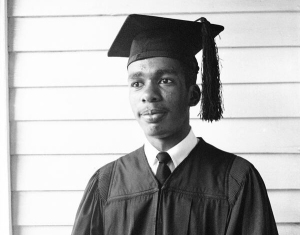
Last week, the Class of 2018 graduated from Little Rock Central High School.  Perhaps the most famous Last week, the Class of 2019 graduated from Little Rock Central High School.  Perhaps the most famous graduation ceremony in the long-storied history of Little Rock Central High took place on May 27, 1958.  It was on that date that Ernest Green became the first African American to graduate from the formerly all-white school.

Among those in the audience to witness this historic event was an up and coming minister named Dr. Martin Luther King, Jr.  A friend of L. C. and Daisy Bates, he attended the 1958 Central High School graduation to witness Green receiving a diploma. Each senior only received eight tickets to the ceremony at Quigley Stadium.   Dr. King was in the state to address the Arkansas AM&N (now UAPB) graduation.  Because he was going to be nearby, Dr. King wanted to witness the history.  Green did not know that Dr. King was in the stands until after the conclusion of the ceremony.  Later that evening, Dr. King gave Green a graduation present of $15.

Because of fears about the event becoming a media circus, the Little Rock School District limited the press on the field to one Democrat and one Gazette photographer. Other press were limited to the press box normally filled with sportswriters covering the gridiron exploits of the champion Tigers.  There were photos taken of Green prior to the ceremony as well as during the ceremony.

During the graduation rehearsal, there had been concerns that some students or other people might try to disrupt the practice.  But it went off without a hitch.  Likewise, the ceremony itself went smoothly.  Local press reported that some members of the class briefly chatted with Green during the ceremony.  That the event took place without incident was a relief on many levels to City leaders.  Also in the class of 1958 were a son of Little Rock Mayor Woodrow Mann and a daughter of LRSD Superintendent Virgil Blossom.

Share this:

  • Share on Facebook (Opens in new window) Facebook
  • Email a link to a friend (Opens in new window) Email
  • Share on X (Opens in new window) X
  • Share on LinkedIn (Opens in new window) LinkedIn
  • Share on Tumblr (Opens in new window) Tumblr
  • More
  • Share on Reddit (Opens in new window) Reddit
Like Loading...
Posted in Civic Engagement, Government, History, LR Look Back | Tagged Crisis at Central High, Daisy Bates, Ernest Green, L. C. Bates, Little Rock Central High School, Martin Luther King Jr., Quigley Stadium, UAPB, Virgil Blossom, Woodrow Wilson Mann

Little Rock’s Recall Election – May 25, 1959

Posted on May 25, 2019 by Scott

May 25, 1959, was not only the Recall Election Day, it was the last day of school for the Little Rock School District’s elementary and junior high students.

The results of that day’s vote would determine whether the ninth grade students would be in class come fall, or joining their older friends and neighbors in sitting out a school year.

While expectations that a new record of turnout would be set were off, over 25,000 of the 42,000 registered voters DID cast ballots in the May 25, 1959, Recall Election.

As the precinct results started coming in, some unexpected trends developed.  Some of the boxes in the more affluent, western neighborhoods which had been expected to be strongly in favor of keeping Everett Tucker, Russell Matson and Ted Lamb were not providing the anticipated overwhelming numbers.  Likewise, some of the more working class neighborhoods which had been projected to be strongly in favor of keeping Ed McKinley, Ben Rowland and Bob Laster were more receptive to keeping Tucker, Matson and Lamb.

As the night rolled onward, only Everett Tucker looked like a sure thing to be retained on the School Board.  At one point in the evening it appeared that the other five members would be recalled.  By the time they were down to four boxes still uncounted, the three CROSS-backed candidates were guaranteed to be recalled, but the status of Lamb and Matson was still undetermined.  Finally, with only two boxes remaining, there was a sufficient cushion to guarantee Matson and Lamb would continue as board members.

Two boxes from the Woodruff school were uncounted at the end of Monday. They had 611 votes between the two of them, which was not enough to change any outcomes.  They were being kept under lock and key to ensure there was no tampering with them.

Once it became apparent that Tucker, Lamb and Matson were retained, the STOP watch party erupted.  Six young men hoisted the triumphant three on their shoulders and paraded them through the crowd.  Dr. Drew Agar enthusiastically announced to the crowd, “Mission completely accomplished.”

At around 11:00 p.m. William S. Mitchell addressed the crowd.  “This is a great awakening of our home town…I have never seen such a wonderful demonstration of community spirit.”  He later went on to thank the thousands of people who volunteered in the effort.

At the CROSS headquarters, Ed McKinley and Rev. M. L. Moser were sequestered in a room poring over results.  When it appeared that 5 of the 6 might be recalled, McKinley issued what turned out to be a premature statement.

Back at the STOP party, the celebration continued.  While people knew that much work was still ahead, the men and women in attendance were enjoying a rare moment of joy after nearly two years of strife.

Share this:

  • Share on Facebook (Opens in new window) Facebook
  • Email a link to a friend (Opens in new window) Email
  • Share on X (Opens in new window) X
  • Share on LinkedIn (Opens in new window) LinkedIn
  • Share on Tumblr (Opens in new window) Tumblr
  • More
  • Share on Reddit (Opens in new window) Reddit
Like Loading...
Posted in Civic Engagement, Government, History | Tagged Ben Rowland, Crisis at Central High, CROSS, Dr. Drew Agar, Ed McKinley, Everett Tucker, Horace Mann Middle School, Little Rock Central High School, Little Rock Hall High, Lost Year, M. L. Moser Jr., Robert Laster, Russell Matson, STOP, Ted Lamb, Will Mitchell, Women's Emergency Committee

Post navigation

← Older posts
Newer posts →

Search the Site

Archives

  • January 2020
  • December 2019
  • November 2019
  • October 2019
  • September 2019
  • August 2019
  • July 2019
  • June 2019
  • May 2019
  • April 2019
  • March 2019
  • February 2019
  • January 2019
  • December 2018
  • November 2018
  • October 2018
  • September 2018
  • August 2018
  • July 2018
  • June 2018
  • May 2018
  • April 2018
  • March 2018
  • February 2018
  • January 2018
  • December 2017
  • November 2017
  • October 2017
  • September 2017
  • August 2017
  • July 2017
  • June 2017
  • May 2017
  • April 2017
  • March 2017
  • February 2017
  • January 2017
  • December 2016
  • November 2016
  • October 2016
  • September 2016
  • August 2016
  • July 2016
  • June 2016
  • May 2016
  • April 2016
  • March 2016
  • February 2016
  • January 2016
  • December 2015
  • November 2015
  • October 2015
  • September 2015
  • August 2015
  • July 2015
  • June 2015
  • May 2015
  • April 2015
  • March 2015
  • February 2015
  • January 2015
  • December 2014
  • November 2014
  • October 2014
  • September 2014
  • August 2014
  • July 2014
  • June 2014
  • May 2014
  • April 2014
  • March 2014
  • February 2014
  • January 2014
  • December 2013
  • November 2013
  • October 2013
  • September 2013
  • August 2013
  • July 2013
  • June 2013
  • May 2013
  • April 2013
  • March 2013
  • February 2013
  • January 2013
  • December 2012
  • November 2012
  • October 2012
  • September 2012
  • August 2012
  • July 2012
  • June 2012
  • May 2012
  • April 2012
  • March 2012
  • February 2012
  • January 2012
  • December 2011
  • November 2011
  • October 2011
Create a free website or blog at WordPress.com.
Little Rock Culture Vulture
Create a free website or blog at WordPress.com.
Privacy & Cookies: This site uses cookies. By continuing to use this website, you agree to their use.
To find out more, including how to control cookies, see here: Cookie Policy
  • Subscribe Subscribed
    • Little Rock Culture Vulture
    • Join 668 other subscribers
    • Already have a WordPress.com account? Log in now.
    • Little Rock Culture Vulture
    • Subscribe Subscribed
    • Sign up
    • Log in
    • Report this content
    • View site in Reader
    • Manage subscriptions
    • Collapse this bar
 

Loading Comments...
 

    %d