
LR Women Making History – Louise Loughborough

Louise Loughborough was the first woman to serve on the Little Rock Planning Commission.  Not only was the she first woman to serve on this body, she was the first to serve on any City commission other than the Board of Censors or Library Board.  Born Louisa Watkins Wright in Little Rock 1881, her ancestors included many early Arkansas leaders including Little Rock Mayor David Fulton.

In 1935, Loughborough was appointed to the Little Rock Planning Commission, and it was in this role that she first heard about the plan to condemn the half-block of houses that she had grown up admiring on Cumberland and East Third streets. Although the neighborhood had fallen on hard times, becoming a red-light district and slum, Loughborough feared the loss of several historic structures, including the Hinderliter House, the oldest building in Little Rock and thought to be Arkansas’s last territorial capitol. She mobilized a group of civic leaders to save these buildings. She enlisted the aid of prominent architect Max Mayer and coined the term “town of three capitols” to try to capture the imagination of potential supporters, grouping the “Territorial Capitol” with the Old State House and the State Capitol.

The Arkansas Territorial Restoration opened on July 19, 1941. The project was the first Arkansas agency committed to both the restoration of structures and the interpretation of their history, and it served as a model and inspiration for historic preservation in the state. Around the same time, she was a moving force behind the creation of a museum at the Old State House as well.  Today both Historic Arkansas Museum (as the Territorial Restoration is now known) and the Old State House Museum are agencies of the Department of Arkansas Heritage.

As founding Chairman of the Arkansas Territorial Restoration Commission, Louise Loughborough provided daily direction for the museum house complex through the first twenty years of its existence. She died in Little Rock on December 10, 1962 and was buried at Mount Holly Cemetery.

Little Rock Look Back: St. Pat’s Day with Mayor Pat Robinson

On this date in 1900, future Little Rock Mayor Pat L. Robinson was born.  While it cannot be verified that he was indeed named after St. Patrick, it would be fairly reasonable to assume there might be a connection.  He was born in a community outside of Arkadelphia, but moved to Little Rock with his parents.

By the 1920s, Robinson was a rising star of Little Rock Democratic politics.  In April 1929, just weeks after his 29th birthday, he was elected Mayor.  He had twice been elected as City Attorney (1926 and 1928) and was one of the youngest to serve in that position.

During Mayor Robinson’s tenure, he announced plans to construct a new airport.  That project led to the creation of what is now the Bill and Hillary Clinton National Airport.  Mayor Robinson was also involved in helping Philander Smith College secure the property where it is now located.  In addition, during his tenure, what is now the Museum of Discovery was folded into the City of Little Rock.  Shortly after taking office, he championed several projects for approval by Little Rock voters. The projects he supported were approved; the ones he did not support did not pass.

Single at the time he was in office and generally considered good looking, Mayor Robinson was sometimes referred to as the “Jimmy Walker of the Southwest.” Walker was the handsome and charming Mayor of New York City at the time.

Mayor Robinson ran afoul of some of the Democratic party leaders. While the extent of the discord is not exactly known, it IS known that shortly after taking office he confronted the City Council over a special election.  Mayor Robinson sat silently while the City Council voted to approve a special election with a variety of options for voters. Only after the Council approved it did he disclose he only supported three of the initiatives.  In a bit of political brinkmanship, the Council subsequently voted to cancel the election. The Mayor vetoed their vote.  The aldermen chose not to attempt an override (though they had the votes based on disclosures made to the public and the press).  It appears that the relationship between the Mayor and the City Council never recovered.

IMG_4532During this era in Little Rock, it was customary for an incumbent mayor to be given a second term. But City Clerk Horace Knowlton challenged Robinson in the primary.  It was a bitter campaign with Robinson linking Knowlton to disreputable denizens and Knowlton charging Robinson with “an orgy of spending.”  Robinson initially came out 17 votes ahead. But after a review and a lawsuit, it was found that Knowlton ended up with 10 more votes and became the nominee.  At the time, being the Democratic nominee was tantamount to election.

After he left office, Robinson practiced law for a few years in Little Rock and then left the city.  He married a woman from England, Arkansas in the 1930s, but by the 1940 census, he was listed as divorced and living as a lodger.  He later served in the Army during World War II.  Robinson died in June 1958, and is buried in Clark County.

LR Women Making History – Janis Kearney

Janis Kearney is the only person to have held the title of U.S. Presidential Diarist. In 1995 she was appointed to that position by President Bill Clinton.

After graduating from the University of Arkansas, she was hired by the State of Arkansas as a program manager.  Nine years later, she became managing editor for the Arkansas State Press. She later purchased it from owner Daisy Bates.

In 1992, she took a leave from the paper to work on the Clinton presidential campaign.  Following the election, she worked in the transition office, the White House, and the U.S. Small Business Administration until her appointment as Presidential Diarist.

In 2001, she moved to Chicago and started working on a book, while also having fellowships at Harvard and DePaul.  In 2004, she founded Writing Our World Press and published her first book, Cotton Field of Dreams.  Her Clinton biography, Conversations: William Jefferson Clinton-From Hope to Harlem was published in 2006.  Since then she has also published a novel, a biography of Daisy Bates, and the second part of her memoirs.

She is also active in the Celebrate! Maya Project. This program seeks to honor and promote the inclusive literacy, creativity, and social consciousness of the life and work of artist and activist Maya Angelou.

LR Women Making History – Mollie Irvin

Mollie Irvin spent her life serving others.  She was a wife, mother, and grandmother. She was a volunteer in her church and her children’s schools.  She helped her friends.  She may have never seen herself as someone who would start spending every Tuesday night at Little Rock City Hall.

But she did.

Miss Mollie, as she came to be known at City Hall, had long been active in the Cloverhill/Pennbrook Neighborhood.  For many years, she served as president of the neighborhood association where she organized crime watches, police night outs and 4th of July celebrations.

When a young lady was injured crossing John Barrow in front of Henderson Middle School, Miss Mollie sprang into action.  She felt there needed to be a stoplight on the street.  She launched a campaign to have a stoplight installed at John Barrow Road and Cloverhill Road.  At the time the City did not have the money for the necessary widening and installation of the light, but was expecting it after the 2003 passage of capital bond improvements.  To make sure the City did not forget her request, Miss Mollie would come to every meeting. Sometimes she would be by herself, other times she would have guests. She was always polite and forceful with grace and humor when she made her plea.

Finally, the effort paid off.  She was actually tasked with flipping the switch to turn on the traffic signal.

Her goal met, Miss Mollie did not stop coming to City Hall.  After sitting through all those meetings, she had found herself interested in a variety of issues. She would attend the City Board meetings, neighborhood meetings, public budget meetings, and just about any other City meeting as a way to learn more. She was contacted by others for advice on how to lobby.   Her efforts were recognized nationally when the Cloverhill/Pennbrook Neighborhood was named Neighborhood of the Year by Neighborhoods USA.

Miss Mollie was as much a fixture at City Hall as city staff and elected officials.  When the holidays rolled around, Miss Mollie would show up at City Hall with individually prepared baggies full of baked goods for City officials.  She was also a fixture at Henderson Middle School as a volunteer.

Throughout her new career in civic engagement, she continued to be devoted to her family, her church, and her friends.  (She would regularly meet with friends she had known since elementary school.)

Following a brief illness, Miss Mollie died in 2016.  But her legacy lives on in the lives she touched and in a stoplight at John Barrow Road and Cloverhill Road.

LR Women Making History – Stephanie S. Streett

Stephanie S. Streett is the executive director of the Clinton Foundation. In this role she oversees the day-to-day operations of the Clinton Presidential Center, including the development and implementation of its educational programs, special events, exhibits, and services as well as staff management. She establishes and cultivates strategic partnerships and cooperative arrangements with state and local governments, the non-profit and private sector, community groups and other organizations. Stephanie also serves as the corporate secretary for the Clinton Foundation Board of Directors.
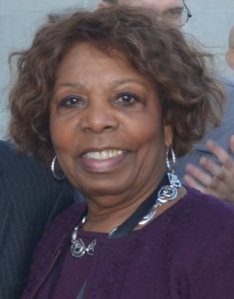
Stephanie has used her position to broaden culture in Little Rock through the wide variety of exhibits which the Clinton Center has hosted. A wide variety of styles of visual arts, design, contemporary craft, sports, science and history have been showcased in exhibits at the Clinton Center.  She also was instrumental in planning the special events in conjunction with the Clinton Center 10th Anniversary in 2014 and the 2017 celebration of the 25th anniversary of President Clinton’s election.

In addition, she has been active in promoting partnerships with the Kennedy Center for the Performing Arts. Together with Kaki Hockersmith, she has facilitated several seminars which have brought key Kennedy Center leaders to Little Rock.  Together they lead the effort known as Fusion: Arts + Humanities Arkansas. Now in its second year, Fusion promotes heritage and culture and celebrates human achievement by weaving the arts and humanities together.

She has been the president of the University of Arkansas Alumni Association National Board of Directors and is co-chair of the Board of Directors for City Year Little Rock. She also serves on the Board of Directors for the Downtown Partnership of Little Rock and is a member of the International Women’s Forum Arkansas.  In April, she will be honored with the 2018 City Year Little Rock Lifetime of Service Award at the Red Jacket Ball.

LR Women Making History: Lottie Shackelford

Lottie Shackelford has been a trailblazer throughout her career in public service.
Active in community activities and politics, she ran for the City Board in 1974 and lost.  But she was appointed to the Little Rock City Board in September 1978 to fill a vacancy.  This made her the first African American woman to serve on he City Board, and indeed on any governing board for the City (during Reconstruction, there were at least three African Americans on the City Council, but they were all men.) She was subsequently elected to a full-term on the City Board in 1980 winning 55% of the vote over three male candidates.

She was subsequently re-elected in 1984 (unopposed) and in 1988 (with 60% of the vote).

In January 1987, Shackelford became the first female mayor of Little Rock when she was chosen by her colleagues on the City Board to serve in that position. She was Mayor until December 1988.

From 1982 until 1992, she served as Executive Director of the Arkansas Regional Minority Purchasing Council.  She left that position to serve as Deputy Campaign Manager of Clinton for President.  She subsequently served on the Clinton/Gore transition team. She later served on the Overseas Private Investment Corporation from 1993 to 2003. She was the first African American to be in that position.

A graduate of Philander Smith College, she has also studied at the Arkansas Institute of Politics at Hendrix College and the Kennedy School of Government at Harvard University.

In recognition of all of her achievements, she has been included in the Arkansas Civil Rights Heritage Trail, the Arkansas Black Hall of Fame, and the Arkansas Women’s Hall of Fame.

Little Rock Look Back: First Class status granted City of Little Rock

On March 9, 1875, the City of Little Rock became a City of the First Class in Arkansas. It was the first city in the state to receive this designation.

This was in conjunction with the adoption of the Arkansas Constitution of 1874 which created this status.  The Constitution defines them as: “All cities, which at the last federal census had, or now have, a population exceeding two thousand five hundred (2,500) inhabitants shall be deemed cities of the first class.”

March 9 is just one of several dates Little Rock could celebrate as a birthday.

  • January 6, 1866 – Little Rock government resumes operations following the Civil War
  • November 2, 1835 – Little Rock is incorporated as a City
  • November 7, 1831 – Little Rock is incorporated as a Town
  • October 27, 1825 – Little Rock given the right to elect a governing board of trustees
  • June 1, 1821 – Little Rock officially becomes capital of Arkansas
  • April 9, 1722 – Jean Batiste Benard de La Harpe sees Le Petite Roche

There could also be the dates in 1812 when William Lewis built the first home in Little Rock (a shack) or in February 1820 when the first permanent settlement was established.  But neither of those have exact dates that are remembered.