August 9 is National Book Lover’s Day

bldAugust 9 is National Book Lover’s Day (or Book Lovers Day or Book Lovers’ Day — take your pick).

However you punctuate it, today is a day for those who love to read.  It is set aside to encourage you to kick back and relax with a great book. From shaded spots under arching trees to being tucked up warm in bed, there’s no better way to celebrate today than to while the hours away lost in a book.

A few years ago Huffington Post offered these suggestions as activities for this “holiday.” I’ve annotated them with thoughts of my own.

1) Visit your local library (bonus points if you hum “A Trip to the Library” or “Marian, Madame Librarian” when you do)

2) Reread an old favorite (CliffsNotes don’t count-except for Faulkner because Mala Rogers said it was okay.)

3) Drop some literary references (commiserate a sports loss with a “there is no joy in Mudville;” describe something tiny as Lilliputian; express frustration with “Fiddle dee dee”)

4) Get a new bookshelf (or build one.  or get a book about how to build one.)

5) Give the gift of reading (read to someone — just make sure it is age appropriate — the original Grimm Folk Tales are not intended for pre-school audiences)

6) Hit up a literary haunt (Jay Jennings can probably suggest several Arkansas locations, or you can go to the Capital Bar–many journalists have scribbled notes on napkins there which have made there ways into political books)

7) Host your own book club (or crash your neighbor’s)

8) Host a book lovers party (or tell people you went to one dressed as the Invisible Man–either Wells or Ellison version)

9) Contact your favorite living author (just make sure there isn’t a restraining order because you already have tried this.  repeatedly. at inappropriate locations and times)

10) Donate (it does seem a sin to throw away a book. so pass it on)


So visit the Central Arkansas Library System or WordsWorth Books.  Make a pilgrimage to Piggott to see where Hemingway wrote part of A Farewell to Arms (which my classmates and I dubbed A Farewell to Leg because of the line, “I put my hand on my knee, it wasn’t there.”).  Crack open that book at home.  Go down a rabbit hole in search of your Green Light, your Dulcinea, or your Holy Grail.

For younger audiences, chew on a board book, marvel at a pop-up book, experience a scratch ‘n’ sniff book.

Whatever you do today, don’t let it go by without touching a book!  (Episcopalians have it covered with the BCP.)
Little Rock Look Back: L. Brooks Hays

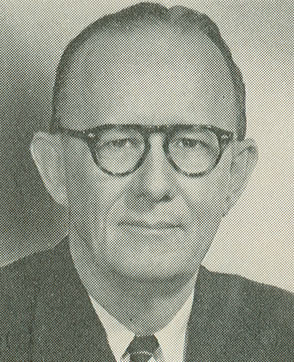
BrooksHaysFor many years on a Sunday morning, the Brooks Hays Sunday School Class met at Second Baptist Church in downtown Little Rock.  Named for its longtime leader, the class continued for decades after he had retired to the Washington D.C. area.  Since today is a Sunday, and his birthday, this entry looks back at the life, career and legacy of Brooks Hays.

Lawrence Brooks Hays was born on August 9, 1898, in the Pope County town of London.  He grew up in Russellville and attended the University of Arkansas.  After military service in World War I and law school at George Washington University, he returned to Arkansas and practiced law with his father.  In 1925, he was named an Assistant Attorney General and moved to Little Rock.  A lifelong Southern Baptist, he joined Second Baptist Church.

His first entries into political races were not met with success.  He failed to attain the Democratic nomination for governor in 1928 and 1930. In 1933, he narrowly lost a race for Congress to David D. Terry.  Following that loss, he was appointed General Counsel to the U.S. Department of Agriculture by President Roosevelt.

In 1942, he was elected to Congress to succeed Terry.  Throughout the 1940s and 1950s, he was focused on foreign affairs. He was a leading proponent of religion as a way to fight Communism. His emphasis on faith was also evident when he became elected the President of the Southern Baptist Convention in 1957. He was only the second lay person, and last one to date, to have been selected to this post.

In Congress, Hays had been a proponent of seeking a middle road on issues of segregation. He was not an integrationist, but he did believe that some rights should be afforded to African Americans.  These efforts were met with disdain by both sides.  Hays denounced the Brown v. Board decision in 1954, but three years later was caught up in it.

With Governor Orval Faubus openly defying federal law, there was pressure on President Dwight Eisenhower to uphold the law.  Hays brokered a meeting with Faubus and Eisenhower, which did nothing to break the stalemate.  However, because he had worked to uphold the law, he was a target when he was on the ballot in 1958.  After defeating a segregationist candidate in the Democratic primary, Hays was surprised by a write-in candidate a week before the general election.  Dr. Dale Alford, a member of the Little Rock School Board, pulled an upset and defeated Hays.

Presidents John F. Kennedy and Lyndon B. Johnson appointed Hays to a series of positions following that election.  In 1966, he ran unsuccessfully for the Democratic gubernatorial nomination.  He moved to North Carolina in 1968 to take a position with Wake Forest University. While in that state, he ran unsuccessfully for Congress in 1972.  Shortly thereafter he moved to Chevy Chase, Maryland, which would be his base until his death in 1981.  He is buried in Oakland Cemetery in Russellville.

Among the books he authored were Politics is My Parish, A Hotbed of Tranquility: My Life in Five Worlds, and A Southern Moderate Speaks.

His son, Steele Hays (named for the Congressman’s father) served on the Arkansas Supreme Court from 1981 to 1994. He had previously served on the Court of Appeals and as a Pulaski County Circuit Judge.


Sandwich in History at Oak Forest United Methodist Church today at noon

ofumc sandwichThe monthly architectural history program “Sandwiching in History” visits Oak Forest United Methodist Church, located at 2415 Fair Park Boulevard. The program begins at noon today.  A historian with the Arkansas Historic Preservation Program delivers a brief lecture about the church before leading guests on a tour.

The church was founded in 1943 and is located in the Oak Forest neighborhood near UALR. The building was built in 1949 and was designed by Little Rock architect John Parks Almand. The distinctive stone building features elements of the Gothic Revival style as well as a Mission-style parapet and bell tower

Sandwiching in History is a program of the Arkansas Historic Preservation Program, an agency of the Department of Arkansas Heritage.

Little Rock Look Back: Mayor William Ashley

W E Ashley signature

On August 6, 1823, future Little Rock Mayor William Eliot Ashley was born in Little Rock.  He would go on to become the first Little Rock Mayor to be born in Little Rock.  Ashley was the son of Mary and Chester Ashley; his father would later serve as a U. S. Senator from Arkansas.  He was the second of the couple’s seven children.

Though he was raised in Little Rock, he did receive some schooling out of state. The State History Commission has correspondence between eleven year old William, studying in New York, and his father. Part of the letter is a request for money.

On October 26, 1846, he married Frances Eliza Grafton at Christ Episcopal Church.  They were the first Little Rock residents to be married in that church.  The couple had five children, including triplets.  Only one of the children, Frances (who was one of the triplets) survived to adulthood.

Ashley was first elected Mayor of Little Rock in 1857. After completing a two year term, he was succeeded by Gordon N. Peay (another scion of a prominent Little Rock family).  In 1861, Ashley returned to the office of Mayor.  He was reelected to a third term in 1863.  In September 1863, following the defeat of Confederate troops by the Union forces at the Battle of Little Rock, the City of Little Rock ceased operations.  On September 21, 1863, Little Rock municipal government closed its doors, stopped collection of taxes and disbanded.  Thus Ashley’s third term ended.

In addition to his interest in local government, Ashley was a member of St. John’s College Board and a director of the newly-formed Little Rock Gas Company.

William Eliot Ashley died on August 16, 1868, at the age of 45.  He was buried in Mt. Holly Cemetery (which sat partially on land that had once belonged to his family). His parents, wife and children are all buried in Mt. Holly as well.

Interestingly, for someone who grew up in a prominent family, there does not appear to be a surviving likeness of Mayor Ashley – either in painting or photograph.  Several exist of his parents, but none of him.

Little Rock Look Back: Louis Armstrong

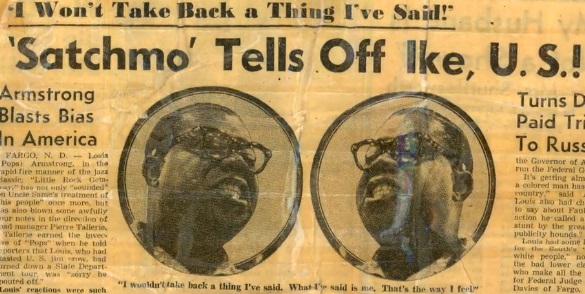
SatchmoLouis Armstrong was born on August 4, 1901 in New Orleans.  As he rose to fame, he would play Little Rock numerous times in a variety of venues.

As the Civil Rights movement started taking hold in the mid-1950s, many African American entertainers were vocal in their support.  Armstrong stayed silent.  Until, that is, September 17, 1957.  That night, in Grand Forks, North Dakota, he blasted President Dwight Eisenhower for his lack of action to make Governor Orval Faubus obey the law.  This was in an interview conducted by a 21 year old University of North Dakota journalism student named Larry Lubenow.

Journalist David Margolick wrote about the incident in The New York Times in September 2007 in conjunction with the 50th anniversary of the integration of Little Rock Central High School.  He recounted how the story, written for the Grand Forks Herald, was picked up all over the country.  The entire Margolick piece can be read here.  Margolick tells that when Armstrong was given the chance to back off the comments, he asserted that he meant all of it.

On September 24, 1957, the night that the 101st Airborne was being mobilized to come into Little Rock, Armstrong sent Eisenhower a telegram again criticizing him for lack of action.  He used colorful language which sarcastically spoofed the “Uncle Tom” moniker which some of his critics had bestowed when they felt he was not doing enough for Civil Rights.  The Eisenhower Presidential Library has a copy of that telegram.  The incident between Satchmo and Ike was the basis for two different plays: Terry Teachout’s Satchmo at the Waldorf and Ishmael Reed’s The C Above C Above High C.

Armstrong would again play a part in Little Rock’s Civil Rights history.  In September 1966, he played the first major concert in Robinson Auditorium that was before a fully integrated audience.  Since the early 1960s, there had been a few sporadic concerts which had been before integrated audiences. But the policy of the Auditorium Commission remained that the building was to be segregated.  Following the approval of the 1964 Civil Rights Act, public facilities had to be integrated. Louis Armstrong played before a full house at Robinson Auditorium that night.

Little Rock Look Back: Mayor William Whipple

whippleOn August 4, 1834, future Little Rock Mayor William G. Whipple was born in Connecticut.  He attended school in Massachusetts and graduated from Wesleyan University. After studying law at Albany Law School, he moved to Milwaukee, Wisconsin.

In 1868, Whipple moved to Little Rock following the 1866 death of his first wife in Wisconsin. Long active in Republican politics, he quickly became involved in Little Rock’s political and social life.  Shortly after his arrival he was appointed United States Attorney and served three years.

In 1870, he married Mary S. Dodge, daughter of former mayor Roderick Lathrop Dodge MD.  They had one son Durand, who followed his father into the legal profession. The Whipples were active members of Trinity Episcopal Cathedral.

In 1887, Whipple was elected Mayor of Little Rock and was re-elected two years later.  Whipple’s mayoral administration introduced electric lighting to the city beginning on September 1, 1887, paved many streets with granite and macadam, created sixty miles of new brick and concrete sidewalks, and introduced a steam dummy railway.

In 1892, he ran for Governor of Arkansas as the Republican nominee but was unsuccessful.  In 1895, he sought a third term for Mayor but was defeated by James A. Woodson.

From 1897 to 1900, he served as register of the US Land Office in Arkansas.  Whipple, who had long practiced law, was appointed United States Attorney for the Eastern District of Arkansas in 1900.  He served in that capacity until 1913.

In July 1914, Mayor Whipple died.  He is buried at Oakland Cemetery in Little Rock.

And the Baby Chimp’s Name Is….

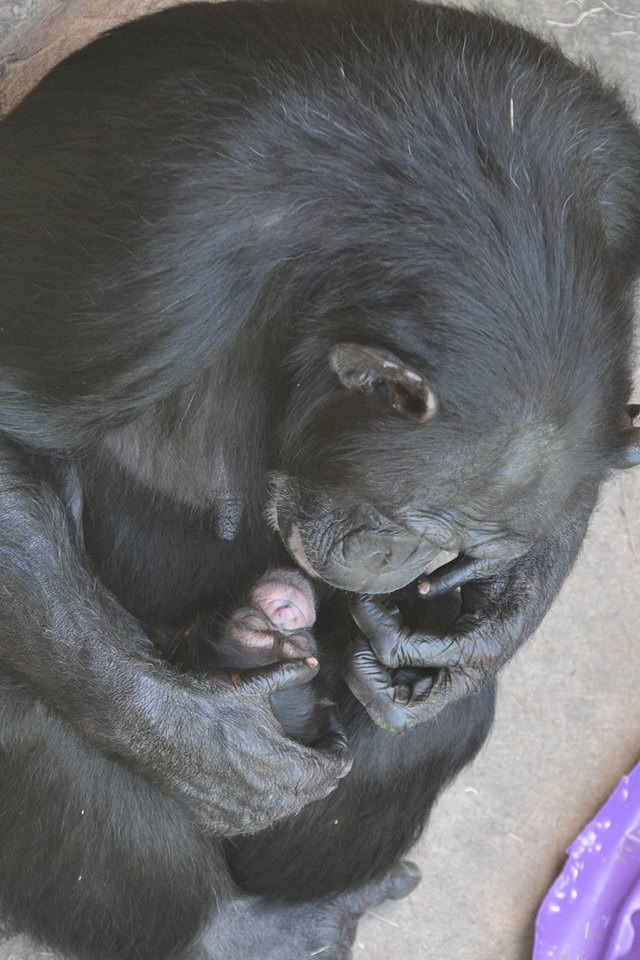
Mahale and JumokeThe votes are in, the results have been tabulated and the Little Rock Zoo is proud to announce that the name of its new baby chimpanzee is JUMOKE (pronounced joo MOH keh).

A total of 1,401 votes were cast in an online poll collected at the Little Rock Zoo’s website. Jumoke received 42 percent of the vote with 584 votes. Kibale received 36 percent of the vote with 504 percent and Kgosi received 22 percent with 313 votes.

The public was asked to participate in an online poll posted after the July 18, 2015, birth of its new baby chimpanzee to chimp Mahale (pronounced ma HAH lay). Keepers selected three possible choices from which the public would be asked to choose:

Jumoke – Swahili for “everyone loves the child”

Kibale – (pronounced kih BAH lay) named after Kibale National Park in Uganda. The baby’s mother, Mahale, was named for Mahale Mountains National Park in Tanzania.

Kgosi –   (pronounced koh see) a Setswana term for “king” or “chief”. The baby’s grandfather was named “King Richard”

This marks the second birth for Mahale who gave birth to Kendi (pronounced ken dee) on August 29, 2009. While paternity tests have not been conducted, keepers suspect the likely father of the baby is Kijana (pronounced key JHON ah) the alpha male chimpanzee of the group.

The new baby and the chimp family are most likely to be visible to the public during the 1:30 p.m. scatter feed at the Great Ape exhibit every day. However, keepers note that mom and baby have access to an indoor air conditioned area and have the choice to venture outside or stay inside.

The birth of this chimp comes as the result of the Little Rock Zoo’s participation in the chimpanzee Species Survival Plan (SSP) of the Association of Zoos and Aquariums (AZA). The SSP is an organization with members from other AZA accredited zoos that makes breeding and companionship recommendations for endangered animals.  The Little Rock Zoo is accredited by the Association of Zoos and Aquariums.