Have late night fun with BEETLEJUICE at 10pm tonight at the Ron Robinson Theater

RRT BeetleBefore he was Birdman, Michael Keaton was Beetlejuice (or technically Betelgeuse).  Tonight the CALS Ron Robinson Theater gives you the opportunity to again experience this film on the big screen.

In the 1988 Tim Burton comedy, Alec Baldwin and Geena Davis star as a pair of recently deceased homeowners who contract the services of a “bio-exorcist” played by Keaton in order to remove the obnoxious new owners of their house.  Jeffery Jones and Catherine O’Hara play the homeowners and Wynona Ryder stars as their sympathetic daughter.  The cast also includes Glenn Shadix, Robert Goulet, Susan Kellerman and Dick Cavett.

Earlier this week, plans for a sequel with Ryder were confirmed.

Beetlejuice starts at 10pm.  Admission is $5, and refreshments will be available for purchase.

Arts Abound Tonight at 2nd Friday Art Night

2FAN logo Font sm22nd Friday Art Night proves there is a cure for the Summertime Blues.  It offers visual art, music, food and drink!  You can eat, drink, learn, appreciate, and be merry!

At Historic Arkansas Museum from 5 to 8 pm there will be a free opening reception for two new exhibits: Katherine Rutter & Ginny Sims in the Trinity Gallery for Arkansas Artists and PopUp in the Rock: The Exhibit in the Second Floor Gallery. Enjoy live music by John Willis and the Late Romantics and #ArkansasMade brews from Moody Brews. Delicious appetizers provided by Boulevard Bread.

Down the street, the Old State House Museum will be offering musical performances by traditional folk artists Mockingbird from 5-8 p.m. The Old State House Museum will be open for self-guided tours and Mockingbird will play in the acoustically-rich 1836 Arkansas House of Representatives chamber. The room is one of the most historically significant rooms in the state, and this is a fun way for you and your family to see and experience it.

A few blocks south, Christ Church will be featuring the works of John and Judy Shantz Honey and their exhibit “Reflections on Abstraction.”

  • John Honey is a member of Mid-Southern Watercolorists and Arkansas League of Artists. He has studied the use of water-based mediums and collage under several nationally recognized artists. He is constantly challenged to find a different approach for including the elements of design in his paintings. He favors abstraction over realism as a means of expression. John’s work has been seen in juried exhibitions at the Arkansas Art Center.
  • Judy Shantz Honey enjoyed an interest in art as a child, and this interest continued through her studies at the University of Arkansas in Fayetteville and in the Museum School at the Arkansas Arts Center. She has also studied with nationally recognized art instructors in art workshops around the United States and in Mexico.  Watercolor, acrylic, and collage are her primary mediums, with work on paper and on canvas. She is a member of Mid-Southern Watercolorists, the Arkansas League of Artists and the Arkansas Arts Council.


Little Rock Look Back: A (Tom) Prince of a Mayor

Mayor PrinceFuture Little Rock Mayor Tom Prince was born on August 13, 1949.  After graduating high school in 1967 (where he was on the state championship golf team), he attended the United States Naval Academy.  He later received his law degree from the University of Arkansas at Little Rock and began practicing law in Little Rock.

In 1984 he ran for the City of Little Rock Board of Directors and was elected.  In January 1985, he was selected by his fellow City Directors to serve as Mayor of Little Rock.  He served as Mayor until January 1987.  During his term in office, Arkansas celebrated its Sesquicentennial. Mayor Prince oversaw the City’s participation in the celebratory activities.  As Mayor he was also a strong advocate for expanding the city’s involvement in quality of life issues through enhanced parks and arts while maintaining a commitment to public safety and public works issues. After the completion of his four year term on the City Board, he did not seek a second term.

City of Little Rock races are non-partisan.  After leaving office, he became involved in Democratic Party politics.  In 1992, he campaigned for Bill Clinton’s presidential bid in Iowa and other Midwest states.  When his law partner, Sheffield Nelson, ran for Governor in 1994 as a Republican, Prince resigned from his Democratic Party positions and worked on the Nelson campaign.  In 1997, he was elected chair of the Pulaski County Republican Committee.  In 1998, he ran for the United States Senate as a Republican.

In 1999, Prince experienced a family tragedy and took a sabbatical from practicing law. In 2000, he moved to St. Louis to become general counsel for a securities firm located there.  Following several years with the securities firm, he joined a St. Louis law firm in private practice.  After spending over a decade in St. Louis, Prince returned to Central Arkansas and is managing business interests.

Explore the Transformation of Arkansas during Civil War and Reconstruction at Mosaic Templars Cultural Center

MTCC-1Through December 31, Mosaic Templars Cultural Center is featuring the exhibit “Freedom! Oh, Freedom!” Arkansas’s People of African Descent and the Civil War: 1861-1866.

The Civil War radically changed the lives of all Arkansans, especially those of African descent. Across the country freed Africans were no longer property or simply viewed as a part of the South’s agrarian society. The war destroyed a society and an economy that had enslaved Africans and used them as chattel property.

“Freedom! Oh, Freedom!” tells a story of transformation, as it will allow visitors the opportunity to explore the African American perspective of the Civil War from the lens of slavery, the contributions of African American soldiers, and what happened through and after the Reconstruction Era.

The transformation was not swift or seamless as the United States government made empty promises to the newly freed African Americans, however in the aftermath of the Civil War Arkansas’s African Americans seized new opportunities and freedoms to create a new way of life as citizens of the United States. African Americans used the war to participate in their own emancipation. Former enslaved people experienced not only physical liberation from the ties of slavery, but a transformation of the spirit from bondage to freedom.

African American politicians emerged after the war ended and took seats in the state general assembly in 1869. The state general assembly even passed the Arkansas Civil Rights Act of 1873, which provided for equal access to all public institutions and outlawed segregation. However, as Reconstruction came to an end in 1874, Democrats replaced Republicans and began altering the civil rights laws and enacting segregationist policies in their place. African Americans maintained some representation in the general assembly until 1893, but it was nearly a century later when Arkansans elected another African American to the legislature in 1973. The fight for full equality, the fight for justice,and the fight for civil rights had just begun.

This exhibit was made possible through a grant from the Arkansas Natural and Cultural Resource Council, funded by the Arkansas Real Estate Transfer Tax. All pictures are courtesy of the Arkansas History Commission.

The Mosaic Templars Cultural Center is an agency of the Department of Arkansas Heritage.

Women in Bicycling is topic of today’s Old State House Museum Brown Bag lunchtime lecture

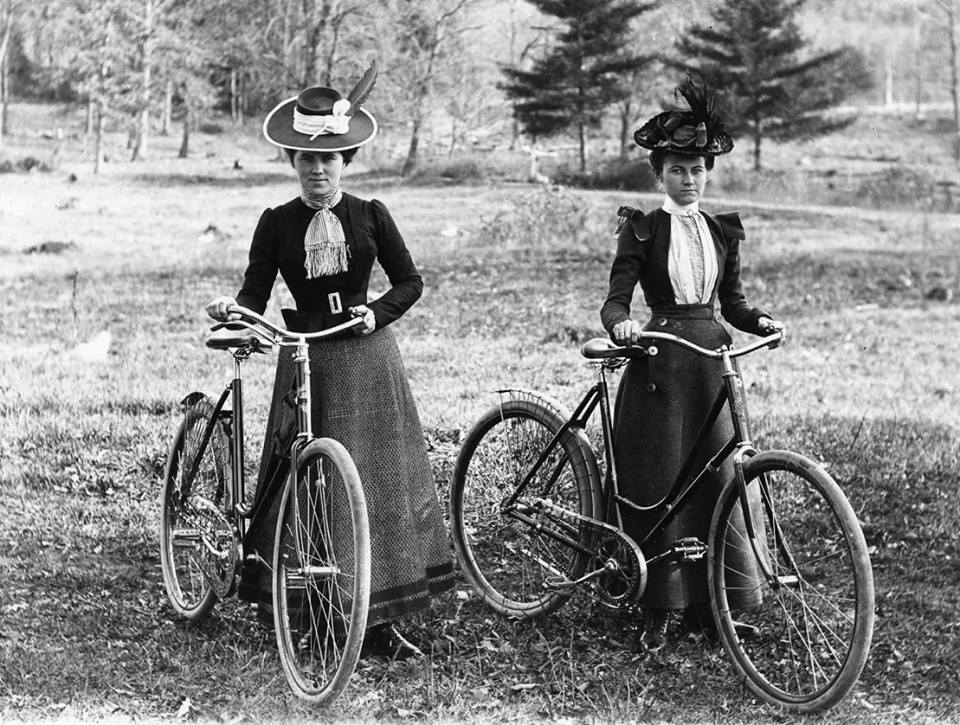
osh bikeToday at noon, the next installment in the Old State House Museum’s Brown Bag series takes place.  Misty Murphy will discuss Women in Bicycling.

The bicycle was one of many factors that helped open the world to women in the 1890’s and early 1900’s.

From changes in clothing styles to increased mobility, the advent of the bicycle marked a turning point in the social life of women around the nation and at home in Arkansas.

Misty Murphy is the regional trails coordinator for the Northwest Arkansas Council. A native of small-town Arkansas, she loves local history and keeping alive the traditions unique to the state.

The Old State House Museum is an agency of the Department of Arkansas Heritage.

Little Rock Look Back: Judge Eisele rules HAIR must flow at Robinson Auditorium

Ad for the original production of HAIR in Little Rock. Note the ticket prices. And that they could be purchased at Moses Music Shops.

Ad for the original production of HAIR in Little Rock. 

Forty-four years ago today, on August 11, 1971, Nixon appointee Federal Judge G. Thomas Eisele ruled that the musical Hair must be allowed to play in Little Rock in 1972 at Robinson Auditorium.

In February 1971, a young Little Rock attorney named Phil Kaplan petitioned the Little Rock Board of Censors to see if it would allow a production of Hair to play in the city. He was asking on behalf of a client who was interested in bringing a national tour to Arkansas’ capital city. The show, which had opened on Broadway to great acclaim in April 1968 after an Off Broadway run in 1967, was known for containing a nude scene as well for a script which was fairly liberally sprinkled with four-letter words. The Censors stated they could not offer an opinion without having seen a production.

By July 1971, Kaplan and his client (who by then had been identified as local promoter Jim Porter and his company Southwest Productions) were seeking permission for a January 1972 booking of Hair from the City’s Auditorium Commission which was charged with overseeing operations at Robinson Auditorium. At its July meeting, the Commissioners voted against allowing Hair because of its “brief nude scene” and “bawdy language.”

Kaplan decried the decision. He stated that the body couldn’t “sit in censorship of legitimate theatrical productions.” He noted courts had held that Hair could be produced and that the Auditorium Commission, as an agent for the State, “clearly can’t exercise prior censorship.” He proffered that if the production was obscene it would be a matter for law enforcement not the Auditorium Commission.

The Commission countered that they had an opinion from City Attorney Joseph Kemp stating they had the authority. One of the Commissioners, Mrs. Grady Miller (sister-in-law of the building’s eponym, the late Senator Robinson, she had served on the Commission since 1940), expressed her concern that allowing Hair would open the door to other productions such as Oh! Calcutta!

On July 26, 1971, Southwest Productions filed suit against the Auditorium Commission. Four days later there was a hearing before federal Judge G. Thomas Eisele. At that hearing, Auditorium Commission member Lee Rogers read aloud excerpts from the script he found objectionable. Under questioning from Kaplan, a recent touring production of Neil Simon’s Plaza Suite was discussed. That play has adultery as a central theme of one of its acts. Rogers admitted he found the play funny, and that since the adultery did not take place on stage, he did not object to it. Among those testifying in favor of it was Robert Reddington, who was director of performing arts at the Arkansas Arts Center.

Judge Eisele offered a ruling on August 11 which compelled the Auditorium Commission to allow Hair to be performed. Prior to the ruling, some of the Auditorium Commissioners had publicly stated that if they had to allow Hair, they would close it after the first performance on the grounds of obscenity. To combat this, Judge Eisele stated that the Commission had to allow Hair to perform the entire six day engagement it sought.

Upon hearing of the Judge’s ruling, Commissioner Miller offered a succinct, two word response. “Oh, Dear!”

On January 18, 1972, Hair played the first of its 8 performances over 6 days at Robinson Auditorium.  In his review the next day, the Arkansas Gazette’s Bill Lewis noted that Hair “threw out all it had to offer” and that Little Rock had survived.

Little Rock was by no means unique in trying to stop productions of Hair.  St. Louis, Birmingham, Los Angeles, Tallahassee, Boston, Atlanta, Charlotte NC, West Palm Beach, Oklahoma City, Mobile and Chattanooga all tried unsuccessfully to stop performances in their public auditoriums.  Despite Judge Eisele’s ruling against the City of Little Rock, members of the Fort Smith City Council also tried to stop a production later in 1972 in that city. This was despite warnings from City staff that there was not legal standing.

Go to the “Suggin Territory” at Historic Arkansas Museum

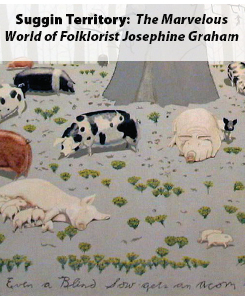
Graham-promoIn this heat, it is nice to be able to travel to a different time and place in the comfort of air conditioning.  Historic Arkansas Museum’s current exhibit “SUGGIN TERRITORY: THE MARVELOUS WORLD OF FOLKLORIST JOSEPHINE GRAHAM” offers a chance to visit a bygone era in Arkansas.

Josephine Graham (1915-1999) a.k.a. “Josus,” was a celebrated artist and folklorist of Arkansas’s White River culture. Her “Suggin” folk paintings depict the Depression-era folk history of the White River region.

Though professionally trained as a painter at Columbia University, Graham’s paintings are intentionally primitive in style, inspired by the stories and lives of “Suggins,” a playful term she used in reference to the people living along the White River.

Through more than twenty exhibitions, over 100 paintings, and a self-published cookbook, she shared the wonder and charm of her native region with the world. Graham was a founding member of the Mid-Southern Watercolorists and founder of the Suggin Folklife Society.

The exhibition continues through November 29, 2015.