Film 14 WOMEN screened today

14womenLittle Rock Central High School National Historic Site, in partnership with the Little Rock Central High School Feminist Alliance, will host a series of film screenings on women’s rights and feminist issues.  The series will run on selected Saturdays in March and April at 2:30 p.m. and will be screened at the National Historic site visitor center. Each screening will be followed by a post-film dialogue moderated by local advocates/activists.  Admission is free.

14 Women will be screened on Saturday, March 21st at 2:30pm at the Central High National Historic Site, 2120 W. Daisy L. Gatson Bates Drive.

Between 1789 and 2006, only 35 of the 1,875 people who were chosen to serve in the United States Senate were women, so 2006 became a banner year when 14 women held seats in the Senate (and two more were elected in the mid-term elections held that year).  14 Women offers an inside portrait of women in politics and allows its subjects a chance to talk about the “glass ceiling” in American politics, the hard work that goes into serving in Congress, and how gender can sometimes trump party allegiances in dealing with their colleagues on Capitol Hill. ~ Mark Deming, Rovi (New York Times)

The screening will have a post-film dialogue moderated by Stephanie Harris, Arkansas Supreme Court’s Communications Counsel and founder of Women Lead Arkansas, a non-partisan non-profit organization whose mission is to empower women and girls to engage in politics, policy and leadership.

For more information, contact Brian Schwieger at brian_schwieger@nps.gov or Sally Goldman (LRCHS Feminist Alliance) at sjgoldman1996@gmail.com

Women Entrepreneurs celebrated at Mosaic Templars today

Women Phenomenal: A Celebration of Women Entrepreneurs – Join Mosaic Templars Cultural Center in celebration of some of central Arkansas’s phenomenal women in honor of National Women’s History Month. The program runs from 11:30am until 1:00pm. 

Enjoy lunch and a candid conversation with a group of business savvy leaders and entrepreneurs who will share their stories of success and struggles as they found their path in the business world. 

Special guests include: Leanna Godley, founder and president of Goddess Products, Inc.; Yolanda Hughes, owner, RSVP Catering; Ashley Jones, owner, Ashley Ann’s Event Planning Service and Patricia Nunn Brown, director, Arkansas Economic Development Commission’s Small and Minority Business Division. 

The event will be moderated by MTCC Executive Director and Editor-in-Chief of “PowerPlay” magazine, Sericia Cole.

Lunch is free and open to the public, but reservations are required. Contact Tameka Lee at 501.683.3620 or tameka@arkansasheritage.org to reserve your seat.

Governor’s Arts Awards presented today

Today at noon at the Arkansas Governor’s Mansion, Governor Asa Hutchinson will join with the Arkansas Arts Council to present the annual Governor’s Arts Awards.

Lifetime Achievement Award-Jana L. Beard, Little Rock

Arts Community Development Award-Remica Gray, Texarkana

Arts in Education Award-DeltaARTS, West Memphis

Corporate Sponsorship of the Arts Award-Entergy Arkansas, Inc.

Folklife Award-Margaret Jones Bolsterli, Fayetteville

Individual Artist Award-Kevin Kresse, Little Rock

Patron Award-Curt & Chucki Bradbury, Little Rock

Judges Recognition Award-Kaki Hockersmith, Little Rock


The annual Governor’s Arts Awards were established in 1991 to recognize Arkansas artists, arts patrons and corporations for their outstanding contributions to the arts community. The recipients are nominated by the public and selected by distinguished panel of arts professionals from around the state.

The Arkansas Arts Council is an agency of the Department of Arkansas Heritage.

Little Rock Look Back: Grover Cleveland


Stephen Grover Cleveland, the 22nd and 24th President of the U.S. was born on March 18, 1837. He won the popular vote in 1884, 1888 and 1892, but lost the Electoral College vote in 1888.

Though he never visited Little Rock, Cleveland Street is named in his honor. Cleveland County in southeast Arkansas is also named for him. It originally was Dorsey County, named after a GOP Senator from Arkansas. It was renamed for Cleveland in hopes to curry favor for the state from the new Democratic president.  Cleveland’s Attorney General was Augustus Garland from Arkansas. Garland Street in Little Rock and Garland County are both named for him. 

Cleveland was the leader of the pro-business Bourbon Democrats who opposed high tariffs, Free Silver, inflation, imperialism, and subsidies to business, farmers, or veterans. His crusade for political reform and fiscal conservatism made him an icon for American conservatives of the era.

Civil War Archeology is Brown Bag topic today at Old State House


The Old State House Museum will host a Brown Bag lecture today at 12 noon. 

Dr. Carl Drexler will discuss recent Civil War archaeology in Arkansas, including the battlefield at Wallace’s Ferry, near Helena-West Helena, fortifications at Camden, and civilians along the Red River. 

Dr. Drexler is a historical archaeologist with the Arkansas Archaeological Survey, specializing in the archaeology of the Civil War.

Little Rock Look Back: St. Patrick’s Day with Mayor Pat L.  Robinson 

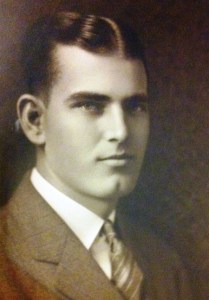
On this date in 1900, future Little Rock Mayor Pat L. Robinson was born.  While I cannot verify that he was indeed named after St. Patrick, it would be fairly reasonable to assume there might be a connection, especially given the fact that he was Catholic.

Robinson was a rising star of Little Rock Democratic politics.  In April 1929, just weeks after his 29th birthday, he was elected Mayor.  He had twice been elected as City Attorney (1926 and 1928) and was one of the youngest to serve in that position.

During Mayor Robinson’s tenure, he announced plans to construct a new airport.  That project led to the creation of what is now the Bill and Hillary Clinton National Airport.  Mayor Robinson was also involved in helping Philander Smith College secure the property where it is now located.  In addition, during his tenure, what is now the Museum of Discovery was folded into the City of Little Rock.

Single at the time he was in office and generally considered good looking, Mayor Robinson was sometimes referred to as the “Jimmy Walker of the Southwest.” Walker was the handsome and charming Mayor of New York City at the time.

Mayor Robinson ran afoul of some of the Democratic party leaders. Records don’t seem to indicate exactly what actions he took or did not take.  One thing that is brought up is that the City went into financial distress during his tenure.  Considering the Wall Street crash happened shortly after he took office, that financial state was not unique to Little Rock.

IMG_4532During this era in Little Rock, it was customary for an incumbent mayor to be given a second term. But City Clerk Horace Knowlton challenged Robinson in the primary.  It was a bitter campaign with Robinson linking Knowlton to disreputable denizens and Knowlton charging Robinson with “an orgy of spending.”  Robinson initially came out 17 votes ahead. But after a review and a lawsuit, it was found that Knowlton ended up with 10 more votes and became the nominee.  At the time, being the Democratic nominee was tantamount to election.

After he left office, Robinson practiced law for a few years in Little Rock and then left the city.  Records do not indicate where he went but he no longer appeared in the City of Little Rock directory by the early 1940s.

Politics of Health is Clinton School topic today

Today at noon at the Clinton School, Michael Sparer looks at “The Politics of Health: From the ACA to ACOs.” 

Michael Sparer studies and writes about the politics of health care, with a particular emphasis on the health insurance and health delivery systems for low-income populations, and the ways in which inter-governmental relations influences policy, both in the U.S. and abroad.

Dr. Sparer’s current projects include a review and analysis of lessons learned from thirty years of Medicaid managed care programs and a comparison of inter-governmental health politics in the U.S. and the UK.

He is also working on a book funded by the RWJ Investigator Program, which examines how American Federalism influenced the politics and substance of the recently enacted Patient Protection and Affordable Care Act.