
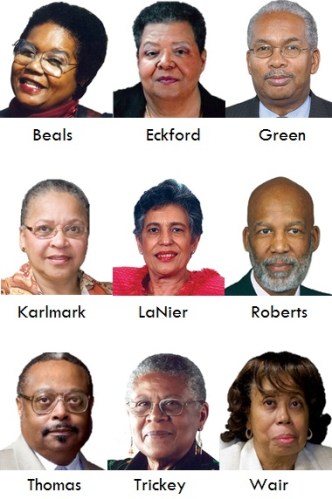
Little Rock Look Back: Little Rock Nine enter Central High for First Full Day

After legal challenges, stymied attempts, and literally countless threats, it was on Wednesday, September 25, 1957, that the group of African American students known as the Little Rock Nine actually entered Little Rock Central High School for a full day.  They would return each day through the end of the school year.

Unlike September 23, when they went in a side door before being hustled a few hours later for their own protection, on September 25 they walked in the front door.  They did so escorted by members of the 101st Airborne who had been ordered to Little Rock by President Eisenhower.

Much has been written about the events of September 25, 1957.  Several of the participants that day have penned memoirs.

Whatever I would write today would pale in comparison to the accounts of those who lived it.

So I just end this with words of gratitude to:

  • Melba Pattillo Beals
  • Elizabeth Eckford
  • Ernest Green
  • Gloria Ray Karlmark
  • Carlotta Walls LaNier
  • Terrence Roberts
  • Jefferson Thomas
  • Minnijean Brown Trickey
  • Thelma Mothershed Wair

Thank you to these nine pioneers, who were simply teenagers trying to have equal education opportunities.  Thank you to their parents, their families, their pastors, their legal team, their support system.  Thank you to Daisy and L. C. Bates, Wiley Branton Sr. Chris Mercer, and Thurgood Marshall for the roles they played.

While Jefferson Thomas passed away in 2010, the other eight continue to tell their stories and speak truth to audiences ranging from one to thousands and ages from pre-school to seniors.

Little Rock Look Forward: Happy Birthday Annie Abrams

September 25 is the birthday of Annie Mable McDaniel Abrams.
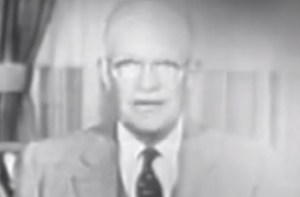
Miss Annie or Mother Abrams or Mrs. Abrams.  Whatever you call her, she greets you with a smile, a hug, and sage advice.

As both a historian and a futurist, she has turned her house into a museum and library. As a writer and preservationist, she has worked to document history and ensure historical properties and neighborhoods will long remain in Little Rock.

Born in Arkadelphia, she moved to Little Rock at age 13 to attend Dunbar Junior High School and High School.  She studied education at Dunbar Junior College and later taught in Marianna. In 1956, she returned to Little Rock to work for the Arkansas Teachers Association.  After her return to the capital city, she married Orville Abrams.  In addition to raising her four children, Miss Annie has helped raise countless others through her advice, support, love, and sometimes strong admonitions.  She also found time to return to school and receive a degree from Philander Smith College.

Among her many accomplishments are leading efforts to rename High Street for Martin Luther King, 14th Street for Daisy L. Gatson Bates and 20th Street for Charles Bussey.  Through her community activities, she had worked closely with both Bates and Bussey.  She was a friend to the Little Rock Nine (who were only a few years younger than she) and to their families. Perhaps, because she has been a personal friend of many Arkansas and national politicians over the past 60 years, it should come as no surprise that she and her husband were also acquainted with Governor Faubus.

Whether a leading political figure or a small child, Miss Annie isn’t afraid to give advice or to share her love.  Once an educator, always an educator, she loves to learn and teach. It is rare for her to miss a speech at the Clinton School or a Political Animals Club meeting.  (She is the Helen Thomas of the Political Animals Club — always given the first question when she is present.)

In recognition of all her efforts she has been recognized with an honorary doctorate from Philander Smith College, the Brooks Hays Award, and an award award from the national Martin Luther King Jr. Commission.  In 2010, she was inducted into the Arkansas Black Hall of Fame.

Little Rock Look Back: Ike sends the 101st

On September 24, 1957, President Dwight Eisenhower ordered the 101st Airborne to Little Rock to ensure that the Little Rock Nine would be able to enter Central High School.
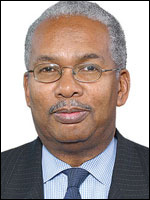
In a thirteen minute televised White House address to the nation, President Eisenhower stated he had acted to prevent “mob rule.”  The President made his decision about the troops while vacationing in Rhode Island. But he flew to Washington DC to deliver the address from the White House. In his remarks, he stated that he felt it was important to discuss this action from the house of Lincoln.

Following the President’s noontime decision, 1,000 members of the 101st Airborne Division were flown to Little Rock.  In addition, all 10,000 members of the Arkansas National Guard were “federalized.”

Earlier in the day, Little Rock Mayor Woodrow Mann had pleaded with the President and US Attorney General for federal intervention.  He stated that the Little Rock police could not quell the crowds alone.

Little Rock Look Back: Happy Birthday to Ernest Green

Ernest Green’s sixteenth birthday was probably more memorable than most people’s.  It was not about getting a car, it was about wondering if he would ever get to attend Little Rock Central High School.

Born on September 22, 1941, he was the son of Lothaire S. and Ernest G. Green.  In 1957, his birthday was on a Sunday.  The next day, the Little Rock Nine would spend a few hours in Central High School before being escorted out for their own safety.  However, three days after his birthday, escorted by members of the 101st Airborne Division of the US Army, he finally entered Central to complete the school year.

In May 1958, he became the first African American to graduate from Little Rock Central High School.  At the age of seventeen he was awarded the NAACP’s Spingarn Medal, as one of the Little Rock Nine.  He then obtained a  B.S. in Social Science and Masters in Sociology from Michigan State University.

Featured in the 2006 list of Black Enterprise Magazine’s “75 Most Powerful Blacks on Wall Street”, Ernest has served as senior investment banker on transactions for such key clients as the City of New York, State of New York, City of Chicago, Port of Oakland, City of Atlanta, State of Connecticut, Detroit Wayne County Airport, Denver Airport, and the Washington Metropolitan Airport Authority.

He served as Assistant Secretary of Labor for Employment and Training during the Carter Administration.  President Clinton appointed him to serve as Chairman of the African Development Foundation.  Secretary of Education Richard W. Riley, appointed him Chairman of the Historically Black Colleges and Universities Capital Financing Advisory Board.

In 1995, he was awarded the Distinguished Eagle Scout Award.  Ernest Green is also a recipient of the Urban League’s Frederick Douglass Freedom Medal, and the John D. Rockefeller Public Service Award. On November 9, 1999, with the Little Rock Nine, he was presented by President Clinton with the Congressional Gold Medal. He holds honorary doctorates from Michigan State University, Tougaloo College, and Central State University.

Several books, movies and documentaries have chronicled his and his eight classmates’ historic year at Central High School in Little Rock — the most recent being the “Ernest Green Story”, produced and distributed by the Walt Disney Corporation.

He and his wife Phyllis live in Washington, D. C.  He is the proud father of Adam, Jessica and McKenzie Ann.


Sculpture Vulture: Clay Enoch’s UNITED installed on Sept 22, 2017

Clay Enoch’s sculpture UNITED was dedicated to kick off the public events for the commemoration of the 60th Anniversary of the Central High School integration by the Little Rock Nine.

The piece, which depicts two figures working together to close two circles, is located in front of Little Rock Central High School.

Enoch was joined at the dedication by several members of the Little Rock Nine, City of Little Rock officials, and current Central High School personnel.

City Director Dean Kumpuris and Little Rock Nine member Ernest Green (who was celebrating a birthday that day) made remarks about the importance of the message of United.  Enoch discussed his process in creating the sculpture.

Principal Nancy Rousseau accepted the sculpture on behalf of the school.  Then Mr. Enoch, Mr. Green, and current Central High students unveiled the sculpture.

The sculpture was installed by Little Rock Parks and Recreation staff.  The Central High School PTSA has landscaped the area around the sculpture and maintains it.

Enoch was chosen through a national public monument commission process sponsored by Sculpture at the River Market.

Little Rock Look Back: LR City Hall Suspends Operations in 1863

A few days after the defeat at the Battle of Little Rock, the City of Little Rock ceased operations on September 21, 1863.

Planning for this had started in August, which would suggest that civic leaders were none too confident in the ability of Confederate forces to hold on to the city.  At the August 24, 1863, City Council meeting it was reported that the City’s funds (presumably Confederate) had been “placed in the hands of a reliable party who is well known to the Council.”  The identity of this “reliable party” has never been disclosed.

On September 21, the Council met and took three votes.  The first was to suspend the operation of City police (which at the time was not an official police force, it was a constable and some volunteers). The second was to suspend the collection of City taxes.  The final vote was to adjourn.

There is no record of Mayor William Ashley being present at this meeting.  Recorder A. J. Smith (the equivalent of City Clerk today) was not present.  The minutes were signed by “J. Ash, Deputy.” Records do not indicate if that gentleman was officially Deputy Recorder or if he had simply been deputized to take minutes at the meeting.  The five City Council members present were C. P. Bertrand (a former mayor and step-son of Little Rock’s first Mayor, Matthew Cunningham), S. H. Tucker, W. B. Walt, I. A. Henry (would would also serve on the first City Council after the war in 1866), and Lou George.

Little Rock Look Back: CALS Opens New Downtown Main Library

On September 20, 1997, the Central Arkansas Library System debuted its new main library building.  The building had previously been the Fones Brothers Warehouse building and was repurposed by the Polk Stanley Yeary architectural firm.

The grand opening festivities included storytellers for children throughout the day as well as various special activities.  Linked balloons made to resemble bookworms greeted visitors to the front entrance.

The move and expansion were the dream of then-CALS Director Bobby Roberts.  The previous library space had limited parking and was in a confined (and confining) space with no room for expansion.

To prepare for the move from the old location at 7th and Louisiana Streets, the library’s main branch had closed in July.  They had to inventory the existing materials in anticipation of the move.  The actual transport of the 250,000 books was accomplished in three 16-hour work days by the 65 member staff.

The project cost $13 million dollars, most of which came from a millage approved by voters. The 200 seat auditorium was funded by overdue book fines and areas for the employees were financed by a patron bequest.

At the time it opened, the fifth floor remained undeveloped.

Since September 1997, the fifth floor has been developed and CALS has ultimately developed over one city block in what is now known as Library Square.