
Little Rock Look Back: Establishment of Arkansas Arts Center

Architectural model of the original Arkansas Arts Center which would open in 1963.

On Tuesday, September 6, 1960, the City of Little Rock Board of Directors adopted ordinance 11,111 which formally established the Arkansas Arts Center.

In July 1957, the City Council of Little Rock granted the Museum of Fine Arts the authority to solicit and receive funds for expanding that museum’s physical plant.  During that process, it had been decided that the museum needed an expanded mission and a new name.  By the summer of 1960, the museum supporters had raised sufficient funds to proceed with constructing the new facility.  Therefor the new ordinance was prepared and submitted to the City Board.  (In November 1957, the City Council had been replaced by a City Board.)

Ordinance 11,111 set forth that the Museum of Fine Arts would be known as the Arkansas Arts Center and that the previous museum’s board would serve as the board for the new museum.  The Board of the Arkansas Arts Center was given the authority to have the new building constructed in MacArthur Park and the existing building modified.  As a part of the planning for the new museum, the City committed $75,000 for the capital campaign.

The groundbreaking for the new museum would take place in August 1961.  Mayor Werner Knoop, who signed Ordinance 11,111, took part in the groundbreaking.

Media attending the September 6, 1960, City Board meeting were more interested in discussion about a potential leash law for dogs within the City limits.

Legacies & Lunch features Dr Brooks Blevins discussing his new book on the Ozarks

The Butler Center’s monthly Legacies & Lunch program is today.

Brooks Blevins will discuss his book A History of the Ozarks, Volume 1: The Old Ozarks, the first in a trilogy on the history of the region that includes most of the southern half of Missouri, much of northern Arkansas, and some of northeastern Oklahoma and southeastern Kansas.

Legacies & Lunch is free and open to the public. Programs are held from noon-1 p.m. on the first Wednesday of each month. Attendees are invited to bring a sack lunch; drinks and dessert are provided. For more information, contact 918-3033.

A native of Batesville, Brooks Blevins is the Noel Boyd Professor of Ozarks Studies at Missouri State University. He is the author or editor of eight books, including: Ghost of the Ozarks: Murder and Memory in the Upland South; Arkansas, Arkansaw: How Bear Hunters, Hillbillies, and Good Ol’ Boys Defined a State; and Hill Folks: A History of Arkansas Ozarkers and their Image.

Elizabeth Eckford Bench Dedicated Today

Sixty-one years ago today, Elizabeth Eckford took the long walk down Park Street as she was trying to enter Little Rock Central High for her first day of classes there.

Met by a mob and kept out of the school by the soldiers she thought were there to protect her, Eckford finally made her way to a bus bench at Sixteenth and Park Streets.

Today at 4:30 pm, a replica of that bench is being dedicated at that location.

Little Rock Central High School National Historic Site is collaborating with the Central High Memory Project students and additional partners for the ceremony.

September 4, 1957, was supposed to be the first day of school for the African American students who were selected to integrate Little Rock Central High School.  Due to the mobs gathered outside of the school and interference from Governor Orval Faubus, the students would not get in the school that day.

The most famous images from that day are the photos of Elizabeth Eckford walking in front of the school, only to be rebuffed by soldiers and tormented by the crowds. Elizabeth’s decision to walk through the mob of protesting segregationists to enter school, only to be turned away became world news. The story of the desegregation of Central High School was thrust into a defining role within the Civil Rights Movement. Elizabeth’s efforts to overcome the fear and uncertainty that she faced that morning resulted in her seeking refuge at a lonely bus stop bench.

In order to highlight this aspect of the story and create more personal connections with this turning point in history for students and visitors, the National Park Service and the Central High Memory Project Student Team will work with community partners in a new public history project.  The Bench Project includes building a replica of the bus stop bench, creating a mobile app for the students’ audio walking tour of eyewitness accounts of that first day of desegregation, and developing a storycorps recording booth for interviews and student podcasts.

The partnership includes: Bullock Temple C.M.E., Central High School and their EAST LAB, the Little Rock School District, the City of Little Rock, the Clinton School of Public Service, Central Arkansas Library System’s Butler Center for Arkansas Studies, Good Earth Garden Center, Friends of Central High Museum Inc., Home Depot, Little Rock Club 99 and other Rotary International Clubs,  Unity in the Community, and others.

The groundbreaking ceremony will be held at the corner of Park and 16th Street starting at 4:30 p.m. The program will include remarks by the NPS Superintendent and the directors of some of the partnering organizations regarding the projects that will be completed in connection with this effort. The Central High Memory Project Student Team will be on hand to meet the public and share details about their work.

Little Rock Look Back: Arkansas Arts Center study group heads to China

TIna Poe, Raida Pfeifer and Jeane Hamilton at the Great Wall of China (photo from collection of Jeane Hamilton)

On September 1, 1975, a group from the Arkansas Arts Center left Little Rock for a study tour of China. This was the first non-governmental group from the United States who had been authorized to tour the People’s Republic of China.

Fred Poe, of Poe Travel, and Jeane Hamilton were the organizers of the trip.  It was part of the annual travel seminars the Arts Center  would take to locations throughout the world to learn more about art and culture.  It took many months of planning as wells as mounds and pounds of paperwork to get this trip underway.

Persons interested in the trip had to apply and be approved by the Chinese government in order to participate in the trip.   The Chinese government selected eighteen AAC members from submitted applications and the group visited Beijing, Shanghai, Changsha, Kweilin, and Guangzhou.

The AAC Traveling Seminar participants in front of Mao’s birthplace. (Photo from the Jeane Hamilton collection.)

Little Rock Look Back: Memorial Services for Senator Robinson

As Arizona Senator John McCain is being remembered in a series of memorial services, it seems an appropriate time to recall the series of services for Arkansas’ senator who was on a national party ticket. That man was Joseph Taylor Robinson.
Like Senator McCain, Senator Robinson was honored in services both in the state he represented as well as at the US Capitol.

Senator Robinson died in Washington D.C. on July 14, 1937.  His wife was in Little Rock making preparations for a trip the couple was to take. Following his demise, Mrs. Robinson went to Washington to accompany her husband’s body back to Arkansas.

The Senator was honored with a memorial service in the Senate chambers on Friday, July 17.  President Roosevelt and the cabinet joined members of the senate on the floor in what was described as a state funeral without pomp.  Mrs. Robinson sat with her brothers and two nephews as well as Bernard Baruch and Arkansas Power & Light’s Harvey Couch, who were Senator Robinson’s closest friends.  Eleanor Roosevelt was one of the many crowded in the senate galleries observing the service.  Following the service his body remained in the chambers until it was transferred to a train to make the journey to Little Rock.

The funeral train bore his body, his family, 50 senators and over twenty congressmen. It reached Little Rock around 8am on Sunday the 19th.  From there, Senator Robinson’s body was taken to his house on Broadway Street until noon.  It subsequently lay in state at the Arkansas State Capitol until being escorted by military to First Methodist Church.

1,500 people packed the church a half hour before the service began. The sun shone through the windows onto the flag-draped coffin as Rev. H. Bascom Watts led the service. Among the pallbearers was former Vice President Charles G. Dawes. Governor Carl Bailey of Arkansas was joined by Governors Richard Leche of Louisiana and E.W. Marland of Oklahoma.

As the funeral procession reached Roselawn Cemetery, thunder echoed. The skies which had alternated between sun and rain that day, returned to rain. A deluge greeted the end of the service and sent visitors hurrying for shelter at the end.

Little Rock Look Back: Thurgood Marshall confirmed to SCOTUS

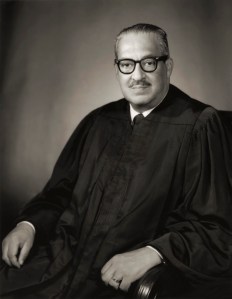
On August 30, 1967, Thurgood Marshall was confirmed as the first African American to serve on the Supreme Court of the United States.
Ten years earlier, Marshall had been spending much time in Little Rock as he fought for the Little Rock Nine to be allowed to integrate Little Rock Central High School.  While he was in town, he would stay at the home of L. C. and Daisy Bates.  One  can tour the home today and see the bedroom in which he, Dr. Martin Luther King Jr., Ossie Davis & Ruby Dee, and other Civil Rights leaders stayed while visiting Little Rock.

His involvement with the Little Rock Nine came about from his role with the NAACP. In had been in that capacity that he was lead attorney for the Brown v. Board of Education decision which paved the way for the Little Rock schools to be integrated.  He worked with local attorneys such as Wiley Branton Sr. and Chris Mercer on the Little Rock efforts.

In May 1961, President John F. Kennedy named Marshall to a seat on the US Court of Appeals. Unsurprisingly, a group of segregationist senators tried to hold up the appointment.  In 1965, he was named to the position of Solicitor General by President Lyndon B. Johnson.

Regrettably there is another Arkansas connection to Thurgood Marshall’s appointment to the Supreme Court.  As he had with the 1961 appointment to the Court of Appeals, Arkansas Senator John L. McClellan vigorously opposed the nomination of Marshall.  As a member of the Judiciary Committee he tried to hold it up.  In the end, McClellan did not vote on Marshall’s appointment when it came before the full Senate.

The final vote was 69 for and 11 against with 20 not voting. Of the 11 former states of the Confederacy, Arkansas’ J. William Fulbright, Tennessee’s Howard Baker & Al Gore Sr., Texas’ John Tower & Ralph Yarborough, and Virginia’s William Spong were the only six votes for yes.  There were six who did not vote, and 10 Nay votes.

The remaining Nay vote came from West Virginia’s Robert Byrd. Among those outside the South who did not vote were future Democratic presidential candidates Eugene McCarthy,  Edmund Muskie and George McGovern as well as Republican former actor George Murphy.  Montana was the only state with neither senator casting a vote one way or the other.

Marshall served on the US Supreme Court until October 1991, when he retired due to failing health. He died in January 1993, just four days after Bill Clinton became president.

Little Rock Look Back: Michael Jackson in town

August 29, 2018, would have been Michael Jackson’s 60th Birthday.

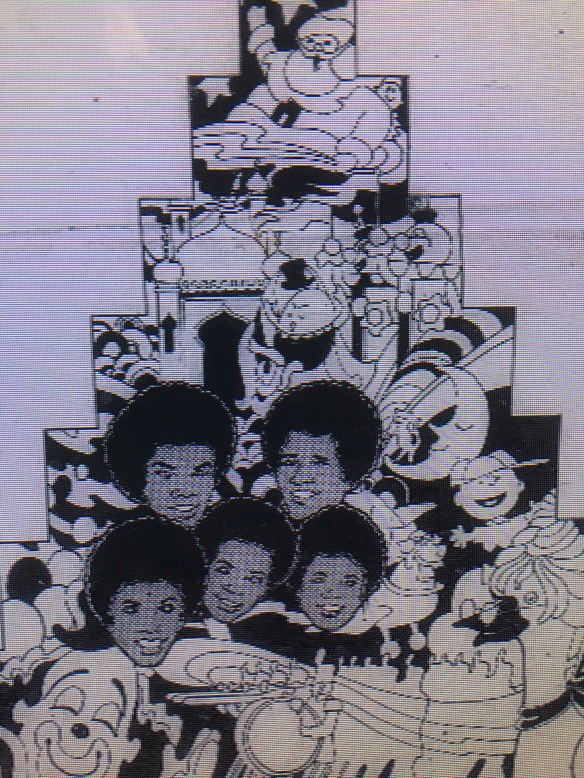
On December 2, 1972, he and his brothers performed in concert at Barton Coliseum. But earlier in the day, they were the grand marshals for the second annual Little Rock Christmas Parade.

They were featured in a full page ad for M. M. Cohn advertising the parade (and of course encouraging persons to stop by the store while they were downtown).

The Jackson 5 sang and waved from the upper level of a London style double decker bus. About fifty kids followed behind the bus yelling their appreciation and singing along.

Writing for the Arkansas Gazette, Bill Lewis notes that the biggest cheers at the parade, however, went to Gary Weir as KATV’s Bozo (even louder than the one’s for Santa).