
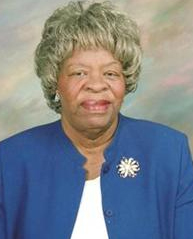
 Annie Mable McDaniel Abrams is a retired educator by trade and civic activist by avocation. She is included in this list because she is also a historian. As a writer and preservationist, she has worked to document history and ensure historical properties and neighborhoods will long remain in Little Rock.
Born in Arkadelphia, she moved to Little Rock at age 13 to attend Dunbar Junior High School and High School. She studied education at Dunbar Junior College and later taught in Marianna. In 1956, she returned to Little Rock to work for the Arkansas Teachers Association. After her return to the capital city, she married Orville Abrams. In addition to raising her four children, Miss Annie has helped raise countless others through her advice, support, love, and sometimes strong admonitions. She also found time to return to school and receive a degree from Philander Smith College.
Among her many accomplishments are leading efforts to rename High Street for Martin Luther King, 14th Street for Daisy L. Gatson Bates and 20th Street for Charles Bussey. Through her community activities, she had worked closely with both Bates and Bussey. She was a friend to the Little Rock Nine (who were only a few years younger than she) and to their families. Perhaps, because she has been a personal friend of many Arkansas and national politicians over the past 60 years, it should come as no surprise that she and her husband were also acquainted with Governor Faubus.
Whether a leading political figure or a small child, Miss Annie isn’t afraid to give advice or to share her love. Once an educator, always an educator, she loves to learn and teach. It is rare for her to miss a speech at the Clinton School or a Political Animals Club meeting.
In recognition of all her efforts she has been recognized with an honorary doctorate from Philander Smith College, the Brooks Hays Award, and an award award from the national Martin Luther King Jr. Commission. In 2010, she was inducted into the Arkansas Black Hall of Fame.
For more on Annie Abrams and other inductees into the Arkansas Black Hall of Fame, visit the permanent exhibit at the Mosaic Templars Cultural Center. That museum is an agency of the Department of Arkansas Heritage.
 For much of Little Rock’s history, the City Council did not meet on March 20. (Under City Council rules, meetings were often once a month, and later moved to twice a month – usually second and fourth Monday). Since switching to the City Manager form of government, meetings moved to the first and third weeks of the month. The first instance of the First Day of Spring being a City Board meeting was in 1961.
 Though not a graduate of Little Rock Central High School, Nancy Rousseau is a Central High Tiger through and through.
 Jeannette Edris Rockefeller only lived in Arkansas for about fifteen years. But her impact on the cultural life of Little Rock and all of Arkansas continues to be felt today.
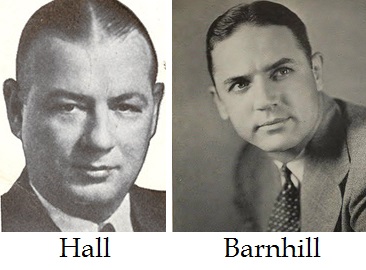 On March 18, 1947, Governor Ben T. Laney signed the bill into law which authorized the construction of War Memorial Stadium.
 Charlotte Andrews Stephens was the first African American teacher in the Little Rock School District. Between 1910 and 1912, when an elementary school for African Americans was named after her, she became the first woman to have a public building in Little Rock named after her. For nearly fifty years, Stephens Elementary (which is now in its third building) would be the only LRSD building named after a woman.
 Louise Loughborough was the first woman to serve on the Little Rock Planning Commission. Not only was the she first woman to serve on this body, she was the first to serve on any City commission other than the Board of Censors or Library Board. Born Louisa Watkins Wright in Little Rock 1881, her ancestors included many early Arkansas leaders including Little Rock Mayor David Fulton.
