Free Admission to Clinton Center for Independence Day

CPC july4Friday, July 3 and Saturday, July 4, the Clinton Presidential Center will feature free admission to the exhibits.

Explore the Clinton Center’s newest exhibit, “Dinosaurs Around the World,” as well as our permanent exhibits. Acoustiguide audio tours narrated by President Clinton are also free.  The Clinton Center is open from 9am to 5pm on Friday and Saturday.

Dinosaurs Around the World takes you back in time on a dinosaur adventure and a tour of an Earth very different from today – a time before the continents as we know them existed, when lush landscapes covered Africa and greenery was the norm in Antarctica! With 13 life-sized animatronics, a multi-layered narrative, fossils, authentic casts, cutting-edge research and immersive design elements, you’ll experience the Age of Reptiles as it comes to life!

The permanent exhibits include:

Little Rock Look Back: President Truman returns to LR

trumansmallOn July 1, 1952, President Harry S. Truman returned to Little Rock for the last time in his presidency.  He landed at Adams Field. After a short ride to the Missouri Pacific train station, he boarded a train for Newport where he made remarks.  Later that evening, the presidential train arrived at Norfork where Mr. Truman spent the night on the train.

The next morning, he went by car to the Norfork Dam before heading to Bull Shoals Dam where he gave an address.  An outdoor luncheon followed the Bull Shoals address.  After lunch, he got back on the train.  Truman made a whistle stop visit in Batesville before arriving back in Newport.  He boarded a plane in Newport and returned to Washington DC.

Congressmen James W. Trimble and Wilbur D. Mills accompanied the President on the entire trip from and to Washington.  Governor McMath joined the party once they were in Little Rock.  The press corps on the trip included the New York Times, Washington Star, Baltimore Sun, New York Herald-Tribune, Chicago Tribune, Associated Press, CBS Radio, NBC Radio, ABC Radio and NBC Television.  The local press included reporters and photographers from both the Arkansas Gazette and the Arkansas Democrat as well as KLRA Radio and the Memphis Commercial-Appeal.

800 Years of Magna Carta focus of noon program today by Clinton School and Clinton Foundation

Magna_charta_cum_statutis_angliae_p1This week marks 800 years since the signing of the Magna Carta. To commemorate this historic anniversary, the Clinton Foundation, in partnership with the Clinton School of Public Service and the Pulaski County Bar Association, invites you and a guest to, “The Magna Carta at 800,” on Friday, June 26, at NOON. The program will feature the distinguished Lewis Neilson, Jr., Chancellor of the National Society Magna Charta Dames and Barons.

Signed in 1215 by King John of England, the Magna Carta has persisted as one of the most influential charters in history. Its principles of individual liberty, right to trial by jury, and legal supremacy have informed a wide variety of documents, from the United States Constitution to the Universal Declaration of Human Rights. Mr. Neilson will discuss the importance of the Magna Carta as well as the institutions that have preserved its principles.

This event is free and open to the public, but reservations are required. Call 501-748-0425 with any questions.

Master Mix-Off celebrates historic cocktails to promote historic structures

Master-Mix1-300x278Preserve Arkansas, the Historic Preservation Alliance of Arkansas, is hosting the First Annual Master Mix-Off tonight.  This will features some of Central Arkansas’s best bartenders engaging in a bartending competition.  It promises to be a rip-roaring good time celebrating prohibition-era mixology!!!

Eight of Central Arkansas’s best bartenders will mix for the masses with a prohibition-era drink, hoping to win the “People’s Choice” Award. Then our “best in the business” judges will judge a second round of mixing, where bartenders will serve an updated, modern version of their favorite prohibition-era drink.

Joann “Jojo” Sims of Cache Restaurant, the reigning Arkansas Times Best Server in Little Rock, will be the emcee.

Participating Bartenders are:

The “Best in the Business” Judges are:

DATE: Thursday, June 25, 2015
TIME: 5:30-7:30 pm
LOCATION: Albert Pike Memorial Temple, 712 Scott Street, Little Rock

Don’t Ask, Don’t Tell is focus of this month’s film at MacArthur Museum

MacMus DontAskEach month, the MacArthur Museum of Arkansas Military History screens a free movie one evening.  This month’s film is the HBO documentary The Strange History of Don’t Ask, Don’t Tell.  The film screens from 6:30pm to 8:30pm.  It is part of LGBT Heritage month.

This film illustrates the tumultuous evolution of the controversial policy that forced many soldiers to lie and live in secrecy. Filmed during the final 15 months of the law, The Strange History of Don’t Ask, Don’t Tell interweaves archival news footage and interviews with key players, from policy experts to Pentagon personnel, as well as personal accounts by a number of actively serving gay soldiers

Free admission. Popcorn and libations provided.

Filmed during the final 15 months of the law, THE STRANGE HISTORY OF DON’T ASK, DON’T TELL interweaves archival news footage and interviews with key players, from policy experts to Pentagon personnel, as well as personal accounts by a number of actively serving gay soldiers (obscured from the camera because speaking about their sexual orientation violates Don’t Ask, Don’t Tell). Among the featured subjects are: Mass. Rep. Barney Frank; Ct. Sen. Joe Lieberman; former Pa. Rep Patrick Murphy, an Iraqi war veteran who played a leading role in the Don’t Ask, Don’t Tell repeal; Lt. Col. Victor Fehrenbach; Col. Margarethe Cammermeyer; Jeh C. Johnson, general counsel of the Department of Defense; and Aubrey Sarvis, executive director of the Servicemembers Legal Defense Network (SLDN).

Filmmakers Fenton Bailey and Randy Barbato have produced a variety of acclaimed nonfiction programming, including 24 documentaries for HBO and CINEMAX, among them “Heidi Fleiss: The Would-Be Madam of Crystal,” “Monica in Black and White,” “The Eyes of Tammy Faye” and, most recently, the Emmy®-nominated “Wishful Drinking.”

THE STRANGE HISTORY OF DON’T ASK, DON’T TELL is produced and directed by Fenton Bailey and Randy Barbato; supervising producer, Jacqueline Glover; executive producer, Sheila Nevins; producers, Gabriel Rotello and Mona Card; editors, Langdon F. Page, Chris Conway; music by David Benjamin Steinberg.

Little Rock Look Back: Mayor Buddy Villines

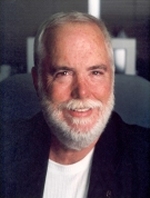
judgebuddyOn this date in 1947, future Little Rock Mayor Floyd G. “Buddy” Villines was born.  A 1969 graduate of Hendrix College, he served in Vietnam in 1970 and 1971. He later graduated from the University of Arkansas at Little Rock Law School.

Villines’ first interaction with Little Rock City Hall was as an employee in the City Manager’s office.  After joining the private sector, he returned to City Hall in 1985 serving on the Little Rock City Board of Directors.  He was re-elected in 1989.

While on the City Board, he was chosen as Vice Mayor for a two year term in 1987 and 1988.  The following year he was selected as Mayor for a two year term.  In 1990, Villines was elected Pulaski County Judge; he resigned from the City Board in December 1990 to take office.

Villines served as Pulaski County Judge for 24 years, from January 1991 until December 2014.  He is the longest serving County Judge in Pulaski County history.

Little Rock Look Back: Founding Fathers of Little Rock

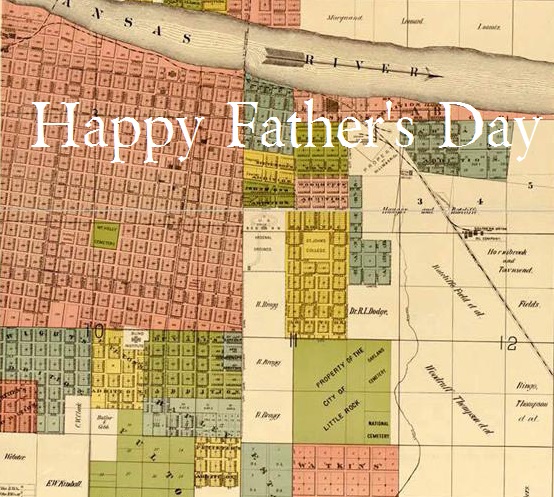
Fathers DayThere are several men who can be considered founding fathers of Little Rock: William Lewis, the first settler, who stayed for a few months in 1814; Roswell Beebe, who acquired most of the land and laid out streets as well as providing land for public buildings and a cemetery; Amos Wheeler, who was the first postmaster and later a land agent; Jesse Brown, who founded the first school and later served as mayor; and William Woodruff, the founder of the Arkansas Gazette.

There are three other men who were not only founding fathers, but also actual fathers to other leaders. They are: Dr. Matthew Cunningham, Major Nicholas Peay and Chester Ashley.

Dr. Cunningham was one of the first residents of Little Rock. He arrived in 1821 and was shortly joined by his family.  Dr. Cunningham would be Little Rock’s first physician. His son Chester was the first child born in Little Rock.  Dr. Cunningham later served as Little Rock’s first mayor from January 1832 to January 1833.  His stepson, Charles P. Bertrand, later served as Mayor of Little Rock from January 1855 to January 1857.  This is the closest Little Rock has ever had to a father and son both serving as Mayor.

Major Nicholas Peay arrived in Little Rock in 1825.  He quickly became engaged in civic affairs and served as a trustee of Little Rock (a precursor to a city council).  In the 1830s, Major Peay served on the Little Rock City Council. In that capacity, he also served as Acting Mayor of Little Rock.  His son, Gordon Neill Peay, would serve as Mayor of Little Rock from 1859 to 1861.  A grandson son, Ashley Peay, was a Little Rock alderman in the 1920s. A great-great-grandson, Joseph B. Hurst, served on the Little Rock City Board from 1967 to 1970.

Chester Ashley never served on the Little Rock council or as mayor.  He was, however, an early leader of Little Rock.  He actually arrived in 1820 and brought his new wife here in late 1821 (a few months after Mrs. Cunningham arrived).  One of Little Rock’s first attorneys, he was instrumental in the settlement of a competing land ownership disputes. In 1844, he was appointed to be one of Arkansas’ U.S. senators. He served in the Senate until his 1848 death.  His son William E. Ashley, served as Little Rock’s mayor from January 1857 to January 1859 and again from January 1861 until September 1863.

With Bertrand, Ashley, Peay and Ashley in the office of Mayor, from January 1855 until September 1863, Little Rock was governed by second generation leaders.

Descendants of the Cunningham and Peay families still reside in Little Rock today.