
 He shared the screen with Cher, Tom Hanks, John Belushi, Gary Cooper, Robert DeNiro, Judd Nelson, Liza Minnelli, Ken Howard, Shirley Jones, George C. Scott, Karl Malden, and Walter Matthau.
His stage co-stars included Jane Fonda, Shirley Booth, Dyan Cannon, William Daniels, Uta Hagen, Mercedes McCambridge, and Arthur Hill.
Ben Piazza spent his entire adult life earning money solely through work in the arts. (Except for a very brief, failed stint as a waiter for a few weeks after he graduated from Princeton.) Few in the acting profession can make that claim.
Actor-director-playwright-author Ben Piazza was born on July 30, 1933, in Little Rock. Piazza graduated from Little Rock High School in 1951 as valedictorian. He also had starred in the senior play that year (The Man Who Came to Dinner) and edited the literary magazine.
Piazza attended college at Princeton University and graduated in 1955. While there he continued acting, including an appearance in a Theatre Intime production of Othello.
In February 1958, he starred in Winesburg, Ohio sharing the National (now Nederlander) Theatre stage with James Whitmore, Dorothy McGuire, and Leon Ames. In April 1959, Piazza starred in Kataki at the Ambassador Theatre. For his performance, Piazza received one of the 1959 Theatre World Awards.
 Piazza started the 1960s on Broadway starring at the Eugene O’Neill Theatre in A Second String with Shirley Booth, Jean-Pierre Aumont, Nina Foch, Cathleen Nesbitt, and Carrie Nye. Following that, he started his association with Edward Albee by appearing as the title character in The American Dream. That play opened at the York Playhouse in January 1961. Later that year, he appeared in Albee’s The Zoo Story opposite original cast member William Daniels at the East End Theatre.
In February 1963, he took over the role of Nick in the original run of Who’s Afraid of Virginia Woolf? when original actor George Grizzard left to play Hamlet at the Guthrie Theatre. (He had participated in earlier readings of the play prior to it being mounted on Broadway.)
Piazza played Nick for the remainder of the run and acted with Uta Hagen, Arthur Hill, fellow Arkansan Melinda Dillon, Eileen Fulton, Nancy Kelly, Mercedes McCambridge, Rochelle Oliver and Sheppard Strudwick.
 During the run of this show, Piazza’s novel The Exact and Very Strange Truth was published. It is a fictionalized account of his growing up in Little Rock during the 1930s and 1940s. The book is filled with references to Centennial Elementary, West Side Junior High, Central High School, Immanuel Baptist Church and various stores and shops in Little Rock during that era. The Piazza Shoe Store, located on Main Street, was called Gallanti’s.
He appeared with Alfred Drake in The Song of the Grasshopper in September 1967. In 1968, he returned to Albee and starred in The Death of Bessie Smith and The Zoo Story in repertory on Broadway at the Billy Rose Theatre.
Later that season, in March 1969, his one-acts: Lime Green/Khaki Blue opened at the Provincetown Playhouse. Throughout the 1960s and early 1970s, Piazza toured in many plays nationally and internationally. As the 1970s progressed, he turned his focus to television and movies.
Piazza’s film debut was in a 1959 Canadian film called The Dangerous Age. That same year, his Hollywood film debut came opposite Gary Cooper, Karl Malden, Maria Schell and George C. Scott in The Hanging Tree.
 Throughout the 1950s and 1960s, he appeared in a number of TV shows. He had a recurring role during one season of Ben Casey and appeared on the soap opera Love of Life. In the 1970s, he starred in the films Tell Me That You Love Me, Junie Moon; The Candy Snatchers and I Never Promised You a Rose Garden. He also starred as the City Councilman who recruits Walter Matthau to coach a baseball team inThe Bad News Bears.
Among his numerous TV appearances in the 1970s were The Waltons, Mannix, Switch, Barnaby Jones, Gunsmoke, Mod Squad and Lou Grant . In the 1980s, he appeared in The Blues Brothers, The Rockford Files, Barney Miller, Hart to Hart, Family Ties, The Winds of War, Dallas, Dynasty, Too Close for Comfort, The A Team, Saint Elsewhere, Santa Barbara, The Facts of Life, Mr. Belvedere, Moonlighting and Matlock.
Piazza’s final big screen appearance was in the 1991 film Guilty by Suspicion. He played studio head Darryl Zanuck in this Robert DeNiro-Annette Bening tale of Hollywood during the Red scare.
Ben Piazza died on September 7, 1991.
In November 2016, a room at the Robinson Conference Center was dedicated to his memory.


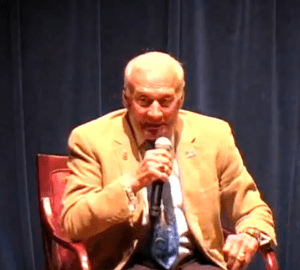 Forty-four years after being the second man to step foot on the moon, legendary astronaut Dr. Buzz Aldrin spoke in Little Rock. His appearance was sponsored by the Clinton Foundation and the Clinton School of Public Service.
 On July 20, 1969, at 3:17 pm (Little Rock time), the lunar module Eagle set down in the Sea of Tranquility on the moon. Astronaut Neil Armstrong radioed to Mission Control in Houston, “The Eagle has landed.”
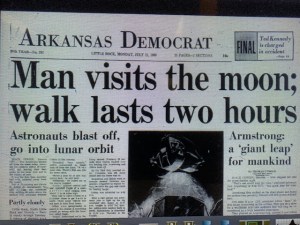 At 9:39 pm, several hours ahead of schedule, Armstrong opened the hatch and started his slow descent to the lunar surface. At 9:56 pm, he set his booted foot on the moon and uttered his now famous (and garbled) statement: “That’s one small step for a man, one giant leap for mankind.”
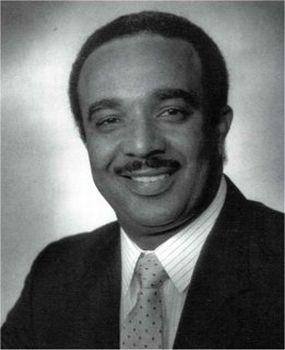 On July 19, 1945, future Little Rock City Manager Mahlon A. Martin was born in Little Rock.
 Little Rock Culture Vulture