
Frida Unbound program at Arkansas Arts Center tonight

Nickolas Muray, American (Szeged, Hungary, 1892 – 1965, New York, New York), Frida Kahlo on White Bench, New York (2nd Edition), 1939, color carbon print, 19 x 14 ½ inches. Courtesy of Throckmorton Fine Art, New York, New York.

DePaul Art Museum Director Julie Rodrigues Widholm will examine Kahlo’s continued relevance to international artists who address the performance of gender, issues of national identity, the political body, among other themes. Frida Kahlo is one of the most famous artists in the world.

The program begins at 6pm tonight (March 14) in the Lecture Hall at the Arkansas Arts Center.

Her reputation and persona have grown immensely since her death in 1954, yet posthumously she has been turned into a stereotype of Latin American art. This predicament, along with her celebrity status, often overshadows the confrontational and boldly transgressive nature of her paintings, and ultimately undermines the revolutionary intent of her work.

At the time it was made, Kahlo’s unabashedly intimate portrayal of her physical and psychological experiences and her appropriation of Mexican folk art aesthetics challenged the bourgeois European mainstream. Her work subverted accepted notions of gender, sexuality, social class, and ethnicity, and was prophetic in anticipating the broader cultural concerns—postcolonialism, feminism, civil rights, multiculturalism, and globalization—that reached a crescendo in the 1960s and continue to be relevant today.

Following the lecture, guests are invited to view the galleries, shop in the Museum Shop or enjoy dinner at Watercolor in the Park.

Seating is limited. Tickets are required. Call 501-372-4000 for tickets.
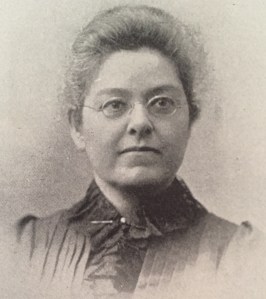
Women Making History – Dr. Ida Joe Brooks

Dr. Ida Joe Brooks was the first woman to practice medicine in Arkansas.  In 1920, she became the first woman to be a party nominee for a statewide office.

She was the Republican nominee for State Superintendent of Public Instruction. However, due to her gender, the state Attorney General would not let her name appear on the ballot. (Even though this was the first election in which women could vote.)

In 1877, Dr. Brooks, became the first woman to head a state teachers’ organization. She was president of the Arkansas Educational Association.  After teaching for several years, she wanted to attend medical school.  She had to do so out of state, because the Arkansas medical school would not admit her based on her gender.  In 1914, she ended up becoming the first female faculty member of what is now UAMS.

During World War I, she attempted to enlist in military service.  When she was denied, due to her gender, she was commissioned in the US Public Health Service and served at Camp Pike specializing in psychiatry.  After the war, she was health director for the Little Rock School District.

Remembering Betty Ford with Clinton Foundation, Clinton School tonight

In celebration of Women’s History Month, the Clinton Foundation and University of Arkansas Clinton School of Public Service will host Remembering Betty Ford, a conversation about the woman who made a positive and lasting impact on our country.

The conversation will include Susan Ford Bales, daughter of President Gerald Ford and First Lady Betty Ford, and Lisa McCubbin, author of “Betty Ford: First Lady, Women’s Advocate, Survivor, Trailblazer,” an intimate and insightful biography of Betty Ford, the groundbreaking, candid, and resilient First Lady and wife of President Gerald Ford. From the #1 New York Times bestselling author Lisa McCubbin – with foreword by Susan Ford Bales – the book tells the inspiring story of an ordinary Midwestern girl thrust onto the world stage and into the White House under extraordinary circumstances.

The program starts at 6pm at Sturgis Hall.

Setting a precedent as First Lady, Betty Ford refused to be silenced by her critics as she publicly championed equal rights for women, and spoke out about issues that had previously been taboo—breast cancer, depression, abortion, and sexuality. Privately, there were signs something was wrong. After a painful intervention by her family, she admitted to an addiction to alcohol and prescription drugs. Her courageous decision to speak out publicly sparked a national dialogue, and in 1982, she co-founded the Betty Ford Center, which revolutionized treatment for alcoholism and inspired the modern concept of recovery.

All Clinton School Speaker Series events are free and open to the public. Reserve your seats by emailing publicprograms@clintonschool.uasys.edu or by calling (501) 683-5239.

A book signing will follow the conversation. Copies of “Betty Ford: First Lady, Women’s Advocate, Survivor, Trailblazer” are available for purchase through the Clinton Museum Store online, in store, and at the event. Those who purchase their book through the Clinton Museum Store will receive priority line access at the signing.

Women Making History: Anne Bartley

In 1976, Anne Bartley was sworn in as the first director of what was then known as the Department of Arkansas Natural and Cultural Heritage.  In that capacity, she was the first woman to serve in an Arkansas Governor’s cabinet.  She had encouraged Governor David Pryor to propose establishing the department and then had lobbied the Arkansas General Assembly to create it.  (Her oath of office was administered by the first woman on the Arkansas Supreme Court, Justice Elsijane Trimble Roy.)
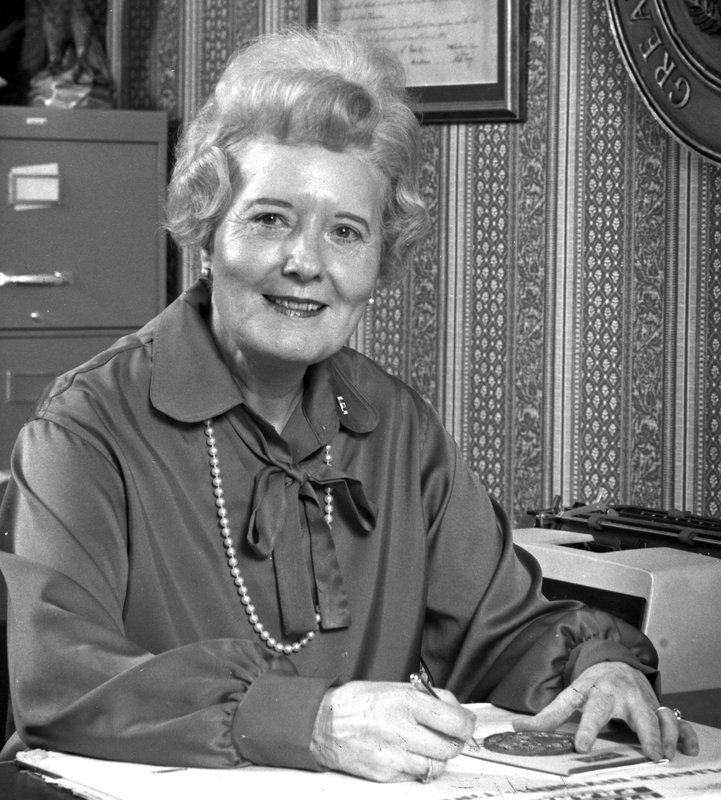
Since 1968, Bartley had been involved in historic preservation, promotion of the arts, and civic engagement.   In 1979, Bartley was asked to establish a Washington Office for the state of Arkanas.  She later was involved in founding the Threshold Foundation (1981), the Funders’ Committee for Citizen Participation (1983), the Forum Institute for Voter Participation (1986), the Faith and Politics Institute (1991), Vote Now ’92 and ’94, America Coming Together (2004), Democracy Alliance (2004), America Votes (2005), and, currently, the Committee on States.

Some of the boards she has served on have been the New World Foundation, the Winthrop Rockefeller Foundation, and the Rockefeller Family Fund. She is currently on the boards of the Bauman Family Foundation, Rockefeller Philanthropy Advisors, America Votes, and on the Advisory Councils for Project New West and TAI SOPHIA.

Women Making History: Vada Webb Sheid

Image result for vada sheidVada Webb Sheid was the first woman to be elected to both the Arkansas House and the Arkansas Senate. She was also the first woman in the Arkansas Senate who did not first succeed a husband.
Born in 1916 in Izard County, she grew up there. After graduating in high school in 1934, she attended classes in Little Rock at Draughon School of Business before returning to Izard County.  In 1940, she married Carl Sheid. Over the next few years they lived in Mountain Home, El Dorado, and Little Rock before returning to Mountain Home after World War II.

After an earlier unsuccessful race for Baxter County Treasurer in 1958, Vada Sheid was elected to the position in 1960 and served until 1965. In 1966, she was elected to the Arkansas House of Representatives.  She was one of four women in the House during her first term.

Vada Sheid served in the Arkansas House through 1976. That year, she was elected to the Arkansas State Senate. She served as a State Senator from 1977 to 1985. Defeated in a bid for a third term, she was later appointed to the Arkansas State Police Commission.  In 1993, she was returned to the Arkansas House in a special election and served until January 1995.

During her service in the Arkansas General Assembly, public works and higher education projects were a major focus. She championed the construction of a bridge across Norfolk Lake as well as many other river bridges and highways in North Central Arkansas. She also pushed through the bills to establish the Mountain Home campus of Arkansas State University as well as what is now known as North Arkansas College in Harrison.

Though a staunch Democrat, she worked across the aisle to get projects completed. Her work on the Norfolk Lake bridge required lobbying of both Gov. Rockefeller and President NIxon.

Vada Webb Sheid died in 2008, but her legacy lives on.

Women Making History: Judge Elsijane Trimble Roy

Elsijane Trimble Roy was born the daughter of a judge. At an early age, she knew she wanted to be an attorney.  She would eventually become not only the third female to graduate from the University of Arkansas Law School, but the first female circuit court judge in Arkansas, the first female on the Arkansas Supreme Court, and the first female Federal judge from Arkansas.

She was also the first woman in the United States to follow her father as federal judge.  She presided in the same courtroom where her father had served for 20 years. She retired in 1999 after 21 years on the federal bench.

Judge Roy has received many awards and honors including being selected Woman of the Year by the Business and Professional Woman’s Club in 1969, Arkansas Democrat Woman of the Year in 1976, an honor that her mother also received, and Outstanding Appellate Judge of 1976-1977 by the Arkansas Trial Lawyers Association.

While she was on the Arkansas Supreme Court (to which she had been appointed by Governor David Pryor), she administered the oath of office to Anne Bartley to lead the Department of Arkansas Natural and Cultural Heritage.  Ms. Bartley became the first woman in an Arkansas Governor’s cabinet.  In 1977, President Jimmy Carter appointed her to the federal bench to succeed Judge Oren Harris.

Women Making History – Irma Hunter Brown

Irma Hunter Brown served in the Arkansas House of Representatives from January 1981 until January 2003.  She was the first African American woman to be elected to the Arkansas General Assembly in either house.

In 2003, she was sworn in as a State Senator, becoming the first African American woman in that body, as well.

In 2015, she was included in the Arkansas Civil Rights Heritage Trail.  Other honors include recipient of the Distinguished Citizen award, Philander Smith College, Little Rock, 1981; fellow, Institute Politics, 1975.