
Rock the Oscars 2019: THE STORY OF DR. WASSELL

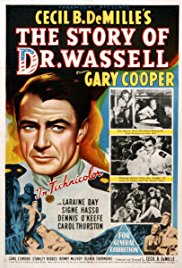
From April 24 to 26, 1944, future Oscar winner Cecil B. DeMille was in Little Rock for the world premiere screening of The Story of Dr. Wassell.  This 1944 Paramount Pictures Technicolor release told the story of wartime hero Dr. Corydon Wassell.  It would be nominated for the Oscar for Best Special Effects.

Why was Little Rock chosen?  It was the hometown of Dr. Wassell.  His paternal grandfather, John Wassell, was Little Rock’s 27th mayor.  His first cousin, Sam Wassell, was serving on the City Council at the time of the film’s release and would become Little Rock’s 51st mayor.

Based on a book by James Hilton, it was inspired by the heroic efforts of Dr. Wassell, a naval officer, as he led the evacuation of several sailors (and treated their wounds) in Java in February 1942.  President Roosevelt highlighted Dr. Wassell in his May 26, 1942, fireside chat.

Little Rock rolled out the red carpet (literally and figuratively) for DeMille and a contingency from Hollywood.  Dr. and Mrs. Wassell also returned to Little Rock for the festivities.  Unfortunately, Gary Cooper (who played Wassell in the film) was unable to attend due to illness.  His costar, Laraine Day, was making another film and could not attend either.    Those in attendance with DeMille (and Mrs. DeMille) included actresses Signe Hasso and Carol Thurston, and actor Melvin Francis.  The latter played himself; he had actually been one of the sailors saved by Dr. Wassell.

On April 24, 1944, DeMille and Dr. Wassell appeared on a radio program broadcast live from the music hall of Robinson Auditorium.  The next day, the troupe toured Camp Robinson and spoke to the soldiers there.  Later that day, Miss Hasso and Miss Thurston sold war bonds at Pfeiffers and M.M. Cohn’s.

April 26, 1944, was a full day for the DeMilles, the Wassells, and the others.  It started with a luncheon at the Hotel Marion, hosted by the Lions Club and Little Rock Chamber of Commerce.  Governor Homer Adkins presented DeMille with an Arkansas Traveler certificate.  DeMille, in return, presented Governor Adkins with a copy of the script.

When it was Dr. Wassell’s time to speak, he praised Little Rock’s efforts on the home front.  He also asked for a standing tribute to longtime Little Rock school superintendent R.C. Hall, who had died the day before.  Dr. Wassell had taught with Mr. Hall decades earlier.

Following the lunch, there was a parade on Main Street.  It started at 10th and Main and proceeded to Markham before ending at the War Memorial Building (now the Old State House Museum).  Newspaper accounts said that it was four miles long and featured many military units and marching bands.

Dinner that evening was at the Lafayette Hotel before screenings of the movie at the Capitol and Arkansas Theatres. Both screenings were sold out.  On April 27, 1944, a regular run of the movie started at the Capitol Theatre.  It would be released nationally on July 4, 1944, which also happened to be Dr. Wassell’s birthday.

Annual Members meeting tonight for Quapaw Quarter Association

Image may contain: outdoor

Join the Quapaw Quarter Association for its yearly members only reception at the beautifully rehabilitated Mills-Davis house!

Built in 1878, this Italianate house was home to Abraham Anderson Mills and his wife Eliza. Abraham was sheriff and county judge. They lived in the house until the 1940s when it was sold to Dr. Emmett N. Davis, who passed the house on to his son, famed photographer William “Bill” Davis. The house was purchased by Jennifer Carman in 2016, and rehabilitated by Jennifer Carman and Donna Thomas. It is now home to J. Carman,Inc. fine art advisory and appraisal services, and Norton Arts, Inc., a nationally known art conservation firm.

This event is for members only, but memberships can be purchased at the door for as little as $35.00. Members who need to renew their memberships will also have the chance to do so at the event.

Event Location: Mills-Davis House, 523 E. 6th St Little Rock, AR.

Time: 5:30 pm to 7:30 pm

Parking: There is parking a block down the street at Curran Hall, or in the Curran Hall parking lot at 620 E. 6th street. There is also street level parking on Capitol (one block north), Sherman, 7th Street, and 8th Street.

Questions? Call 501-371-0075 ext. 3 or e-mail qqa@quapaw.com.

RSVP: Please let them know you are coming by clicking here.

Little Rock Look Back: W W Stevenson

On January 29, 1797, future Little Rock Mayor William Wilson “W. W.” Stevenson was born in South Carolina.
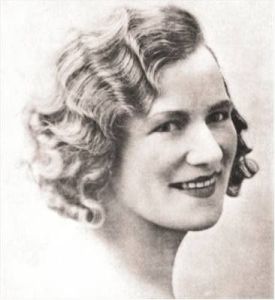
In 1811, he came to Arkansas when his family settled in Batesville.  An ordained Presbyterian minister, he married Ruana Trimble in 1821 and had two children. After she died, he married Maria Tongray Watkins in 1831 and had two more children.

In 1831, he ran for Little Rock Mayor in the first election for the office but was defeated by Dr. Matthew Cunningham.  The next year he ran to succeed Cunningham and was elected.  After leaving the Mayor’s office on December 31, 1833, he continued public service.  He was asked to run for Mayor later in the 1830s, but declined.  He did serve as State Commissioner for Public Buildings in 1839.

In 1849, he delivered the funeral oration at the ceremony for Hon. Ambrose H. Sevier.  Later that year, he was hired as a geologist for the Little Rock and California Association which was created to take advantage of the gold rush.  He and his two oldest sons moved to California and never returned to Arkansas. He died in 1888.

Rock the Oscars 2019: Marjorie Lawrence

Opera star Marjorie Lawrence, CBE, was born in Australia, but spent the last two decades of her life in Arkansas.   Her triumph over polio to return to the opera stage was the subject of the Oscar winning film Interrupted Melody.

First singing in her native country, she rose to star in the opera halls of Europe before conquering the Metropolitan Opera.  Lawrence had contracted polio as an adult while on a trip to Mexico.  She eventually returned to the stage, usually singing while seated or reclining.  She also had an extensive recital career.  She performed at the White House at the invitation of Franklin Roosevelt and later Lyndon Johnson. During World War II, she performed at Buckingham Palace.  When Queen Elizabeth II made her a Commander of the British Empire in 1977, the Queen fondly remembered that wartime concert.

Eleanor Parker as Lawrence in INTERRUPTED MELODY

In 1949, she wrote her autobiography Interrupted Melody. The next year, Hollywood was interested in making it into a film.  Lawrence only wanted to agree to that if she herself did the singing.  In 1955, MGM released the film starring Eleanor Parker as Lawrence and Glenn Ford as her husband. Lawrence did not provide the singing voice; Eileen Farrell did.  Lawrence was openly critical of the film, though some suspected it was because she did not get to sing for it.  By the time of the filming, her vocal range was not what it had been, which is apparently what led MGM to make the decision not to use her.

Despite Lawrence’s disdain for the film, the film was financially successful.  It was nominated for three Oscars: Original Screenplay (though it was actually based on a book), Eleanor Parker as Best Actress, and Costume Design for Color motion pictures.  Sonya Levien and William Ludwig won the statuette for their screenplay.

Lawrence and her husband bought a ranch near Hot Springs in 1952.  She spent most of her life there afterward though she was a vocal coach at Southern Illinois University and Tulane. She also welcomed international students to her home for coaching.  In 1975, she started working with students from the University of Arkansas at Little Rock.  She was also an early member of the Arkansas Arts Council.

Lawrence died in January 1979 and is buried in Hot Springs.

Rock the Oscars 2019: THE WAR ROOM

This Oscar-nominated 1993 American documentary film follows Bill Clinton’s campaign for President of the United States, during the 1992 presidential election.  At the start of the 1992 Democratic primaries, husband and wife filmmakers D.A. Pennebaker and Chris Hegedus requested permission from the Campaign to film its progression. The Clinton Campaign agreed, and Pennebaker and Hegedus were allowed to film Communications Director George Stephanopoulos as well as Lead Strategist James Carville; they were given limited access to Bill Clinton.
At the start of filming, the film team was embedded with the Clinton Campaign in New Hampshire for that state’s Democratic primary. During the onset of the campaign, the film crew traveled around the state with the Clinton campaign.

After the surprise Clinton second place finish in the New Hampshire primary, the crew filmed mostly in Little Rock, home to the Clinton campaign’s national headquarters. As the film focused in on Carville and Stephanopoulos, the film crew saw no need to travel outside of Little Rock as both were present in the city for much if not all of the primary and general election campaigns.

Because of the time spent in Little Rock, numerous buildings and backgrounds familiar to the capital city residents appear throughout the film. Jason D. Williams’ song “Get Back to Little Rock” is featured in the film’s soundtrack.

Though Stephanopoulos and Carville were the film’s main figures, many other prominent figures in the campaign were featured, including Paul Begala, Dee Dee Myers, Mandy Grunwald, Bob Boorstin, Stan Greenberg, Mickey Kantor, Harold Ickes, and Bush deputy campaign manager Mary Matalin, who later married Carville.  Also featured in footage are rivals George H. W. Bush, Ross Perot and Jerry Brown.

Though the film did not win the Oscar for Feature Documentary, Pennebaker would receive an Honorary Oscar in 2013. (Another winner that night was Arkansan Hal Needham.)

Skip Day! Happy Birthday to Skip Rutherford!

Though a native of Batesville (and a proud booster to this day), James L. “Skip” Rutherford has lived in Little Rock for many years. While he was a student at the University of Arkansas, he probably never envisioned the impact he would have on the cultural scene of Little Rock.

After moving to Little Rock, Skip (and his wife Billie) became civic boosters which often involved attending or promoting cultural events.  However, by the mid-1990s, this moved into a whole new realm.

Skip was one of the visionaries behind the creation of a Central High Visitors Center.  His interest in this project combined his interests in public service, public policy, and public schools. This was an extension of his work as an aide to Senator David Pryor from 1979 to 1983 and a Little Rock School Board member from 1987 to 1991.  As the 40th anniversary of the integration of Little Rock Central High approached, Skip worked with Mayor Jim Dailey and others to plan the 1997 commemoration activities as well as the 1998 recognition of the Women’s Emergency Committee.

A few weeks after the Central High 40th anniversary events in September 1997, President Clinton announced that Little Rock would be the site of his Presidential Library.  As President of the Clinton Foundation, he was involved in the planning for not only the construction of the building but also the grand opening festivities.  Through his efforts, the City’s major cultural institutions all had events in conjunction with the opening of the Clinton Presidential Center.

In 2006, he followed Sen. David Pryor in the role of Dean of the Clinton School of Public Service.  Among his accomplishments in this role has been the expansion of the Clinton School Speaker Series. This free series of lectures and public discussions has added immensely to Little Rock’s cultural life. Topics range from foreign relations to domestic policy, from social services to community philanthropy, The lecture series has also focused on productions at the Arkansas Repertory Theatre, guest artists with the Arkansas Symphony Orchestra, books by historians, and many other cultural topics over the years.

That he would oversee the expansion of this lecture program should not be a surprise.  He is also the founder (in 1983) of the Political Animals Club. While the original, non-partisan group still meets regularly in Little Rock, several other affiliates have been created in other portions of the state. He has always been one for civil, civic dialogue.

In April and May 2018, Skip was one of the civic leaders who stepped up to promote efforts to save the Arkansas Repertory Theatre. He was also involved in the planning and promotion of the Elizabeth Eckford Bench which was installed near Little Rock Central High School in September 2018.  Later that month, he presided over an event celebrating the 60th anniversary of the Women’s Emergency Committee.

Earlier this month, the Clinton School partnered with UA Little Rock Downtown for the a Clinton School program which discussed the 1930s mural which has been restored and now hangs in the new UA Little Rock space.  2019 will offer more opportunities for his civic and cultural boosterism, as well.

Little Rock Look Back: A Municipal Auditorium approved by LR Voters in 1937

On January 26, 1937, Little Rock voters went to the polls to vote on three different municipal bond issues.  One of them was the construction of a municipal auditorium.

The bonds for the auditorium would be $468,000 in general obligation bonds which would be paid off between 1940 and 1971. This was toward a total cost of $760,000 for the entire project.

The official campaign for the auditorium was sponsored by the Little Rock Forward Committee which was led by W. H. Williams. In campaign advertisements it showed the value of conventions in New York City which was estimated at $100 per convention attendee. Little Rock organizers were estimating a $10 a day expenditure by visitors, which the committee stressed was very conservative. The campaign committee emphasized the importance of acting at that time due to the federal government money involved.

Various committees and organizations endorsed the auditorium project including the Little Rock Chamber of Commerce, Little Rock Federation of Women’s Clubs, and the Young Business Men’s Association.

The thrust of the campaign focused on the economic benefit to Little Rock as well as the fact that the auditorium would be for all citizens. This message was picked up in editorials by both the Democrat and Gazette. In editorials on January 23 and 25, the Democratopined that the benefits of the auditorium would be distributed among all classes of the citizenry. The next day, both papers ran editorials which touted the economic boon an auditorium would bring through conventions and meetings.

The Democrat’s approach broke down the current value of conventions to Little Rock with, what it termed, the city’s “existing inadequate” facilities. The paper emphasized a conservative estimate of what the added value to Little Rock’s economy would be with the new auditorium.

In expressing support for the auditorium the Gazette stressed the values for local, statewide and national groups. “An auditorium would provide a more convenient and better adapted community center for all kinds of local gathering,” and continued that it would make Little Rock “the logical meeting place for state conventions of every sort.” In discussing the value of state, regional and national meetings the paper stressed that the outside money spent by convention attendees has an impact beyond stores, hotels and restaurants.

Both papers also echoed the importance of the federal government financing to make this possible. The Democrat noted that the Public Works Administration grant and federal low cost loan made this an ideal time.

On January 26, 1937, Little Rock voters approved the auditorium bond by a vote of 1,518 to 519. It passed in each of the city’s 23 precincts. Little Rock Mayor R. E. Overman expressed his pleasure at the outcome of the vote and extended his thanks to the voters.

After the election, a Gazette editorial commented on the low turnout for the special election by commenting that the weather had been nice and there were no other barriers to voting. The editorial writer opined that those not voting in the election must not have been opposed to the endeavor.