
On the penultimate day of the year (and the 2010s decade), a look at numbers 8 through 10 of the 19 Little Rock cultural milestones in 2019.
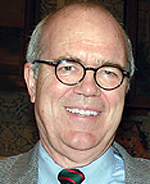 8 – Dedication of the CALS Bobby Roberts Library. Though the name change had been approved months earlier, there had never been a formal naming event for the Central Arkansas Library System Bobby L. Roberts Library. In April 2019, in conjunction with the inaugural Maurice Smith Distinguished Lecture, CALS rectified it. In the presence of Roberts and many longtime library supporters, President Bill Clinton gave remarks at the event which was a tribute to his former staffer. (Roberts was on Clinton’s gubernatorial staff.)
The event took place in the CALS Ron Robinson Theatre, a component of the Arcade Building, which is adjacent to the Roberts Library. The two edifices make up the Library Square complex which rose in phases during Roberts’ more than two-decade tenure as director of CALS. Formally known as the CALS Bobby L. Roberts Library of Arkansas History & Art, it opened in 2009 as the Arkansas Studies Institute. The building consists of a new portion as well as the repurposing of the Geyer & Adams and the Porbeck & Bowman buildings. It houses the Butler Center for Arkansas Studies, CALS’s Arkansas history department, meeting rooms, offices, and five galleries that feature art depicting the state or created by artists living in or from Arkansas.
In HIS remarks that evening, Roberts was his usual self-effacing persona who used his time to pay tribute to current and former CALS staff and trustees as well as to his family and his colleagues from his Clinton administration days. In so doing, Roberts demonstrated why the naming of the facility in his honor was appropriate with it being a home to historic documents and art as well as a place to facilitate conversations.
 9 – Ruth Bader Ginsburg and Nina Totenberg. The Kumpuris Distinguished Lecture which took place on September 3, 2019, set records for Clinton School, Clinton Center, and Clinton Foundation programming.
Due to overwhelming ticket demand, the event’s locale was shifted first to UA Little Rock’s Jack Stephens Center and eventually the then-Verizon Arena. Before a crowd of an estimated 13,000 (with probably that many on the waiting list for tickets), Justice Ginsburg conversed with NPR journalist Nina Totenberg.
Following comments from Clinton School Dean Skip Rutherford and Clinton Foundation Executive Director Stephanie S. Streett, the pair were introduced by President Bill Clinton. In his remarks, he noted that only one individual present had appointed her to the U.S. Supreme Court, and that only one person present had voted to confirm her (U. S. Senator David Pryor, who was in attendance). The crowd contained a who’s who of the Arkansas judicial and legal community as well as many state and local political officials from across the political spectrum.
Justice Ginsburg spent a great deal of time discussing her affection for two former colleagues who were her polar opposite on the court – Justices Sandra Day O’Connor and Antonin Scalia. It was a reminder for the audience of the importance of being able to strongly disagree on political beliefs but to be able to value the person and treasure their friendship.
(And as someone who met Nina Totenberg in the late 1980s, it was remarkable to realize that she has not aged. At all. She obviously has a painting in her attic which IS aging.)
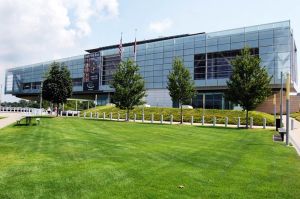 10 – 15 years of the Clinton Presidential Center and Clinton School of Public Service November 18, 2019, marked the 15th anniversary of the opening of the Clinton Presidential Center. This year also marked the 15th anniversary of the U of A Clinton School for Public Service.
Since opening its doors 15 years ago, the Clinton Center has welcomed 4.8 million visitors from around the world, and 430,000 students and educators have been inspired through educational and civic engagement opportunities. Likewise, the Clinton School has featured hundreds of speakers which have been seen by hundreds of thousands of attendees.
In conjunction with the 15th anniversary, the Clinton Foundation hosted the Domestic Policy Conference on Economic Inclusion and Growth. It brought together leaders and bipartisan representatives from state and local municipalities, nonprofits, and the philanthropic and private sectors to discuss the evolution and successes of Community Development Financial Institutions (CDFI), proven approaches for urban and rural economic revitalization, supporting entrepreneurs and small businesses, and how to further economic growth in underserved communities.
 On December 30, 1838, future Little Rock Mayor Jefferson George Botsford was born in Port Huron, Michigan. He married Charlotte Adelia Henry on June 13, 1867. She had been born in Massachusetts, but moved to Little Rock with her parents and grandparents.
 On December 29, 1829, future Little Rock Mayor Frederick G. Kramer was born in Halle, Prussia (now part of Germany). In 1848, he immigrated to the United States.
 Earlier this year, the Arkansas Democrat-Gazette marked 200 years since the publication of the first issue of the Arkansas Gazette. For the first two years of its existence, that paper was printed in Arkansas Post. Today marks the anniversary of its first printing in Little Rock.

 Boxing Day has nothing to do with pugilism. But it is a fun day to recall some boxing-related stories in Little Rock history that are related to the sport.
 Though largely forgotten today, Little Rock native Fay Templeton was one of the leading stars of vaudeville and Broadway in the late 1800s and early 1900s.
 Little Rock Culture Vulture