14th EVER Nog Off results. And the winners are….

Historic Arkansas Museum has announced the winners of last Friday’s 14th ever Nog Off!
Taster’s Choice Award
Eggnog Ice Cream by Loblolly Creamery
“BAE!”
“Love this play on the traditional nog. I think this may be my new favorite ice cream and as it melts it turns into nog and stays cold.”
“Wanted to eat my weight in it!”

People’s Choice Award
Pioneer’s “Nog on a Log” Eggnog by Arkansas Pioneer’s Association
“I love this, and I am now snockered.”
“So well-balanced; yummy!”
“Great mouthful, lovely alcoholy aftertaste.”

Not Your Great, Great, Great Grandfather’s Eggnog
Citrus Capital Eggnog by Matias de Matthaeis at the Capital Hotel
“Lemon meringue pie goodness.”
“Christmassy, very inventive.”
“Amazing presentation. It was like opening a present – first a raft of beautiful citrus custard and candied orange peel, and then the most other worldly beverage underneath.”

Congratulations to our winners! And thank you all so much for being such great partners in this much-beloved, community event! Here are some comments on the other nogs:

Nicholas Peay’s Eggnog (Rachel Worthen and Bill Worthen): “Bourbon cake batter.” “Good Scottish kick in the pants.” “This is like a nog cloud – reminds me of a sabayon – so light and fun to drink.”

Keg Nog (Stone’s Throw Brewing and The Pizzeria): “Yummo.” “Surprising.”” Fun and effervescent.”

Hollisopp & Chapple Nog (Allsopp and Chapple Restaurant and Bar): “Soooo drinkable.” “So friendly and delicious.” “Savory undertones – nice kick.” “This is one I could sip all night long!”

BootlEgg Nog (South on Main): “Whiskey was perfect.” “Love it. Love the people.” “Goldilocks – just right.”

“’Tis the Reason” Eggnog and Bread (Old Mill Bread and E.J.s Eats & Drinks): “Smooth.” “This is what the holidays are all about!”

Big Orange Eggnog (Big Orange: Mid-Town): “Great vanilla notes, cinnamon and smooth.” “Christmas in your mouth.” “Gingerbread cookie.” “This has notes of cotton candy!” “Enjoyed the tantalizing quality of the spiciness.”

Until next time. Happy Nogging!

Little Rock Look Back: A Bowl of Chili’s Role in Civil Rights

Minnijean Brown Trickey and Dent Gitchel at the 2006 chili cook-off (Richelle Antipolo/Flickr)

On December 17, 1957, perhaps the most famous chili bowl was dropped in the Central High cafeteria.

It was, of course, not just any chili bowl.  It was dropped by Minnijean Brown as she was being harassed by white students who were trying to make it difficult for her to navigate the cafeteria.

Balancing food on a cafeteria tray and maneuvering around narrow paths around chairs and tables can be difficult in the best of circumstances. But doing it when you are being harassed for the umpteenth time that day makes it even more of a challenge.

Reports differ as to whether she dropped the tray or let it slip. In the pandemonium of the moment, it may be six of one, half-dozen the other.  But what is not disputable is that the chili fell on a junior who was sitting at a table and not taking part in the harassment. That junior was future attorney and UA Little Rock Bowen School of Law professor Dent Gitchel.

While no one had stepped in to stop the pestering, after Minnijean had dropped the chili on Dent, officials swooped in and sent both students to the principal’s office.  Dent was sent home to change clothes.  Minnijean was suspended for six days.  This incident and suspension would be fodder for her foes who pressed for her eventual expulsion in February 1958.  (The student other student involved in that incident – a white female – was only suspended and later returned for the remainder of the school year.)

Minnijean and Dent went their separate ways.  While many knew about the chili episode, the name of the student who was on the receiving end had become forgotten.  It was not until many years later that his name was once again attached to it.  In 2005, he was named in an article in an historical journal.  By that time, he was a retired law school professor.  Later that year, he gave a brief interview to the Arkansas Democrat-Gazette about it.

In March 2006, the Central High Museum Inc. board organized a chili cook-off as a fundraiser.  Minnijean and Dent reunited for the first time since December 1957 to serve as co-chairs and judges of the cook-off.  The other judge was Central High principal Nancy Rousseau.  There were nine chilies made by Little Rock area celebrities:  Mark Abernathy of Loca Luna and Bene Vita, “Broadway” Joe Booker of Citadel Communications, Dave Williams of Dave’s Place, Max Brantley of Arkansas Times, Michael Selig of Vermillion Water Grille, Pamela Smith of KATV, Channel 7, Sanford Tollette of the Joseph Pfeifer Kiwanis Camp, Scott McGehee of Boulevard Bread Co. and state Sen. Tracy Steele.

Eleven years ago – on the fiftieth anniversary of the incident — NPR did a story and interviewed by Minnijean and Dent.  In various interviews, Minnijean has commented that she told officials that day she knew that Dent was an innocent bystander.  In the few public statements he has made, Dent has commented that while he did not cause problems for the Nine, he also was not one of the very, very few white students who befriended them.  Today, they both focus their comments on the continued need for reconciliation as well as facing up to the issues in order to move forward.

So have a bowl of chili today. And think about how far we have come.  And how very far we still have to go.

Little Rock Look Back: Creation of Pulaski County

On December 15, 1818, the Territory of Missouri created Pulaski County.  The same day, Clark and Hempstead Counties were also created.
The original Pulaski County includes both the present day entity bearing that name as well as all or part of Crawford County and Conway County (both created in 1820), Jefferson County (created in 1829), Scott County (created in 1833), White County (created in 1835), Saline County (created in 1835), Prairie County (created in 1846), Faulkner County (created in 1873), and Lonoke County (created in 1873).  Today, Pulaski County comprises 771 square miles.

The first County government met on May 24, 1819. It met at the home of Samuel McHenry, the first Pulaski County Judge.

Fourteen years after creating a Pulaski County in what is now Arkansas, the State of Missouri created its own Pulaski County.

Got Nog? 14th Ever Historic Arkansas Museum Nog Off is tonight

As part of 2nd Friday Art Night, the 14th EVER Nog Off takes place tonight at Historic Arkansas Museum.

Inspired by an inter-staff discussion about the best eggnog recipe among Little Rock’s first families, it has grown into an event attracting thousands of visitors each year.

Longtime (and now “retired”) museum director Bill Worthen still makes the eggnog recipe of Nicholas Peay, an early settler who is one of Bill’s many storied ancestors.  Joining Bill as contestants are teams from Arkansas Pioneers Association, Allsopp and Chapple, Big Orange, Loblolly, Old Mill Bread, EJs Eats, One Eleven at the Capital Hotel, South on Main, Stones Throw Brewery, and The Pizzeria.

The judges this year are Georgia Pellegrini, Louise Terzia, and Helaine R. Williams.

Three awards are given:  The People’s Choice, the Taster’s Choice (judges) and the Not Your Great, Great, Great Grandfather’s Eggnog (a nod to Colonel Peay).

Vote for your favorite nog, enjoy live music by the Electric 5, visit the #gotnog selfie station, sing carols around the fire, sample roasted pecans, and just HAVE FUN!

This FREE event runs from 5pm to 8pm.

Little Rock Look Back: Gordon Neill Peay

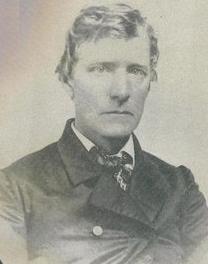
Mayor PeayOn December 12, 1819, future Little Rock Mayor Gordon Neill Peay was born.  The Peay family arrived in Arkansas from Kentucky in 1825.  They quickly became one of Little Rock’s leading families.

Mayor Peay’s father, Nicholas Peay served on the Little Rock Board of Trustees (which existed before the town was incorporated) and later served on the City Council and was acting mayor. It is Nicholas Peay’s Egg Nog recipe which inspired the Historic Arkansas Museum Nog Off!

Godon N. Peay served as mayor of Little Rock from 1859 to 1861.  During the Civil War, Peay served as Captain and later Colonel of the Capital Guard.  He later received a pardon from the federal government.  In the days leading up to the Civil War and during it, Mayor Peay was one of a select group of civic leaders who corresponded with President Lincoln and other Union leaders. It has been said that this conciliatory tone is a reason that Little Rock fared better during Federal occupation and Reconstruction than did many other Confederate cities.

The Peay family owned the Peay Hotel, Little Rock’s first hotel, and were also co-founders of what became Worthen Bank.  They were also a founding family of Christ Episcopal Church. Mayor Peay later served as Pulaski County Chancery Clerk.

He died on December 14, 1876, and is buried at Mount Holly Cemetery along with many members of his family.  A nephew of his, Ashley Peay, served on the City Council in the 1920s.  Mayor Peay’s great-grandson Joseph Barber Hurst, Sr. served on the Little Rock City Board of Directors from 1967-1971. One of Mr. Hurst’s sons, Howard, was born on Mayor Peay’s birthday.

Little Rock Look Back: Mayoral Primary of 1944

Following his second stint as mayor, Charles Moyer decided to not seek a fifth term leading Little Rock.  It set the stage for the December 1944 Democratic primary.  Alderman Sam Wassell and former Alderman Dan Sprick faced off in a particularly nasty race.  As World War II was drawing to a close, there were charges leveled which questioned patriotism. With both men having service on the Little Rock City Council, there were also plenty of past votes on both sides which could become fodder for campaigns.
The election was on December 5, 1944. Sprick received 3,923 votes and Wassell 3,805. A few days later, Wassell filed suit claiming that there were people who voted who were not on the poll tax rolls and another group of voters who did not live in the ward in which they voted. Sprick countersued making the same charges against Wassell.

The case was heard in Pulaski County Circuit Court in February 1945.  It eventually ended up at the Arkansas Supreme Court, which remanded it back to the lower court. On March 26, 1945, Wassell dropped his case. This was only eight (8) days before the municipal general election.

Two years later, Wassell would challenge Sprick in the primary and be triumphant. Wassell would serve from 1947 until 1951.  Sprick would later return to politics and serve a decade in the Arkansas State Senate.

Little Rock Look Back: First Ballet Arkansas production of THE NUTCRACKER

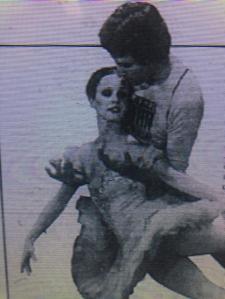
Burton and Tuzer

One of the sure signs of the Christmas season is the return of The Nutcracker to ballet companies across America.  Though the Little Rock Civic Ballet had first presented this ballet in 1968, by the mid-1970s, it was no longer performing the complete ballet.

In 1978, the Little Rock Civic Ballet was reorganized and re-christened Ballet Arkansas.  That first year, it did not perform The Nutcracker.  But on December 11, 1979, the tradition returned as Ballet Arkansas presented its first production of The Nutcracker.  It was once again at Robinson Center Music Hall.

The production was directed and choreographed by Lorraine Cranford, Ballet Arkansas’ Artistic Director.  The music was provided by musicians from the Arkansas Symphony Orchestra under the baton of guest conductor David Schimmell.  This was the first time in several years that the ballet had been accompanied by the ASO.

The guest artists were Anne Burton and Tanju Tuzer, both from Dallas.  The local dancers including David Twillie, Mirana, Peggy Howard, Carol Campbell, Jeffrey Stuart, Haven Cooper, Buddy Harris, Chris Clarke and Jeff Johns.

Tickets were $3.00 for the matinee. Evening performances ranged from $5 to $10 a person.