Little Rock Look Back: Robert Catterson–Doctor, Soldier, LR Mayor

R_F_Catterson_BGen_ACWOn this date in 1835, future Little Rock Mayor Robert Francis Catterson was born in Indiana, the son of Irish immigrants.  He studied medicine in Ohio and established a medical practice in Indiana upon completion of his studies.

With the outbreak of the Civil War, he enlisted as a private in the Union Army.  Throughout the war, he was promoted and was eventually mustered out as a brigadier general in 1866.  During his service, he participated in the siege of Vicksburg, the Battle of Chattanooga, the Atlanta Campaign and Sherman’s March to the Sea.

Following his departure from the military, Catterson decided not to return to medical practice.  He moved to Arkansas and worked for a brief time in the cotton commodities field.  He later returned to military service commanding a militia fighting the Ku Klux Klan.  Catterson was appointed US Marshal and would also command the Brooks troops during the Brooks-Baxter War in Little Rock.

In November 1871, he was elected Mayor of Little Rock. His election ended a tumultuous two-year period where the Little Rock City Council tried unsuccessfully to remove Mayor A. K. Hartman.  Mayor Catterson served a relatively quiet two year term in office until November 1873.

Following the completion of his term, Mayor Catterson moved to Minnesota. He later moved to Texas where he died on March 30, 1914 at the age of 79.  He is buried in the San Antonio National Cemetery.

Women’s History Month Throwback Thursday: The Little Rock Musical Coterie


In 1893 Mrs. Elizabeth Pierce Lyman (pictured at left), Mrs. Susie Pierce Stephens, and Mrs. Effie Miller Williams were invited to the home of Mrs. Cora Cross Marshall for tea and the express purpose of forming a music club. From this grew the organization now known as the Little Rock Musical Coterie.

Meetings of the Little Rock Musical Coterie were first held in members’ homes, and by January 1904, the organization had become well enough established to be featured in Arkansas Life magazine in an article marking its first decade as `a notable institution for the promotion of musical talent and higher culture * * * the leading organization of its kind in the Southeast.’

Meetings, with concerts, were held monthly from September through May, and from members’ homes moved to various city locations, including the Masonic Temple, the Christian Temple at Tenth and Louisiana, the Hotel Marion, Robinson Auditorium, and the Arkansas Arts Center.

From its modest beginnings, the coterie was more than just an opportunity for like-minded individuals to get together to make music. Perhaps because the membership has always included a good percentage of music teachers, the main interest and concern has been to foster musical talent in the young and provide financial support wherever possible.

In 1898 similar music clubs around the Nation formed the National Federation of Music Clubs [NFMC], which Arkansas joined in 1915, becoming one of the first States to affiliate with the national organization.

In 1904 the coterie voted to send $25 to the NFMC convention toward prize money for an American composition contest, the first such contribution recorded in the history of American music clubs.

In 1973 the coterie was incorporated as a nonprofit corporation and received tax-exempt status. Over the years, the Little Rock Musical Coterie has been in the forefront of movements that later resulted in the formation of the Arkansas Symphony Orchestra, the Arkansas Choral Society, the Arkansas Opera Theatre, and the Community Concerts organization.

Annually, the coterie sponsors or promotes competitions and awards designed to encourage young musicians. The Hildegard Smith Award, in the amount of $1,000, is given each year to a university student. The Crusade for Strings competition, part of a national program of the same name, is open to elementary and secondary school students, winners receiving cash prizes and an opportunity to perform on a coterie program.

Programs for young musicians are organized and promoted through 11 junior music clubs and junior festivals are held in February.

The coterie contributes to the Butterfield Endowment Fund, which provides scholarships to the opera workshop and festival at Inspiration Point in Eureka Springs, presents the Stillman-Kelly Scholarship quadrennially, and the Wendell Irish Viola Award.

In the of cutbacks and budget constraints, organizations like the Little Rock Musical Coterie fill the void in school music curricula, as well as touch many other areas of the community through its actions in the cause of music.

On the occasion of the 100th anniversary, Senator Dale Bumpers delivered an address on the floor of the Senate extolling the virtues of the LR Musical Coterie. 

Little Rock Look Back: The Eagle Returns to Little Rock

eagleOn March 16, 1822, Captain Morris piloted the steamboat The Eagle to Little Rock, seventeen days after departing New Orleans.  This became the first steamboat to reach Little Rock.  The boat reached Little Rock at an early hour in the morning and Captain Morris, in order to arouse the town, fired a salute of several guns.

It did not stay in Little Rock, but headed upriver toward the community of Dwight Mission, founded by Presbyterians in what is now Pope County at the mouth of the Illinois Creek.  Due to low waters, it was unable to make it to Dwight Mission.  On March 19, 1822, it returned to Little Rock.  It then headed back to New Orleans.

Though it would be the McClellan-Kerr navigation project before the Arkansas River would become a permanent home to commercial river traffic, boats up and down the Arkansas River helped establish Little Rock as an important trading post.

Little Rock Look Back: Grover Cleveland


Stephen Grover Cleveland, the 22nd and 24th President of the U.S. was born on March 18, 1837. He won the popular vote in 1884, 1888 and 1892, but lost the Electoral College vote in 1888.

Though he never visited Little Rock, Cleveland Street is named in his honor. Cleveland County in southeast Arkansas is also named for him. It originally was Dorsey County, named after a GOP Senator from Arkansas. It was renamed for Cleveland in hopes to curry favor for the state from the new Democratic president.  Cleveland’s Attorney General was Augustus Garland from Arkansas. Garland Street in Little Rock and Garland County are both named for him. 

Cleveland was the leader of the pro-business Bourbon Democrats who opposed high tariffs, Free Silver, inflation, imperialism, and subsidies to business, farmers, or veterans. His crusade for political reform and fiscal conservatism made him an icon for American conservatives of the era.

Little Rock Look Back: St. Patrick’s Day with Mayor Pat L.  Robinson 

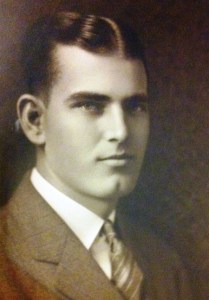
On this date in 1900, future Little Rock Mayor Pat L. Robinson was born.  While I cannot verify that he was indeed named after St. Patrick, it would be fairly reasonable to assume there might be a connection, especially given the fact that he was Catholic.

Robinson was a rising star of Little Rock Democratic politics.  In April 1929, just weeks after his 29th birthday, he was elected Mayor.  He had twice been elected as City Attorney (1926 and 1928) and was one of the youngest to serve in that position.

During Mayor Robinson’s tenure, he announced plans to construct a new airport.  That project led to the creation of what is now the Bill and Hillary Clinton National Airport.  Mayor Robinson was also involved in helping Philander Smith College secure the property where it is now located.  In addition, during his tenure, what is now the Museum of Discovery was folded into the City of Little Rock.

Single at the time he was in office and generally considered good looking, Mayor Robinson was sometimes referred to as the “Jimmy Walker of the Southwest.” Walker was the handsome and charming Mayor of New York City at the time.

Mayor Robinson ran afoul of some of the Democratic party leaders. Records don’t seem to indicate exactly what actions he took or did not take.  One thing that is brought up is that the City went into financial distress during his tenure.  Considering the Wall Street crash happened shortly after he took office, that financial state was not unique to Little Rock.

IMG_4532During this era in Little Rock, it was customary for an incumbent mayor to be given a second term. But City Clerk Horace Knowlton challenged Robinson in the primary.  It was a bitter campaign with Robinson linking Knowlton to disreputable denizens and Knowlton charging Robinson with “an orgy of spending.”  Robinson initially came out 17 votes ahead. But after a review and a lawsuit, it was found that Knowlton ended up with 10 more votes and became the nominee.  At the time, being the Democratic nominee was tantamount to election.

After he left office, Robinson practiced law for a few years in Little Rock and then left the city.  Records do not indicate where he went but he no longer appeared in the City of Little Rock directory by the early 1940s.

Women’s History Month Throwback Thursday: The Fine Arts Club

In 1914, a group of women interested in visual art came together in Little Rock and formed The Fine Arts Club of Arkansas. 

In the early years, they gathered for regular discussions and taught art classes. 

Over time, the Fine Arts Club started acquiring artworks through donations. Originally they displayed these in the Pulaski County Courthouse in a room loaned to them for that purpose. 

Eventually, the County needed the space and the Fine Arts Club needed more room.  In the early 1930s, members approached Mayor Horace Knowlton with the suggestion of the City constructing a fine art museum. 

After securing funding for construction from the WPA, ground was broken and the Museum of Fine Arts opened in 1937 in City Park (now MacArthur Park).

Members of the Fine Arts Club staffed the museum as volunteers and docents as well as arranged for traveling exhibits. From the museum, the club continued to offer classes and guest lectures

By the mid-1950s, there was a desire for larger exhibit space, and the Fine Arts Club joined with the Junior League and the City of Little Rock in creating a new art museum.  

In 1963, the Arkansas Arts Center opened in MacArthur Park. This new facility encompassed the previous museum as well as additional spaces. With the hiring of professional staff to curate exhibits and teach classes, the Fine Arts Club transitioned to a volunteer corps and continued special monthly programming. 

Today, the purpose of the Fine Arts Club is to promote and extend the activities, usefulness and enjoyment of the Arkansas Arts Center.  The Fine Arts Club supports the Arkansas Arts Center by hosting programs featuring knowledgeable and dynamic speakers, and providing volunteers.  

Little Rock Look Back: Little Rock becomes a City of the First Class


On March 9, 1875, the Arkansas General Assembly approved legislation  creating the classification of City of the First Class, and designating Little Rock as the first city with that nomenclature. 

This action by the General Assembly grew from the 1874 Constitution, which replaced the 1868 Constitution. 

In April 1875, Little Rock voters approved a new slate of City Council members and elected John Gould Fletcher as Mayor.