Little Rock Look Back: John Herndon Hollis – Acting Mayor of Little Rock in 1908

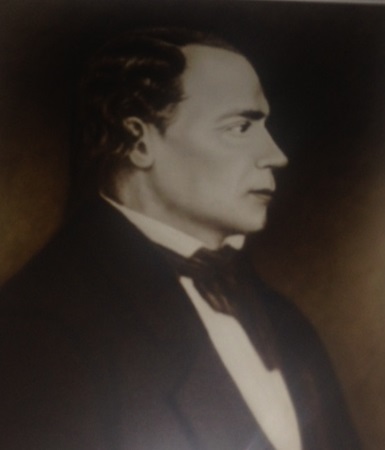
John Herndon HollisOn February 5, 1870, future Little Rock alderman and acting mayor John Herndon Hollis was born shortly before his family moved to what is now Cleveland County. His parents were originally from Georgia and came from prosperous and longtime families there.

The Hollis family came to Arkansas after the Civil War and settled in Union County. A portion of that county was carved off and became Dorsey County (named after a Republican US Senator from Arkansas) but was renamed Cleveland County after Grover Cleveland was elected President. Cleveland was the first Democrat to be elected President in over 20 years. This name change also reflected the political shift in Arkansas from the Reconstruction-led Republican politics to the Democratic Party politics which would dominate for the next century.

John Herndon Hollis was one of six children, and the only one with a middle name. Herndon had been his mother’s maiden name. As one of his brothers described their childhood in Cleveland County, “they all went to country schools in their home neighborhood, worked hard on the farm in the summertime, and were inside their little Methodist Church every time the doors were open.”

Around 1900, Hollis and his new wife Malinda M. “Linda” Taliaferro Hollis (formerly of Rison) moved to Little Rock.  Together the couple had six children. In Little Rock, Hollis worked in the banking industry. For years he worked for People’s Building and Loan Association.

Hollis was first elected to the Little Rock City Council in April 1904. He would serve as one of the Aldermen from the city’s Fourth Ward until April 1918.  This was on the western border of Little Rock at the time. The family lived at 1510 S. Schiller, which is one block east of Central High, though at the time neither the school nor its predecessor (West End Park) existed.  From 1907 until 1913 he also served on the Little Rock School Board.

In April 1908, at the first City Council meeting in the new City Hall, Mayor W. E. Lenon announced his resignation. Because the resignation was effective immediately, there was a vacancy in the office of mayor.  Hollis was selected by his colleagues to serve as acting mayor until a successor could be elected. So from April 1908 through June 1908, Hollis was the City’s chief political and executive leader.

Though he was never formally mayor (and did not resign his position as alderman), since 1908, Hollis’ name has appeared on the list of mayors of Little Rock. The reason seems to be as a sign of respect since there was a vacancy.

There previously had been acting mayors when the mayor would be absent on business or due to illness. But in those instances, the mayor had not resigned. This is the only instance in Little Rock history when a mayor resigned immediately with no successor in place. So John Herndon Hollis holds a unique role in Little Rock history.

Hollis’ wife died in 1920.  He later married Ann Jewell of Little Rock (who was a distant cousin of his first wife). They were married until his death on October 23, 1941.  Ann Hollis lived in Little Rock until her death in 1980.  The Hollis family is entombed in the mausoleum at Mount Holly Cemetery.

Little Rock Look Back: George Wimberly, LR 59th & 61st Mayor

https://www.meaningfulfunerals.net/fh_live/10300/10306/images/obituaries/1388392.jpgOn February 3, 1920, future Little Rock Mayor George Wimberly was born in Star City. He served his country first in the Civilian Conservation Corps and later aboard a U.S. Naval Department hospital ship in the Pacific during World War II.
Wimberly was first elected to the Little Rock City Board in November 1968.  He was re-elected in November 1972 and served until December 1976.  In January 1971, he was selected to serve as Little Rock Mayor through December 1972.  In a rare move, he was again selected to serve as Mayor from January 1975 through December 1976.  During the era of the City Board selecting one of their own members to serve as Mayor, George Wimberly was the only one selected to two non-sequential terms.

In 1978, he was elected to the State House of Representatives and served until December 1988.  While in the House he led the effort for smoking to be banned in the House chambers (a move that predated many public smoking bans of the 1990s and onward).

For over fifty years he was an employee and later owner of Buice Drugstore located on Markham in the Stifft Station neighborhood. In 1986 he received the Arkansas Pharmacist of the Year Award and the Lifetime Achievement Award in 2009.

Mayor Wimberly died on February 5, 2012, two days after his 92nd birthday.  He was survived by his wife, two sons, a grandson and several other relatives.

Little Rock Look Back: Movie Stars Descend on Robinson Auditorium

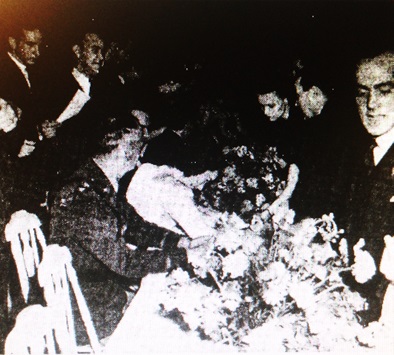
Autograph seekers crowd around the actors at the Movie Ball (photo from Arkansas Gazette)

Autograph seekers crowd around the actors at the Movie Ball (photo from Arkansas Gazette)

As final preparations were being made for the opening of the Joseph Taylor Robinson Municipal Auditorium in early 1940, a glamorous evening took place in Robinson’s lower level convention hall on February 1.

In conjunction with a meeting of film executives and movie theatre owners sponsored by Robb and Rowley Theaters (which later became the United Artists theatre chain), several Hollywood actors were in Little Rock and headlined a Movie Ball. While in Little Rock, Maureen O’Hara, Phyllis Brooks, Arleen Whelan, Tim Holt and Gene Autry had also made a variety of public appearances.

Mr. Autrey had to miss the ball because he had to return to Hollywood early to attend to business matters. Actress Ilona Massey had also been scheduled to attend the events but was unable due to illness.

The quartet who did appear at the Movie Ball caused quite a scene. Upon their entrance, so many of the attendees crowded around for autographs that the evening’s grand march could not take place (a newspaper headline in the Democrat innocently used the word “orgy” to describe the crowd). After two attempts, Little Rock Mayor J. V. Satterfield (who was escorting Miss O’Hara) and the other members of the Little Rock host delegation led the Hollywood foursome to their reserved table. For quite a while that evening, the table was besieged by autograph seekers.

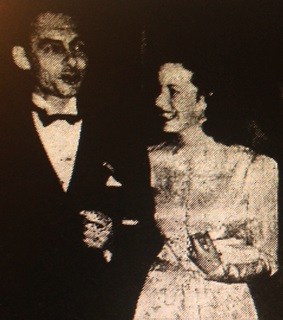
Mayor J V Satterfield escorting actress Maureen O'Hara at the Movie Ball (photo from Arkansas Democrat)

Mayor J V Satterfield escorting actress Maureen O’Hara at the Movie Ball (photo from Arkansas Democrat)

Though it is unknown as to whether he sought an autograph, photos from the evening showed a very satisfied Mayor Satterfield with Miss O’Hara on his arm. Satterfield family lore joked that Mrs. Satterfield (who had stayed home that night to tend to a sick son) was not a fan of Miss O’Hara’s films after that evening.

The Movie Ball showed Little Rock citizens the value of Robinson Auditorium even before it had been officially dedicated. The film industry meetings had taken place at the Albert Pike Hotel which did not feature a ballroom large enough to host the ball. Without the auditorium’s availability for the gala, organizers might not have chosen Little Rock for the meeting.

With the auditorium’s convention hall not attached to any hotel, it opened up the chance for Little Rock to host more events. This had been one of the key arguments for an auditorium since Mayor W. E. Lenon’s first proposal back in 1904. Having a glamorous event this early in the auditorium’s life validated that contention. After having endured the challenges to open the building, it was a nice lagniappe for the auditorium’s proponents who were present.

The actor Tim Holt would again be connected to Little Rock. In September 1951, he tried to obtain a divorce in Arkansas and stated that he had been a resident of the state for at least six weeks. He also had someone else testify to that fact. In October 1951, the divorce was granted. Later Mr. Holt was charged with perjury and fined $200 for falsely representing his length of residence in Arkansas. Judicial sanctions for his legal team, which included a State Senator, were eventually reviewed by the Arkansas Supreme Court.

Little Rock Look Back: The Copper Bowl

Copper Bowl

A Little Rock police officer tackles a NLR player in one of the Copper Bowls.

Today is Super Bowl Sunday, so it seems to be a good time to remember the five year series of football games in Little Rock known as the Copper Bowl.

From December 1959 through December 1963, the Little Rock Police Department played the North Little Rock Police Department in a series of football games.  The Copper Bowl games were fundraisers to help the LRPD provide food and presents for needy families during the Christmas season.

The agreement was that the teams would play for five years. The team with the most wins would permanently receive the Copper Bowl trophy.  The LRPD was outfitted with uniforms from Little Rock University and Louisiana State University (thanks to the efforts of Sgt. Harold Zook).  The games were played at Quigley Stadium.

Before the final game on December 1, 1963, the series was tied at 2-2.  The LRPD team won the game and permanently captured the trophy.  Over the five year period several thousand dollars were raised.

Little Rock Look Back: Congressman David D. Terry

david_terry_fOn January 31, 1881, future U.S. Congressman David Dickson Terry was born in Little Rock.  He was the son of William Leake Terry, who would serve in Congress from 1891 until 1901.  At the time David was born, his father was Little Rock City Attorney.  His mother was Mollie C. Dickson Terry. His parents also had two other sons, and after his mother’s death and his father’s remarriage, David had a half-sister.  He attended school in Virginia, and studied law in Little Rock and Chicago.

In 1910, he married Adolphine Fletcher, daughter of a former Little Rock mayor.  They had four children: David, Sarah, William and Mary. They later adopted a fifth child, Joseph.  The family lived in the Albert Pike Mansion, now known today as the Pike-Fletcher-Terry House.

In 1918, at the age of 37, David enlisted for service in World War I.  During the war, he would remain stateside.  Due to some family health issues, after the war he split his time between Little Rock and Massachusetts.  By the late 1920s, he had returned to Little Rock pretty much full time.

Continuing with his family’s commitment to public service, he served as president of the Little Rock Boys Club beginning in 1928. He oversaw a fundraising drive which raised $150,000 to replace a building destroyed by fire in 1930.  From 1929 until 1933, he served on the Little Rock School Board.

In 1933, David began service in the Arkansas House of Representatives.  The next year, he was elected to Congress to fill a vacancy in a hotly-contested election.  After the primary, he had barely made it into a runoff with Brooks Hays. But he ended up defeating Hays by 625 votes. Hays and his supporters protested due to election irregularities in Yell County, but David Terry was declared the winner.

Though he often was fiscally very conservative, he was also a strong advocate for the New Deal. His first bill in congress was to provide relief for financially strapped Arkansas schools.  In 1942, he decided to run for the Senate, but lost to John L. McClellan.  He ran unsuccessfully for Governor in 1944.  The winner that year, Ben Laney, appointed David Terry to lead the Flood Control, Water and Soil Conservation office. He held this position until 1953.

In later years, he kept a lower profile, even as his wife continued to raise her profile.  Arguably more people in Little Rock today are familiar with Adolphine Fletcher Terry and her efforts to reopen the Little Rock public schools than with the Congressman.

He died on October 6, 1963 and is buried at Mount Holly Cemetery.

The Terry Lock and Dam and the Little Rock School District’s Terry Elementary are both named for the former Congressman.

Little Rock Look Back: FDR

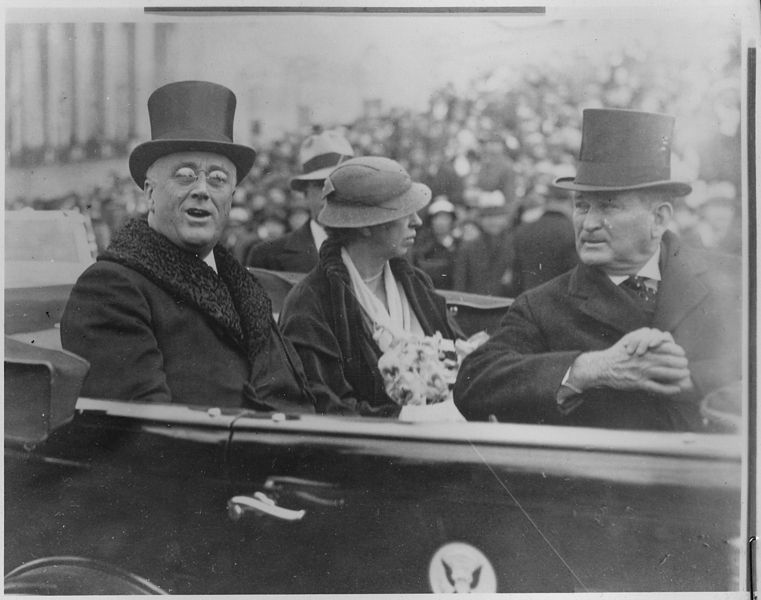
Gov. & Mrs. Roosevelt with Sen. Robinson en route to FDR taking oath as president.

Gov. & Mrs. Roosevelt with Sen. Robinson en route to FDR taking oath as president.

On January 30, 1882, future U.S. President Franklin Delano Roosevelt was born.  In 1936, he visited Little Rock as part of a statewide tour in conjunction with Arkansas’ Centennial celebration.  While in the state he spent time outside of Hot Springs at Couchwood, the vacation home of Arkansas Power & Light founder Harvey Couch, who was the chair of the Centennial activities.

In honor of President Roosevelt’s visit, a portion of Highway 365 in Little Rock was designated Roosevelt Road. He followed part of that road while in the Capital City before making a public appearance.

President Roosevelt’s address on June 10, recounted Arkansas’ territorial and statehood history. At the end he paid tribute to his Senator Joseph Taylor Robinson.  The Senator was a friend and confidant who often led the charge for FDR programs in congress.  Indeed, it would be New Deal programs which would allow for the construction of a municipal auditorium in Little Rock, which would be named in memory of Sen. Robinson after his death in the summer of 1937.  (As the Democratic leader of the Senate, it had been Robinson who accompanied FDR and Eleanor in the motorcade to the 1933 Presidential inauguration ceremony.)

FDR’s visit to Arkansas had political implications as well.  The late Senator Huey Long of neighboring Louisiana had been arguably FDR’s biggest adversary in Washington.  Long was very popular in rural areas of Arkansas and had campaigned for Hattie Caraway when she ran for re-election to the Senate, to the dismay of many of Arkansas’ Democratic establishment.  Harvey Couch had worked to bring about a detente between FDR and Long prior to the latter’s assassination in 1935.  But between a lingering mistrust of FDR by Long supporters and discontent from some sectors based on New Deal programs, it was important for FDR to shore up Democratic support in Arkansas.  At the time the state had nine electoral votes.

FDR would return to Central Arkansas in 1943 to review troops at the military facility named for Sen. Robinson.  That would be his final visit to Arkansas before his death in April 1945.

Little Rock Look Back: Rev. W. W. Stevenson, LR 2nd Mayor

Mayor StevensonOn January 29, 1797, future Little Rock Mayor William Wilson “W. W.” Stevenson was born in South Carolina.

In 1811, he came to Arkansas when his family settled in Batesville.  An ordained Presbyterian minister, he married Ruana Trimble in 1821 and had two children. After she died, he married Maria Tongray Watkins in 1831 and had two more children.

In 1831, he ran for Little Rock Mayor in the first election for the office but was defeated by Dr. Matthew Cunningham.  The next year he ran to succeed Cunningham and was elected.  After leaving the Mayor’s office on December 31, 1833, he continued public service.  He was State Commissioner for Public Buildings in 1839.

In 1849, he delivered the funeral oration at the ceremony for Hon. Ambrose H. Sevier.  Later that year, he was hired as a geologist for the Little Rock and California Association which was created to take advantage of the gold rush.  He and his two oldest sons moved to California and never returned to Arkansas. He died in 1888.