

Map showing boundaries of original City of Little Rock
On September 25, 1839, businessman (and future mayor) Roswell Beebe received title to all of the land in Little Rock.
Starting in the 1810s, there had been much dissension as to who had title to land in what would become Little Rock. As the settlement developed into a town and city, these disagreements became greater. Often land speculators would sell land to settlers without having the right to do so.
Coming to Little Rock in 1835, Beebe was a witness to the continued uncertainty over land ownership. In early 1839, he acquired 240 acres which had the only incontestable title in town. This acreage comprised most of Little Rock. He went to Washington DC in 1839 and, on September 25, received the original patent for the town of Little Rock, signed by President Martin Van Buren. It is recorded in the Pulaski County recorder’s office Book L, page 312.
Upon his return, Beebe gave all the people who had bought lots from a certain real estate developer, whom he considered to be fair and honest, title to their land for a dollar. In December 1839, he drew up a plan for Little Rock, laying off blocks and streets. He deeded the streets and alleys to the city for a dollar.
He gave the state the title for the land on Markham Street, where the new capitol building (now the Old State House Museum) was located. He also donated part of the land for Mount Holly Cemetery, the other portion came from his brother-in-law Chester Ashley.
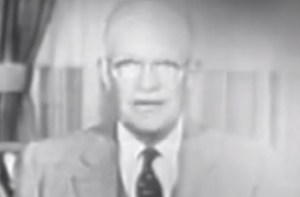 On September 24, 1957, President Dwight Eisenhower ordered the 101st Airborne to Little Rock to ensure that the Little Rock Nine would be able to enter Central High School.
 On Monday, September 23, 1957, the Little Rock Nine entered Central High School for a few hours.
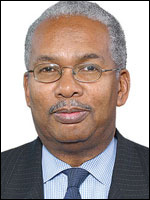 Ernest Green’s sixteenth birthday was probably more memorable than most people’s. It was not about getting a car, it was about wondering if he would ever get to attend Little Rock Central High School.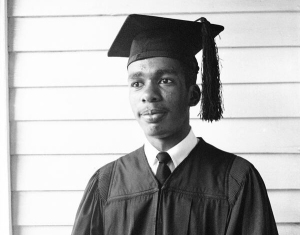
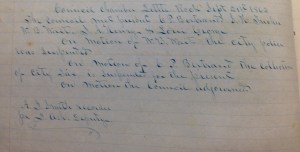 A few days after the defeat at the
  On September 20, 1997, the Central Arkansas Library System debuted its new main library building. The building had previously been the Fones Brothers Warehouse building and was repurposed by the Polk Stanley Yeary architectural firm.
 Jefferson Thomas was a track athlete at all-black Dunbar Junior High School in Little Rock when he volunteered to integrate all-white Central High School as a sophomore in 1957. A few days before he entered the school, he celebrated his fifteenth birthday, having been born on September 19, 1942.
 Little Rock Culture Vulture