Little Rock Look Back: Chartering of City of Little Rock

On November 2, 1835, the Town of Little Rock became the City of Little Rock upon the signature of Territorial Governor William S. Fulton.  The Town of Little Rock had been established on November 7, 1831.

The new charter deemed that the election of officers (including a mayor and eight aldermen) would be on November 10 at the Pulaski County Courthouse. To be eligible to serve, candidates had to be free white men who were aged 30 and above.

The charter established a constable and a court system, gave the City the ability to levy fees and fines, and provided the fact that the City would not have responsibility for maintaining county roads.

This transformation cut short David Fulton’s term as mayor of Little Rock by two months. Mayor Fulton was the father of Governor Fulton. So the governor signed legislation which shortened his father’s term as mayor.  James Pitcher would be elected the first mayor of the City of Little Rock.

Little Rock Look Back: Mr. J. N. Heiskell

At the age of 87, J. N. Heiskell in 1960.

John Netherland (J. N.) Heiskell served as editor of the Arkansas Gazette for more than seventy years.  He was usually called “Mr. Heiskell” by all, but a very few confidantes felt confident to call him “Ned.”

Mr. Heiskell is the person most responsible for Robinson Center Music Hall being located at the corner of Markham and Broadway.  As Chair of the Planning Commission and editor of the Arkansas Gazette he had twin bully pulpits to promote this location when those on the City Council (who actually had the final say) were looking at other locations.  He felt the location would help create a cluster of public buildings with its proximity to the county courthouse and to City Hall.  Mr. Heiskell finally succeeded in winning over the mayor and aldermen to his viewpoint.

He was born on November 2, 1872, in Rogersville, Tennessee, to Carrick White Heiskell and Eliza Ayre Netherland Heiskell. He entered the University of Tennessee at Knoxville before his eighteenth birthday and graduated in three years at the head of his class on June 7, 1893.

His early journalism career included jobs with newspapers in Knoxville and Memphis and with the Associated Press in Chicago and Louisville. On June 17, 1902, Heiskell’s family bought controlling interest in the Arkansas Gazette. Heiskell became the editor, and his brother, Fred, became managing editor.

Governor George Donaghey appointed Heiskell to succeed Jeff Davis in the United States Senate after Davis’s death in office. Heiskell served from January 6, 1913, until January 29, 1913, when a successor was chosen by the Arkansas General Assembly.  His tenure is the shortest in the U. S. Senate history.  His first speech on the Senate floor was his farewell.  He was also only the second US Senator to live to be 100.

On June 28, 1910, Heiskell married Wilhelmina Mann, daughter of the nationally prominent architect, George R. Mann. The couple had four children: Elizabeth, Louise, John N. Jr., and Carrick.

In 1907, he joined a successful effort to build the city’s first public library. He served on the library board from that year until his death and was issued the first library card.  He also served on the City’s Planning Commission for decades.  In 1912, he was instrumental in bringing John Nolen to Little Rock to devise a park plan.

In the paper and in his own personal opinions, he crusaded on a variety of progressive causes.  Perhaps the most famous was the Gazette’s stance in the 1957 Central High desegregation crisis.  It was for this effort that the paper received two Pulitzer Prizes.

Although Heiskell stopped going to the office at age ninety-nine, he continued to take an active interest in the newspaper. He began by having a copy of the newspaper delivered to his home by messenger as soon as it came off the press each night. Eventually, he switched to having his secretary call him daily at his home and read the entire newspaper to him. He operated on the premise that “anyone who runs a newspaper needs to know what’s in it, even to the classified ads.”

A few weeks after turning 100, Heiskell died of congestive heart failure brought on by arteriosclerosis on December 28, 1972. He is buried in Little Rock’s Mount Holly Cemetery.  Interestingly, he is buried in the same cemetery as two of his most notable adversaries: Governor Jeff Davis, and segregationist Congressman Dale Alford.

Mr. Heiskell donated his vast papers to UALR. They are part of the Arkansas Studies Institute collection. These papers give insight into not only his career as a journalist, but also his political and civic affairs.  Thankfully he saved much of his paperwork. Without it, much insight into Little Rock in the 20th Century would be lost.

Little Rock Look Back: Founding of Rose Law Firm

On November 1, 1820, Robert Crittenden and Chester Ashley signed an agreement to form a “Partnership in the Practice of Law.”  This document is the genesis for what is now known as the Rose Law Firm, the oldest law firm west of the Mississippi River.

Crittenden and Ashley were both political leaders.  At the age of 22, Crittenden was appointed Lieutenant Governor of Arkansas Territory by President James Monroe.  Ashley would serve as a U.S. Senator from Arkansas from 1844 to 1848.  His son William E. Ashley was the first Little Rock mayor to be born in Little Rock.

Both Crittenden and Ashley have counties in Arkansas named in their memory.  In addition both Chester and Ashley streets in Little Rock are named for the latter.

In 1832, Crittenden and Ashley dissolved their partnership, though each continued practicing law.  George Watkins joined Mr. Ashley in 1837.  By 1865, U.M. Rose joined partnership. The name Rose has been in the firm’s name ever since.

Little Rock Look Back: Tricks, Treats on Little Rock’s mid-century streets

A recent romp through an ARKANSAS GAZETTE gave insight into Halloween in Little Rock in the middle of the 20th Century.

Apparently by late afternoon on Halloween 1950, downtown Little Rock was filled with kids and teens in costumes. Much of the focus seemed to be on tricks as many of these revelers were utilizing water guns to soak people, throwing enough talcum powder to create an aroma downtown, shooting off firecrackers, and soaping store windows. Several industrious store owners had coated there windows with glycerine so that soap would not mark them.

The mayhem was enough to cause even more problems to traffic at rush hour. Police officers were helpless as they were directing traffic.  One city bus filled with passengers was attacked by a phalanx of waterguns, until the windows were all closed.

GAZETTE writer noted that two teen boys were dressed rather convincingly as girls. One was described as “rather pretty.” It was not until the teen let out an expletive (which the paper reported as “g— d—–”) that the reporter was certain it was a male.

Not everyone was focused on tricks.  Merchants in the Heights neighborhood created a block party with a carnival. It was deemed to be so successful that it would become an annual event.

Little Rock Look Back: Dedication of LR High School Auditorium

On October 31, 1927, a recital took place in the auditorium of the new Little Rock High School which served as a dedication ceremony for the new high school auditorium.  The school had been serving students for several weeks by the time the recital took place.  The first day of school was Wednesday, September 14, 1927.

The star of the recital was Mary Lewis, a Little Rock High School graduate (from the previous location on Scott Street) who had made her Metropolitan Opera debut and become a toast of New York City.

The evening started with remarks from former Arkansas Governor Charles Brough, who had made a name for himself as an advocate for education before, during and after his stint in the statehouse.  He was followed by Miss Lewis, who sang over a dozen arias and musical selections.  For her first encore, Miss Lewis sang “Dixie.”  Her second encore was supposed to be “Home Sweet Home.”  After several attempts to sing it, she was so overcome with emotion that she had to abandon the effort.

For more on the opening event, read Jay Jennings’ excellent book Carry the Rock: Race, Football, and the Soul of an American City.

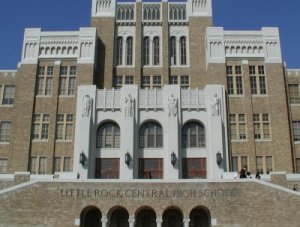
The 1927 schoolbuilding replaced one built in 1905 at 14th and Scott Streets (with an auditorium completed a few years later at 14th and Cumberland).  This new building was located in the western edges of Little Rock on what had been city parkland.  The former West End Park was now site to Little Rock High School.  The adjoining Kavanaugh Field was a baseball field on which Earl Quigley’s football Tigers also played their games.

Architects John Parks Almand, Lawson L. Delony, George R. Mann, Eugene John Stern, and George H. Wittenberg (virtually all of Little Rock’s full-time working architects at the time) designed the $1.5 million structure, which the New York Times dubbed the most expensive school ever built in the United States at that time.

Featuring a combination of Collegiate Gothic and Art Deco architecture, Central High spans two city blocks, comprising over 150,000 square feet of floor space, upon its completion. Requiring 36 million pounds of concrete and 370 tons of steel, the finished product consisted of 100 classrooms (accommodating over 1,800 students), a fireproof 2,000-seat auditorium, a gymnasium, and a greenhouse.

The six-story structure (counting the bell tower and basement) features a middle section containing the auditorium with four classroom wings (two per side) flanking a reflection pool in the foreground of the building. Faced with brick, the building’s highlights include pilasters and colonnades of cut stone, double-hung window frames with twelve lights per sash, and a main entry terrace supported by a colonnade of five masonry arches rising above Corinthian columns of stone.

Little Rock Look Back: 1908 Special Mayoral Election

Following the resignation of Mayor W. E. Lenon so he could devote more time to his business interests, John Herndon Hollis was chosen to serve as mayor until a special election could be held.  Mayor Hollis did not choose to run for the seat.

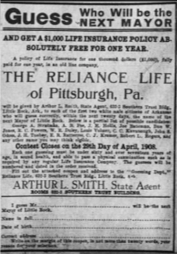
Alderman A. B. Poe announced his resignation at the City Council meeting so that he could run for the mayoral seat. Several other aldermen were mentioned as potential candidates but none of them ended up filing.  Numerous names outside of City Hall were floated as potential candidates.  With so many potential candidates, one insurance firm offered a free life insurance policy to a person who could accurately predict who would be the mayor. (Contest open to persons between the age of 17 and 60, some restrictions apply.) Records do not indicate who won the contest.

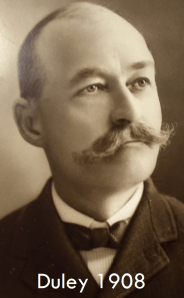
The April 22, 1908, Arkansas Democrat carried announcements of Alderman Poe, former mayor W. R. Duley, E. M. Merriman, Charles J. Kramer, and Harry M. Ramey all seeking the office.  Aldermen R. C. Powers and John H. Tuohey came close to announcing but changed their minds at the last minute.  Alderman George H. Stratman did announce but withdrew before the field was set. Likewise, Mr. Kramer withdrew.
When the Democratic Party announced the May 14 primary, the field was set with Mr. Duley, Mr. Poe, Mr. Ramey, and Mr. Merriman. On April 29, Mr. Merriman withdrew “for reasons best known to himself” leaving three in the race.

As the race got going, so did the politicking.  Mr. Duley advocated for better storm sewers as well as street maintenance. He also expressed the need for a change to the state constitution to allow cities more bonding capabilities for public improvements (an issue that would not be fixed until the 1920s). Mr. Poe campaigned on better drinking water, more sidewalks, better streets, and a new City Hospital.  Mr. Ramey was especially focused on the City’s water supply. He also promised to run the City like a business.

In addition to speeches and newspaper ads, the candidates conducted rallies and parades. Their supporters would march up and down the streets with megaphones, brass bands, and other accoutrements.  In the waning days of the campaign, supporters of the candidates were leveling personal attacks against the opponents. Most of these were made verbally, as the ads in the newspapers where candidates were defending themselves were vague in their references to the attacks’ specifics.

The May 14 election day was fraught with activity. Every available vehicle which could be hired had been by the campaigns to carry voters (all white men) to the polls.  Boys were paid to run up and down the streets advocating for candidates and passing out handbills.

The final results were W. R. “Bill” Duley with 1,429 votes, A. B. Poe with 996 votes, and Harry M. Ramey with 688 votes.  Considering it was his first race for public office, Mr. Ramey and his supporters were pleased with the showing he made.  Mr. Poe was not-quite gracious in defeat. In a statement he released he contended that he had been attacked more unfairly than any man in the city’s history.

Mr. Duley carried wards 2, 5, 6, and 7, finishing in second place in wards 1, 3, 4, and 8. Mr. Poe carried wards 1, 3, 4, and 8, while finishing in second in ward 5, and landing in third in the remaining wards. Mr. Ramey did not carry any wards but did finish in second place in three of them.

Following the primary election, Mr. Duley left town for a short vacation.  On June 17, 1908, the general election was held. As Mr. Duley was unopposed, the election was a formality.

Little Rock Look Back: Site (finally!) chosen for LR municipal auditorium

Potential rendering of new auditorium which appeared in October 30, 1937 ARKANSAS GAZETTE

On October 29, 1937, the Little Rock City Council finally selected the site for the Municipal Auditorium.  It had been approved by voters in January of that year, but no site had been identified during the campaign.

During the early autumn, the City had engaged a consultant to evaluate several downtown locations as potential sites for the municipal auditorium.  One stipulation was that it had to be an entire city block.

The six sites were:

  • Broadway, Markham, Spring and Garland Streets;
  • Center, Markham, Spring and Second Streets;
  • Center, Eighth, Louisiana and Ninth Streets;
  • Scott, Fourth, Cumberland and Capitol Streets;
  • Scott, Tenth, Cumberland and Ninth Streets; and
  • Third, State, Second and Gaines Streets

The top choice was the site bounded by Center, Markham, Spring and Second Streets. It was felt that location’s proximity to public buildings made it ideal for a civic auditorium. It was across the street from the former state capitol (then known as the Arkansas War Memorial) which was, at the time, housing state and federal offices.  The site was also adjacent to the county courthouse structures.

Half of the desired property was owned by the federal government.  Because it was being used for federal offices, it was uncertain as to the site’s availability.  Therefore a city committee recommended the site bounded by Center, Eighth, Louisiana and Ninth Streets be utilized as the auditorium location.

The City Council met on October 20 to make a decision. But were at a stalemate. They met again a few days later with still no resolution.

At an October 25 City Council meeting, Arkansas Gazette publisher (and chairman of the Planning Commission) J. N. Heiskell, advocated the site on Markham and Broadway Streets. The Council convened on October 29 to meet again.  The clock was ticking, a site had to be selected because ground had to be broken prior to January 1, 1938.

At the October 29th meeting, the discussion from previous meetings among the aldermen picked up where it had left off.  Again J. N. Heiskell spoke about the importance of employing city planning concepts in selecting the site.

“In the past, selection of a site for a public building has been merely a matter of who could sell the city some property.  I had hoped we were starting a new effort in starting selection of an auditorium site with the advice of Mr. Bartholomew.  Starting with the auditorium, we should be guided by competent advice and locate future buildings following a city plan.  Your vote today will determine the future of Little Rock so far as city building goes.”

After having engaged in discussions with various federal government agencies, Mayor Overman reported that the city could not obtain the recommended site.  It would not be possible for the federal government to relocate those agencies currently occupying half of that block within the time allowed.  The mayor also stated that he had been warned that if construction did not start by January 1, 1938, (which was just a few weeks away) then the money could be taken back and allocated to other projects.

Ultimately the City Council voted 16 to 1 with 1 absent to locate it at the corner of Markham and Broadway.  At last, Little Rock had a location for the new municipal auditorium!

Though it had not been anyone’s first choice (except Mr. Heiskell, who did not have a vote), in retrospect, the auditorium site finally chosen offered many advantages which were not identified during the marathon selection discussions.  The grade of the land sloped toward the Arkansas River from Markham Street down to Garland Street which allowed for a street level entrance to both the planned exhibition hall on a lower level and the music hall on an upper level.

Given the topography of the other sites under consideration, this was only possible at the chosen location.  By stacking the two major components the project did not take up an entire block, which had been the forecasted footprint.  Not using the entire block allowed for subsequent expansion of the complex’s footprint in the coming decades.  This would not have been possible at any of the other sites under consideration if the original structure had taken up the entire block.  In addition, both Markham and Broadway Streets are wider than normal city streets which allowed for better traffic flow and for easier access to a loading dock.

Interestingly, the Convention & Visitors Bureau, which oversees Robinson Center Music Hall, now has offices in the Cromwell Building. This building is located on the site which had been the first choice for the auditorium in 1937.