
Little Rock Look Back: US Supreme Court rules in Bates v. City of LR

On February 23, 1960, the U. S. Supreme Court handed down a decision in the case of Daisy BATES et al., Petitioners, v. CITY OF LITTLE ROCK et al.  This case had been argued before the Court in November 1959.

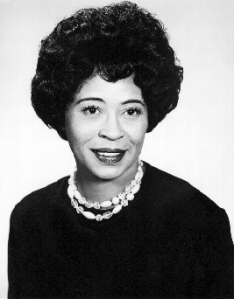
Daisy Bates of Little Rock and Birdie Williams of North Little Rock were the petitioners.  Each had been convicted of violating an identical ordinance of an Arkansas municipality by refusing a demand to furnish city officials with a list of the names of the members of a local branch of the National Association for the Advancement of Colored People. The question for decision was whether these convictions can stand under the Due Process Clause of the Fourteenth Amendment to the United States Constitution.

The Little Rock ordinance (10,638) was passed on October 14, 1957. It charged that certain non-profits were actually functioning as businesses and using non-profit status to skirt the law. Therefore it required the non-profits to disclose their members and sources of dues.  North Little Rock passed an identical ordinance.

(Mayor Woodrow Mann was not present at the meeting of the LR Council when the ordinance was passed. But he signed all of the resolutions and ordinances approved that night.  Ordinance 10,638 was the only legislation that night which had also been signed by Acting Mayor Franklin Loy.  Mayor Mann crossed through Loy’s name and signed his own.)

Mrs. Bates and Mrs. Williams as keepers of the records for their respective chapters of the NAACP refused to comply with the law.  While they provided most of the information requested, they contended they did not have to provide the membership rosters and dues paid.

After refusing upon further demand to submit the names of the members of her organization, each was tried, convicted, and fined for a violation of the ordinance of her respective municipality. At the Bates trial evidence was offered to show that many former members of the local organization had declined to renew their membership because of the existence of the ordinance in question. Similar evidence was received in the Williams trial, as well as evidence that those who had been publicly identified in the community as members of the National Association for the Advancement of Colored People had been subjected to harassment and threats of bodily harm.

Each woman was convicted in the court of Pulaski Circuit Court, First Division, William J. KirbyJudge. They were fined $25 a person.  On appeal the cases were consolidated in the Supreme Court of Arkansas in 1958. The convictions were upheld by five justices with George Rose Smith and J. Seaborn Holt dissenting.

Mrs. Bates and Mrs. Williams then appealed to the U. S. Supreme Court.  The pair’s legal team included Robert L. Carter and George Howard, Jr. (who would later become a federal judge).  Little Rock City Attorney Joseph Kemp argued the case for the City.  The arguments before the U. S. Supreme Court were heard on November 18, 1959.

The SCOTUS decision was written by Associate Justice Potter Stewart.  He was joined by Chief Justice Earl Warren and Associate Justices Felix Frankfurter, Tom C. Clark, John M. Harlan II, William J. Brennan and Charles E. Whittaker.  Justices Hugo Black and William O. Douglas wrote a concurring opinion.

The U. S. Supreme Court reversed the lower courts.

In sum, there is a complete failure in this record to show (1) that the organizations were engaged in any occupation for which a license would be required, even if the occupation were conducted for a profit; (2) that the cities have ever asserted a claim against the organizations for payment of an occupation license tax; (3) that the organizations have ever asserted exemption from a tax imposed by the municipalities, either because of their alleged nonprofit character or for any other reason.

We conclude that the municipalities have failed to demonstrate a controlling justification for the deterrence of free association which compulsory disclosure of the membership lists would cause. The petitioners cannot be punished for refusing to produce information which the municipalities could not constitutionally require. The judgments cannot stand.

In their concurring opinion, Justices Black and Douglas wrote that they felt the facts not only violated freedom of speech and assembly from the First Amendment, but also aspects of the Fourteenth Amendment. They wrote that the freedom of assembly (including freedom of association) was a principle to be applied “to all people under our Constitution irrespective of their race, color, politics, or religion. That is, for us, the essence of the present opinion of the Court.”

Neither the Gazette or Democrat carried any reaction from City leaders. There was a City Board meeting the evening of the decision. If it was mentioned, the minutes from the meeting do not reflect it.

Arkansas Attorney General Bruce Bennett, on the other hand, was very vocal in his outrage. The city laws were known as Bennett Laws because they had been drafted by him as ways to intimidate African Americans and others he viewed as agitators.

In 1960 Bennett was challenging Governor Orval Faubus for the Democratic gubernatorial nomination.  In reaction to the to the Supreme Court he vowed that, if elected Governor, he would “de-integrate” (a term he proudly took credit for coining) the state.

For his part, and not to be outdone by the AG, Faubus fretted that the Court’s decision meant that Communists would be able to give money to the NAACP.

Little Rock Look Back: Museum of Discovery opens in River Market

Museum of Discovery Logo when it opened in 1998

Founded in 1927 as the Arkansas Museum of Natural History and Antiquities in a downtown storefront, by 1997, the museum had been located in at least two other spots and had several different names.  On February 21, 1998, it reopened as the Museum of Discovery in its new location in the recently launched River Market district.  It occupied space on the first floor and basement of the Museum Center building (formerly the Terminal building the erstwhile train station which later was used for printing the Arkansas Democrat.)

The new name and new space reflected a greater emphasis on the science aspect of the museum’s mission.  It featured many hands on and interactive exhibits.

The museum spent one-third of its $10.6 million cost on exhibits.  Of the $10.2 million pledged for the museum, 47 percent — or about $4 million — came from a half-cent city sales tax approved by voters about five years ago. Another 14 percent came from foundations and 2 percent from private organizations and individuals. The remaining 37 percent came from corporations, sometimes in connection with specific exhibits.

Following a February 20, 1998, preview party, the official grand opening was held on February 21, 1998.

The previous museum space (inside the Arsenal building in MacArthur Park) occupied 14,000 square feet, 8,000 of which was display space. After the move, the museum had 35,000 square feet of display space.

Little Rock Look Back: Opening of Robinson Auditorium

robinson-auditorium-by-scott-carterOn February 16, 1940, after three years of planning and construction including several delays due to lack of funding, the Joseph Taylor Robinson Memorial Auditorium officially opened. It was a cold, rainy night, but those in attendance did not care.  (The concept of a municipal auditorium for Little Rock had first been raised in 1904, so this evening was truly a long time in the works.)
Searchlights painting arcs in the sky greeted attendees. They were borrowed from the Arkansas National Guard. Newspaper accounts noted that only a few of the men who attended were in tuxedos, most were simply in suits. The work to get the building opened had been so harried, that it was discovered there was not an Arkansas flag to fly in front of the building. Mayor Satterfield found one at the last minute courtesy of the Arkansas Department of the Spanish War Veterans.

The weather delayed arrivals, so the program started fifteen minutes late. Following a performance of Sibelius’ Finlandia by the fledgling Arkansas State Symphony Orchestra, Mayor J. V. Satterfield, Ewilda Robinson (the Senator’s widow), Emily Miller (the Senator’s sister-in-law and a member of the Auditorium Commission) and D. Hodson Lewis of the Chamber of Commerce participated in a brief ribbon cutting ceremony. Mrs Robinson cut the ribbon on her second attempt (once again proving that nothing connected with getting the building open was easy).

The ceremony was originally set to be outside of the building but was moved indoors due to the inclement weather. The ribbon cutting took place on the stage with the ribbon stretched out in front of the curtain. The opening remarks were broadcast on radio station KGHI.

Mr. Lewis, Mrs. Miller and Mayor Satterfield look on as Mrs. Robinson cuts the ribbon

Mr. Lewis, Mrs. Miller and Mayor Satterfield look on as Mrs. Robinson cuts the ribbon


Though he had previously discussed how he had voted against the auditorium in 1937 before entering public life, the mayor’s remarks that evening were appropriately gracious, statesmanlike and a testament to the effort he had invested to get it open upon becoming mayor. “We hope you have a very pleasant evening and hope further that it will be the first in a long series which you will enjoy in this, your auditorium.”

Tickets for the event, advertised as being tax exempt, were at four different pricing levels: $2.50, $2.00, $1.50 and $1.00.

The estimated attendance was 1700. Following the ribbon cutting, the main performance took place. The headliner for the grand opening was the San Francisco Opera Ballet accompanied by the new Arkansas State Symphony Orchestra (not related to the current Arkansas Symphony Orchestra). The featured soloist with the ballet was Zoe Dell Lantis who was billed as “The Most Photographed Miss at the San Francisco World’s Fair.”

Auditorium Commission chairman E. E. Beaumont, a local banker, noted that while event planners knew the evening of ballet and classical music would not appeal to everyone, it was intended to show the wide range of offerings that would be suitable in the new space.  Earlier in the week, children’s theatre performances had been offered to school groups through the auspices of the Junior League of Little Rock.

At the same time that the gala was going on upstairs in the music hall, a high school basketball double-header was taking place in the downstairs convention hall. North Little Rock lost to Beebe in the first game, while the Little Rock High School Tigers upset Pine Bluff in the marquee game.

Little Rock Look Back: Court orders integration of LR public facilities

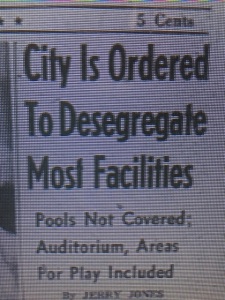
Following the March 1962 lawsuit by twenty-two (22) African Americans seeking the integration of public facilities in Little Rock, Federal Judge J. Smith Henley issued a order on February 15, 1963.  Judge Henley ordered the end to segregation in City parks, playgrounds, golf courses, tennis facilities, community centers, and Robinson Auditorium.

Regarding the auditorium, the order allowed for single event, short-term leasing of wholly private meetings for membership and immediate friends of members.  But it did stress that there could be no racial discrimination in the selection of or terms of leases.

The judge’s order did not cover “other facilities not identified in the record.”  Which meant, the order did not apply to swimming pools.  At the time, War Memorial pool was operated for whites and Gillam Park pool was operated for African Americans.   The judge wrote that he saw no reason to extend it to facilities not mentioned, but did not rule out the ability for future lawsuits.  In asking for a summary judgement in January 1963, the defendants had listed many types of facilities but not swimming pools.

Judge Henley’s decision did not mean that a municipality was required to integrate.  It just could not enforce segregation.  As with many other court decisions at the time, it was narrow in scope.

The end result was that Little Rock facilities were now integrated.  Except for the swimming pools.  Those would have their own story.  It would take the 1964 Civil Rights act and more legal actions for that to happen.

Little Rock Look Back: Ash Wednesday Valentines

Today marks the sixth time since Little Rock was permanently settled in 1820 that Ash Wednesday and Valentine’s Day fall on the same day.  The previous years are 1866, 1877, 1923, 1934, and 1945.

The 1866 Arkansas Gazette for February 14 contains no mention of it being either Ash Wednesday or Valentine’s Day.  Eleven years later, the paper carried a history of Valentine’s Day, but no mention of the religious observance on that day.  The story in the Gazette discussed the hard work of the designers, lithographers, lace makers, and other artisans who created the cards and other tokens which were sent.  The writer noted that none of that work was romantic. It was tasks those people undertook every day.  What made it romantic, the writer continued, was the intent of the person who sent it.

In 1923, only one ad in the paper mentioned Valentine’s Day – the Exchange National Bank.  There were no stories on Valentine’s Day, Mardi Gras or Ash Wednesday.  The stories that pertained to churches discussed revivals and new clergy, but no services for penance.

In 1934, the only mention of Ash Wednesday was in the regular Saturday religious feature. It previewed the various churches Ash Wednesday services in addition to discussing Sunday sermon topics.  Again, there was no mention that Ash Wednesday fell on Valentine’s Day.  Camay Soap and Pfeifer’s Department Store were the only ads on February 14 which made mention of the romantic holiday.

The 1945 newspaper coverage was very similar to eleven years earlier. Previews of Ash Wednesday on Saturday the 10th dominated the religious section on Saturday – but no mention of the other holiday.  The days leading up to Valentine’s Day saw quite a few advertisements from various national companies and local businesses regarding the holiday.  On February 14, however, the only Valentine’s ads were for Pfeifer and for several of the local movie theatres.  Blass Department Store, which had been focused on Valentine’s Day through February 13, used the 14th to switch the focus to springwear.

Little Rock Look Back: Mardi Gras in the Rock–1870s edition

In the post-Civil War era, Mardi Gras was a major event in Little Rock.  By the 1870s, newspapers would have stories for several days about preparations for parties and parades which would be followed by coverage summarizing the events.

For instance, the Ash Wednesday 1877 edition of the Arkansas Gazette carried a front page story that discussed Mardi Gras in New Orleans and Memphis.  Inside the paper there were a series of stories about the downtown Little Rock Mardi Gras parade.  It started at Markham and Rock Streets.  Because of the crowd assembled for it, organizers had to reroute the parade that afternoon.  Among the entries were the Fat Men’s Club, Butchers’ Benevolent Association (which rode on horses), the Mystic Krewe, and several trade groups.  In addition there were many people who marched along in masks.  The unnamed writer bemoaned the fact that the masked revelers’ clothing had no theme.

On Thursday, February 15, 1877, there were stories about some of the Mardi Gras balls which had taken place two nights earlier.  The paper’s deadline probably was earlier than the parties ended, which is why they were not in the paper until two days later.  Among the various events were the Knights of Pythian Ball at the Grand Opera House, the aforementioned Fat Men at a special pavilion set up in the Main Street Cotton Shed, the Mystic Krewe at O’Haras Hall, and the Cosmopolitans at Concordia Hall.  There were other events that the writer was not able to attend due to lack of time.

Some of the venues also played host to balls in advance of Mardi Gras.  The February 10 Gazette previews some events set for Friday and Saturday night.

By the start of the 20th Century, Mardi Gras was no longer a major social event in Little Rock.  But while it lasted, it was quite the production.  It appealed to all classes and races of Little Rock’s citizenry. Though most of the events were segregated, the parade did allow for African Americans to participate as well as the white revelers.

Little Rock Look Back: Bombing of the Carlotta Walls Home

On February 9, 1960, a bomb was detonated at the home of Carlotta Walls. One of the Little Rock Nine as a sophomore, she was now in her senior year at Little Rock Central High.  This followed the September 1959 Labor Day bombings in Little Rock.

The bomb went off at approximately 11:00pm.  The blast could be heard for two miles from the house (located at 1500 S Valentine St.). Carlotta’s mother, Juanita, and sisters were at home with her, though her father, Cartelyou, was at his father’s house at 3910 West 18th Street.  Thankfully all members of the family were not physically harmed.  Two sticks of dynamite were used for the bomb.  The blast removed brick and broke three windows in the Walls house.

According to media accounts, this bombing was the first in the United States directed at a student since the 1954 US Supreme Court decision in Brown v. Board of Education.  As such, it made national headlines.  Carlotta was not deterred.  She had no thought of dropping out of school.

Reaction in the community including the Women’s Emergency Committee deploring the action and the NAACP being outraged.  The Little Rock School District only stated that it was a matter for the police.  The Chamber of Commerce was concerned about the impact it would have on attracting industry.

The FBI came in to investigate in addition to the Little Rock Police Department.  Two African Americans, Herbert Monts and Maceo Binns, Jr., were convicted for causing the bombing. Binns’ conviction was thrown out because it was proven he was coerced into a confession.  Monts served twenty (20) months of a five year sentence.  The supposed motive was to build sympathy for the African American community.  Carlotta Walls LaNier has stated that she did not believe the men bombed her house.

Monts has petitioned the Arkansas Parole Board for a pardon. It is scheduled to be reviewed in September 2018.