Little Rock Look Back: Cornice installed at Robinson Auditorium

On June 1, 1939, the cornice was installed on Robinson Auditorium.  This granite slab noted the name of the building as the Joseph Taylor Robinson Memorial Auditorium.  (It is interesting to note that it used the more modern “u” instead of the classical “v” which was often used in buildings during prior decades – as evidenced by the Pvlaski Covnty Covrt Hovse across the street.)

This was a milestone marking the completion of the front facade of the structure.  Much work would continue on the interior of the structure.  This step in the construction was considered major enough that the Arkansas Gazette mentioned it in a news article.

On this date in 2015 and 2016, the cornice was again surrounded by construction materials and braces. But the restoration of Robinson Center finished in November 2016. Once again, the cornice stands proudly atop the six columns with no impediments around it.

Little Rock Look Back: JFK100

100 years ago today, John Fitzgerald Kennedy was born to Joe and Rose Kennedy, the second of nine children. Groomed for leadership by his parents, he was thrust even more into the path of political greatness following the World War II death of his elder brother Joe Jr.  A war hero himself, following his leadership after the attack of PT-109, he was first elected to Congress from Massachusetts in 1946. He would be re-elected in 1948 and 1950.  In 1952, he challenged incumbent Senator Henry Cabot Lodge and beat him.  He was re-elected to the Senate in 1958.

Kennedy had been seen as a strong potential Vice Presidential candidate for the Democrats in 1956. But his father discouraged this fearing that a loss to Eisenhower/Nixon would set him back in the future.  In 1960, the young, dashing Senator from the Bay State sought the Democratic nomination.  After a contentious primary season where he often ran against senate colleagues, Kennedy headed into the Democratic convention with the most delegates.  He added his chief rival, Texas Senator Lyndon Baines Johnson as his running mate.

After a close election, the Kennedy-Johnson ticket bested Vice President Richard Nixon and his running mate Henry Cabot Lodge (the selfsame former Senator who had been defeated by Kennedy 8 years earlier).

Following the oldest President (at the time), the young Kennedy administration seemed to captivate the country.  During his 1000 days in office, Kennedy faced many challenges both foreign (Bay of Pigs, Cuba missile crisis, start of Vietnam) and domestic (civil rights, organized crime). His ambitious “New Frontier” focused on education, additional services to rural areas and medical care for the elderly.  He also focused on getting the US to the moon.

On the personal front, in 1953 he married Jacqueline Bouvier. In addition to their daughter Caroline and son John Jr., who survived their father, the Kennedy’s had a miscarriage, a stillborn daughter, and son Patrick who died after two days.

Together with Franklin Roosevelt and Ronald Reagan, JFK embodied not only his generation but the mood of the country.  And his quotes resonate today including:

My fellow Americans, ask not what your country can do for you, ask what you can do for your country.

Let every nation know, whether it wishes us well or ill, that we shall pay any price, bear any burden, meet any hardship, support any friend, oppose any foe to assure the survival and the success of liberty.

Ich bin ein Berliner

On October 3, 1963, President Kennedy delivered remarks at the Arkansas State Fairgrounds.  Only a few weeks later, he would be felled by an assassins bullet in Texas.  In the speech, the President praised Arkansas’ congressional delegation including Senators John McClellan and J. William Fulbright and Congressmen Took Gathings, Bill Trimble, Wilbur Mills and Oren Harris.  Each of these men held senior leadership positions in key committees.  The main focus of the speech was to discuss President Kennedy’s vision for a new economy in the South.

The President was actually in the state to speak at the dedication of the Greers Ferry Dam. He agreed to make that appearance as a part of a negotiation with Congressman Mills as they were deadlocked over changes to the tax code.  He had previously visited Little Rock in 1957 when he came to the state to address the Arkansas Bar Association meeting in Hot Springs.

Little Rock Look Back: Ernest Green graduates from Little Rock Central High

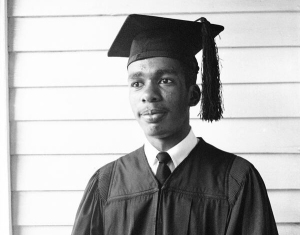
Perhaps the most famous graduation ceremony in the long-storied history of Little Rock Central High took place on May 27, 1958.  It was on that date that Ernest Green became the first African American to graduate from the formerly all-white school.

Among those in the audience to witness this historic event was an up and coming minister named Dr. Martin Luther King, Jr.  A friend of L. C. and Daisy Bates, he attended the 1958 Central High School graduation to witness Green receiving a diploma. Each senior only received eight tickets to the ceremony at Quigley Stadium.   Dr. King was in the state to address the Arkansas AM&N (now UAPB) graduation.  Because he was going to be nearby, Dr. King wanted to witness the history.  Green did not know that Dr. King was in the stands until after the conclusion of the ceremony.  Later that evening, Dr. King gave Green a graduation present of $15.

Because of fears about the event becoming a media circus, the Little Rock School District limited the press on the field to one Democrat and one Gazette photographer. Other press were limited to the press box normally filled with sportswriters covering the gridiron exploits of the champion Tigers.  There were photos taken of Green prior to the ceremony as well as during the ceremony.

During the graduation rehearsal, there had been concerns that some students or other people might try to disrupt the practice.  But it went off without a hitch.  Likewise, the ceremony itself went smoothly.  Local press reported that some members of the class briefly chatted with Green during the ceremony.  That the event took place without incident was a relief on many levels to City leaders.  Also in the class of 1958 were a son of Little Rock Mayor Woodrow Mann and a daughter of LRSD Superintendent Virgil Blossom.

Little Rock Look Back: Brown v. Board of Education

On May 17, 1954, the U.S. Supreme Court issued its ruling in Brown vs. Board of Education of Topeka.  

This landmark United States Supreme Court case declared state laws establishing separate public schools for black and white students to be unconstitutional. The decision overturned 1896’s Plessy v. Ferguson decision, which allowed state-sponsored segregation in public education. In a unanimous 9-0 decision, the Warren Court stated “separate educational facilities are inherently unequal.”  The results of this decision would be tested on the streets of Little Rock in 1957.Th

The Court’s fourteen page decision did not spell out any sort of method for ending racial segregation in schools, and the Court’s second decision in Brown II, muddied the waters even further by only ordering states to desegregate with the oxymoronic “all deliberate speed.”

Brown v. Board grew out of a class action suit filed in Topeka, Kansas, by thirteen African American parents on behalf of their children.  Mr. Oliver Brown was the only male. He was chosen to be the lead plaintiff, because it was felt that the court would look more favorably on a male plaintiff.  The District Court ruled in favor of the Board of Education, citing Plessy v. Ferguson.  The court did note that segregation had a detrimental effect on African American students, but that since the Topeka schools were substantially equal, there was no relief to be granted.

When it was appealed to the Supreme Court, Brown v. Board was combined with four other cases from other jurisdictions.  All were NAACP sponsored cases.  Thurgood Marshall was the lead attorney for the plaintiffs.  In December 1952, the Justice Department filed a “friend of the court” brief and argued, in part, that racial segregation had a detrimental effect on US foreign policy. Communist countries were using racial separation in anti-US propaganda.

In the spring of 1953, the Supreme Court held the case.  Unable to decide the issue, they reheard it in the fall of 1953.  They then put special emphasis on the Fourteenth Amendment’s Equal Protection Clause.

During deliberations, Chief Justice Earl Warren insisted on a unanimous ruling to avoid massive Southern resistance.

Since the Topeka schools were found to be substantially equal, the Court’s ruling was important in noting that the harm came from the separation.  While there was no doubt that many (if not most) African American public schools were inferior in infrastructure and supplies to white schools – that in and of itself was not the issue.

School leaders in Little Rock started perusing the Brown decision and considering how the Little Rock School District would comply.


Little Rock Look Back: Elvis headlines Robinson

Photo by Wayne Cranford

After two visits in 1955 where he was down on the bill, Elvis Presley made his third and final appearance at Robinson Auditorium on May 16, 1956.  This time he was the star and Robinson was packed. The tickets were $1.50 in advance at Walgreens and $2.00 at the box office.

The ads featured 8 great acts in “his” variety show which consisted of the Jordonaires; Rick and Emil Flaim and their orchestra; vocalists Frankie Conners and Jackie Little and comedian-magician Phil Maraquin. A second show was added at 9:30 p.m. to accommodate the ticket demand.

About 30 minutes late, due to a missed flight, Elvis appeared on stage in a purple blazer and started singing “Heartbreak Hotel.”  The crowd rushed the stage. Little Rock police officers were able to control them eventually and get the teenagers back to their seats.  While the crowd was impressed, the police officers were less so.  One of the patrolmen told the Arkansas Gazettereporter: “I wouldn’t know him if I saw him. And I wouldn’t be here unless I was being paid.”

Disc jockey Ray Green recorded the concert that night.  Copies of the concert on CD (which also includes an interview with Presley) are prized possessions of Presley collectors.

The Arkansas Democrat-Gazette has a special section on its website containing quotes from some of the concert attendees.

Little Rock Look Back: J. V. Satterfield Jr.

SatterfieldOn May 14, 1902, future Little Rock Mayor John Vines Satterfield, Jr. was born in Marion.   He grew up in Little Rock and Earle. J.V. was a star quarterback for the Earle football team and is featured in a painting of that team by respected painter Carroll Cloar.

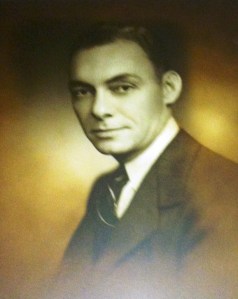
Following high school, J.V. taught (including, much to his family’s amusement, a course in penmanship) and coached and sold Fords.  He then moved to Little Rock and sold insurance and later securities.  In 1931 he opened his own business; that same year he built a house at 40 Beverly Place in Little Rock, which would serve as his home until his death.

J. V. Satterfield was elected to serve as Mayor of Little Rock in 1939 and served one term, until 1941.  He was credited with saving the City from bankruptcy because of his fiscal policies. Among his efficiencies were the creation of a central purchasing office and using grass moved from the airport to feed the Zoo animals.  Though as a private citizen he had voted against the creation of a municipal auditorium in 1937, Mayor Satterfield fought valiantly to ensure that Robinson Auditorium opened to the public once he took office.  Shortly after he became Mayor, it was discovered that there were not sufficient funds to finish the construction. After the federal government refused to put in more money, he was able to negotiate with some of the contractors to arrange for the building to be completed. He also oversaw a successful special election to raise the money to finish the project.

Satterfield was a staunch supporter of the airport and worked to expand it.  He would serve as the chair of the first Municipal Airport Commission.  He also established the Little Rock Housing Authority (on which he would later serve on the board).  Mayor Satterfield also served as President of the Arkansas Municipal League in 1941.

Following the outbreak of World War II, Satterfield enlisted in the Army and was given the rank of a Major. He later was promoted to a Colonel and worked in the Pentagon during its early days.

In the late 1940s Satterfield became president of a small Little Rock bank called People’s Bank.  The bank changed its named to First National Bank when it moved into new offices at 3rd and Louisiana in 1953.  By focusing on smaller customers and courting corporate customers, Satterfield grew the bank into one of the state’s largest banks.  He maintained his desk in the lobby of the bank so he could interact with the customers and ensure they were having a positive experience.

Due to chronic health issues, Satterfield retired from the bank in 1964. He died in March 1966.

Mother’s Day Look Back: Little Rock’s first mother – Eliza Cunningham

Eliza CunninghamEliza Wilson Bertrand Cunningham was the First Lady of Little Rock.  She literally was the first lady and the founding mother.

She became the first permanent female resident when she joined her husband Matthew Cunningham in Little Rock.  She gave birth to Chester Ashley Cunningham, the first baby born in Little Rock, as well as several other children with Cunningham.  When he became the first Mayor of Little Rock, she was the first First Lady of Little Rock. They hosted the first Little Rock Council meeting at their house on what is now the block downtown bounded by Third, Main, Fourth and Louisiana Streets.  Her son Charles P. Bertrand, from her first husband, later served as Mayor of Little Rock, making her the only woman to be married to a Mayor and be mother of a Mayor.

Born in Scotland in December 1788, she emigrated with her parents to the United States as a young girl.  In 1804 or 1805, she married a French businessman, Pierre Bertrand in New York City.  She lived in New York City, while he traveled to his various business ventures.  He never returned from a trip to his coffee plantation in Santo Domingo and was presumed to have died in 1808 or 1809.  She and Bertrand had three children, Charles Pierre, Arabella and Jane. (Jane may have died in childhood, because records and lore only indicated Charles and Arabella coming to Little Rock with their mother.)

Eliza married Dr. Matthew Cunningham in New York City.  He later moved to Saint Louis and settled in Little Rock in early 1820.  Eliza and her two children came to Little Rock in September 1820.  In 1822, she gave birth to Chester Ashley Cunningham, the first documented baby born in Little Rock.  (There are unsubstantiated reports that at least one slave child may have been born prior to Chester.)  She and Matthew also had Robert, Henrietta, Sarah and Matilda.  The latter married Peter Hanger, after whom the Hanger Hill neighborhood is named.

Dr. Cunningham died in June 1851.  Eliza died in September 1856. They and Chester (who died in December 1856) are buried in the Hanger family plot at Mount Holly Cemetery.