Temporary Home for Arkansas Arts Center announced

The Arkansas Arts Center will temporarily relocate to 2510 Cantrell Road in the Riverdale Shopping Center for two and a half years during the center’s upcoming renovation and expansion project.

The temporary location, about three miles from the AAC’s MacArthur Park site, will include studio space for Museum School classes, design and rehearsal space for the Children’s Theatre and additional flexible spaces for offices, retail, facilities storage and educational programs.

“The AAC’s impact in our community, both in Central Arkansas and across the state, is immense and enduring,” said Merritt Dyke, President of the AAC board. “In addition to the nearly 200,000 visitors to MacArthur Park, the AAC’s statewide outreach numbers approach half a million people. We’ve been working with numerous community partners to ensure that we can continue to fulfill our mission and to serve these people while the AAC is under construction.”

“The support we’ve received throughout this endeavor has been overwhelming, and we are grateful to Harriet and Warren Stephens who are chairing our lead gifts capital campaign,” said Dyke. “Without their leadership, this project would not be where it is today. I am greatly appreciative to the AAC and Foundation boards, staff and all our community partners for their role in realizing this important vision.”

The AAC’s staff of approximately 100 full-and part-time employees will office out of this location during the renovation. Groundbreaking on the AAC’s transformational building project is scheduled for fall 2019, with the project anticipated to be completed in early 2022. The MacArthur Park facility will be available for all regular summer programming, with the new temporary Riverdale location opening sometime in September.

“The AAC’s programs are a vital part of our community,” said Bobby Tucker, Chairman of the AAC’s Foundation board. “We feel it’s of maximum importance that they continue to be offered while the center is under construction. Our commitment to the success of this transformational project in MacArthur Park is unwavering, as is our commitment to the organization as a whole.”

The Cantrell Road location will offer convenient, secure parking and new amenities for AAC program participants. With 15,200 square feet of studio space, the Museum School will offer nearly all its current program of classes and workshops, including drawing, painting, ceramics, jewelry, glass, small metals, woodworking and printmaking for its nearly 3,000 students per year. Fall Quarter classes will begin in the Riverdale location in September.

“We’ve been working diligently for more than a year to ensure that our students have a creative space, with the equipment needed to continue to engage in our classes in a temporary location,” said Rana Edgar, Director of Education and Programs. “Over the next three years, we plan to welcome our students into well-appointed studios, with all our core classes currently being offered, in addition to offering expanded opportunities to build their talents.”

In the Children’s Theatre’s 14,200 square-foot workshop, theatre staff will create sets, sew costumes, and build props for the AAC’s productions, including touring programs. Children’s Theatre on Tour, part of the AAC’s Statewide ArtsReach program, serves more than 35,000 students and families in communities across Arkansas every year with traveling professional theatre productions.

“The work of the Children’s Theatre team doesn’t stop when the stage lights go down in MacArthur Park,” said Bradley Anderson, Artistic Director in the Children’s Theatre. “We create theatre productions each season that travel the state, in addition to our local summer theatre academies, theatre classes and performances at the AAC. This move will allow those programs to continue – and possibly even expand.”

The AAC Museum Shop will also move its retail storefront into 1,500 square feet of space, joining many other local restaurants and businesses in the area. Administrative, facilities, equipment storage and flexible educational spaces will round out a total of 65,000 square feet of space at the temporary facility.

The move is one piece of the AAC’s commitment to remaining accessible to the community while its MacArthur Park facility is under construction, and to working with arts partners across the region to expand programming reach.

“The AAC is more than any one space or one building. Our programs will continue to span across communities and extend across the state over the next two and a half years,” said Laine Harber, Interim Executive Director and Chief Financial Officer. “This would not be possible without the commitment and dedication of our board leadership in continuing to fulfill our mission and vision while we undergo these much-needed renovations.”

AAC exhibition programs will also pop up in locations across Central Arkansas and beyond, including the continuation of the popular Delta and Young Arkansas Artists exhibitions. Works from the collection will also travel to other institutions across the country and across Arkansas, in addition to select objects from the contemporary craft collection remaining on view at 15 Central Arkansas Library System locations.

More details about additional programs and partnerships locally and across the state will continue to be announced throughout 2019.

Juror for 61st Arkansas Arts Center Delta Show announced; Deadline to apply is February 13

Image result for kevin cole artistAtlanta-based artist Kevin Cole will serve as guest juror for the 61st Annual Delta Exhibition, on view May 3 through June 30 at the Arkansas Arts Center. The deadline for artists to submit work to be considered for the exhibition is February 13, 2019.

Kevin Cole is a contemporary artist best known for sculptural works, paintings, and intentional use of color. An Arkansas native, Cole’s artwork has been featured in more than 475 national and international exhibitions, including the 42nd Annual Delta Exhibition (1999) at the Arkansas Arts Center.

His work can be found in notable private and public collections around the country. Among his public commissions are a fifteen-story mural commissioned by the Coca-Cola Company for the 1996 Centennial Olympic Games in Atlanta and a twenty-foot high by fifty-five feet long sculpture commission at Hartsfield-Jackson International Airport, Atlanta. His recent sculpture, When My Scars are my Testimony, is featured in the 2019 Atlanta Biennial at the Atlanta Contemporary Art Center.

Cole has been a member of AfriCOBRA since 2003 and was inducted into the Arkansas Black Hall of Fame in 2018.

2nd Friday Cinema at Old State House: THE CREATURE FROM THE BLACK LAGOON

Image may contain: one or more people and text

In 2013, the Old State House played host to Little Rock native Julie Adams where she discussed her work in the film The Creature from the Black Lagoon.  Miss Adams died earlier this month. As a tribute to her, the Old State House is screening her seminal film.

This 1954 movie tells the tale of a strange prehistoric beast which lurks in the depths of the Amazonian jungle. A group of scientists try to capture the animal and bring it back to civilization for study. The explorers capture the mysterious creature, but it breaks free. The Gill-Man returns to kidnap the lovely Kay (played by Adams), fiancée of one in the expedition, with whom it has fallen in love.


Photographing Frida: Portraits of Frida Kahlo/Fotografiando Frida: Retratos de Frida Kahlo exhibit at Arkansas Arts Center from Feb 1 to April 14

Nickolas Muray, American (Szeged, Hungary, 1892 – 1965, New York, New York), Frida Kahlo on White Bench, New York (2nd Edition), 1939, color carbon print, 19 x 14 ½ inches. Courtesy of Throckmorton Fine Art, New York, New York.

The Arkansas Arts Center presents a rare opportunity to see one of Mexico’s greatest painters captured by some of the 20th century’s most important photographers. 

Photographing Frida: Portraits of Frida Kahlo/ Fotografiando Frida: Retratos de Frida Kahlo will be on view at the Arkansas Arts Center through April 14, 2019.

Photographing Frida: Portraits of Frida Kahlo features 65 images of Kahlo as art and artist. The photographs document Kahlo’s life as seen by the greatest photographers of the time – Lola and Manuel Álvarez Bravo, Imogen Cunningham, Emmy Lou Packard, Graciela Iturbide, Nickolas Muray, and Edward Weston, among others. From casual snapshots to intimate family photographs to artfully posed studio portraits, viewers will see the full spectrum of Kahlo’s life, from self-assured adolescent, to influential artist, fashion icon and passionate lover, as she takes on a mythic presence in our collective imagination.

In the hands of photojournalists, friends and artists, the camera allowed Kahlo to explore her own image and identity, document her marriage to the great muralist Diego Rivera, express her strong political views, and artfully reveal her life-long struggle to overcome her physical challenges. In the process, she ultimately defined the principal subject of her own art – herself.

Photographing Frida is an opportunity to see Frida Kahlo as you’ve never seen her before,” Chief Curator Brian J. Lang said. “These images defined not only the way the world saw her – and continues to see her – but how she saw and depicted herself through her own work.”

Frida Kahlo was born in Coyoacán, Mexico City, Mexico in 1907. Her father, Guillermo Kahlo, was a photographer, and often photographed the young Frida. Through her father’s portraits, she became acquainted with the power of her own image.

In 1929, Kahlo married muralist Diego Rivera. Throughout their tumultuous marriage, the couple was often photographed together, both in Mexico and in the United States. Rivera was a major presence, both in Kahlo’s life and in the photographs that document their life. As they traveled through Mexico and the United States, “Frida and Diego” – as they were affectionately known – became a source of fascination and intrigue for the paparazzi: Kahlo, stunning in her Tehuana dresses, beribboned hair and beaded jewelry, accompanied her famous muralist husband. Photos of their second wedding (the couple divorced in 1939, only to remarry a year later) in California were captured by American press photographers.

The exhibition reveals Kahlo’s fascination with fashion – as self-expression, political expression, and a means for concealing her physical disabilities. She was often photographed wearing traditional Mexican clothing – Tehuana dresses, huipils and rebozos, and beaded jewelry. Under the voluminous skirts and flowing dresses, she was able to hide the injuries that had affected her since youth. The pre-Hispanic clothing she was so fond of allowed her to express her belief in mexicanidad – the nationalist movement that found its inspiration in pre-Columbian Mexico after the end of the Mexican Revolution.

Kahlo continued to be photographed until her death in 1954. To each photographer she encountered, she became something new – ever present and continually beguiling – but made different through their lens. In the process, she herself became a work of art.

Photographing Frida features images by Lola Álvarez Bravo, Manuel Álvarez Bravo, Florence Arquin, Lucienne Bloch, Imogen Cunningham, Gisèle Freund, Hector Garcia, Juan Guzman, Graciela Iturbide, Peter Juley, Guillermo Kahlo, Bernice Kolko, Leo Matiz, Nickolas Muray, Emmy Lou Packard, Victor Reyes, Bernard Silberstein, Edward Weston and Guillermo Zamora. A fully-illustrated catalogue, Mirror, Mirror: Portraits of Frida Kahlo, featuring an essay by Salomon Grimberg, a noted authority on Latin American art, accompanies the exhibition.

Photographing Frida: Portraits of Frida Kahlo/Fotografiando Frida: Retratos de Frida Kahlo is organized by the Arkansas Arts Center in collaboration with Throckmorton Fine Art, New York, New York. The exhibition is sponsored by Bank of America; JC Thompson Trust; Judy Fletcher, In Memory of John R. Fletcher; Belinda Shults; Laura Sandage Harden and Lon Clark; Holleman & Associates, P.A.; Barbara House; and Rhonda and Tim Jordan. Additional support by Consulate of Mexico in Little Rock.

2019 Museum of Discovery Science After Dark starts with Troopers vs. Trekkies

It’s a new year and the Museum of Discovery is stirring the pot by hosting an event that addresses one of the greatest arguments of all time – an argument that has allies in every corner of the galaxy.
On Thursday, January 31 from 6pm to 9pm, come to the Museum of Discovery for their first Science After Dark of 2019 and take part in “Troopers vs. Trekkies”

Whether you’re boldly going where no man has gone before or you’re already in a galaxy far, far away, you’ve probably heard the age-old debate about which of science fiction’s two biggest franchises is better.

Is it Star Wars?

Is it Star Trek?

Is the Museum crazy for doing this?

Science After Dark is for ages 21 and up. Tickets are $10 or free for members.

The 2019 presenting sponsor is Fassler Hall.  Sponsors are Stone’s Throw Brewing and Rock Town Distillery.

Who says the Museum of Discovery is only for kids?!? Not the hundreds of 21-and-older science-and-fun lovers who attend Science After Dark each month. Because, science is fun … at any age! Science After Dark provides visitors the opportunity to have fun and learn about science in a unique setting. Museum educators pick a science-related topic and build an entertaining, interactive evening around it. You never know what will sprout, pop, fizzle, or glow. We invite you to discover the science of having fun. Museum partners are there to serve pizza, and a full bar from craft beer to wine to cocktails is available. And beyond the themed activities each month, Science After Dark admission ($10, free for members) includes access to all museum galleries and our 90-plus hands-on, interactive exhibits.

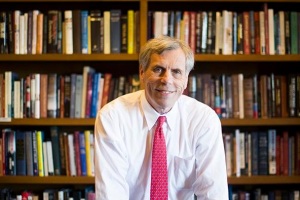
Skip Day! Happy Birthday to Skip Rutherford!

Though a native of Batesville (and a proud booster to this day), James L. “Skip” Rutherford has lived in Little Rock for many years. While he was a student at the University of Arkansas, he probably never envisioned the impact he would have on the cultural scene of Little Rock.
After moving to Little Rock, Skip (and his wife Billie) became civic boosters which often involved attending or promoting cultural events.  However, by the mid-1990s, this moved into a whole new realm.

Skip was one of the visionaries behind the creation of a Central High Visitors Center.  His interest in this project combined his interests in public service, public policy, and public schools. This was an extension of his work as an aide to Senator David Pryor from 1979 to 1983 and a Little Rock School Board member from 1987 to 1991.  As the 40th anniversary of the integration of Little Rock Central High approached, Skip worked with Mayor Jim Dailey and others to plan the 1997 commemoration activities as well as the 1998 recognition of the Women’s Emergency Committee.

A few weeks after the Central High 40th anniversary events in September 1997, President Clinton announced that Little Rock would be the site of his Presidential Library.  As President of the Clinton Foundation, he was involved in the planning for not only the construction of the building but also the grand opening festivities.  Through his efforts, the City’s major cultural institutions all had events in conjunction with the opening of the Clinton Presidential Center.

In 2006, he followed Sen. David Pryor in the role of Dean of the Clinton School of Public Service.  Among his accomplishments in this role has been the expansion of the Clinton School Speaker Series. This free series of lectures and public discussions has added immensely to Little Rock’s cultural life. Topics range from foreign relations to domestic policy, from social services to community philanthropy, The lecture series has also focused on productions at the Arkansas Repertory Theatre, guest artists with the Arkansas Symphony Orchestra, books by historians, and many other cultural topics over the years.

That he would oversee the expansion of this lecture program should not be a surprise.  He is also the founder (in 1983) of the Political Animals Club. While the original, non-partisan group still meets regularly in Little Rock, several other affiliates have been created in other portions of the state. He has always been one for civil, civic dialogue.

In April and May 2018, Skip was one of the civic leaders who stepped up to promote efforts to save the Arkansas Repertory Theatre. He was also involved in the planning and promotion of the Elizabeth Eckford Bench which was installed near Little Rock Central High School in September 2018.  Later that month, he presided over an event celebrating the 60th anniversary of the Women’s Emergency Committee.

Earlier this month, the Clinton School partnered with UA Little Rock Downtown for the a Clinton School program which discussed the 1930s mural which has been restored and now hangs in the new UA Little Rock space.  2019 will offer more opportunities for his civic and cultural boosterism, as well.

Little Rock Look Back: Birth of a General

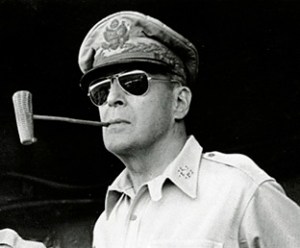
On January 26, 1880, Douglas MacArthur was born in the Arsenal Building while his father was stationed at the Little Rock Barracks.  Though he left Arkansas a few weeks later when his father was transferred, he returned to his birthplace on March 23, 1952. On that day he was greeted by crowds welcoming one of the USA’s most famous military figures.

Though Gen. MacArthur spent only a few weeks in Little Rock, he was baptized at Christ Episcopal Church.  The location of the baptism remains a mystery today because the church was meeting in temporary locations due to the first structure having been lost to a fire.

When the General returned to Little Rock in 1952, he did pay a brief visit to Christ Church.  He also spoke at the Foster Bandshell in the park which bore his name.

When General MacArthur died, he was granted a state funeral.  He was one of the few non-Presidents to have been given this honor.

Today, the MacArthur Museum of Arkansas Military History is located in the Arsenal building.  It was created to interpret our state’s military heritage from its territorial period to the present.

Located in the historic Tower Building of the Little Rock Arsenal–the birthplace of General Douglas MacArthur–the museum preserves the contributions of Arkansas men and women who served in the armed forces.

Exhibits feature artifacts, photographs, weapons, documents, uniforms and other military items that vividly portray Arkansas’s military history at home and abroad.