2015 In Memoriam – Tillie “Mumaw” Anderton

1515 Mumaw

In these final days of 2015, we pause to look back at 15 who influenced Little Rock’s cultural scene who left us in 2015.

She was never a resident of Little Rock, but for the last several of her 101 years, Tillie Anderton was a frequent visitor.  She would often be found at Arkansas Arts Center events or attending the Arkansas Repertory Theatre while in town to visit her grandson Laine Harber.

Mumaw, as she was known to everyone, enjoyed seeing the art, attending a Children’s Theatre performance, or taking part in the crafts. She also enjoyed the chance to socialize with her many well-wishers who stopped by to chat with her.  As longtime Arts Center supporter Jeane Hamilton once remarked, “I want to be her when I grow up!”

Mumaw loved to learn, so she viewed a trip to the Arts Center or the Rep as a chance to learn more – both from experiencing the art and from visiting with people.

On the occasion of her 100th birthday, “Tillie ‘Mumaw’ Anderton Day” was declared in Little Rock in recognition of her contributions as a participant in, and ambassador of, Little Rock’s cultural life.

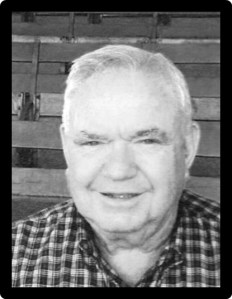
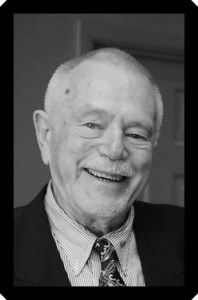
2015 In Memoriam – Bert Parke

1515 ParkeBert Parke enjoyed music.  While he may have been better known for listening to the organ at the baseball park (first Ray Winder Field, then Dickey-Stephens Ballpark), he also enjoyed the organ at Christ Episcopal Church.  Of course his affection for the church organ cannot be separated from the fact that his beloved Ann Blair was often in the choir singing with the organ.

To many in Arkansas (and — let’s be honest, beyond Arkansas), Bert was known for his decades-long association with the Arkansas Travelers. He was part of the small group of businessmen who kept baseball in Little Rock in the 1960s by turning the Travelers into the nation’s only community-owned professional baseball team. In the 1970s, he served as Treasurer of the Travelers before being elected as President in 1980. For the next 30 years, he served in that capacity until becoming President Emeritus in 2010. Just weeks before he died, Bert was elected to the Texas League Hall of Fame.

As a businessman, he led Democrat Printing & Lithograph through many innovations and changes. Through it all, he made sure it continued to serve its customers. He passed this on to his sons Frank and John. To his children and grandchildren, he also passed on to his family the importance of philanthropy and serving the community.  He and Ann Blair co-chaired the first Opus Ball for the Arkansas Symphony Orchestra. At the time, there were very few black tie balls in Little Rock, so their leadership was crucial to the success of the event.

Bert also was involved in the MacArthur Museum of Arkansas Military History; he was named an Honorary Lifetime Commissioner of that museum. A life-long member of Christ Episcopal Church, he held many leadership positions in the church and the Episcopal Diocese of Arkansas.

These words do poor service to the man who was Bert Parke. He had a perpetual twinkle in his eye. His mouth was always curled ready to burst into one of his generous smiles. He met no strangers.  For a while in 2015, he and I both were using walkers as we trudged down the side aisle at Christ Church. Well, I trudged. Bert reveled in the affection as he worked the crowd in a way that would be the envy of most politicians who try to work a rope line.  Each week, he would check on my progress as I recovered from a broken ankle.

For a better job at capturing the spirit of Bert Parke, here is the Rev. Scott Walters’ outstanding homily which was delivered at his service.

Noon Year’s Countdown today from 9am to Noon at the Museum of Discovery

Let’s face it, it can be difficult for parents to stay up until midnight to celebrate the New Year! And you probably don’t want the kids to stay up that late, either.

This year, the Museum of Discovery offers “Noon Year’s Countdown” today from 9am until 12 noon!

Join them from 9 a.m. to noon for some fun hands-on activities that include: party hat decorations, kazoo making, straw streamer creations, clock making, clock take-aparts, chain reactions and a museum-wide countdown to noon!

Ring in the New Year in style, family style at the Museum of Discovery!

And be honest, by this point, you are ready to get out of the house!

2015 In Memoriam – Susan Purvis

1515 PurvisRemembering Susan Turner Purvis, Artist and Teacher – by Judy Baker Goss

From the bulletin, “A Service of Resurrection and Thanksgiving to God for Susan Turner Purvis:”

In our life there is a single color, as on an artist’s palette, which provides the meaning of life and art. It is the color of love. 

-Marc Chagall

On July 22, there were many reasons that an overflowing crowd filled the sanctuary of Pulaski Heights United Methodist Church to memorialize the radiant life of Susan Turner Purvis. I believe that her large heART was the root of them all. A native of Hope who lived in Little Rock over forty years, Susan’s love deeply touched family, friends, fellow teachers and artists, and students.

Fortunately, I knew Susan for half a century. We met as Hendrix freshmen living in Galloway Hall, where she was the ringleader for fun. Packed three girls to a room, we were the last class to endure Hendrix’s version of orientation “hazing.” When commanded, “Button, Freshman,” we fell to a knee in dresses, one hand touching beanie cap, and sounded off, “Good afternoon, Miss Jones, m’am, I’m freshman Susan Turner from Hope, Arkansas, m’am.”  An “upperclasswoman” told Susan and her roomies to “fly like birds” into the dining hall for supper, but Susan topped that comical idea. Looking adorably innocent, Susan’s impulses were extremely impish. She made bloody bandages from huge gauze pads dripping with red lipstick blood, which they taped to their knees. They boldly flapped in that evening, giggling in front of the astonished crowd! Wherever Susan went, there was laughter, and many anecdotes prove that she never sought sainthood. The blessings she showered on others, however, gave her the aura of cherished guardian angel.

Susan knew she was an artist in college, as I was stepping into theatre, and she always encouraged my dreams. We know this was her nature, too. During her twenty-eight year career as Art Specialist at Gibbs International Studies Magnet School, which she began with no classroom and, rather, one table and a box of Mardi Gras beads, she not only provided excellent art education, but she aligned her efforts with others, enhancing the creative potential of all.  Discovering that a former Gibbs custodian, Eddie Lee Kendrick, was a self-taught artist, she facilitated his joining her for a year at Gibbs and then co-curated a show of his work with the New Orleans Museum of Art and the Arkansas Arts Center. When she worked with a project of the Rockefeller Foundation, UALR and the Japanese-American Museum in Los Angeles dealing with the Japanese-Americans who were relocated during World War II, especially to the Arkansas camps at Jerome and Rowher, she co-wrote curriculum for social studies and art teachers based on those internees’ experiences. Her Gibbs students made a wonderful quilt reflecting their encounters with this curriculum. Susan brought people together to move forward, through art, to greater human understanding.

Her approach to learning always demonstrated curiosity and creativity, making something new from what was at hand. By no accident did her methods produce remarkable results time and again. Her students won many awards, some in the exclusive International Children’s Art Exhibition sponsored by Pentel.  In nineteen of the twenty-six years that Gibbs students’ work was accepted in the Young Arkansas Artists (YAA) exhibition through the Arkansas Arts Center, they won “Best in Class.” In 2015, Susan’s retirement year, two Gibbs group projects won awards. Also beloved by her professional peers, she was twice named Arkansas Elementary Art Educator of the Year and once as Arkansas Art Educator of the Year.

Bright and well-educated, Susan’s contributions were never limited to theory; her talented efforts blossomed through personal relationships: Susan provided her full self. She convinced students that they were artists by opening their hearts to believe it and coaxing their visions into art objects, the solid evidence. She presented core ideas which students could research and expand and for which they could imagine inclusive group participation to produce results. Their remarkable achievements sprang from authentic shared creativity. I agreed with Susan that there is no higher educational goal. The outpouring on Facebook by young adults whom Susan taught at Gibbs often referenced specific examples of her inspired teaching, which still nurtures them today.

One of my happiest memories of Susan is a joyful collaboration on a music and arts project with other young mothers at our church in 1986. We guided elementary students, including our children, to create their own Christmas pageant.  They wrote a script from Bible stories, selected songs, built props and acted the play in the sanctuary. Susan and I loved the children’s interpretations, especially their decision that someone should BE the star of Bethlehem, and “it should move.” With Susan’s direction, they created a stunning orb, which was carried atop a pole down the center aisle, one of the high points in “Starry, Starry Night.” Yes, think Van Gogh, too, for Susan added art history along the way. It’s apt to say we followed Susan, our star.

Time and again, I saw that Susan’s vision of the power of self-expression was all-encompassing. It mattered to her how others experience the world, and her empathy for them, especially for children, opened the heavens for us all.

Great grief pours from great joy and love, and though the light of her life will not fade, Susan is deeply missed in this community. I treasure reminders of Susan: the faces of her family and friends, the photos and stories we’ll share over and over, her voice in my mind’s ear, and her artist’s spirit tucked deep in my heart.

2015 In Memoriam – Fred Poe

1515 Poe

In these final days of 2015, we pause to look back at 15 who influenced Little Rock’s cultural scene who left us in 2015.

Fred Poe was a world traveler who spent his lifetime sharing his love of travel with others.

Poe’s first solo trip at age nine on the Rock Island’s “Doodlebug” from Little Rock to El Dorado, Poe visited 168 countries (a country being defined as one which issues its own postage stamps) include such arcane destinations as Tristan da Cunha, the Faroe Islands, Afghanistan’s Wakkan Corridor and Upland Togo. Poe Travel was the first American travel agency to arrange tourist travel to the Peoples’ Republic of China as that nation’s Cultural Revolution wound down with son Tony Poe led an early group of Americans to North Korea. He loved automobile trips and drove in each of the 50 states and every province and territory of Canada save Nunavut which he visited only by air.

After growing up in Little Rock, he graduated from Vanderbilt University where he wrote the college musical comedy. Upon graduation he moved to San Francisco becoming part of the Beatnik subculture and playing ragtime and jazz piano in clubs. Drafted, he served as a translator in Germany in the US Forces and did graduate work at Mainz University in Eastern European History. In 1961, he opened Poe Travel in Little Rock, likely the youngest travel agency owner in the US at the time.  The firm continues today.

Poe was active in the Civil Rights Struggle among other accomplishments having sat-in at the Memphis Airport Restaurant which resulted in its racial integration. He is a member of the ACLU, a former president of the Little Rock SKAL club made up of travel professionals and was a lifetime member of the Country Club of Little Rock. As a travel writer he enjoyed great success in local publications, published at Bicentennial Guide to the USA for the German speaking market and was frequently quoted in such publications as The New York Times, Wall Street Journal, Travel and Leisure, and Conde Nast Traveler.  He was a serious scholar with a fine library on the subject of the Nazi Holocaust and a dedicated art collector with especially significant items from the Russian Avant Garde and 20th Century Austrian schools.

With Jeane Hamilton, he led Arkansas Arts Center patrons on many trips including to China, Egypt and Cuba.  Just weeks before he died, he was in the front row at the Clinton School as Jeane Hamilton and Skip Rutherford discussed her lifetime support of the Arts Center. Jeane often referred to Fred in to fact check when they discussing some of the travel seminars.


2015 In Memoriam – Mary Fletcher Worthen

In these final days of 2015, we pause to look back at 15 who influenced Little Rock’s cultural scene who left us in 2015.

1515 WorthenMary Fletcher Worthen cultivated history and music with the same grace and skill as she cultivated gardens.

Born outside of Scott, she attended Vassar and Little Rock Junior College. After marrying banker Booker Worthen, she devoted her life to improving Little Rock. Together with Stella Boyle and George Smith, she and Booker helped found the precursor to the Arkansas Symphony Orchestra.  Through its many iterations, she was a steadfast supporter and later was named a life member of the ASO Board.  She was also a supporter of many other music organizations in Little Rock including the Chamber Music Society of Little Rock, of which she was a founder.

Another hallmark of her involvement was Mount Holly Cemetery Association.  For over 50 years she served on the board of this body.  Without notes, she could recite the history of practically every resident buried there.  The tours she led with the late Peg Newton Smith were hot commodities when auctioned at fundraisers.  These two loving and lifelong friends would sometimes remember things differently. They playfully prodded and needled each other as they wended and winded their way through the headstones and history regaling rapt audiences with yarns of yore, quips and quotes, plus an anecdote or two.

She also served on the Old State House Museum Board and the Pulaski County Historical Society Board.  As a historian, she literally wrote the book on Trinity Episcopal Cathedral.  She combined her interest in herb gardening and history with the creation of the Medicinal Garden at Historic Arkansas Museum, which is now named in her honor.

Born in 1917, up until her final days Mary Worthen continued to learn new facts, share her love of history and music, and work to cultivate the next generations of cultural enthusiasts.

15 Highlights of 2015 – Arkansas Arts Center exhibits “Our America” and “30 Americans”

Since the 1960s, the Arkansas Arts Center has worked to showcase artists from a variety of backgrounds.  This year, Dr. Todd Herman and his staff brought two outstanding exhibits to Little Rock.

From April to June, the Arkansas Arts Center was home to 30 Americans.

30americans30 Americans showcased works by many of the most important African American artists of the last three decades. This provocative exhibition focused on issues of racial, sexual, and historical identity in contemporary culture while exploring the powerful influence of artistic legacy and community across generations.

“This exhibition presents a sweeping survey of artwork by many of the most influential African-American artists of the last four decades,” said Arkansas Arts Center executive director Todd Herman. “For years, I’ve searched for an exhibition of this kind but couldn’t quite find what I was looking for – an exhibition with powerful interpretations of cultural identity and artistic legacy. When I came across 30 Americans, I knew this was exactly what I wanted patrons and visitors of the Arts Center to experience. These themes are universal in nature and speak to the larger human experience.”

30 Americans features work by such early and influential artists as Barkley L. Hendricks, Robert Colescott and Jean-Michel Basquiat, and those of younger and emerging artists, such as Kehinde Wiley, Wangechi Mutu and Shinique Smith. Often provocative and challenging, 30 Americans explores what it means to be a contemporary artist through an African-American point of view – whether addressing issues of race, gender, sexuality, politics or history.

Drawn from the collection of Mera and Don Rubell, 30 Americans contains 41 works in a variety of media – paintings, drawings, sculptures, installations, digital videos and photographs – by 30 of the leading contemporary African American artists. The Rubells began acquiring contemporary art in the late 1960s, often forging close friendships with living artists, particularly young artists.

On display since October and there until January 17, 2016 is Our America: The Latino Presence in American Art.

A major collection of modern and contemporary Latino art from the Smithsonian American Art Museum, the exhibition Our America includes 93 works in all media by 72 artists who participated in various artistic styles and movements, including abstract expressionism; activist, conceptual and performance art and classic American genres such as landscape, portraiture and scenes of everyday life.

Our America presents the rich and varied contributions of Latino artists in the United States since the mid-20th century, when the concept of a collective Latino identity began to emerge. The exhibition is drawn entirely from the Smithsonian American Art Museum’s pioneering collection of Latino art.

Artists featured in the exhibition reflect the rich diversity of Latino communities in the United States. Our Americashowcases artists of Mexican, Puerto Rican, Cuban and Dominican descent, as well as other Latin American groups with deep roots in the United States. By presenting works by artists of different generations and regions, the exhibition reveals recurring themes among artists working across the country.

The 72 artists featured in the exhibition are ADÁL, Manuel Acevedo, Elia Alba, Olga Albizu, Carlos Almaraz, Jesse Amado, Asco (Harry Gamboa Jr., Gronk, Willie Herrón and Patssi Valdez), Luis Cruz Azaceta, Myrna Báez, Guillermo Bejarano, Charles “Chaz” Bojórquez, María Brito, Margarita Cabrera, María Magdalena Campos-Pons, Melesio “Mel” Casas, Leonard Castellanos, Oscar R. Castillo, José Cervantes, Enrique Chagoya, Roberto Chavez, Carlos A. Cortéz, Marcos Dimas, Ricardo Favela, Christina Fernandez, Teresita Fernández, iliana emilia garcía, Rupert García, Scherezade García, Carmen Lomas Garza, Ignacio Gomez, Ken Gonzales-Day, Hector González, Luis C. “Louie the Foot” González, Muriel Hasbun, Ester Hernandez, Judithe Hernández, Carmen Herrera, Carlos Irizarry, Luis Jiménez, Miguel Luciano, Emanuel Martinez, María Martínez-Cañas, Antonio Martorell, Ana Mendieta, Amalia Mesa-Bains, Franco Mondini-Ruiz, Delilah Montoya, Malaquias Montoya, Abelardo Morell, Jesús Moroles, Raphael Montañez Ortiz, Pepón Osorio, Amado M. Peña Jr., Chuck Ramirez, Paul Henry Ramirez, Sophie Rivera, Arturo Rodríguez, Freddy Rodríguez, Joseph Rodríguez, Frank Romero, Emilio Sánchez, Juan Sánchez, Jorge Soto Sánchez, Rafael Soriano, Ruben Trejo, Jesse Treviño, John M. Valadez, Alberto Valdés and Xavier Viramontes.

The exhibition is organized by E. Carmen Ramos, curator of Latino art at the Smithsonian American Art Museum.

Our America: The Latino Presence in American Art is organized by the Smithsonian American Art Museum. Generous support for the exhibition has been provided by Altria Group, the Honorable Aida M. Alvarez, Judah Best, The James F. Dicke Family Endowment, Sheila Duignan and Mike Wilkins, Tania and Tom Evans, Friends of the National Museum of the American Latino, The Michael A. and the Honorable Marilyn Logsdon Mennello Endowment, Henry R. Muñoz III, Wells Fargo and Zions Bank. Additional significant support was provided by The Latino Initiatives Pool, administered by the Smithsonian Latino Center. Support for “Treasures to Go,” the museum’s traveling exhibition program, comes from The C.F. Foundation, Atlanta.