Comedies, Dramas and Musicals mark the 2017-18 season at Arkansas Rep

ark repA Southern story that is a favorite, a modern take on a classic comedy, a new musical based on a timeless Christmas tale, a contemporary drama of familial relationships, a joyous romp of a musical, a darkly comic tale of manners (without the manners), and a biting look at the madness of the holidays compose the 42nd season of the Arkansas Rep!

Under the leadership of new Producing Artistic Director John Miller-Stephany, the Arkansas Repertory Theatre, the state’s largest nonprofit professional theatre, announced its 2017-18 Season.

Beginning in August, the new season exemplifies The Rep’s mission of producing diverse work of the highest artistic standards for its Arkansas audience.

The Heart is a Lonely Hunter
Aug. 23 – Sept. 10, 2017; Opening Night on Friday, Aug. 25, 2017
By Rebecca Gilman | Based on the novel by Carson McCullers
Directed by John Miller-Stephany

Based on Carson McCullers’ celebrated debut novel, this haunting Southern drama tells the story of a handful of misfits in a 1930s Georgia mill town. Deaf-mute John Singer becomes confidant and confessor to four of the town’s most colorful eccentrics, forever changing their lives by his sympathetic and gentle presence. Rebecca Gilman’s poignant adaptation for the stage captures all of the loss and longing of the original novel and combines it with a graceful theatricality.


The School for Lies
Oct. 11 – 29, 2017; Opening Night on Friday, Oct. 13, 2017
By David Ives | Adapted from The Misanthrope by Molière

Based upon Molière’s classic 17th Century comedy, The Misanthrope, The School for Lies feels surprisingly relevant as it exposes the hypocrisies of polite high society with a sharp wit and even sharper observations about human nature. Comic master David Ives (All in the Timing, Venus in Fur, Is He Dead?) adapts this wicked farce for contemporary audiences, contrasting the high-brow characters with low-brow humor and employing present-day language that breathes fresh air into this rollicking satire.


The Gift of the Magi
Nov. 29 – Dec. 24, 2017; Opening Night on Friday, Dec. 1, 2017
A new musical by Jeffrey Hatcher, Maggie-Kate Coleman and Andrew Cooke
Directed by John Miller-Stephany

The Arkansas Repertory Theatre is proud to present the world premiere of a new chamber musical based upon O. Henry’s beloved holiday story. Unwrap a new tradition in this tender tale of love and sacrifice, told with fresh intimacy on The Rep stage. Acclaimed playwright Jeffrey Hatcher (Compleat Female Stage Beauty, Tuesdays with Morrie, Three Viewings) is joined by composer Andrew Cooke and 2017 Jonathan Larson Grant recipient Maggie-Kate Coleman (lyricist).


The Call
Jan. 24 – Feb. 11, 2018; Opening Night on Friday, Jan. 26, 2018
By Tanya Barfield

Annie and Peter are a childless couple in their late 30s who have decided to adopt a baby from Africa. But when they receive some surprising news about their potential bundle of joy, anxiety and doubt threaten to tear their world apart. Middle-class cultural sensibilities and global divisions come crashing in on their comfortable existence as they are forced to confront their own preconceived notions about what makes a family a family. As they reach out to friends and neighbors for advice, Annie and Peter become mired in indecision and second thoughts.


Mamma Mia!
March 14 – April 8, 2018; Opening Night on Friday, March 16, 2018
Music and lyrics by Benny Andersson and Bjorn Ulvaeus
Some songs with Stif Anderson | Additional material by Martin Koch
Book by Catherine Johnson
Directed by John Miller-Stephany

Young bride-to-be Sophie desperately wants her father to walk her down the aisle. But there’s a catch – she’s not sure which of her mother’s old flames is “the one.” So, she invites all three, hoping she’ll learn the truth, which unleashes an out-of-control flood of memories – and irresistible pop music – into all of their lives.


God of Carnage
June 6 – 24, 2018; Opening Night on Friday, June 8, 2018
By Yasmina Reza | Translated by Christopher Hampton
Directed by Cliff Fannin Baker

A simple playground scuffle between their young sons thrusts two sets of affluent parents into an uproarious maelstrom of epic proportions. As they meet to provide a positive example of conflict resolution, what begins as a civil conversation over cocktails and canapés soon devolves into a juvenile war of words and unexpected ferocity.   Winner of three Tony Awards, including Best Play, God of Carnage is a contemporary comedy of manners – minus the manners. From the fertile imagination of playwright Yasmina Reza (Art) comes this hilarious and terrifying descent into the heart of darkness – a searingly dark comedy for uncertain times.


PRODUCTION AT THE BLACK BOX THEATRE, The Rep Annex, 518 Main Street
New this Season, The Rep will run concurrent productions throughout the Christmas holiday. With the productions running on different stages and at staggered curtain times, patrons are encouraged to see both productions back-to-back.


The Santaland Diaries
Dec. 6 – 24, 2017; Opening Night on Friday, Dec. 8, 2017
By David Sedaris

Crumpet is just your average department store Christmas Elf. He’s your average, every day, chain-smoking, martini-swilling, foul-mouthed, Santa-denying department store Christmas Elf. What starts out as a mundane seasonal job to pay the bills becomes a darkly absurd quest through the grey and slush-filled streets of New York City at Christmastime. If the holidays make you feel more like Scrooge than Cratchit, more Grinch than Cindy Lou Who, more Abominable Snow Monster than Rudolph, then The Santaland Diaries is the perfect show for you!


Season Subscriptions are on sale now and start at $132, making subscribing to The Rep the most economical way to see all of the productions included in the 2017-18 Season.


For more information on Season Subscriptions, call The Rep’s Box Office at (501) 378-0405, Monday – Friday, 9 a.m. – 5 p.m., or visit http://www.TheRep.org.

Little Rock Look Back: Opening of Joseph Taylor Robinson Memorial Auditorium

Robinson Auditorium

Robinson Auditorium

On February 16, 1940, after three years of planning and construction including several delays due to lack of funding, the Joseph Taylor Robinson Memorial Auditorium officially opened. It was a cold, rainy night, but those in attendance did not care.

Searchlights painting arcs in the sky greeted attendees. They were borrowed from the Arkansas National Guard. Newspaper accounts noted that only a few of the men who attended were in tuxedos, most were simply in suits. The work to get the building opened had been so harried, that it was discovered there was not an Arkansas Flag to fly in front of the building. Mayor Satterfield found one at the last minute courtesy of the Arkansas Department of the Spanish War Veterans.

The weather delayed arrivals, so the program started fifteen minutes late. Following a performance of Sibelius’ Finlandia by the fledgling Arkansas State Symphony Orchestra, Mayor J. V. Satterfield, Ewilda Robinson (the Senator’s widow), Emily Miller (the Senator’s sister-in-law and a member of the Auditorium Commission) and D. Hodson Lewis of the Chamber of Commerce participated in a brief ribbon cutting ceremony. Mrs Robinson cut the ribbon on her second attempt (once again proving that nothing connected with getting the building open was easy).

The ceremony was originally set to be outside of the building but was moved indoors due to the inclement weather. The ribbon cutting took place on the stage with the ribbon stretched out in front of the curtain. The opening remarks were broadcast on radio station KGHI.

Mr. Lewis, Mrs. Miller and Mayor Satterfield look on as Mrs. Robinson cuts the ribbon

Mr. Lewis, Mrs. Miller and Mayor Satterfield look on as Mrs. Robinson cuts the ribbon

Though he had previously discussed how he had voted against the auditorium in 1937 before entering public life, the mayor’s remarks that evening were appropriately gracious, statesmanlike and a testament to the effort he had invested to get it open upon becoming mayor. “We hope you have a very pleasant evening and hope further that it will be the first in a long series which you will enjoy in this, your auditorium.”

Tickets for the event, advertised as being tax exempt, were at four different pricing levels: $2.50, $2.00, $1.50 and $1.00.

The estimated attendance was 1700. Following the ribbon cutting, the main performance took place. The headliner for the grand opening was the San Francisco Opera Ballet accompanied by the new Arkansas State Symphony Orchestra (not related to the current Arkansas Symphony Orchestra). The featured soloist with the ballet was Zoe Dell Lantis who was billed as “The Most Photographed Miss at the San Francisco World’s Fair.”

At the same time that the gala was going on upstairs in the music hall, a high school basketball double-header was taking place in the downstairs convention hall. North Little Rock lost to Beebe in the first game, while the Little Rock High School Tigers upset Pine Bluff in the marquee game.

Black History Month – PORGY & BESS at Robinson Auditorium

porgy-bess-robinsonOn December 6, 1943, one of the great love stories of the 20th Century came to Robinson Auditorium.  Cheryl Crawford’s Broadway revival of PORGY & BESS was presented for one performance.

The show was on a national tour after having played Broadway in 1942 and 1943.  The cast included Todd Duncan, who had originated the role of Porgy in 1935 and Etta Moten, for whom George and Ira Gershwin had originally written the part of Bess.  Avon Long played Sportin’ Life (as he would for much of his long career).  The Eva Jessye Choir was the chorus, as they had been for the original 1935 Broadway debut and were in the 1942 and 1943 Broadway revivals.

Conductor Alexander Smallens had been associated with the title since its 1935 debut. The design team of Herbert Andrews (settings) and Paul Du Pont (costumes) had been brought to the project in 1942 by producer Crawford.

This production of Porgy & Bess eliminated some of the singing and changed most of the recitatives to spoken dialogue. It made it less like an opera and more like conventional musical theatre.  While it may not have been true to George Gershwin’s original intent, it was financially more successful than the original production.  In fact, the Crawford version played Broadway in 1942, 1943, and 1944, with national tours after each of the stops on the Rialto.

In 1942, the cast of the revival had performed a one hour version on radio. This was recorded and released, making it one of the first original cast recordings of a Broadway production.

Based on the play by DuBose and Dorthy Heyward,  George Gershwin envisioned Porgy & Bess as an American opera. It had a libretto by DuBose Heyward, who also supplied lyrics along with George’s brother Ira.  While the original production seemed to have slightly confounded critics and audiences who were expecting something more along the lines of the breezy Gershwin shows of the 1920s and early 1930s, it has proven to be a durable title.  It fell out of favor in the 1960s and early 1970s as the Civil Rights movement was causing people to rethink the depictions of African Americans.  In 1976, the Houston Grand Opera staged a new production which restored most of Gershwin’s score and returned it squarely into the realm of opera.  This production played Broadway in 1976 (and won the 1977 Tony for Best Revival) and was revived in 1983 on Broadway.

The most recent notable production of Porgy & Bess originated at Harvard’s American Repertory Theatre in 2011.  It officially opened on Broadway in January 2012 (where Little Rock native Will Trice was one of the producers).  In addition to winning the Tony for Best Revival of a Musical, it captured a Tony for Audra McDonald’s performance of Bess (Miss McDonald’s fifth Tony).

Black History Month – James Earl Jones and Robinson Center

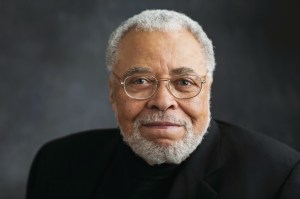
james_earl_jones_headshotActor James Earl Jones has made several appearances in Central Arkansas over the years.  He has appeared at Robinson Center with the Arkansas Symphony Orchestra.  On February 12, 1999, he narrated Aaron Copland’s “Lincoln Portrait” and Alexander Miller’s “Let Freedom Ring” with the Symphony in a concert at Robinson Center.  (It was the 190th birthday for Lincoln.)

Born in Mississippi, he spent most of his childhood in Michigan.  After service in the Army during the Korean War, he moved to New York to study theatre.  In the late 1950s he started alternating between Broadway (where he often played a servant) and Off Broadway (where he played leading roles).  His first film appearance was in Dr. Strangelove….  From the 1960s onward he has alternated between stage, film and TV.  In the 1980s, he added voice work to his repertoire.

In 1969 and in 1987, he won Tony Awards for Actor in a Play (The Great White Hope and Fences, respectively).  His other Tony nominations have been for revivals of On Golden Pond and The Best Man.  He was nominated for an Oscar in 1970 for reprising The Great White Hope on film.  He received two Emmy Awards in 1991 – the only actor to ever win two in the same year.

In 2008, he won the Screen Actors Guild Lifetime Achievement Award, and in 2011 he was given an Honorary Oscar.  In 2002, he was a Kennedy Center Honors recipient.

He is probably best loved for his work as the voice of Darth Vader in many of the Star Wars films as well as his voicework in The Lion King.

Black History Month – Lawrence Hamilton and Robinson Center

LawrenceHamiltonAnother notable former Little Rock performing artist who is memorialized at Robinson Center is Lawrence Hamilton.

The son of the Dr. Oscar and Mae Dell Hamilton, he was born in the small southwest Arkansas town of Foreman With an interest in music stemming from childhood, Hamilton earned a music scholarship to attend Henderson State University in Arkadelphia where he studied piano and voice He graduated in 1976 with a bachelor’s degree in music education.

From Arkansas, Hamilton traveled to Florida to work as a performer at Walt Disney World in Orlando, Florida where he would meet talent manager, Tommy Molinaro. This fateful meeting would prove to be a life-changing encounter, as Molinaro would invite Hamilton to come to New York to audition for the famed actor/director Geoffrey Holder. This marked the beginning of Hamilton’s bold and creative career in the performing arts, leading to performances on Broadway and on tours in Sophisticated Ladies, The Wiz,Uptown – Its Hot, Porgy and Bess, Big River, Play On!, and Jelly’s Last Jam among others. Perhaps his crowning achievement was starring in Ragtime.

Hamilton has been a member of the Southern Ballet Theater, Brooklyn Dance Theater, Ballet Tap USA, and the Arkansas Opera Theater He has performed in concert with the legendary Lena Horne at the White House for President and Mrs. Ronald Reagan, and at the Vatican for Pope John Paul II. Hamilton’s career also led to a stint as musical director for the renowned opera legend Jessye Norman, as well as vocal coach/arranger for the pop group New Kids on the Block

Upon his return to Arkansas, Hamilton served for several years as director of choral music at Philander Smith College. He also appeared in several plays at the Arkansas Repertory Theatre and made numerous appearances on the stage of Robinson Center with the Arkansas Symphony and other groups.  In addition, he performed at countless concerts, benefits and galas throughout Arkansas.  In 2003, he was inducted into the Arkansas Black Hall of Fame.  In 2008, he was appointed to the Little Rock Mayor’s Task Force on Tourism.

Hamilton died in New York in April 2014 due to complications from surgery.  Just weeks prior to the surgery, he had appeared in August Wilson’s The Piano Lesson in Cape Fear, North Carolina.  He had also starred in that play at Arkansas Rep a few years earlier.

Happy Birthday to PHANTOM – 6 weeks until it arrives in Little Rock

The-Phantom-of-the-Opera-North-American-Tour (1)29 years ago today, Andrew Lloyd Webber’s THE PHANTOM OF THE OPERA opened on Broadway.  It is still going strong at the Majestic Theatre.

Of course, Little Rock theatregoers will not have to wait much longer to see PHANTOM at the new Robinson Center Performance Hall.  It will be here from March 8-19. Producer Cameron Mackintosh’s spectacular new production of Andrew Lloyd Webber’s phenomenal musical success, THE PHANTOM OF THE OPERA, will come to Little Rock as part of a brand new North American Tour.

The production will be the largest musical to play in the building ever.  It will eclipse Beauty and the Beast and Wicked, which both have played at Robinson twice.

The musical, based on a novel by Gaston Leroux, features music by Andrew Lloyd Webber and book & lyrics by Charles Hart, Richard Stilgoe and Mr. Lloyd Webber.  The production was produced by Cameron Mackintosh and directed by Harold Prince.

After opening in London in 1986, The Phantom of the Opera opened on Broadway in January 1988. It is still running over 27 years later. Phantom is the longest running show in Broadway history.  Nominated for 10 Tony Awards in 1988, it won seven: Best Musical, Actor in a Musical (Michael Crawford), Featured Actress in a Musical (Judy Kaye), Director of a Musical (Harold Prince), Scenic Design (Maria Bjornson), Costume Design (Bjornson) and Lighting Design (Andrew Bridge).

Hailed by critics as “bigger and better than ever before,” this production boasts many exciting special effects including the show’s legendary chandelier, new scenic and lighting designs, new staging and choreography. The beloved story and thrilling score will be performed by a cast and orchestra of 52, making this PHANTOM one of the largest productions now on tour.

Celebrity Attractions is bringing PHANTOM to Little Rock.  Ticket information can be found here.

Little Rock Look Back: The Sun shines in as HAIR plays Robinson Center

Ad for the original production of HAIR in Little Rock. Note the ticket prices. And that they could be purchased at Moses Music Shops.

Ad for the original production of HAIR in Little Rock. Note the ticket prices. And that they could be purchased at Moses Music Shops.

Forty-five years ago today, on January 18, 1972, the musical Hair settled in for a week-long run at Robinson Auditorium.  The saga to bring the national tour to Little Rock had actually begun eleven months earlier.

In February 1971, a young Little Rock attorney named Phil Kaplan petitioned the Little Rock Board of Censors to see if it would allow a production of Hair to play in the city. He was asking on behalf of a client who was interested in bringing a national tour to Arkansas’ capital city. The show, which had opened on Broadway to great acclaim in April 1968 after an Off Broadway run in 1967, was known for containing a nude scene as well for a script which was fairly liberally sprinkled with four-letter words. The Censors stated they could not offer an opinion without having seen a production.

By July 1971, Kaplan and his client (who by then had been identified as Southwest Productions) were seeking permission for a January 1972 booking of Hair from the City’s Auditorium Commission which was charged with overseeing operations at Robinson Auditorium. At its July meeting, the Commissioners voted against allowing Hair because of its “brief nude scene” and “bawdy language.”

Kaplan decried the decision. He stated that the body couldn’t “sit in censorship of legitimate theatrical productions.” He noted courts had held that Hair  could be produced and that the Auditorium Commission, as an agent for the State, “clearly can’t exercise prior censorship.” He proffered that if the production was obscene it would be a matter for law enforcement not the Auditorium Commission.

The Commission countered that they had an opinion from City Attorney Joseph Kemp stating they had the authority. One of the Commissioners, Mrs. Grady Miller (sister-in-law of the building’s namesake the late Senator Robinson, she had served on the Commission since 1940), expressed her concern that allowing Hair would open the door to other productions such as Oh! Calcutta!

On July 26, 1971, Southwest Productions filed suit against the Auditorium Commission. Four days later there was a hearing before federal Judge G. Thomas Eisele. At that hearing, Auditorium Commission member Lee Rogers read aloud excerpts from the script he found objectionable. Under questioning from Kaplan, a recent touring production of Neil Simon’s Plaza Suite was discussed. That play has adultery as a central theme of one of its acts. Rogers admitted he found the play funny, and that since the adultery did not take place on stage, he did not object to it. Among those testifying in favor of it was Robert Reddington, who was director of performing arts at the Arkansas Arts Center.

Judge Eisele offered a ruling on August 11 which compelled the Auditorium Commission to allow Hair to be performed. Prior to the ruling, some of the Auditorium Commissioners had publicly stated that if they had to allow Hair, they would close it after the first performance on the grounds of obscenity. To combat this, Judge Eisele stated that the Commission had to allow Hair to perform the entire six day engagement it sought.

Upon hearing of the Judge’s ruling, Commissioner Miller offered a succinct, two word response. “Oh, Dear!”

In the end, the production of Hair at Robinson would not be the first performance in the state.  The tour came through Fayetteville for two performances in October 1971 at Barnhill Arena.

On January 18, 1972, Hair played the first of its 8 performances over 6 days at Robinson Auditorium.  In his review the next day, the Arkansas Gazette’s Bill Lewis noted that Hair “threw out all it had to offer” and that Little Rock had survived.

The ads promoting the production carried the tagline “Arkansas will never be the same.”  Tickets (from $2 all the way up to $8.50) could be purchased at Moses Melody Shops both downtown and in “The Mall” (meaning Park Plaza). That business is gone from downtown, but the scion of that family, Jimmy Moses, is actively involved in building downtown through countless projects. His sons are carrying on the family tradition too.

Little Rock was by no means unique in trying to stop productions of Hair.  St. Louis, Birmingham, Los Angeles, Tallahassee, Boston, Atlanta, Charlotte NC, West Palm Beach, Oklahoma City, Mobile and Chattanooga all tried unsuccessfully to stop performances in their public auditoriums.  Despite Judge Eisele’s ruling against the City of Little Rock, members of the Fort Smith City Council also tried to stop a production later in 1972 in that city. This was despite warnings from City staff that there was not legal standing.

Within a few years, the Board of Censors of the City of Little Rock would be dissolved (as similar bodies also were disappearing across the US). Likewise, the Auditorium Commission was discontinued before Hair even opened with its duties being taken over by the Advertising and Promotion Commission and the Convention & Visitors Bureau staff.  This was not connected to the Hair decision; it was, instead, related to expanding convention facilities in Robinson and the new adjacent hotel.  Regardless of the reasons for their demise, both bygone bodies were vestiges of earlier, simpler and differently focused days in Little Rock.