
 On February 16, 1940, after three years of planning and construction including several delays due to lack of funding, the Joseph Taylor Robinson Memorial Auditorium officially opened. It was a cold, rainy night, but those in attendance did not care. (The concept of a municipal auditorium for Little Rock had first been raised in 1904, so this evening was truly a long time in the works.)
Searchlights painting arcs in the sky greeted attendees. They were borrowed from the Arkansas National Guard. Newspaper accounts noted that only a few of the men who attended were in tuxedos, most were simply in suits. The work to get the building opened had been so harried, that it was discovered there was not an Arkansas flag to fly in front of the building. Mayor Satterfield found one at the last minute courtesy of the Arkansas Department of the Spanish War Veterans.
The weather delayed arrivals, so the program started fifteen minutes late. Following a performance of Sibelius’ Finlandia by the fledgling Arkansas State Symphony Orchestra, Mayor J. V. Satterfield, Ewilda Robinson (the Senator’s widow), Emily Miller (the Senator’s sister-in-law and a member of the Auditorium Commission) and D. Hodson Lewis of the Chamber of Commerce participated in a brief ribbon cutting ceremony. Mrs Robinson cut the ribbon on her second attempt (once again proving that nothing connected with getting the building open was easy).
The ceremony was originally set to be outside of the building but was moved indoors due to the inclement weather. The ribbon cutting took place on the stage with the ribbon stretched out in front of the curtain. The opening remarks were broadcast on radio station KGHI.

Mr. Lewis, Mrs. Miller and Mayor Satterfield look on as Mrs. Robinson cuts the ribbon
Tickets for the event, advertised as being tax exempt, were at four different pricing levels: $2.50, $2.00, $1.50 and $1.00.
The estimated attendance was 1700. Following the ribbon cutting, the main performance took place. The headliner for the grand opening was the San Francisco Opera Ballet accompanied by the new Arkansas State Symphony Orchestra (not related to the current Arkansas Symphony Orchestra). The featured soloist with the ballet was Zoe Dell Lantis who was billed as “The Most Photographed Miss at the San Francisco World’s Fair.”
Auditorium Commission chairman E. E. Beaumont, a local banker, noted that while event planners knew the evening of ballet and classical music would not appeal to everyone, it was intended to show the wide range of offerings that would be suitable in the new space. Earlier in the week, children’s theatre performances had been offered to school groups through the auspices of the Junior League of Little Rock.
At the same time that the gala was going on upstairs in the music hall, a high school basketball double-header was taking place in the downstairs convention hall. North Little Rock lost to Beebe in the first game, while the Little Rock High School Tigers upset Pine Bluff in the marquee game.
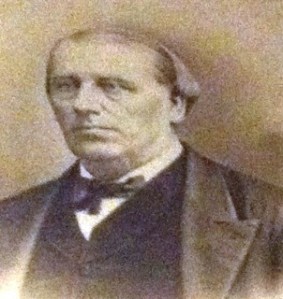 Future Little Rock Mayor John Wassell was born on February 15, 1813 in Kidderminster, England.
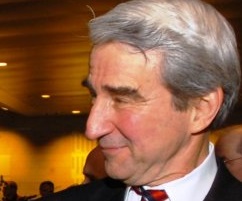 On February 15, 2008, Oscar nominated actor Sam Waterston appeared at the Clinton Presidential Center in a Kumpuris Distinguished Lecture Series program sponsored by the Clinton School for Public Service and the Clinton Foundation.
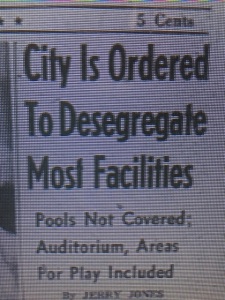 Following the March 1962 lawsuit by twenty-two (22) African Americans seeking the integration of public facilities in Little Rock, Federal Judge J. Smith Henley issued a order on February 15, 1963. Judge Henley ordered the end to segregation in City parks, playgrounds, golf courses, tennis facilities, community centers, and Robinson Auditorium.

 In this month’s Preservation Conversation, the National Register of Historic Places will be discussed. The program, featuring Callie Willliams, begins today (February 14) with a 5:30 reception and a 6:00 lecture. It will be in the Mixing Room at the Old Paint Factory in the East Village (1306 East 6th Street). Preservation Conversations are a program of the Quapaw Quarter Association.
 The National Register of Historic Places is the official list of the Nation’s historic places worthy of preservation. Authorized by the National Historic Preservation Act of 1966, the National Park Service’s National Register of Historic Places is part of a national program to coordinate and support public and private efforts to identify, evaluate, and protect America’s historic and archeological resources. The Arkansas Historic Preservation Program (AHPP) is responsible for National Register implementation in Arkansas. February’s presentation will be on the history and development of the National Register of Historic Places (NRHP) as well as the research and process used to pursue listing in the Register.
 Little Rock Culture Vulture